Exhaust Gas Recirculation Valve
CN → US| HS Code | Tariff Rate | Origin | Destination | Doc |
|---|---|---|---|---|
| 8409919990 | 37.5% | CN | US | Official Doc |
| 8409915085 | 37.5% | CN | US | Official Doc |
| 8481809050 | 37.0% | CN | US | Official Doc |
| 8481909085 | 85.0% | CN | US | Official Doc |
| 8708996890 | 87.5% | CN | US | Official Doc |
Product Images
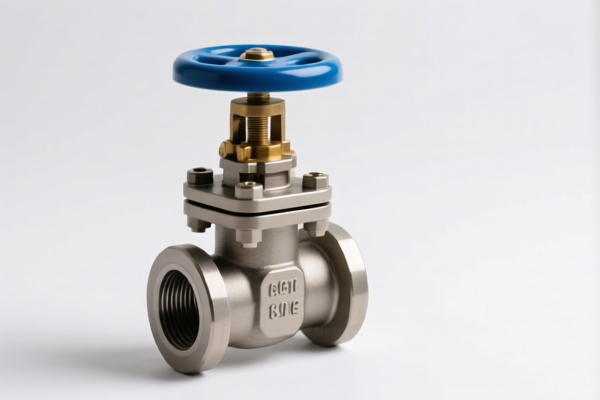
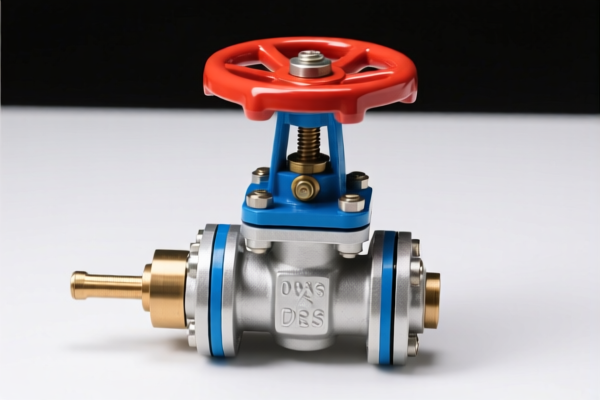
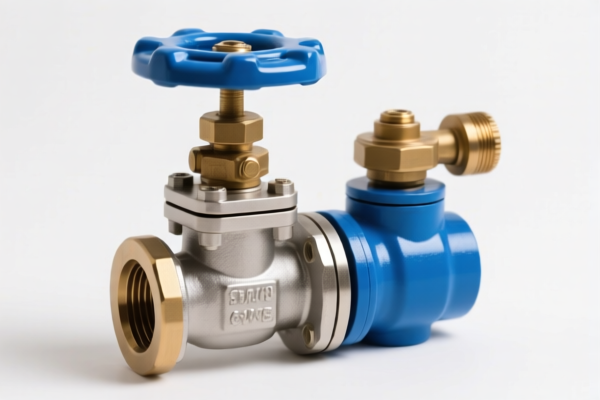
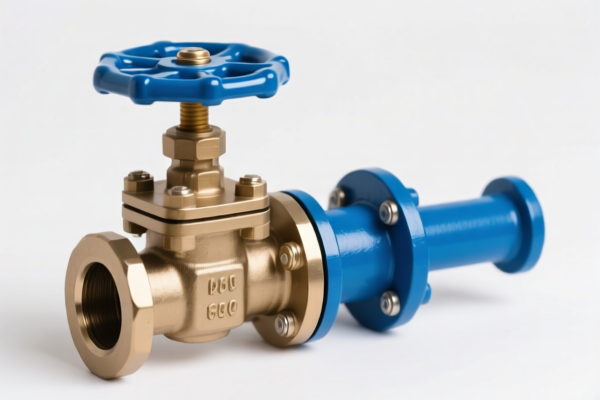
AI Analysis
⚙️ Exhaust Gas Recirculation (EGR) Valve Classification & Duty Analysis (USA/China Trade)
🌐 HS Code Reference & Customs Clearance Guide | 2026 Latest Tariff Structure | Professional Clearance Strategy
📌 I. Product Definition: What is an EGR Valve?
The Exhaust Gas Recirculation (EGR) valve is a critical component in modern internal combustion engines, designed to reduce nitrogen oxide (NOx) emissions by recirculating a portion of the exhaust gas back to the engine cylinders. In international trade, its classification depends heavily on its functional role: - As a Standalone Valve: Classified under general valves. - As an Engine Component: Classified under internal combustion engine parts. - As a Vehicle Part: Classified under automotive vehicle parts.
⚠️ Critical Distinction Point:
- If viewed strictly as a valve mechanism (hydraulic/pneumatic control) → HS 8481
- If viewed as a specific part of an internal combustion engine → HS 8409
- If viewed as a part of a motor vehicle (generic) → HS 8708
📦 II. HS Code Classification Matrix (2026 Latest Tariff Data)
Based on the provided dataset, here are the precise classifications, tax rates, and legal justifications for EGR Valves.
| HS Code | Product Description | Functional Category | Total Duty Rate (US/CN) | Key Tariff Components |
|---|---|---|---|---|
8481.80.90.50 |
Exhaust Gas Recirculation Valve | General Valve (Miscellaneous) | 37.0% | Base: 2.0% + 301: 25.0% + 122: 10% |
8481.90.90.85 |
Valve Parts (EGR Valve) | Accessory/Part of Valve | 85.0% | Base: 0.0% + 301: 25.0% + 122: 10% + Steel/Alu/Cu: 50% |
8409.91.99.90 |
Engine Part (EGR Valve) | Part of Internal Combustion Engine | 37.5% | Base: 2.5% + 301: 25.0% + 122: 10% |
8409.91.50.85 |
Engine Part (EGR Valve) | Part of Internal Combustion Engine | 37.5% | Base: 2.5% + 301: 25.0% + 122: 10% |
8708.99.68.90 |
Vehicle Part (EGR Valve) | Part of Motor Vehicle | 87.5% | Base: 2.5% + 301: 25.0% + 122: 10% + Steel/Alu/Cu: 50% |
🔍 Data Source Note:
All classifications derive from the provided XML data (<DATA>). The high duties reflect US trade policies (Section 301 "122 Clause" and Section 122 tariffs) applied to Chinese-origin goods.
💰 III. Detailed Tariff Breakdown & Legal Basis
✅ Applicable Country: United States (US)
✅ Origin: China (CN)
✅ Effective Time: Current enforcement (2025-2026 period)
🎯 1. Classification as a General Valve (8481.80.90.50)
- Summary: The EGR valve is classified as a miscellaneous valve device. No material conflict identified.
- Tariff Structure:
- Base Tariff: 2.0%
- Section 301 Tariff: 25.0%
- 122-Clause Tariff: 10.0%
- Total Effective Rate: 37.0%
- Strategy: This is the lowest duty rate among valve-based classifications. Ideal if the product is marketed primarily as a fluid control component.
🎯 2. Classification as a Valve Part (8481.90.90.85)
- Summary: Considered a part/accessory of a valve. No specific material conflict, but material surcharges apply.
- Tariff Structure:
- Base Tariff: 0.0%
- Section 301 Tariff: 25.0%
- 122-Clause Tariff: 10.0%
- Material Surcharge (Steel/Aluminum/Copper): 50.0% (Applies if made of these metals)
- Total Effective Rate: 85.0%
- Strategy: Avoid if possible. The 50% material surcharge makes this the most expensive classification if the valve body is metallic.
🎯 3. Classification as an Engine Part (8409.91.99.90 / 8409.91.50.85)
- Summary: Classified as a key working component or "other part" for internal combustion engines.
- Tariff Structure:
- Base Tariff: 2.5%
- Section 301 Tariff: 25.0%
- 122-Clause Tariff: 10.0%
- Total Effective Rate: 37.5%
- Strategy: Very similar cost to the general valve classification. Preferred if the product is explicitly sold as an "OEM Engine Replacement Part."
🎯 4. Classification as a Vehicle Part (8708.99.68.90)
- Summary: Classified as a generic part of a motor vehicle.
- Tariff Structure:
- Base Tariff: 2.5%
- Section 301 Tariff: 25.0%
- 122-Clause Tariff: 10.0%
- Material Surcharge (Steel/Aluminum/Copper): 50.0% (Applies if made of these metals)
- Total Effective Rate: 87.5%
- Strategy: Highest Duty. Only use if other classifications are rejected by customs. The material surcharge drastically increases costs.
🛠️ IV. Customs Clearance Practical Advice
✅ 1. Documentation Checklist (Mandatory)
| Document | Required | Purpose |
|---|---|---|
| ✅ Product Specification Sheet | ✔️ | Must detail function (EGR control), material (Steel/Aluminum/etc.), and voltage/signal type. |
| ✅ Commercial Invoice | ✔️ | Must clearly state: "Exhaust Gas Recirculation Valve" and intended use. |
| ✅ Packing List | ✔️ | Detailed list of items to avoid bulk valuation issues. |
| ✅ OEM Compatibility List | ✔️ | Proof of fitment (e.g., "Fits Ford 6.7L Diesel") supports 8409 (Engine Part) classification. |
| ✅ Material Declaration | ✔️ | Crucial for determining if the 50% surcharge applies (Steel/Alu/Cu). |
| ✅ Technical Diagrams | ✔️ | To prove it is an integrated valve unit, not just a loose pipe or bracket. |
✅ 2. Classification Strategy & Tips
🔥 Golden Rule: "Claim as Valve or Engine Part to Save 50%!"
| Scenario | Recommended HS Code | Why? |
|---|---|---|
| Valve Body is Steel/Aluminum | 8481.80.90.50 or 8409.91.99.90 |
Avoids the 50% material surcharge found in 8481.90 and 8708.99. Duty is ~37-37.5%. |
| Valve Body is Plastic/Non-Metal | 8481.90.90.85 |
Saves 50%! No material surcharge applies. Duty drops to 35% (0+25+10). |
| Sold as Complete Assembly | 8481.80.90.50 |
Easiest defense as a "Valve." |
| Sold as Replacement Part | 8409.91.99.90 |
Strong argument as an "Engine Component." |
✅ 3. Risk Mitigation (Avoiding the 85%-87% Trap)
-
⚠️ High Risk: Declaring as
8708.99.68.90(Vehicle Part) or8481.90.90.85(Valve Part) when made of steel/aluminum.- Consequence: You will pay 85-87.5% duty.
- Mitigation: Provide evidence that the primary function is valve control (
8481) or engine regulation (8409), not generic vehicle accessory.
-
⚠️ Documentation Gap: Failing to declare material composition.
- Consequence: Customs will assume the worst-case scenario (Steel/Aluminum) and apply the 50% surcharge automatically.
- Mitigation: Explicitly state material in the invoice. If mostly plastic/ceramic, highlight this.
🌍 V. Global Market Context (2026 Comparison)
| Market | Likely HS Code | Base Duty | US Section 301/122 Surcharge | Total Est. Duty (CN Origin) |
|---|---|---|---|---|
| 🇺🇸 USA | 8481 or 8409 |
2.0-2.5% | +35% (25% Sec 301 + 10% Sec 122) | 37.0% - 37.5% |
| 🇨🇳 China | 8481 or 8409 |
5-10% | None | 5-10% |
| 🇪🇺 EU | 8481 |
4.5% | None | 4.5% |
| 🇯🇵 Japan | 8481 |
3.0% | None | 3.0% |
📌 Insight:
The US market imposes a ~35% additional penalty on top of base duties. Correct classification is vital because a wrong classification (e.g., as a generic vehicle part) can trigger an extra 50% material tax, pushing the total to nearly 90%.
📌 VI. Common Mistakes & Pitfalls
❌ Mistake 1: Declaring as "Auto Parts" (8708) without justification.
👉 Result: Customs applies 8708.99.68.90 → 87.5% Duty.
✅ Fix: Declare as "Exhaust Gas Recirculation Valve" (8481) or "Engine Part" (8409).
❌ Mistake 2: Ignoring Material Composition in 8481.90 or 8708.
👉 Result: Customs assesses Steel/Aluminum surcharge (+50%) automatically.
✅ Fix: If the valve is plastic-heavy or composite, provide a material breakdown invoice to argue for lower duty or exemption from the 50% surcharge.
❌ Mistake 3: Confusing "Valve" with "Piping/Tube".
👉 Result: Misclassification under 7307 or 7609 (which might have different rules).
✅ Fix: Ensure the product includes the mechanism (stem, actuator, housing) that controls flow, qualifying it as a Valve (8481) or Part (8409).
🎯 VII. Conclusion: Optimize for Clearance
🎯 Key Takeaway:
For EGR Valves from China to the US, 8481.80.90.50 (37.0%) and 8409.91.99.90 (37.5%) are the optimal classifications.
AVOID 8708.99.68.90 and 8481.90.90.85 if your product contains steel, aluminum, or copper, as the 50% material surcharge will destroy your profit margin.
💡 Pro Tip:
Always include a "Material Declaration" in your commercial invoice.
If your EGR valve is primarily plastic/ceramic, explicitly state: "Valve Body Material: Plastic/Ceramic. Metallic Components: <5% by weight." This may help argue against the 50% surcharge under8481.90.
✨ Professional Clearance Starts with Precision Classification!
💼 Don't let a 50% material surcharge surprise you. Declare wisely.
Customer Reviews
About HS Code Classification
The Harmonized System (HS) is an internationally standardized nomenclature developed by the World Customs Organization (WCO) to classify traded products. Over 200 countries use the HS system as the basis for customs tariffs, trade statistics, and import/export regulations.
Each HS code follows a hierarchical structure:
- Chapter (2 digits) — Broad category of goods (e.g., Chapter 84: Machinery and Mechanical Appliances)
- Heading (4 digits) — More specific grouping within the chapter
- Subheading (6 digits) — Internationally standardized breakdown, used by all WCO member countries
- National subdivisions (8-10 digits) — Country-specific extensions for further classification, such as US HTSUS 10-digit codes
Correct HS code classification is essential for smooth customs clearance, accurate duty payment, and compliance with trade regulations. Misclassification can lead to customs delays, overpayment of duties, or penalties.
When importing from CN to US, the applicable tariff rates may include:
- Most-Favored-Nation (MFN) rate — The standard duty rate applied to WTO members
- General rate — Applied to countries without trade agreements
- Trade remedy duties — Additional tariffs such as Section 301 (anti-dumping), Section 232 (national security), or countervailing duties
The information provided on this page is for reference purposes only. For official classification, please consult with your local customs authority or a licensed customs broker.