Exhaust Outlet
CN → US| HS Code | Tariff Rate | Origin | Destination | Doc |
|---|---|---|---|---|
| 8708925000 | 37.5% | CN | US | Official Doc |
| 7307933040 | 91.2% | CN | US | Official Doc |
| 8708927500 | 37.5% | CN | US | Official Doc |
| 8481400000 | 37.0% | CN | US | Official Doc |
| 8481809050 | 37.0% | CN | US | Official Doc |
Product Images
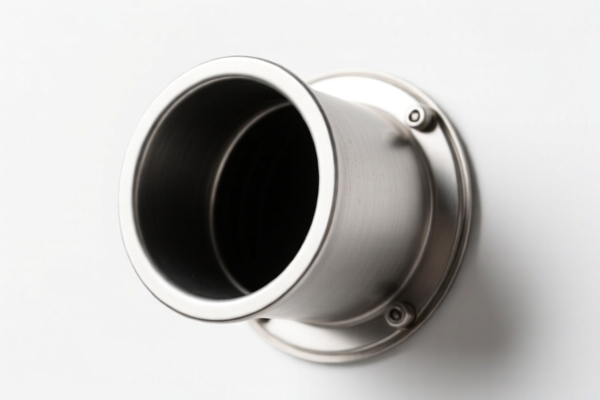
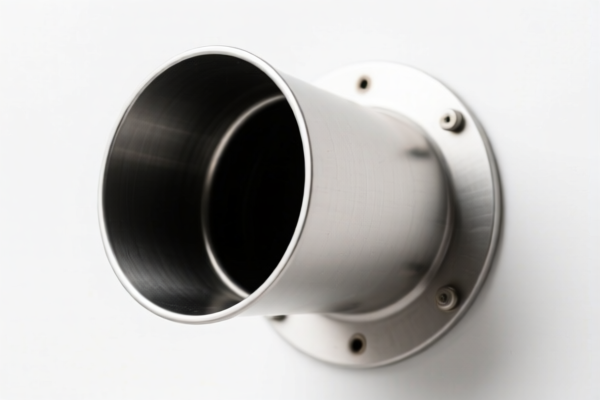
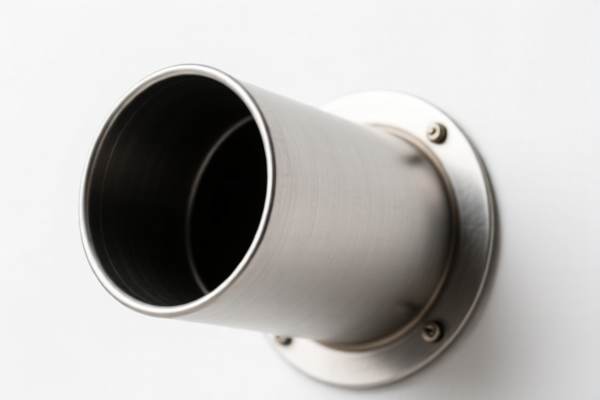
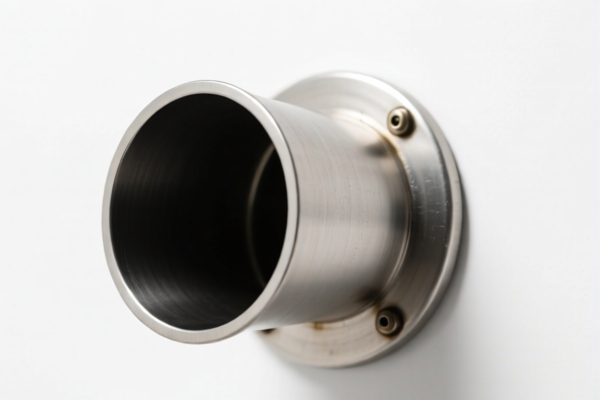
AI Analysis
🚗 Exhaust Outlet Systems & Valves (Automotive Exhaust Components)
🌐 HS Code Reference & Customs Clearance Guide | 2026 Latest Tariff Analysis | Professional Clearance Strategy
📌 I. Product Definition & Classification: Do You Really Understand "Exhaust Outlets"?
In the international trade of automotive parts, "Exhaust Outlet" is not a single monolithic category. It is broadly divided into two distinct functional groups based on material and function:
1. Complete Exhaust Systems (Piping & Muffler Assemblies):
Components such as mufflers, tailpipes, resonators, and connecting pipes that form the complete exhaust path. These are classified under Chapter 87 (Vehicles) as parts and accessories.
2. Exhaust Valves (Pressure Control Devices):
Mechanical valves used to regulate exhaust pressure, such as pressure relief valves or vent valves. These are classified under Chapter 84 (Nuclear Reactors, Boilers, Machinery) as mechanical appliances.
⚠️ Key Distinction Point:
- If the product is a pipe, muffler, or system part made of steel/iron →归入 8708.92.xxxx
- If the product is a valve (mechanical pressure control) →归入 8481.xxxx
- Crucial Note: If the pipe component is made of Iron or Non-Alloy Steel and resembles welded fittings, it may be misclassified as general steel products (7307), triggering much higher tariffs.
📦 II. HS Code Classification Details (2026 Latest Tariff Authority Comparison)
Based on the provided data, here are the specific HS Codes and their logical justifications:
| HS Code | Product Description | Applicable Scenario | Key Classification Logic |
|---|---|---|---|
8708.92.50.00 |
Exhaust System Part | Matches the use of exhaust pipes; classified as a system component including mufflers and pipes. | System Component: Classified under "Parts and accessories of motor vehicles" specifically for exhaust systems. |
8708.92.75.00 |
Exhaust System Part | Matches the category of mufflers and exhaust pipes; classified under "Other" parts and accessories. | General Part: Fits the broader "Other" category for exhaust-related components not explicitly listed elsewhere. |
7307.93.30.40 |
Steel Exhaust Pipe/Fitting | Based on material (Iron/Non-Alloy Steel); conforms to the form and use of butt-weld fittings. | Material-Based (High Risk): Classified as steel fittings. WARNING: Subject to heavy steel-specific tariffs. |
8481.40.00.00 |
Exhaust Valve | Pressure control category; pressure relief/venting valves, consistent with safety valve uses. | Valve (Pressure Relief): Classified as pressure relief valves under mechanical appliances. |
8481.80.90.50 |
Exhaust Valve | Valves and similar apparatus; fits the definition of taps, cocks, and similar appliances as a catch-all. | Valve (General): Classified as "Other" valves/valve-like apparatus. |
🔍 Critical Insight:
- Do not classify steel exhaust pipes as7307.93.30.40unless they are strictly steel fittings and not vehicle-specific parts. If they are vehicle-specific,8708is safer and cheaper. - Valves must be clearly distinguished from pipes. A valve controls flow/pressure; a pipe conducts it. Misclassification here leads to duty discrepancies.
💰 III. 2026 Latest Tariff Rate Details (Including Surtaxes & Policy Add-ons)
✅ Applicable Country: United States (US)
✅ Country of Origin: China (CN)
✅ Effective Date: 2025 November 10 onwards (and subsequent imports)
🎯 1. 8708.92.50.00 & 8708.92.75.00 —— Exhaust System Parts
| Item | Details |
|---|---|
| Base Tariff | 2.5% (ad valorem) |
| Surtax (Section 301) | +25.0% |
| IEEPA Surtax | +10.0% (Section 122 Tariffs) |
| Total Tax Rate | 37.5% |
| Tax Calculation | CIF Value × 37.5% |
| De Minimis Exemption | ❌ Not Eligible |
| Legal Basis Path | Base: 2.5% → 301: 25.0% → IEEPA: 10.0% |
📌 Explanation:
- The 2.5% is the standard MFN (Most Favored Nation) duty for auto parts. - The 25% is the Section 301 tariff on Chinese goods. - The 10% is the specific "Section 122" tariff on automotive components. - Total 37.5% is high but significantly lower than steel products.
🎯 2. 7307.93.30.40 —— Steel/Non-Alloy Steel Exhaust Fittings
| Item | Details |
|---|---|
| Base Tariff | 6.2% |
| Surtax (Section 301) | +25.0% |
| IEEPA Surtax | +10.0% |
| Steel/Aluminum/Copper Surtax | +50.0% |
| Total Tax Rate | 91.2% |
| Tax Calculation | CIF Value × 91.2% |
| De Minimis Exemption | ❌ Not Eligible |
| Legal Basis Path | Base: 6.2% → 301: 25.0% → IEEPA: 10.0% → Steel Surtax: 50.0% |
📌 CRITICAL WARNING:
- This rate is EXTREMELY HIGH.
- The 50% steel surcharge is applied specifically to iron and non-alloy steel products.
- Avoid this code if the product is a vehicle part. Use8708instead to save 53.7% in taxes.
🎯 3. 8481.40.00.00 & 8481.80.90.50 —— Exhaust Valves
| Item | Details |
|---|---|
| Base Tariff | 2.0% |
| Surtax (Section 301) | +25.0% |
| IEEPA Surtax | +10.0% |
| Total Tax Rate | 37.0% |
| Tax Calculation | CIF Value × 37.0% |
| De Minimis Exemption | ❌ Not Eligible |
| Legal Basis Path | Base: 2.0% → 301: 25.0% → IEEPA: 10.0% |
📌 Explanation:
- Valves have a lower base rate (2.0% vs 2.5% for pipes). - However, the 37.0% total is still substantial. - Ensure the product is indeed a valve (has a moving part to control flow/pressure) and not just a pipe joint.
🛠️ IV. Customs Clearance Practical Advice (Real-World Pitfall Avoidance Guide)
✅ 1. Preparation Checklist (Non-Negotiable)
| Document | Required | Explanation |
|---|---|---|
| ✅ Product Specifications | ✔️ | Must specify if it is a Pipe/Muffler (System) or Valve (Control). |
| ✅ Material Certificate | ✔️ | Critical to prove it is Auto Part Steel (for 8708) and not generic Construction Steel (for 7307). |
| ✅ Product Photos | ✔️ | Clear images showing branding, model numbers, and assembly context. |
| ✅ Commercial Invoice | ✔️ | Must accurately describe the item (e.g., "Exhaust Muffler for Ford F-150" vs "Steel Pipe Fitting"). |
| ✅ Packing List | ✔️ | Detail components to avoid "missing parts" flags. |
✅ 2. Declaration Strategy (Key Mantras)
🔥 "Auto Parts Use 8708, Steel Fittings Use 7307 (Avoid!), Valves Use 8481!"
| Scenario | Correct HS Code | Incorrect Action | Consequence |
|---|---|---|---|
| Complete Exhaust Pipe/Muffler | 8708.92.50.00 |
Declared as 7307.93.30.40 |
Tax jumps from 37.5% to 91.2% (+53.7% penalty) |
| Exhaust Valve | 8481.40.00.00 |
Declared as 8708.92.75.00 |
Minor discrepancy, but may trigger customs inquiry for "Why a valve in auto parts?" |
| Generic Steel Pipe (Non-Auto) | 7307.93.30.40 |
Declared as 8708 |
Misclassification Fraud Risk: Customs may deny auto part status. |
💡 Pro Tip:
Always emphasize "For Automotive Use" in the declaration. If it is a vehicle part,8708is your best friend. If you declare it as7307(Steel Fitting), you invite the 50% steel surcharge.
✅ 3. Special Cases Handling
| Case | Handling Advice |
|---|---|
| Stainless Steel Exhaust | Still usually 8708 if for auto use. Stainless steel may avoid some steel surcharges in other contexts, but for China-US, check if 8708 still applies. |
| Valve vs. Pipe Joint | If it has a screw, lever, or mechanism to open/close, it is a Valve (8481). If it just connects, it is a Part (8708). |
| Kit with Multiple Parts | Declare the primary function. If it's an exhaust kit, 8708 is preferred. Do not split into pipes (7307) and valves (8481) unless necessary for inventory, as it complicates the tariff structure. |
🌍 V. Global Market Comparison (2026 Latest)
| Country/Region | Recommended HS Code | Tariff Rate | Note |
|---|---|---|---|
| 🇺🇸 USA (China Origin) | 8708.92.50.00 |
37.5% | Includes 301 + IEEPA 122 tariffs. |
| 🇺🇸 USA (Steel Fittings) | 7307.93.30.40 |
91.2% | AVOID. Includes heavy steel surcharge. |
| 🇨🇳 China (Import) | 8708.92.50.00 |
5-10% | Lower base tariffs, no Section 301. |
| 🇪🇺 EU | 8708.92.50.00 |
4.5% | No Section 301 equivalent, but verify CBAM for steel. |
| 🇲🇽 Mexico | 8708.92.50.00 |
0% (USMCA) | Zero Duty if rules of origin are met. |
📌 Conclusion:
- USA is the most expensive market due to layered tariffs.
- Mexico (USMCA) offers a significant advantage if you can source/assemble there.
- Misclassification as Steel (7307) is the biggest financial risk for Chinese exhaust parts entering the US.
📌 VI. Common Errors & Pitfalls (Lessons Learned)
❌ Error 1: Declaring an automotive exhaust pipe as a "Steel Pipe Fitting" (7307)
👉 Consequence: You pay 91.2% instead of 37.5%. Loss: 53.7% of value.
❌ Error 2: Declaring a Valve as a "Pipe" (8708)
👉 Consequence: Customs may audit for "Valve" classification (8481), causing delays. While rates are similar (37.0% vs 37.5%), accuracy is key for compliance.
❌ Error 3: Not providing Material Certificates
👉 Consequence: Customs cannot verify if it is "Auto Part Steel" or "General Steel," leading to default classification as 7307 (91.2%).
✅ Correct Declaration Example:
"Exhaust Muffler System Part for Automotive Use, Stainless Steel, Model XYZ, No Valve Function, HS 8708.92.50.00"
🎯 VII. Conclusion: Precision Classification Saves Money!
🎯 Remember the Mantra:
🔹 "Auto Parts = 8708 (37.5%) | Steel Fittings = 7307 (91.2%) | Valves = 8481 (37.0%)"
🔹 "Don't let Steel Surcharges eat your profit!"
📌 Tip:
If you are exporting to the US, always ensure your commercial invoice clearly states "For Use in Motor Vehicles" to support the 8708 classification. Consider Advance Rulings from CBP if you are unsure about the "Valve vs. Part" distinction.
📣 Immediate Action:
📞 Contact a customs broker + Provide Product Photos + Verify Material Composition
🚀 Clear Customs Smoothly, Avoid 91.2% Tax Traps, Maximize Profit!
✨ Professional Clearance Starts with Accurate Classification!
💼 Every Percentage Point of Tariff Matters!
Customer Reviews
About HS Code Classification
The Harmonized System (HS) is an internationally standardized nomenclature developed by the World Customs Organization (WCO) to classify traded products. Over 200 countries use the HS system as the basis for customs tariffs, trade statistics, and import/export regulations.
Each HS code follows a hierarchical structure:
- Chapter (2 digits) — Broad category of goods (e.g., Chapter 84: Machinery and Mechanical Appliances)
- Heading (4 digits) — More specific grouping within the chapter
- Subheading (6 digits) — Internationally standardized breakdown, used by all WCO member countries
- National subdivisions (8-10 digits) — Country-specific extensions for further classification, such as US HTSUS 10-digit codes
Correct HS code classification is essential for smooth customs clearance, accurate duty payment, and compliance with trade regulations. Misclassification can lead to customs delays, overpayment of duties, or penalties.
When importing from CN to US, the applicable tariff rates may include:
- Most-Favored-Nation (MFN) rate — The standard duty rate applied to WTO members
- General rate — Applied to countries without trade agreements
- Trade remedy duties — Additional tariffs such as Section 301 (anti-dumping), Section 232 (national security), or countervailing duties
The information provided on this page is for reference purposes only. For official classification, please consult with your local customs authority or a licensed customs broker.