Exhaust Pipe Elbow
CN → US| HS Code | Tariff Rate | Origin | Destination | Doc |
|---|---|---|---|---|
| 8409915081 | 37.5% | CN | US | Official Doc |
| 8409999990 | 35.0% | CN | US | Official Doc |
| 8708927500 | 37.5% | CN | US | Official Doc |
| 8708927000 | 35.0% | CN | US | Official Doc |
| 7304390008 | 10.0% | CN | US | Official Doc |
Product Images
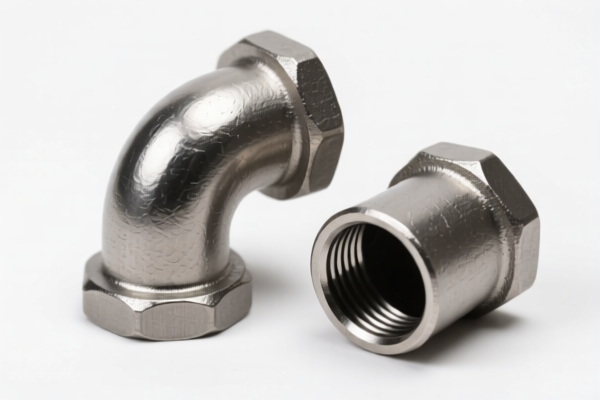
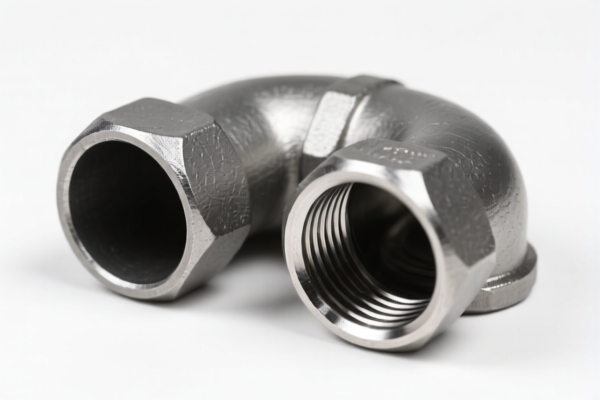
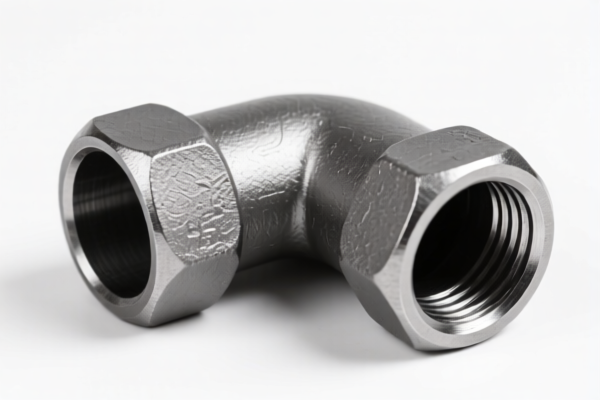
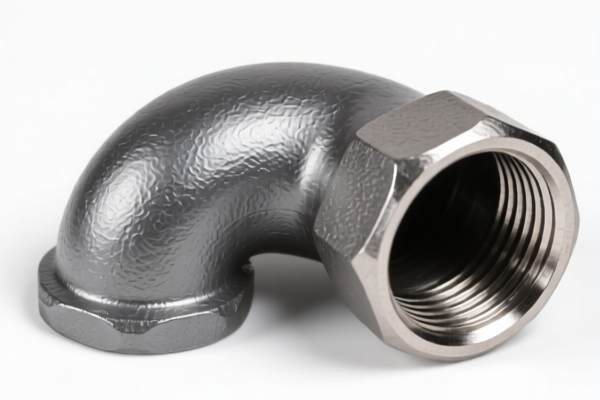
AI Analysis
🚗 Exhaust Pipe Elbow (Automotive Exhaust Components)
🌐 HS Code Reference & Customs Clearance Guide | 2026 Latest Tariff Analysis | Professional Clearance Strategy
📌 I. Product Definition & Classification: Do You Really Know an "Exhaust Elbow"?
An exhaust pipe elbow is a critical component of a vehicle's exhaust system, designed to redirect exhaust gases. In international trade, its classification depends heavily on its material, specific function, and integration level. It can be classified as a general metal pipe, a specific engine part, or a dedicated exhaust system component.
⚠️ Key Distinction Points:
- If it is a raw steel/iron tube with minimal processing → Considered a Pipe/Fitting (Ch. 73);
- If it is a finished engine component (e.g., matched with forged steel parts) → Considered an Engine Part (Ch. 84);
- If it is specifically for silencers/exhaust pipes → Considered an Auto Part (Ch. 87).
📦 II. HS Code Classification Details (2026 Latest Tariff Authority Comparison)
Based on the provided data, here are the five potential HS Codes with their tax implications:
| HS Code | Product Description | Application Scenario | Material/Logic |
|---|---|---|---|
8409.91.50.81 |
Engine Parts (Metal/Steel) | Parts matched with forged steel; specific engine components | ✅ Steel/Iron |
8409.99.99.90 |
Other Engine Parts | Other miscellaneous engine metal tubes; logical consistency with engine parts | ✅ Metal Tube |
8708.92.75.00 |
Parts of Silencers/Exhausts | Parts for mufflers and exhaust pipes; metal material, no conflict | ✅ Metal |
8708.92.70.00 |
Parts of Exhaust Systems | Parts for vehicle exhaust systems; metal material | ✅ Metal |
7304.39.00.08 |
Steel/Iron Pipes & Tubes | General fluid输送 components; steel/iron material | ✅ Steel/Iron |
🔍 Key Reminder:
-7304.39.00.08offers the lowest base tariff but requires proving it is a "general pipe" rather than a specialized auto part.
-8409and8708classifications are safer for finished automotive components but carry higher additional tariffs.
-8708.92.70.00and8409.99.99.90have 0% Base Tariff, making them attractive if you can justify the "0% base" status.
💰 III. 2026 Latest Tariff Rate Details (Including Additional Taxes & Policies)
✅ Applicable Country: United States (US)
✅ Origin: China (CN)
✅ Effective Time: From November 10, 2025 (including subsequent imports)
🎯 1. 8409.91.50.81 —— Engine Parts (Steel/Forged Match)
| Item | Content |
|---|---|
| Base Tariff | 2.5% (Ad Valorem) |
| Section 301 Tariff | +25.0% (USITC Footnote) |
| Section 122 Tariff | +10.0% (China/US Trade Policy) |
| Total Tariff | 37.5% |
| Calculation | CIF Value × 37.5% |
| De Minimis Exemption | ❌ Not Eligible (High tariff rate) |
| Legal Basis Path | Base: 8409 → 301: +25% → 122: +10% |
📌 Explanation:
- This classification treats the elbow as a specific engine part.
- Total 37.5% is high. However, if the product can be argued as a "general pipe" (Ch. 73), you might save significant costs.
🎯 2. 8409.99.99.90 —— Other Engine Parts
| Item | Content |
|---|---|
| Base Tariff | 0.0% |
| Section 301 Tariff | +25.0% |
| Section 122 Tariff | +10.0% |
| Total Tariff | 35.0% |
| Calculation | CIF Value × 35.0% |
| De Minimis Exemption | ❌ Not Eligible |
| Legal Basis Path | Base: 0% → 301: +25% → 122: +10% |
📌 Note:
- Total 35.0% is slightly lower than the previous code due to the 0% Base Tariff.
- Suitable for generic engine metal tubes that don't fit specific sub-categories.
🎯 3. 8708.92.75.00 —— Parts of Silencers & Exhausts
| Item | Content |
|---|---|
| Base Tariff | 2.5% |
| Section 301 Tariff | +25.0% |
| Section 122 Tariff | +10.0% |
| Total Tariff | 37.5% |
| Calculation | CIF Value × 37.5% |
| De Minimis Exemption | ❌ Not Eligible |
| Legal Basis Path | Base: 8708 → 301: +25% → 122: +10% |
📌 Explanation:
- Standard classification for exhaust system parts.
- High total tariff (37.5%) due to 2.5% base + 35% additional.
🎯 4. 8708.92.70.00 —— Parts of Exhaust Systems
| Item | Content |
|---|---|
| Base Tariff | 0.0% |
| Section 301 Tariff | +25.0% |
| Section 122 Tariff | +10.0% |
| Total Tariff | 35.0% |
| Calculation | CIF Value × 35.0% |
| De Minimis Exemption | ❌ Not Eligible |
| Legal Basis Path | Base: 0% → 301: +25% → 122: +10% |
📌 Note:
- Total 35.0% with 0% Base Tariff.
- This is often the recommended classification for dedicated exhaust parts if you can justify the 0% base rate.
🎯 5. 7304.39.00.08 —— Steel/Iron Pipes & Tubes
| Item | Content |
|---|---|
| Base Tariff | 0.0% |
| Section 301 Tariff | +0.0% |
| Section 122 Tariff | +10.0% |
| Total Tariff | 10.0% |
| Calculation | CIF Value × 10.0% |
| De Minimis Exemption | ❌ Not Eligible (Due to 122 Tariff) |
| Legal Basis Path | Base: 7304 → 301: 0% → 122: +10% |
📌 CRITICAL INSIGHT:
- Total 10.0% is the LOWEST among all options!
- Condition: You must prove the product is a generic steel/iron pipe used for fluid transmission, NOT a specialized automotive part.
- Risk: Customs may reclassify it as8708or8409if it looks too much like an auto part, leading to back taxes + penalties.
- Strategy: Use this only if the elbow is unbranded, generic, and lacks specific automotive mounting features.
🛠️ IV. Customs Clearance Practical Advice (Battle-Tested Pitfall Guide)
✅ 1. Document Checklist (No Exceptions)
| Document | Required | Notes |
|---|---|---|
| ✅ Product Specifications | ✔️ | Dimensions, material grade (e.g., 304/409 Stainless, Carbon Steel), thickness |
| ✅ Technical Drawings | ✔️ | Show bending radius, connection flanges, and if it's a "finished part" or "raw tube" |
| ✅ Product Photos | ✔️ | Clear view of markings, welds, and packaging |
| ✅ Commercial Invoice | ✔️ | Description must match HS Code logic (e.g., "Steel Pipe Fitting" vs. "Auto Exhaust Elbow") |
| ✅ Packing List | ✔️ | List contents clearly; avoid mentioning "for specific car model" if using Ch. 73 |
| ✅ Origin Certificate | ✔️ | Proof of Chinese origin triggers Section 301/122 tariffs |
✅ 2. Declaration Strategy (Key Mantra)
🔥 "Generic Pipe = 10%, Auto Part = 35%+! Describe Carefully!"
| Scenario | Correct Declaration | Wrong Approach | Result |
|---|---|---|---|
| Generic Metal Elbow | 7304.39.00.08 – "Steel Pipe Fitting for Fluids" |
"Exhaust Pipe Elbow for Toyota Camry" | 🚀 Saves 25% Tax! |
| Finished Auto Part | 8708.92.70.00 – "Part of Exhaust System" |
"Steel Pipe" | ✅ Compliant (35%) |
| Engine Component | 8409.99.99.90 – "Engine Part" |
"Exhaust Pipe" | ✅ Compliant (35%) |
✅ 3. Special Case Handling
| Situation | Recommendation |
|---|---|
| OEM Parts for Specific Car | Must use 8708 or 8409. Do NOT use Ch. 73. Customs will flag mismatched descriptions. |
| Unbranded/Generic Bulk | Can attempt 7304.39.00.08. Ensure NO logos or car-model-specific bends. |
| Stainless Steel vs. Carbon Steel | Both fall under Ch. 73 and Ch. 84/87, but material specs must match invoice. |
| Pre-Assembly Kits | If sold with gaskets/hardware, still declare as the main item (Elbow). Do not split. |
🌍 V. Global Market Clearance Comparison (2026 Latest)
| Country/Region | Recommended HS Code | Tariff (China Origin) | Certification | Notes |
|---|---|---|---|---|
| 🇺🇸 USA | 7304.39.00.08* |
10% (if generic) 35-37.5% (if auto part) |
None specific | High risk of reclassification if labeled "Exhaust". |
| 🇨🇳 China | 7304.39.00.00 |
0-2% | None | Lower tariffs in domestic trade. |
| 🇪🇺 EU | 7307.99 |
2.5% (standard) | None | No Section 301/122 equivalent. |
| 🇯🇵 Japan | 7307.99 |
3-5% | None | Standard auto part rates may apply if specific. |
📌 Conclusion:
- USA is the most challenging market due to Section 301 and 122 tariffs.
-7304.39.00.08is the "Golden Ticket" for generic pipes, but carries high compliance risk.
- For branded/auto-specific elbows,8708.92.70.00(35%) is the safest legal route.
📌 VI. Common Mistakes & Pitfall Guide (Lessons from Tears)
❌ Mistake 1: Labeling a Toyota-specific elbow as "Steel Pipe"
👉 Consequence: Customs reclassifies to 8708, charges back-taxes + penalties.
👉 Lesson: If it fits a specific car, declare it as an auto part.
❌ Mistake 2: Ignoring Section 122 Tariff
👉 Consequence: Even if 301 is 0%, 122 adds 10%. Total is not 0%.
👉 Lesson: Always calculate Base + 301 + 122.
❌ Mistake 3: Splitting Elbow + Gasket + Bolt as separate items
👉 Consequence: Each part taxed separately, potentially higher total.
👉 Lesson: Declare as a set if sold together.
✅ Correct Practice:
"Steel Pipe Elbow, Carbon Steel, Generic Design, for Industrial Fluid Transfer" (If generic)
OR
"Automotive Exhaust System Part, Stainless Steel, 45-Degree Elbow" (If auto-specific)
🎯 VII. Conclusion: Precise Classification, Cost Control, Risk Reduction
🎯 Remember the Mantra:
🔹 "Generic Pipe = 10%, Auto Part = 35%+! Don't Risk the Re-Classification!"
🔹 "Describe Truthfully, Declare Accurately, Save Thousands!"
📌 Pro Tip:
If your product is generic/unbranded, consult a customs broker to argue for 7304.39.00.08 (10% tariff).
If it is OEM/auto-specific, prepare for 35-37.5% and budget accordingly.
🚀 Professional clearance starts with precise classification!
💼 Every percent of tax matters!
Customer Reviews
About HS Code Classification
The Harmonized System (HS) is an internationally standardized nomenclature developed by the World Customs Organization (WCO) to classify traded products. Over 200 countries use the HS system as the basis for customs tariffs, trade statistics, and import/export regulations.
Each HS code follows a hierarchical structure:
- Chapter (2 digits) — Broad category of goods (e.g., Chapter 84: Machinery and Mechanical Appliances)
- Heading (4 digits) — More specific grouping within the chapter
- Subheading (6 digits) — Internationally standardized breakdown, used by all WCO member countries
- National subdivisions (8-10 digits) — Country-specific extensions for further classification, such as US HTSUS 10-digit codes
Correct HS code classification is essential for smooth customs clearance, accurate duty payment, and compliance with trade regulations. Misclassification can lead to customs delays, overpayment of duties, or penalties.
When importing from CN to US, the applicable tariff rates may include:
- Most-Favored-Nation (MFN) rate — The standard duty rate applied to WTO members
- General rate — Applied to countries without trade agreements
- Trade remedy duties — Additional tariffs such as Section 301 (anti-dumping), Section 232 (national security), or countervailing duties
The information provided on this page is for reference purposes only. For official classification, please consult with your local customs authority or a licensed customs broker.