Exhaust System
CN → US| HS Code | Tariff Rate | Origin | Destination | Doc |
|---|---|---|---|---|
| 8708927500 | 37.5% | CN | US | Official Doc |
| 7307933040 | 91.2% | CN | US | Official Doc |
| 8708925000 | 37.5% | CN | US | Official Doc |
Product Images
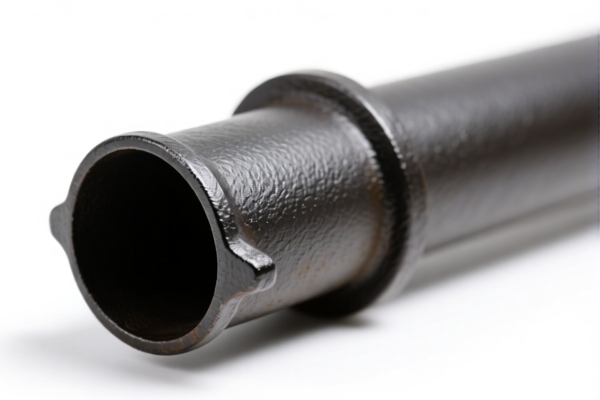
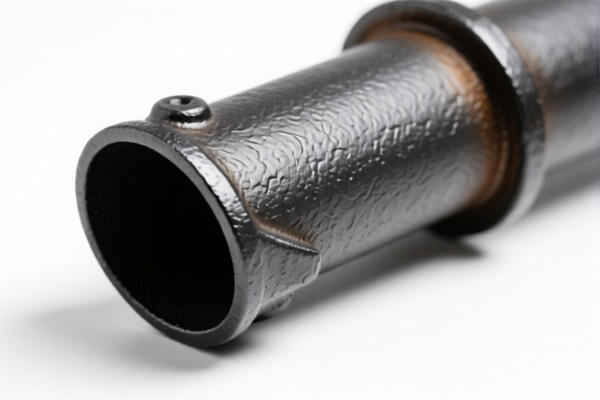
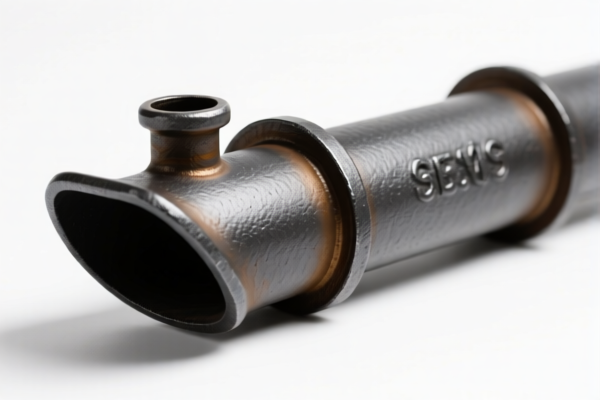
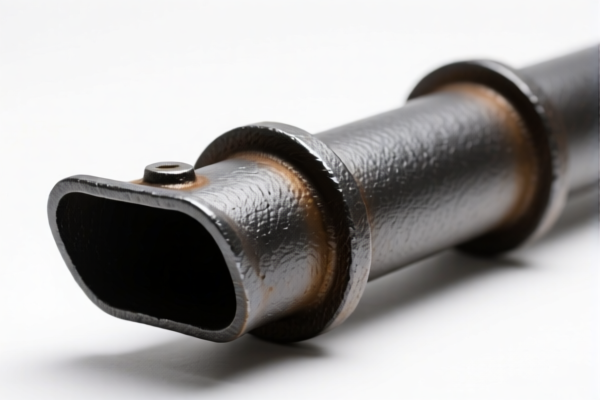
AI Analysis
🚗 Exhaust Systems & Mufflers (Auto Parts)
🌐 HS Code Reference & Clearance Guide | 2026 Latest Tariff Analysis | Professional Customs Strategy
📌 I. Product Definition & Classification: What Exactly Is an "Exhaust System"?
An exhaust system is a critical component of automotive engineering, designed to route combustion gases away from the engine, reduce noise, and minimize environmental impact. In international trade, classification depends heavily on function and material structure:
1. Functional Classification (Mufflers/Resonators): Components primarily designed to reduce noise. These are often classified under specific automotive parts chapters. 2. Structural Classification (Pipes/Manifolds): Metal tubes or joints made of steel/iron. If the primary characteristic is the material and joint type (e.g., welded fittings), they may fall under metal tubing or fittings chapters.
⚠️ Key Distinction:
- If the item is a muffler or resonator (noise reduction focus) → It falls under Chapter 87 (Vehicle Parts).
- If the item is a metal pipe joint or welded fitting (structure/material focus) → It falls under Chapter 73 (Articles of Iron or Steel).
📦 II. HS Code Classification Details (2026 Latest Tariff Authority Comparison)
| HS Code | Product Description | Applicable Scenario | Tax Rate (China Origin to US) |
|---|---|---|---|
8708.92.75.00 |
Other parts and accessories of motor vehicles: Mufflers and exhaust pipes, other | Generic exhaust systems, mufflers not specifically listed elsewhere; "Catch-all" category for exhaust components | 37.5% |
7307.93.30.40 |
Iron or steel tube or pipe fittings: Other, welded | Metal pipes, welded exhaust manifolds, or steel fittings where material/structure is the defining feature | 91.2% |
8708.92.50.00 |
Other parts and accessories of motor vehicles: Parts of silencers (mufflers) and exhaust pipes | Specific components dedicated to silencing (mufflers), clearly defined as automotive accessories | 37.5% |
🔍 Key Reminder:
-8708.92.xx.xxis generally the preferred category for complete exhaust systems or mufflers because they are specifically designed for vehicles.
-7307.93.30.40is a high-risk/high-cost classification. It applies if customs authorities view the item primarily as an industrial metal fitting rather than an automotive part. The tax burden is significantly higher.
💰 III. 2026 Latest Tariff Rate Breakdown (Including Surtaxes & Policy Add-ons)
✅ Applicable Country: United States (US)
✅ Origin: China (CN)
✅ Effective Date: Ongoing (Includes Section 301 and Section 122 measures)
🎯 1. 8708.92.75.00 & 8708.92.50.00 — Automotive Exhaust Parts
| Item | Content |
|---|---|
| Base Duty Rate | 2.5% (Ad valorem) |
| Section 301 Surtax | +25.0% (On Chinese goods) |
| Section 122 Duty | +10.0% (Additional duty on certain goods) |
| Total Duty Rate | 37.5% |
| Tax Calculation | CIF Value × 37.5% |
| De Minimis Eligibility | ❌ NO (Not eligible for low-value shipment exemption due to high total duty) |
| Legal Basis Path | HTSUS:8708.92.75.00 / 8708.92.50.00 → Section 301 Footnote 9903.88.01 → Section 122 Authority |
📌 Explanation:
- Base Rate (2.5%): Standard duty for most automotive parts under Chapter 87.
- Section 301 (+25%): Imposed by the U.S. Trade Representative on Chinese imports.
- Section 122 (+10%): A specific duty added for certain categories to protect domestic industries.
- Total: 37.5%. This is a moderate-to-high tariff, but significantly lower than the steel fitting classification.
🎯 2. 7307.93.30.40 — Steel/Iron Pipe Fittings
| Item | Content |
|---|---|
| Base Duty Rate | 6.2% |
| Section 301 Surtax | +25.0% |
| Section 122 Duty | +10.0% |
| Steel/Aluminum/Copper Surcharge | +50.0% (Specific additional tariff for steel products under recent trade actions) |
| Total Duty Rate | 91.2% |
| Tax Calculation | CIF Value × 91.2% |
| De Minimis Eligibility | ❌ NO |
| Legal Basis Path | HTSUS:7307.93.30.40 → Section 301 → Section 122 → Steel Product Surcharge (50%) |
📌 Warning:
- The 50% steel surcharge is the critical differentiator here. If classified as steel fittings, the tax burden more than doubles.
- This classification is often triggered if the product is shipped as loose metal components without clear automotive assembly context.
🛠️ IV. Customs Clearance Practical Advice (Field Guide to Avoid Pitfalls)
✅ 1. Documentation Checklist (Mandatory)
| Document | Required? | Description |
|---|---|---|
| ✅ Product Specification Sheet | ✔️ | Must detail: Function (noise reduction vs. gas routing), Material (Steel/Aluminum/Stainless), Dimensions. |
| ✅ Technical Drawing | ✔️ | Show if it includes resonators, mufflers, or is just a pipe. |
| ✅ Product Photos | ✔️ | Clear images of labels, welds, and connection points. |
| ✅ Commercial Invoice | ✔️ | Description should clearly state "Automotive Exhaust System" or "Muffler for Vehicle," NOT just "Steel Pipe." |
| ✅ Packing List | ✔️ | List items as complete units. Do not separate mufflers from pipes if they are sold as a kit. |
✅ 2. Declaration Strategy (Key Mantras)
🔥 "Function Rules, Material Follows; Avoid Steel Trap, Save Half the Cost!"
| Scenario | Correct Declaration | Wrong Declaration |
|---|---|---|
| Complete Exhaust/Muffler | 8708.92.75.00 or 8708.92.50.00 |
Declare as "Metal Fittings" → 91.2% |
| Loose Steel Pipe (Industrial Use) | 7307.93.30.40 |
Declare as "Auto Part" → Misclassification risk |
| Exhaust Manifold (Automotive) | 8708.92.75.00 (if general) |
Declare as "Pipe Fitting" → 91.2% |
💡 Tip:
- Always emphasize the automotive application in the description.
- Use terms like "Muffler," "Silencer," "Exhaust Pipe for Vehicles" instead of generic "Steel Pipe" or "Tube Fitting."
- If the product is a complete system, declare it as such. Do not split into pipes and mufflers to avoid higher combined duties.
✅ 3. Special Handling for Steel Components
| Situation | Handling Advice |
|---|---|
| OEM Replacement Parts | Provide OEM part numbers and vehicle compatibility list to prove automotive use. |
| Aftermarket Mufflers | Clearly label as "Automotive Muffler" on invoice and packing slip. |
| Loose Pipes | If not part of a kit, be prepared for potential scrutiny. Consider if they can be grouped with other auto parts to justify Chapter 87. |
🌍 V. Global Market Comparison (2026 Latest)
| Country/Region | Recommended HS Code | Estimated Duty (China Origin) | Certification/Notes |
|---|---|---|---|
| 🇺🇸 USA | 8708.92.75.00 / 8708.92.50.00 |
37.5% | Strict Section 301/122 enforcement. Avoid 7307 classification. |
| 🇨🇳 China | 8708.92.75.00 |
~5-10% | Low duty, but VAT applies. |
| 🇪🇺 EU | 8708.92.00 |
0-4.5% | Generally lower tariffs; no US-style surcharges. |
| 🇨🇦 Canada | 8708.92.00 |
0% (CUSMA if eligible) | Check origin rules for free trade benefits. |
📌 Conclusion:
- USA is the most expensive market for Chinese exhaust parts due to the 37.5% effective rate (and 91.2% if misclassified).
- Misclassification as steel fittings (7307) is a critical error leading to a 91.2% tax burden.
- Correct classification under Chapter 87 is essential for cost control.
📌 VI. Common Errors & Pitfalls (Lessons Learned)
❌ Error 1: Declaring "Exhaust Pipes" as "Steel Fittings" (7307.93.30.40)
👉 Consequence: Tax jumps from 37.5% to 91.2%. Loss of profit margin!
❌ Error 2: Declaring "Mufflers" as "General Machinery Parts"
👉 Consequence: Customs may reclassify to 8708, but delay occurs. Ensure accurate description from day one.
❌ Error 3: Splitting a complete exhaust kit into "Pipe" + "Muffler" for separate shipments
👉 Consequence: Higher overall cost due to separate handling and potential misclassification of individual components. Ship as a kit.
✅ Correct Practice:
"Automotive Exhaust Muffler, Stainless Steel, for Model XYZ Car, HS 8708.92.50.00"
🎯 VII. Conclusion: Professional Classification, Cost Control, Efficient Clearance!
🎯 Remember the Mantra:
🔹 "Auto Part Chapter 87, 37.5% Tax Safe. Steel Fitting Chapter 73, 91.2% Tax Hazard!"
🔹 "HS Code Determines Profit; Misclassification Costs Half Your Margin!"
📌 Pro Tip:
- If you are exporting to the US, pre-classify your products with a customs broker.
- Ensure your commercial invoice clearly states "For Use in Motor Vehicles" to support Chapter 87 classification.
- Avoid generic terms like "Pipe" or "Fitting" unless they are genuinely industrial.
📣 Take Action Now:
📞 Consult a licensed customs broker + Provide product diagrams + Apply for Advance Ruling if unsure.
🚀 Let your exhaust systems clear customs smoothly, maximize profit, and drive global success!
✨ Professional Clearance Starts with Accurate Classification!
💼 Every cent of duty saved is pure profit!
Customer Reviews
About HS Code Classification
The Harmonized System (HS) is an internationally standardized nomenclature developed by the World Customs Organization (WCO) to classify traded products. Over 200 countries use the HS system as the basis for customs tariffs, trade statistics, and import/export regulations.
Each HS code follows a hierarchical structure:
- Chapter (2 digits) — Broad category of goods (e.g., Chapter 84: Machinery and Mechanical Appliances)
- Heading (4 digits) — More specific grouping within the chapter
- Subheading (6 digits) — Internationally standardized breakdown, used by all WCO member countries
- National subdivisions (8-10 digits) — Country-specific extensions for further classification, such as US HTSUS 10-digit codes
Correct HS code classification is essential for smooth customs clearance, accurate duty payment, and compliance with trade regulations. Misclassification can lead to customs delays, overpayment of duties, or penalties.
When importing from CN to US, the applicable tariff rates may include:
- Most-Favored-Nation (MFN) rate — The standard duty rate applied to WTO members
- General rate — Applied to countries without trade agreements
- Trade remedy duties — Additional tariffs such as Section 301 (anti-dumping), Section 232 (national security), or countervailing duties
The information provided on this page is for reference purposes only. For official classification, please consult with your local customs authority or a licensed customs broker.