Exhaust Tip
CN → US| HS Code | Tariff Rate | Origin | Destination | Doc |
|---|---|---|---|---|
| 8708927500 | 37.5% | CN | US | Official Doc |
| 8708927000 | 35.0% | CN | US | Official Doc |
Product Images
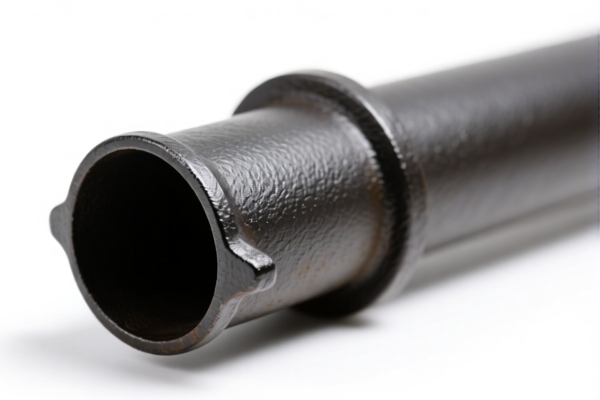
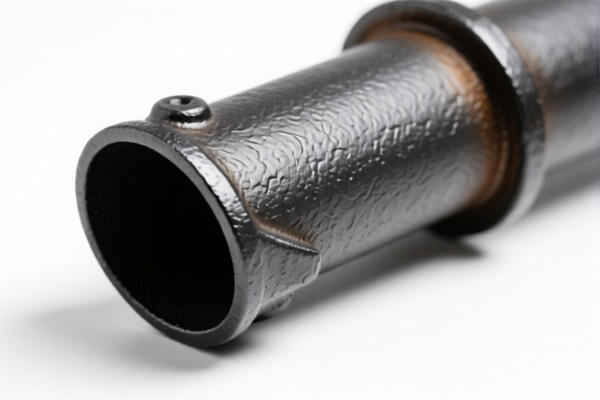
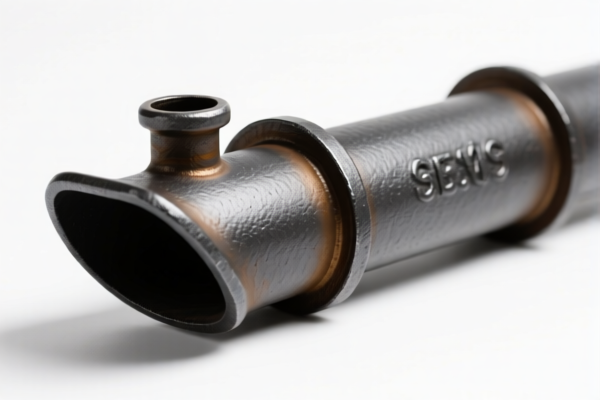
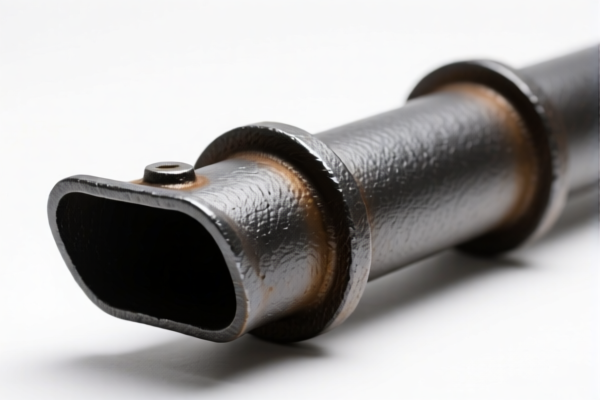
AI Analysis
🏎️ Exhaust Tips (Automotive Exhaust System Components)
🌐 HS Code Reference & Customs Clearance Guide | 2026 Latest Tariff Analysis | Professional-Level Clearance Strategy
📌 I. Product Definition and Classification: Do You Really Understand "Exhaust Tips"?
Exhaust tips, also known as tailpipes or muffler outlets, are the visible end-pieces of a vehicle’s exhaust system. In international trade, they are classified under Chapter 87 (Vehicles), specifically as parts and accessories for motor vehicles falling under headings 8701 to 8705.
Crucially, the classification depends entirely on the material composition:
- Standard/Other Parts: Most exhaust tips made of stainless steel, aluminum, or carbon fiber (non-cast) are classified as "Other parts."
- Cast Iron Parts: Exhaust tips specifically made of cast iron are classified separately under "Of cast iron."
⚠️ Key Distinction Point:
- If the product is made of stainless steel, aluminum, titanium, or carbon fiber → It falls under "Other parts" → HS 8708.92.75.00
- If the product is made of cast iron (heavy, rough finish, typically for heavy-duty or industrial vehicles) → It falls under "Of cast iron" → HS 8708.92.70.00
📦 II. HS Code Classification Details (2026 Latest Tariff Authority Comparison)
| HS Code | Product Description | Applicable Scenario | Material Requirement |
|---|---|---|---|
8708.92.75.00 |
Other parts of mufflers/exhaust pipes: Other: For other vehicles: Other | Stainless steel tips, aluminum tips, carbon fiber tips, chrome-plated steel tips | ✅ Non-cast materials (Stainless, Al, Carbon Fiber, etc.) |
8708.92.70.00 |
Other parts of mufflers/exhaust pipes: Other: For other vehicles: Of cast iron | Heavy-duty truck exhaust tips, industrial vehicle exhaust outlets | ✅ Cast Iron Only |
🔍 Key Reminder:
- Do NOT classify stainless steel exhaust tips under "Cast Iron" just because they are metal. The specific material determines the code. - If the tip is part of a complete muffler unit, ensure it is declared as a part if sold separately. If sold as a complete unit, the entire unit may be classified differently, but this guide focuses on tips as parts/accessories. - Exhaust tips for cars (8703) vs. trucks/buses (8704/8705): Both fall under "For other vehicles" in this context, as long as they are not for heading 8701-8702 (tractors/special purpose).
💰 III. 2026 Latest Tariff Rate Details (Including Additional Taxes, Policy Add-ons)
✅ Applicable Country: United States (US)
✅ Origin: China (CN)
✅ Effective Time: 2025+ (Current Trade Policy)
🎯 1. 8708.92.75.00 —— Other Exhaust Tips (Non-Cast Iron)
| Item | Content |
|---|---|
| Base Tariff Rate | 2.5% (ad valorem) |
| Section 301 Additional Tariff | +25.0% (from USITC Footnote regarding China-origin goods) |
| Total Tax Rate | 27.5% |
| Tax Calculation | CIF Value × 27.5% |
| De Minimis Exemption | ❌ Not Applicable (Section 301 duties apply regardless of value) |
| Legal Basis Path | HTSUS:8708.92.75.00 → Section 301: Footnote 9903.88.01 |
📌 Explanation:
- The 2.5% base rate is the standard Most Favored Nation (MFN) duty for vehicle parts. - The 25% additional tariff is imposed under Section 301 of the Trade Act of 1974 against China-origin goods. - Total Cost Impact: For a $1,000 shipment of stainless steel exhaust tips, the total duty is $275. - No Exemptions: Unlike some consumer goods, vehicle parts under this code do not qualify for the $800 de minimis exemption when subject to Section 301 tariffs.
🎯 2. 8708.92.70.00 —— Exhaust Tips (Of Cast Iron)
| Item | Content |
|---|---|
| Base Tariff Rate | 0.0% |
| Section 301 Additional Tariff | 0.0% |
| Total Tax Rate | 0.0% |
| Tax Calculation | $0 |
| De Minimis Exemption | N/A (Already duty-free) |
| Legal Basis Path | HTSUS:8708.92.70.00 |
📌 Explanation:
- Cast iron exhaust parts are classified under a different subheading that enjoys a duty-free status. - No Additional Tariffs: Unlike stainless steel tips, cast iron exhaust components are not subject to the 25% Section 301 tariff in this specific subheading. - Strategic Note: This creates a significant tax advantage for cast iron parts, but these are rare for consumer vehicles (usually only for heavy trucks).
🛠️ IV. Customs Clearance Practical Advice (Field Pitfall Avoidance Guide)
✅ 1. Preparation Checklist (Missing Documents = Delays)
| Document | Required | Explanation |
|---|---|---|
| ✅ Product Specification Sheet | ✔️ | Must clearly state material (e.g., "304 Stainless Steel," "Cast Iron") |
| ✅ Material Certificate | ✔️ | For stainless steel tips, provide proof of grade to avoid misclassification |
| ✅ Product Photos | ✔️ | Show the tip’s structure, finish, and attachment method |
| ✅ Commercial Invoice | ✔️ | Clearly describe as "Exhaust Tip, Stainless Steel" NOT "Muffler" |
| ✅ Packing List | ✔️ | Quantity per box, total weight |
| ✅ Country of Origin Label | ✔️ | Must be marked on the product or packaging as "Made in China" |
✅ 2. Declaration Tips (Key Mantra)
🔥 "Material Defines Code, Cast Iron is Free, Stainless is 27.5%, Don't Guess!"
| Scenario | Correct Declaration | Wrong Practice |
|---|---|---|
| Stainless Steel Tip | 8708.92.75.00 |
Misclassify as 8708.92.70.00 → Audit Risk & Penalty |
| Cast Iron Tip | 8708.92.70.00 |
Overpay 27.5% by using wrong code |
| Complete Muffler Unit | Separate parts code if sold as parts | Combine with tips → Confusion in valuation |
| Carbon Fiber Tip | 8708.92.75.00 |
Misclassify as plastic/chemical product |
✅ 3. Special Case Handling
| Scenario | Handling Advice |
|---|---|
| OEM Custom Tips | Provide client order + design drawings. Ensure material matches HS code description. |
| Chrome-Plated Steel Tips | Classify under 8708.92.75.00 (Stainless/Other). Chrome plating does not change the base material classification for HS purposes in this context. |
| Bundled Sales (Tip + Gasket) | Declare as single item if sold together as a kit. Value should include gasket. |
| Samples | Even for samples, if entering commercial channels, duties apply. Use "Not for Resale" label for true non-commercial samples, but customs may still assess value. |
🌍 V. Global Market Customs Comparison (2026 Latest)
| Country/Region | Recommended HS Code | Tariff | Certification | Notes |
|---|---|---|---|---|
| 🇺🇸 USA | 8708.92.75.00 |
27.5% | No specific cert required for basic parts | High duty due to Section 301 |
| 🇺🇸 USA | 8708.92.70.00 |
0.0% | No specific cert required | Only for cast iron |
| 🇪🇺 EU | 8708.92 |
~5-10% | ECE R6 (Noise/Emissions) | Requires CE marking for roadworthiness |
| 🇨🇳 China | 8708.92 |
~5-10% | CCC (if for certain vehicles) | Import duty on vehicle parts |
| 🇯🇵 Japan | 8708.92 |
~5% | JIS Standards | Strict emissions compliance |
📌 Conclusion:
- USA is the most expensive market for non-cast iron exhaust tips due to the 27.5% total tariff. - EU and Japan have lower base duties but require strict emissions/noise certifications (ECE R6, JIS). - Cast iron tips enjoy a zero-tariff advantage in the US, but are niche products.
📌 VI. Common Mistakes & Pitfall Guide (Lessons Learned)
❌ Mistake 1: Classifying stainless steel exhaust tips under cast iron code to avoid taxes.
👉 Consequence: Customs audit, seizure, fines, and back-tariffs. Do not fake material description.
❌ Mistake 2: Declaring "Exhaust Muffler" when the product is only a Tip.
👉 Consequence: Incorrect valuation, potential duty evasion accusations. Be precise: "Exhaust Tip, Part of Exhaust System."
❌ Mistake 3: Ignoring Section 301 for China-origin goods.
👉 Consequence: Unexpected $27.5% charge at border. Plan cost structure accordingly.
❌ Mistake 4: Mixing cast iron and stainless tips in one shipment without clear labeling.
👉 Consequence: Customs may classify the entire shipment under the highest duty rate or demand separate entry.
✅ Correct Practice:
"Exhaust Tailpipe Tip, 304 Stainless Steel, 3" Inlet, 4" Outlet, Chrome Finish, Model XYZ, Made in China"
🎯 VII. Conclusion: Precision Classification, Cost Optimization
🎯 Remember the Mantra:
🔹 "Cast Iron = Free, Stainless = 27.5% (US)."
🔹 "Material Matters More Than Appearance."
🔹 "Declare Accurately, Avoid Audits."
📌 Tips:
- If your exhaust tips are originating from Vietnam, Mexico, or Thailand, you may qualify for preferential tariffs (lower or 0% under USMCA or FTAs), avoiding the 25% Section 301 tax.
- For high-volume shipments, consider Advance Rulings from US CBP to confirm classification.
- Always verify material certifications with your supplier.
📣 Immediate Action:
📞 Contact a licensed customs broker + Provide product material specs + Apply for HS Code Advance Ruling
🚀 Ensure smooth clearance, avoid delays, and optimize your landed cost!
✨ Professional Clearance Starts with Accurate Classification!
💼 Every percent of duty saved is pure profit!
Customer Reviews
About HS Code Classification
The Harmonized System (HS) is an internationally standardized nomenclature developed by the World Customs Organization (WCO) to classify traded products. Over 200 countries use the HS system as the basis for customs tariffs, trade statistics, and import/export regulations.
Each HS code follows a hierarchical structure:
- Chapter (2 digits) — Broad category of goods (e.g., Chapter 84: Machinery and Mechanical Appliances)
- Heading (4 digits) — More specific grouping within the chapter
- Subheading (6 digits) — Internationally standardized breakdown, used by all WCO member countries
- National subdivisions (8-10 digits) — Country-specific extensions for further classification, such as US HTSUS 10-digit codes
Correct HS code classification is essential for smooth customs clearance, accurate duty payment, and compliance with trade regulations. Misclassification can lead to customs delays, overpayment of duties, or penalties.
When importing from CN to US, the applicable tariff rates may include:
- Most-Favored-Nation (MFN) rate — The standard duty rate applied to WTO members
- General rate — Applied to countries without trade agreements
- Trade remedy duties — Additional tariffs such as Section 301 (anti-dumping), Section 232 (national security), or countervailing duties
The information provided on this page is for reference purposes only. For official classification, please consult with your local customs authority or a licensed customs broker.