Expanded Polystyrene Board
CN → US| HS Code | Tariff Rate | Origin | Destination | Doc |
|---|---|---|---|---|
| 9503000073 | 10.0% | CN | US | Official Doc |
| 3926909989 | 22.8% | CN | US | Official Doc |
| 9503000071 | 10.0% | CN | US | Official Doc |
| 3926903000 | 39.2% | CN | US | Official Doc |
| 9506290030 | 17.5% | CN | US | Official Doc |
Product Images
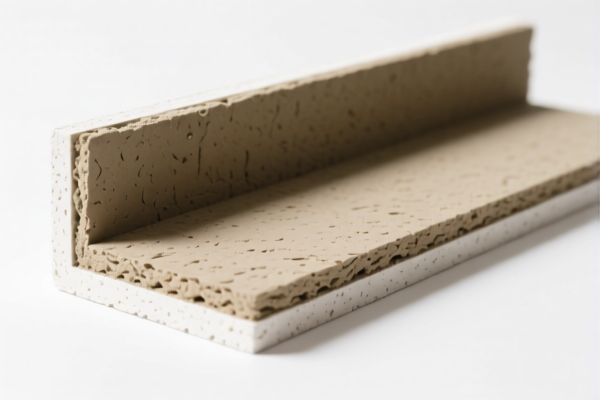
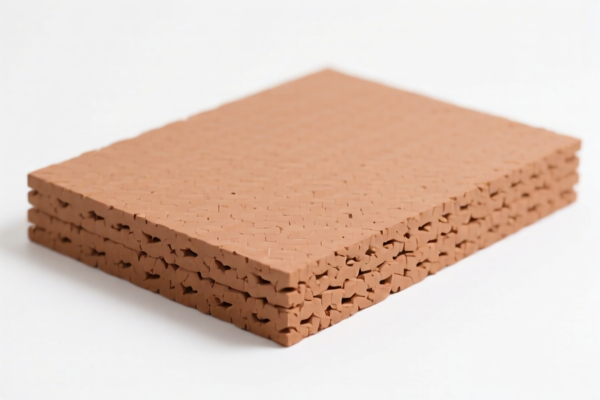
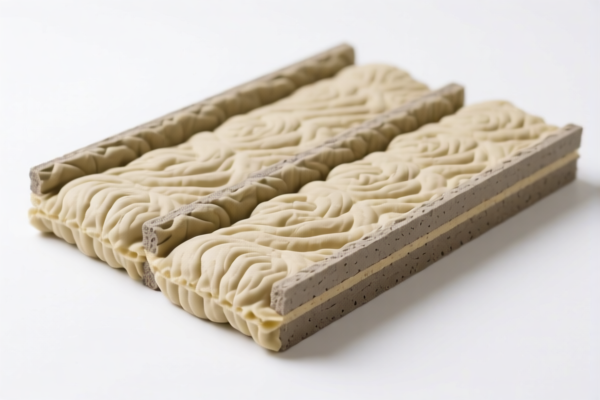
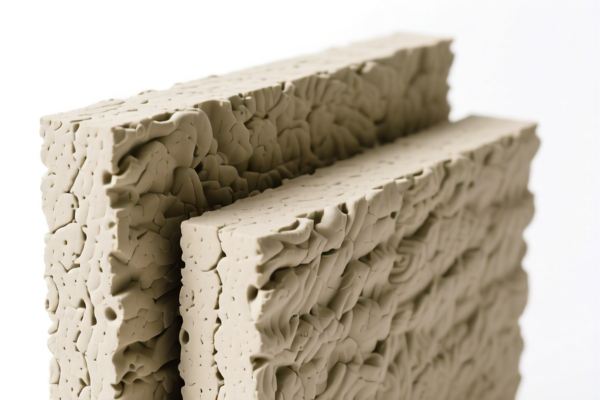
AI Analysis
🏄♂️ Expanded Polystyrene Board (EPS Surfboard Core/Slab)
🌐 HS Code Reference & Customs Clearance Guide | 2026 Latest Tariff Analysis | Professional Clearance Strategy
📌 I. Product Definition & Classification: What is an "EPS Board"?
An Expanded Polystyrene (EPS) Board is a lightweight, rigid foam material widely used in the manufacturing of surfboards, kiteboards, and other recreational water sports equipment. In international trade, the classification depends heavily on its intended use, form, and material composition.
While EPS is a plastic (polymer), the final product’s nature determines whether it is taxed as a Toy/Recreational Item or a Plastic Article. This distinction is critical because of the significant tariff differences under current US trade policies (Section 301 & IEEPA).
⚠️ Key Classification Dilemma:
- Is it a finished recreational item (Surfboard/Toy)? → Lower Base Tariff, but subject to specific Section 122 duties.
- Is it a generic plastic product? → Higher Base Tariff + Section 301 + Section 122 duties.
- Crucial Note: The summary data indicates conflicting classifications depending on how the "board" is defined (e.g., as a "surfboard" vs. "plastic article"). Below are the specific HS Codes provided in the data.
📦 II. HS Code Classification Matrix (Based on Provided Data)
| HS Code | Product Description | Material/Form | Primary Use | Classification Logic |
|---|---|---|---|---|
9503.00.00.73 |
Toy/Model Class | Foam, Surfboard shape | Entertainment | Classified as a toy or model due to foam material and recreational shape. |
3926.90.99.89 |
Plastic Articles | Foam/Synthetic material | Other plastic制品 | Classified as a generic plastic article, not specific to sports or toys. |
9503.00.00.71 |
Sports/Toy Board | Lightweight Foam | Entertainment | Similar to 73, but specific sub-category for recreational board products. |
3926.90.30.00 |
Plastic Ship Fittings | Foam/Plastic | Recreational Boat Accessories | Classified under plastic articles for boats/ship equipment. |
9506.29.00.30 |
Surfboard (Sports Equipment) | Foam | Surfing Sports | Classified as a specific sporting good (surfboard), distinct from toys. |
🔍 Critical Distinction:
- HS 9503/9506 Series: Generally regarded as sports equipment or toys. These often have 0% Base Tariff but are subject to Section 122 duties.
- HS 3926 Series: Regarded as general plastics. These have high Base Tariffs (4.2%–5.3%) PLUS Section 301 (7.5%–25%) AND Section 122 duties.
💰 III. 2026 Latest Tariff Rate Breakdown (Including Surcharges)
✅ Applicable Country: United States (US)
✅ Origin: China (CN) (Implied by "122 Clause" and typical Section 301 context)
✅ Effective Time: Current trade war policies active
🎯 1. 9503.00.00.73 & 9503.00.00.71 —— Recreational Foam Boards (Toy/Model Class)
| Item | Details |
|---|---|
| Base Tariff | 0.0% |
| Section 301 Surcharge | 0.0% (Exempt from standard 301 list for these specific toy/sub-category codes) |
| Section 122 Duty | +10% |
| Total Tax Rate | 10.0% |
| Tax Detail | Base 0% + Sec 301 0% + Sec 122 10% |
| Legal Basis | Classified under Chapter 95 (Toys/Sporting Goods). Section 122 applies to certain recreational items. |
📌 Interpretation:
- This is the most cost-effective classification if the board can be legally defined as a "Toy" or "Recreational Model" rather than a "Plastic Article."
- Savings: Significant compared to plastic classifications.
🎯 2. 9506.29.00.30 —— Surfboards (Sporting Equipment)
| Item | Details |
|---|---|
| Base Tariff | 0.0% |
| Section 301 Surcharge | +7.5% |
| Section 122 Duty | +10% |
| Total Tax Rate | 17.5% |
| Tax Detail | Base 0% + Sec 301 7.5% + Sec 122 10% |
| Legal Basis | Chapter 95 (Sporting Goods), specifically for surfboards. |
📌 Interpretation:
- This is the standard classification for functional surfboards.
- Unlike the toy classification (73/71), this incurs a 7.5% Section 301 surcharge.
- Total Cost: 17.5%, which is lower than plastic articles but higher than toy models.
🎯 3. 3926.90.99.89 —— Plastic Articles (General)
| Item | Details |
|---|---|
| Base Tariff | 5.3% |
| Section 301 Surcharge | +7.5% |
| Section 122 Duty | +10% |
| Total Tax Rate | 22.8% |
| Tax Detail | Base 5.3% + Sec 301 7.5% + Sec 122 10% |
| Legal Basis | Chapter 39 (Plastics), Other articles of plastics. |
📌 Interpretation:
- High Risk: This classification treats the EPS board as a generic plastic product.
- Why it happens: If the board is imported as a raw slab, or if documentation fails to prove it is a finished sports item/toy, customs may default to Chapter 39.
- Cost Penalty: 22.8% is significantly higher than the sports/toy categories.
🎯 4. 3926.90.30.00 —— Plastic Ship/Boat Fittings
| Item | Details |
|---|---|
| Base Tariff | 4.2% |
| Section 301 Surcharge | +25.0% (High Penalty Rate) |
| Section 122 Duty | +10% |
| Total Tax Rate | 39.2% |
| Tax Detail | Base 4.2% + Sec 301 25% + Sec 122 10% |
| Legal Basis | Chapter 39, specifically for articles used in ships/boats. |
📌 Interpretation:
- Avoid This Code: This is the most expensive classification.
- Reason: Certain plastic articles associated with watercraft are subject to the 25% Section 301 penalty rate (not just 7.5%).
- Risk: If customs views the EPS board as a "fender," "flotation device," or "boat accessory" rather than a surfboard, this rate applies.
🛠️ IV. Customs Clearance Practical Advice (Pitfall Avoidance Guide)
✅ 1. Documentation Requirements (Must-Haves)
| Document | Required? | Purpose |
|---|---|---|
| ✅ Product Specification Sheet | ✔️ | Must clearly state: "EPS Surfboard Core" or "Recreational Foam Board." |
| ✅ Material Composition Certificate | ✔️ | Confirm 100% Expanded Polystyrene (EPS) to rule out composite materials that might trigger "Plastic Articles." |
| ✅ Intended Use Declaration | ✔️ | Explicitly state: "For use in water sports/recreation" or "As a toy/model." Avoid vague terms like "industrial packaging." |
| ✅ Product Photos | ✔️ | Show the board’s shape, fin boxes (if any), and branding. Visual proof supports Chapter 95 classification. |
| ✅ Commercial Invoice | ✔️ | Describe as "Surfboard (Foam)" or "EPS Recreational Board". Do NOT use "Plastic Sheet" or "Polystyrene Slab." |
✅ 2. Classification Strategy (Key Mantras)
🔥 "Define by Use, Not Just Material!"
| Scenario | Recommended HS Code | Why? |
|---|---|---|
| Finished Surfboard (Ready to ride) | 9506.29.00.30 |
Clear sporting good classification. Lower tax than plastic. |
| Surfboard Toy/Model (Small scale, decorative) | 9503.00.00.73 / .71 |
Lowest tax (10%). Requires proof it is a "toy" or "model," not serious sports gear. |
| Raw EPS Slab/Blank (Unshaped) | Risky | Likely to be classified as 3926.90.xxxx unless specifically declared for surfboard manufacturing with supporting documentation. |
| Boat Accessory/Fender | Avoid 3926.90.30.00 |
Highest tax (39.2%). Only use if it is strictly a non-sporting boat part. |
✅ 3. Critical Warnings
- ❌ Never Declare as "Plastic Sheet": This triggers Chapter 39 classification (
3926.90.99.89), leading to a 22.8% tax rate. - ❌ Avoid "Boat Accessory" Language: If your invoice says "marine accessories," customs may assign
3926.90.30.00, resulting in a 39.2% tax rate. - ✅ Leverage Section 122: Note that all classifications listed include a 10% Section 122 duty. This is non-negotiable for these types of goods from China. The battle is for the Base Tariff and Section 301 rates.
🌍 V. Global Market Comparison (2026 Snapshot)
| Market | Preferred HS Code | Est. Total Tax (China Origin) | Notes |
|---|---|---|---|
| 🇺🇸 USA | 9506.29.00.30 |
17.5% | Best balance of legality and cost. |
| 🇺🇸 USA | 9503.00.00.73 |
10.0% | Lowest cost, but risky if product is serious sports equipment. |
| 🇺🇸 USA | 3926.90.99.89 |
22.8% | Avoid. High penalty. |
| 🇺🇸 USA | 3926.90.30.00 |
39.2% | Avoid. Catastrophic penalty. |
| 🇪🇺 EU | 9506.29 |
Varies (0-12%) | No Section 301/122. Depends on EU FTA status. |
| 🇨🇳 China Export | 9506.29 |
0% (Refund) | Export tax policy applies. |
📌 Conclusion for US Importers:
- Aim for Chapter 95 (9506or9503).
- Avoid Chapter 39 (3926) unless the product is unequivocally a generic plastic item.
- The difference between 10% and 39.2% is 29.2% of the CIF value. That is a massive profit margin difference.
📌 VI. Common Mistakes & Lessons Learned (Blood & Tears)
❌ Mistake 1: Declaring "EPS Foam" without specifying "Surfboard."
👉 Result: Customs defaults to 3926.90.99.89 → 22.8% Tax.
👉 Fix: Always include "For Surfboard Use" or "Recreational Board" in the description.
❌ Mistake 2: Using "Marine Equipment" in the invoice.
👉 Result: Customs assigns 3926.90.30.00 → 39.2% Tax.
👉 Fix: Use "Water Sports Equipment" or "Surfing Board." Avoid "Marine" or "Ship Fitting."
❌ Mistake 3: Confusing "Toy" with "Sports Gear."
👉 Result: If you claim 9503 (Toy) but the board is full-size and heavy, customs may challenge it.
👉 Fix: Ensure the product matches the description of a "Toy/Model" (e.g., smaller size, decorative) if using the 10% rate. For real surfboards, use 9506 (17.5%).
✅ Correct Declaration Example:
"Expanded Polystyrene (EPS) Surfboard Blank, Unsanded, For Recreational Water Sports, Model XYZ"
(This supports9506.29.00.30)
🎯 VII. Conclusion: Precision in Classification Saves Thousands
🎯 Remember the Mantra:
🔹 "Sports Toy or Plastic? Choose Wisely!"
🔹 "Chapter 95 is King (10-17%), Chapter 39 is the Enemy (22-39%)!"
🔹 "Never say 'Boat Accessory' if it's a Surfboard!"
📌 Pro Tip:
If you are importing raw EPS slabs for manufacturing, consult a customs broker to see if they can be classified under Chapter 39 but with a lower Section 301 rate, OR if they can be classified as parts of surfboards (9506) if they are specifically shaped. Pre-ruling (Advance Ruling) is highly recommended for high-volume EPS shipments.
📣 Action Plan:
1. Update Invoice: Change descriptions from "Plastic Board" to "Surfboard/Sports Board."
2. Verify Material: Ensure no composite materials trigger 3926.
3. Select HS Code: Use 9506.29.00.30 for authentic surfboards.
4. Budget for 17.5%: Plan for Base 0% + Sec 301 7.5% + Sec 122 10%.
✨ Professional Customs Clearance Starts with Accurate Classification!
💼 Every Percentage Point Saved is Pure Profit!
Customer Reviews
About HS Code Classification
The Harmonized System (HS) is an internationally standardized nomenclature developed by the World Customs Organization (WCO) to classify traded products. Over 200 countries use the HS system as the basis for customs tariffs, trade statistics, and import/export regulations.
Each HS code follows a hierarchical structure:
- Chapter (2 digits) — Broad category of goods (e.g., Chapter 84: Machinery and Mechanical Appliances)
- Heading (4 digits) — More specific grouping within the chapter
- Subheading (6 digits) — Internationally standardized breakdown, used by all WCO member countries
- National subdivisions (8-10 digits) — Country-specific extensions for further classification, such as US HTSUS 10-digit codes
Correct HS code classification is essential for smooth customs clearance, accurate duty payment, and compliance with trade regulations. Misclassification can lead to customs delays, overpayment of duties, or penalties.
When importing from CN to US, the applicable tariff rates may include:
- Most-Favored-Nation (MFN) rate — The standard duty rate applied to WTO members
- General rate — Applied to countries without trade agreements
- Trade remedy duties — Additional tariffs such as Section 301 (anti-dumping), Section 232 (national security), or countervailing duties
The information provided on this page is for reference purposes only. For official classification, please consult with your local customs authority or a licensed customs broker.