Expansion Card
CN → US| HS Code | Tariff Rate | Origin | Destination | Doc |
|---|---|---|---|---|
| 8473301180 | 35.0% | CN | US | Official Doc |
| 8534000020 | 35.0% | CN | US | Official Doc |
| 8542310075 | 10.0% | CN | US | Official Doc |
| 8473302000 | 85.0% | CN | US | Official Doc |
| 8534000040 | 10.0% | CN | US | Official Doc |
Product Images
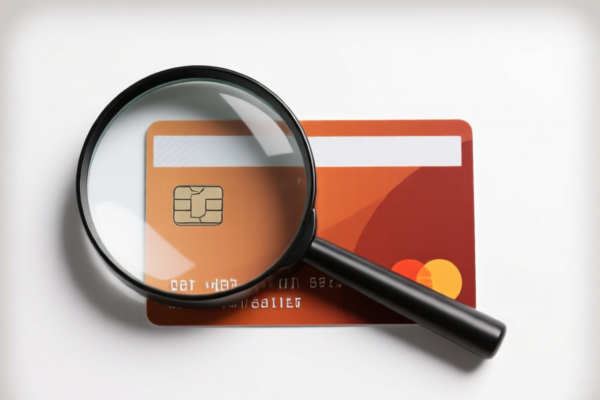
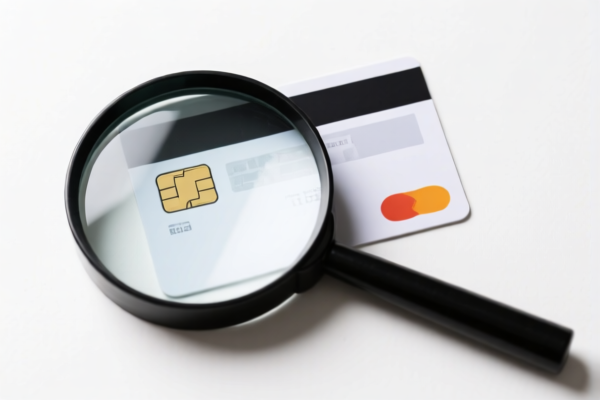
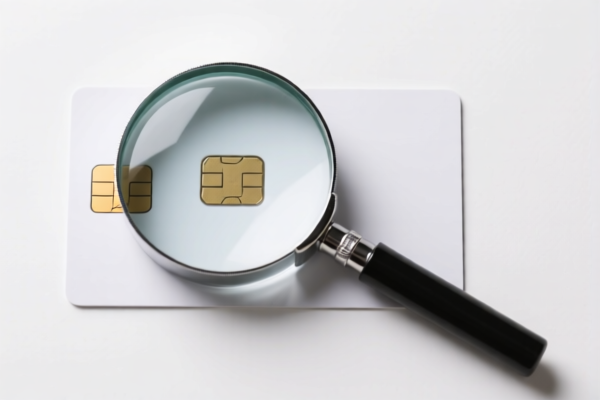

AI Analysis
💳 Expansion Cards (PC Cards / Add-in Cards)
🌐 HS Code Reference & Customs Clearance Guide | 2026 Latest Tariff Analysis | Professional Clearance Strategy
📌 I. Product Definition & Classification: What Exactly is an "Expansion Card"?
In the complex world of electronics trading, "Expansion Card" is a broad, functional term, not a precise technical classification. In international trade, it generally refers to Printed Circuit Board Assemblies (PCBAs) inserted into a host system (like a computer, server, or industrial controller) to add functionality (graphics, network, storage, I/O, etc.).
Critical Distinction for Customs: Customs authorities do not classify based on "what it does" (expansion), but rather "what it is made of" and "how it is structured".
- Scenario A: Simple Passive/Complex Assembly → If it’s primarily a substrate with components, it may be viewed as a Printed Circuit Board Assembly (PCBA) or a Component.
- Scenario B: Functional Integrated Circuit → If it houses complex logic processing chips, it may be viewed as an Integrated Circuit (IC).
- Scenario C: Part of a Machine → If it’s considered a specific part of a larger machine (like a mainframe or specific industrial unit), it might fall under Parts & Accessories.
⚠️ Key Classification Pitfall:
- Misclassifying an Expansion Card as a generic "Part" can lead to massive duty discrepancies (e.g., 85% vs. 10%).
- Failing to distinguish between a standalone IC and a PCBA can trigger incorrect tariff rates (0% + 10% vs. 25% + 10%).
📦 II. HS Code Classification Details (Based on Provided Data)
The following table analyzes the five potential HS Codes provided in the data set for "Expansion Card." Note the significant divergence in tax liability based on the specific interpretation of the card's nature.
| HS Code | Product Description & Logic | Total Tax Rate (China Origin) | Tax Detail Breakdown |
|---|---|---|---|
| 8534.00.00.40 | Printed Circuit Board Assembly (General) Classified as a PCBA with glass-impregnated substrate. Viewed as a "Catch-all" for basic assemblies. |
10.0% | Base: 0.0% Additional: 0.0% Section 301 (122): 10% |
| 8473.30.11.80 | Part of Automatic Data Processing Machines Classified as a component of ADP machines. Material: PCB + Electronic Elements. Not a memory module. |
35.0% | Base: 0.0% Additional: 25.0% Section 301 (122): 10% |
| 8534.00.00.20 | PCBA / Component (Other) Inferred as a PCBA form factor. Treated as a spare part/component category. |
35.0% | Base: 0.0% Additional: 25.0% Section 301 (122): 10% |
| 8542.31.00.75 | Integrated Circuit (Logic Processing) Classified as an electronic component handling logic processing. Treated as an IC under "Other." |
10.0% | Base: 0.0% Additional: 0.0% Section 301 (122): 10% |
| 8473.30.20.00 | Parts & Accessories of ADP Machines Strictly defined as a part/accessory for electronic circuit components. Includes specific metals (Steel/Aluminum/Copper). |
85.0% | Base: 0.0% Additional: 25.0% Section 301 (122): 10% Metal Products Additional: 50% |
🔍 Analysis of Disparity:
- The 10% rate (8534.40 & 8542.75) assumes the card is either a basic PCB assembly or an Integrated Circuit.
- The 35% rate (8473.11 & 8534.20) assumes the card is a part/accessory to a machine subject to a 25% Additional Duty.
- The 85% rate (8473.20) is a critical warning: If the card is deemed a "Part" and contains specific metals, the tax skyrockets due to combined Section 301 and metal-specific duties.
💰 III. 2026 Tariff Rate Explanation (Deep Dive)
✅ Applicable Country: United States (US)
✅ Origin: China (CN)
✅ Effective Date: Post-2025 (Based on Section 301 and IEEPA provisions)
🎯 1. The "Low Tax" Path (10.0%)
Applicable Codes: 8534.00.00.40 | 8542.31.00.75
| Item | Detail |
|---|---|
| Base MFN Rate | 0.0% |
| Section 301 Additional Duty | 0.0% (For 8534/8542 categories in this specific dataset) |
| IEEPA / 122 Clause Surcharge | +10.0% (Specifically applied to Chinese-origin goods in this classification logic) |
| Total Effective Rate | 10.0% |
| Legal Basis | HTSUS Subheadings 8534/8542; IEEPA Provisions |
📌 Interpretation:
This is the most favorable outcome. It requires convincing customs that the expansion card is either:
1. A simple Printed Circuit Board Assembly (8534) without complex machine-specific parts; OR
2. An Integrated Circuit (8542) performing logic operations.
Note: This avoids the 25% Section 301 duty often applied to IT parts.
🎯 2. The "Medium Tax" Path (35.0%)
Applicable Codes: 8473.30.11.80 | 8534.00.00.20
| Item | Detail |
|---|---|
| Base MFN Rate | 0.0% |
| Section 301 Additional Duty | +25.0% (Applied to "Parts of ADP Machines" or specific PCBA components under 301 list) |
| IEEPA / 122 Clause Surcharge | +10.0% |
| Total Effective Rate | 35.0% |
| Legal Basis | HTSUS 8473 (Parts of Machines); USITC Footnotes |
📌 Interpretation:
This is the most common risk for expansion cards. If the card is viewed as a part of an automatic data processing machine (e.g., a graphics card for a server), it attracts the 25% Additional Duty. The extra 10% is likely a specific policy surcharge (122 Clause) for Chinese goods in this category.
🎯 3. The "High Tax" Path (85.0%) – ⚠️ AVOID!
Applicable Code: 8473.30.20.00
| Item | Detail |
|---|---|
| Base MFN Rate | 0.0% |
| Section 301 Additional Duty | +25.0% |
| IEEPA / 122 Clause Surcharge | +10.0% |
| Steel/Aluminum/Copper Additional Duty | +50.0% (Triggered if classified under specific metal product provisions within this heading) |
| Total Effective Rate | 85.0% |
| Legal Basis | HTSUS 8473; Special Metal Product Tariffs |
📌 Interpretation:
DO NOT USE THIS CODE unless absolutely necessary. The 85% rate includes a massive 50% surcharge for steel/aluminum/copper products. If your expansion card has significant metal shielding or components and is misclassified here, you will pay nearly double the duty of the 35% category.
🛠️ IV. Customs Clearance Practical Advice
✅ 1. Documentation Checklist (Critical)
| Document | Requirement | Reason |
|---|---|---|
| Technical Specification Sheet | ✔️ Must include: Substrate material (FR-4?), IC type, Logic function, Metal content. | To prove if it’s a PCBA (8534) or IC (8542). |
| Circuit Diagram / Block Diagram | ✔️ Essential. Shows if it’s a passive assembly or active logic processor. | Differentiates 10% vs 35%+ categories. |
| Bill of Materials (BOM) | ✔️ List all components. Highlight if it contains significant Steel/Aluminum. | Avoids the 85% "Metal Product" trap. |
| Commercial Invoice | ✔️ Description: "Expansion Card, Model XYZ, for Computer Server" OR "Printed Circuit Board Assembly". | Precision in description aids classification. |
| Origin Declaration | ✔️ Certify China Origin. | Triggers Section 301/122 surcharges. |
✅ 2. Classification Strategy (How to Choose)
| Scenario | Recommended HS Code | Strategy |
|---|---|---|
| Simple Passive/Connectivity Card (e.g., I/O board, basic interface) |
8534.00.00.40 (10%) | Argue it is a PCBA (Printed Circuit Board Assembly) without complex logic. |
| Graphics/Network/Logic Card (e.g., GPU, FPGA, Network Adapter) |
8542.31.00.75 (10%) | Argue it is primarily an Integrated Circuit (IC) performing logic/data processing. |
| Standard PC Part (e.g., Standard RAM-less expansion card) |
8473.30.11.80 (35%) | If forced to classify as a "Part of ADP," accept the 25% surcharge. |
| Metal-Rich/Heavy Component | AVOID 8473.30.20.00 | Do not classify as "Part with Metal" unless you have no other option. The 50% metal tax is fatal to profit. |
🔥 Golden Rule:
"If it processes data, it’s an IC (8542). If it just connects, it’s a PCBA (8534). If it’s a 'part of a machine,' it’s 35%. Avoid 'Metal Parts' at all costs!"
✅ 3. Special Considerations
- 122 Clause Tariff: Note that all categories in the data include a 10% surcharge labeled "122条款关税". This is likely a specific trade policy surcharge (possibly related to Section 301 updates or IEEPA) that applies to all Chinese-origin electronics in this context. Do not ignore it in cost calculations.
- Pre-Ruling Application: Given the spread from 10% to 85%, it is highly recommended to file an Advance Ruling (Pre-Ruling) with US Customs and Border Protection (CBP) before shipping high-volume orders. Provide technical specs to get a binding classification.
- Avoid "Part" Language: In invoices, avoid vague terms like "Part for Computer." Use specific technical terms: "Printed Circuit Board Assembly" or "Graphics Processing Unit Card."
🌍 V. Global Market Comparison (Quick Reference)
| Market | Typical HS for Expansion Card | Est. Duty (China Origin) | Notes |
|---|---|---|---|
| 🇺🇸 USA | 8542.31 or 8534.00 |
10% - 35% | Subject to Section 301 + 122 Clause. High volatility. |
| 🇨🇳 China | 8542.31 or 8534.00 |
0% - 10% | Generally lower base rates, no Section 301. |
| 🇪🇺 EU | 8542.31 or 8534.00 |
0% | Most IT components enter at 0% MFN. |
| 🇬🇧 UK | 8542.31 or 8534.00 |
0% | Post-Brexit, similar to EU for electronics. |
📌 Conclusion:
The USA is the most complex market for Expansion Cards due to the layered tariff structure (Base + 301 + 122 + Metal). Precise classification is not just a legal requirement—it is a profit-saving measure.
📌 VI. Common Mistakes & Pitfalls
❌ Mistake 1: Calling everything an "Expansion Card" on the invoice.
👉 Result: Customs will choose the highest applicable rate (potentially 35% or 85%) or delay the shipment for review.
❌ Mistake 2: Ignoring the "122 Clause" 10% Surcharge.
👉 Result: Underestimating landed cost by 10%. This 10% applies to all codes in the provided data.
❌ Mistake 3: Classifying a Logic Card as a "Part of Machine" (8473).
👉 Result: Jumping from 10% to 35%. You can save 25% by arguing it’s an Integrated Circuit (8542) or PCBA (8534).
❌ Mistake 4: Overlooking Metal Content.
👉 Result: If classified under 8473.30.20.00, you face an extra 50%. Ensure the description doesn’t emphasize "Steel/Aluminum Shielding" if you can classify it as PCBA/IC.
✅ Correct Declaration Example:
"Expansion Card, Model XYZ, Printed Circuit Board Assembly with Integrated Logic Chips, for Data Processing Equipment. HS: 8542.31.00.75"
🎯 VII. Final Recommendation
🎯 Strategy for Importers:
1. Technical Review: Determine if your card is better described as an IC (8542) or PCBA (8534). Aim for these to secure the 10% rate.
2. Avoid "Parts": Do not use 8473.30 unless you have no choice, and absolutely avoid 8473.30.20.00 (85%) due to metal surcharges.
3. Calculate Total Landed Cost: Include Base (0%) + Additional (0-25%) + 122 Clause (10%).
4. Apply for Pre-Ruling: For large shipments, submit technical docs to CBP for a binding ruling.
📞 Action Item:
Contact your customs broker with the BOM and Block Diagram. Ask specifically:
"Can we classify this as 8542.31 (IC) or 8534.00 (PCBA) to avoid the 25% Section 301 Additional Duty?"
✨ Professional Clearance Starts with Precise Classification!
💼 Save 25-75% in Duties by Choosing the Right HS Code!
Customer Reviews
About HS Code Classification
The Harmonized System (HS) is an internationally standardized nomenclature developed by the World Customs Organization (WCO) to classify traded products. Over 200 countries use the HS system as the basis for customs tariffs, trade statistics, and import/export regulations.
Each HS code follows a hierarchical structure:
- Chapter (2 digits) — Broad category of goods (e.g., Chapter 84: Machinery and Mechanical Appliances)
- Heading (4 digits) — More specific grouping within the chapter
- Subheading (6 digits) — Internationally standardized breakdown, used by all WCO member countries
- National subdivisions (8-10 digits) — Country-specific extensions for further classification, such as US HTSUS 10-digit codes
Correct HS code classification is essential for smooth customs clearance, accurate duty payment, and compliance with trade regulations. Misclassification can lead to customs delays, overpayment of duties, or penalties.
When importing from CN to US, the applicable tariff rates may include:
- Most-Favored-Nation (MFN) rate — The standard duty rate applied to WTO members
- General rate — Applied to countries without trade agreements
- Trade remedy duties — Additional tariffs such as Section 301 (anti-dumping), Section 232 (national security), or countervailing duties
The information provided on this page is for reference purposes only. For official classification, please consult with your local customs authority or a licensed customs broker.