Exposed and Developed Wide Format Film
CN → US| HS Code | Tariff Rate | Origin | Destination | Doc |
|---|---|---|---|---|
| 3707903290 | 35.0% | CN | US | Official Doc |
| 3702440160 | 38.7% | CN | US | Official Doc |
| 3701300000 | 35.0% | CN | US | Official Doc |
| 3702420100 | 38.7% | CN | US | Official Doc |
| 3701996060 | 35.0% | CN | US | Official Doc |
Product Images

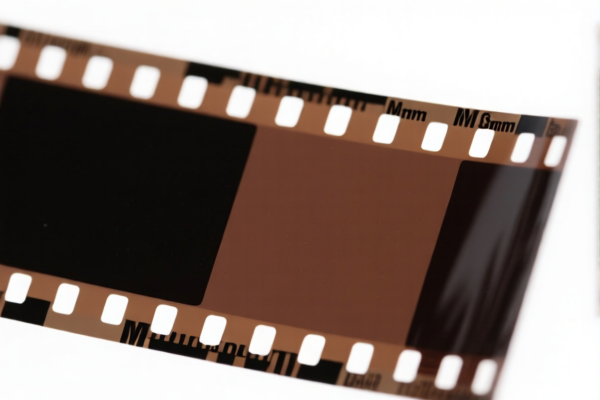

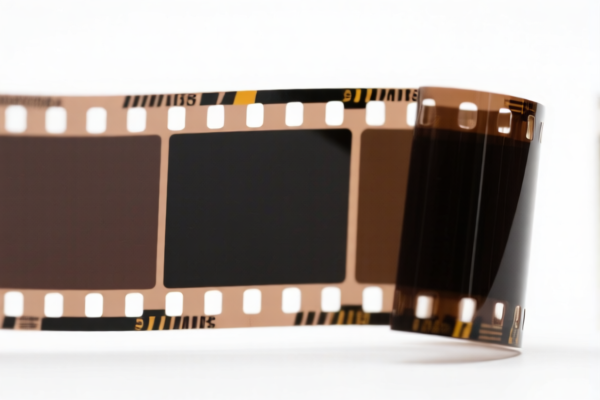
AI Analysis
🎞️ Exposed and Developed Wide Format Film (摄影感光材料/已曝光显影宽幅胶片)
🌐 HS Code Reference & Customs Clearance Guide | 2026 Latest Tariff Analysis | Professional Clearance Strategy
📌 I. Product Definition: What is "Exposed and Developed Wide Format Film"?
In the international trade of photographic materials, "Exposed and Developed Wide Format Film" refers to photographic film that has already undergone exposure and chemical development. Unlike blank film, this product contains a fixed image and does not require further processing by the end-user. It is primarily used for archival purposes, large-format photography, scientific imaging, or as raw material for further processing.
⚠️ Key Distinction:
- Blank/Unexposed Film: Classified under Chapter 3702 (Photographic film in rolls, unexposed).
- Exposed & Developed Film: Classified under Chapter 3707 (Prepared photographic sensitizer, other than films of heading 3706) or 3701/3702 depending on physical form (flat vs. roll) and material nature.
- Crucial Point: Once developed, the "sensitizer" is no longer active in the same way as blank film, but customs often still classifies it based on its physical form (flat plate vs. roll) and material composition under Chapter 37.
📦 II. HS Code Classification Details (2026 Latest Tariff Authority Comparison)
Based on the provided data, the classification of "Exposed and Developed Wide Format Film" depends heavily on its physical shape (flat plate vs. roll) and width.
| HS Code | Product Description | Application Scenario | Physical Form | Total Tax Rate |
|---|---|---|---|---|
3707.90.32.90 |
Prepared Photographic Sensitizers (Other) | Developed film treated as "other photographic chemical preparations" | Any | 35.0% |
3702.44.01.60 |
Unexposed Photographic Film of Other Single-Weight | Note: Data implies this code is considered, but description says "Unexposed". If strictly "Developed", this might be misclassified, but included for comparison. | Roll >105mm | 38.7% |
3701.30.00.00 |
Flat Photographic Plates (Other) | Flat sheet developed film, size >255mm | Flat Plate | 35.0% |
3702.42.01.00 |
Photographic Film of Other Single-Weight | Roll film >610mm wide | Roll >610mm | 38.7% |
3701.99.60.60 |
Other Flat Photographic Plates | Flat film, non-paper/non-textile material | Flat Plate | 35.0% |
🔍 Important Reminder:
- 3707.90.32.90 is a broad category for "other prepared photographic sensitizer," which can cover developed films that don't fit specific flat/roll definitions or are treated as chemical preparations.
- 3701.xxxx codes are specifically for Flat Plates. If your wide format film is in a sheet/flat format and >255mm, use this.
- 3702.xxxx codes are for Rolls. If your film is on a roll, use this.
- Width Matters:
- Width >610mm on a roll →3702.42.01.00
- Width >105mm (but <610mm?) on a roll →3702.44.01.60(Check exact width definition)
- Flat plates >255mm →3701.30.00.00or3701.99.60.60
💰 III. 2026 Latest Tariff Rate Breakdown (Including Additional Taxes)
✅ Applicable Country: United States (US)
✅ Origin: China (CN)
✅ Effective Time: From November 10, 2025 (and subsequent imports)
🎯 1. 3707.90.32.90 – Prepared Photographic Sensitizers (Other)
| Item | Content |
|---|---|
| Base Tariff | 0% |
| Section 301 Additional Tariff | +25% |
| Section 122 Tariff | +10% |
| Total Tax Rate | 35.0% |
| Tax Calculation | CIF Value × 35% |
| De Minimis Eligibility | ❌ No (High tariff rate excludes it) |
| Legal Basis Path | 3707.90.32.90 → USITC Footnote → Section 301 → Section 122 |
📌 Explanation:
- Section 301 (25%): Standard additional tariff on Chinese goods under US Trade Act Section 301.
- Section 122 (10%): Additional tariff under Section 122 of the Trade Act of 1974 (used for balance of payments or specific industry protections).
- Total 35%: This is a high tariff. Declaring as "Other Prepared Sensitizer" captures this rate.
🎯 2. 3702.44.01.60 – Other Unexposed Film (Single Weight, >105mm)
| Item | Content |
|---|---|
| Base Tariff | 3.7% |
| Section 301 Additional Tariff | +25% |
| Section 122 Tariff | +10% |
| Total Tax Rate | 38.7% |
| Tax Calculation | CIF Value × 38.7% |
| De Minimis Eligibility | ❌ No |
| Legal Basis Path | 3702.44.01.60 → USITC Footnote → Section 301 → Section 122 |
📌 Note:
- Although described as "Unexposed" in the data, if your wide format roll film falls into this width category (>105mm), this is the likely classification.
- The base tariff is 3.7%, making the total 38.7%. This is higher than the 3707 classification due to the base rate.
🎯 3. 3701.30.00.00 & 3701.99.60.60 – Flat Photographic Plates
| Item | Content |
|---|---|
| Base Tariff | 0% |
| Section 301 Additional Tariff | +25% |
| Section 122 Tariff | +10% |
| Total Tax Rate | 35.0% |
| Tax Calculation | CIF Value × 35% |
| De Minimis Eligibility | ❌ No |
| Legal Basis Path | 3701.30.00.00 / 3701.99.60.60 → USITC Footnote → Section 301 → Section 122 |
📌 Key Distinction:
- If your wide format film is flat (sheet), not rolled, it falls under 3701.
- If it is >255mm, it likely falls under3701.30.00.00.
- If it is a different type of flat plate (non-paper, non-textile), it may fall under3701.99.60.60.
- Both have 0% base tariff, leading to a 35% total.
🎯 4. 3702.42.01.00 – Other Single-Weight Film (Roll >610mm)
| Item | Content |
|---|---|
| Base Tariff | 3.7% |
| Section 301 Additional Tariff | +25% |
| Section 122 Tariff | +10% |
| Total Tax Rate | 38.7% |
| Tax Calculation | CIF Value × 38.7% |
| De Minimis Eligibility | ❌ No |
| Legal Basis Path | 3702.42.01.00 → USITC Footnote → Section 301 → Section 122 |
📌 Key Distinction:
- This code is for rolls with a width >610mm.
- It has the same base tariff (3.7%) as the narrower roll film, resulting in the same 38.7% total.
🛠️ IV. Customs Clearance Practical Advice (Battle-Tested Pitfall Avoidance Guide)
✅ 1. Required Documentation Checklist (Non-Negotiable)
| Document | Must Provide | Description |
|---|---|---|
| ✅ Product Specification Sheet | ✔️ | Must detail: Format (Flat/Roll), Width (mm), Length (m), Base Material (Acetate/PET/Paper), Sensitivity (ISO if applicable), and Status: EXPOSED & DEVELOPED. |
| ✅ Product Photos (Clear & Detailed) | ✔️ | Show the item’s form factor. Is it a roll? A flat sheet? Show any markings. |
| ✅ Commercial Invoice | ✔️ | Clearly state: "Wide Format Photographic Film, Exposed and Developed, For [Purpose, e.g., Archival, Scientific Use]." Do not just write "Film." |
| ✅ Packing List | ✔️ | Detail how it is packed. Rolls should be protected against light and humidity. |
| ✅ Certificate of Origin (CO) | ✔️ | To confirm Chinese origin for tariff calculation. |
✅ 2. Declaration Tips (Key Mantras)
🔥 "Know Your Shape, Know Your Width, Declare Status Clear!"
| Scenario | Correct Declaration | Incorrect Action |
|---|---|---|
| Flat Sheet >255mm | HS: 3701.30.00.00 or 3701.99.60.60 |
Misdeclaring as Roll → Wrong Tax |
| Roll >610mm Width | HS: 3702.42.01.00 |
Misdeclaring as Flat → Wrong Tax |
| Roll >105mm but <610mm | HS: 3702.44.01.60 |
Misdeclaring as Flat → Wrong Tax |
| Other Prepared Sensitizer | HS: 3707.90.32.90 |
Misdeclaring as Base Film → Lower Base Rate but Risk of Audit |
| "Exposed & Developed" | Must State Clearly | If not stated, Customs may assume "Unexposed" → Different Classification |
✅ 3. Special Situation Handling
| Situation | Handling Advice |
|---|---|
| Mixed Formats (Rolls + Sheets) | Split the Declaration! Do not mix HS codes in one line. Declare separately to avoid confusion. |
| Custom Widths | Measure exactly. Width determines the subheading in 3702. A film of 610.1mm vs. 609.9mm can change the HS code. |
| Material Composition | If the film base is paper or textile, it may NOT fall under 3701/3702 (which are for non-paper/non-textile). Check if it fits "Other" under 3707. |
| Scientific vs. Artistic Use | The HS code is based on physical properties, not use. However, providing a use statement can help customs understand the nature of the goods. |
🌍 V. Global Market Clearance Comparison (2026 Latest)
| Country/Region | Recommended HS Code | Tariff (China Origin) | Certification Requirements | Notes |
|---|---|---|---|---|
| 🇺🇸 USA | 3701.30.00.00 / 3702.42.01.00 |
35% - 38.7% | None specific | High Tariffs due to Sec 301 & 122. |
| 🇨🇳 China | 3707.90.32.90 (Export) |
0% (Export) | N/A | Exports to China are duty-free. |
| 🇪🇺 EU | 3701 / 3702 / 3707 |
0% - 4.5% | CE (if electronic components) | Lower tariffs than US. |
| 🇬🇧 UK | 3701 / 3702 / 3707 |
0% - 4.5% | UKCA | Post-Brexit rules apply. |
| 🇯🇵 Japan | 3701 / 3702 / 3707 |
0% - 3.2% | PSE (if applicable) | No major additional tariffs. |
📌 Conclusion:
- The US market is the most expensive due to the 35%-38.7% effective tariff rate.
- EU, UK, and Japan have significantly lower tariffs (mostly 0-4.5%), making them more competitive for Chinese-origin photographic films.
- Strategy: If selling to the US, ensure precise classification to avoid penalties, as the base rates are low but additional taxes are high. Consider sourcing from countries with FTAs if possible (though China origin is specified here).
📌 VI. Common Mistakes & Pitfall Avoidance (Lessons from Blood and Tears)
❌ Mistake 1: Declaring "Exposed and Developed" film as "Blank Unexposed Film"
👉 Consequence: Customs may flag for misdeclaration. If caught, you may face penalties, and the duty rate might be recalculated. Also, "Exposed" film has no value for photography purposes, so it may be considered "Waste" or "Recycled Material" if not declared correctly.
❌ Mistake 2: Ignoring the Width
👉 Consequence: A roll of 610mm vs. 609mm changes the HS code from 3702.42.01.00 to 3702.44.01.60 (or vice versa). While the tax rate is similar, the legal classification is different. Incorrect classification can lead to audits.
❌ Mistake 3: Not specifying Flat vs. Roll
👉 Consequence: 3701 is for Flat Plates, 3702 is for Rolls. Misdeclaring a flat sheet as a roll (or vice versa) is a clear error. Customs will inspect the physical goods and reject the declaration.
❌ Mistake 4: Using vague descriptions like "Photographic Film"
👉 Consequence: Customs will not know which subheading to apply. This leads to delays, requests for additional information, and potential reclassification by the CBP officer, which may result in a higher duty rate.
✅ Correct Declaration Example:
"Wide Format Photographic Film, Exposed and Developed, Flat Sheet, PET Base, Width 280mm, For Archival Purposes, Model: WF-DEV-280, Origin: China"
🎯 VII. Conclusion: Professional Declaration, Save Time, Reduce Costs!
🎯 Remember the Mantra:
🔹 "Flat vs. Roll: Know the Shape"
🔹 "Width is King: Measure Precisely"
🔹 "Status Clear: Exposed or Blank?"
🔹 "US Tariff High: 35% is the Floor!"
📌 Tips:
- If your film is paper-based, it may not fall under 3701/3702. Check 3707 or other chapters.
- Pre-clearance: For large shipments, consider applying for a Binding Tariff Information (BTI) or Advance Ruling in the US to get definitive classification.
- Insurance: Ensure your cargo insurance covers customs penalties in case of misdeclaration.
📣 Take Action Now:
📞 Contact a Professional Customs Broker + Provide Product Images & Specs + Verify Width & Format
🚀 Let Your Wide Format Film Pass Through US Customs Smoothly, Efficiently, and Profitably!
✨ Professional Clearance Starts with Accurate Classification!
💼 Every Dollar Saved is a Dollar Earned!
Customer Reviews
About HS Code Classification
The Harmonized System (HS) is an internationally standardized nomenclature developed by the World Customs Organization (WCO) to classify traded products. Over 200 countries use the HS system as the basis for customs tariffs, trade statistics, and import/export regulations.
Each HS code follows a hierarchical structure:
- Chapter (2 digits) — Broad category of goods (e.g., Chapter 84: Machinery and Mechanical Appliances)
- Heading (4 digits) — More specific grouping within the chapter
- Subheading (6 digits) — Internationally standardized breakdown, used by all WCO member countries
- National subdivisions (8-10 digits) — Country-specific extensions for further classification, such as US HTSUS 10-digit codes
Correct HS code classification is essential for smooth customs clearance, accurate duty payment, and compliance with trade regulations. Misclassification can lead to customs delays, overpayment of duties, or penalties.
When importing from CN to US, the applicable tariff rates may include:
- Most-Favored-Nation (MFN) rate — The standard duty rate applied to WTO members
- General rate — Applied to countries without trade agreements
- Trade remedy duties — Additional tariffs such as Section 301 (anti-dumping), Section 232 (national security), or countervailing duties
The information provided on this page is for reference purposes only. For official classification, please consult with your local customs authority or a licensed customs broker.