Extra Wide Man Made Fiber Textile Reinforced Transmission Belts
CN → US| HS Code | Tariff Rate | Origin | Destination | Doc |
|---|---|---|---|---|
| 591190 | 0.0% | CN | US | Official Doc |
| 841090 | 0.0% | CN | US | Official Doc |
| 4010364100 | 18.0% | CN | US | Official Doc |
| 4010394100 | 43.0% | CN | US | Official Doc |
Product Images
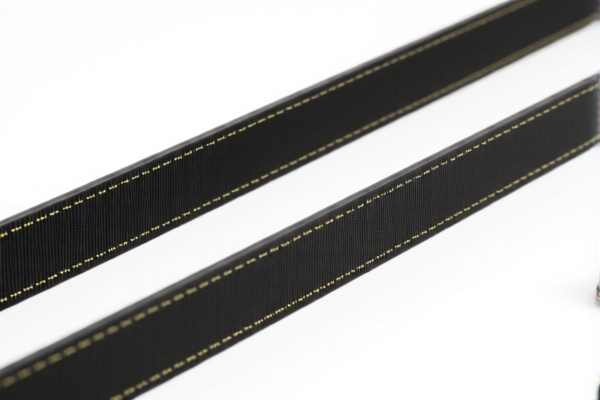
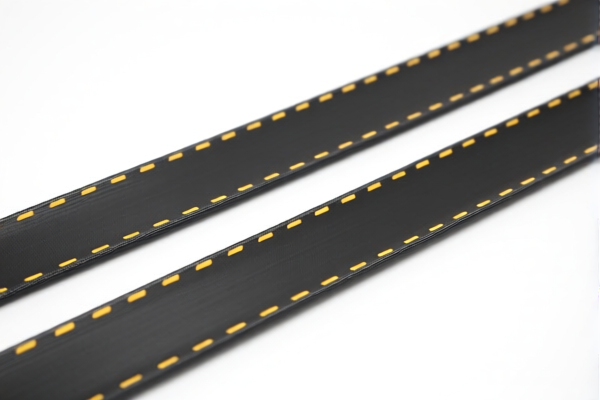
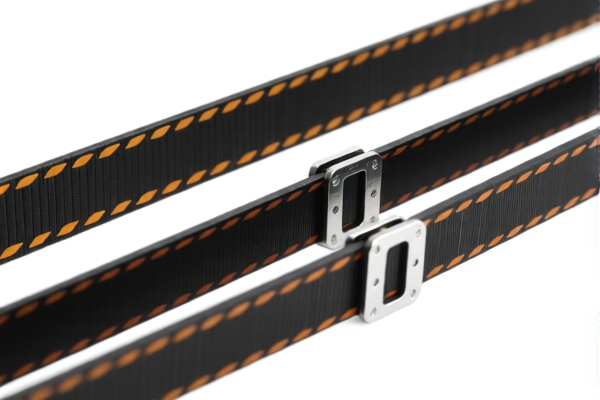
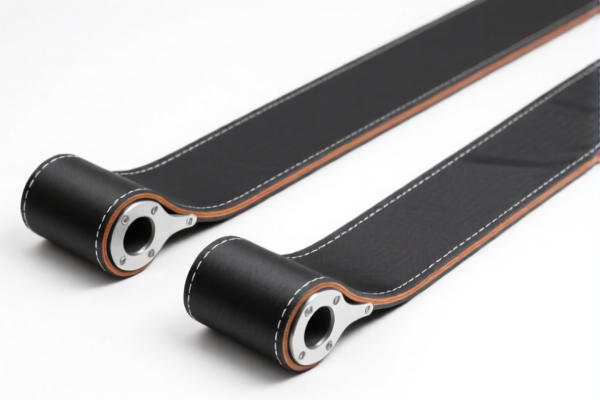
AI Analysis
🎡 Transmission Belts: Man-Made Fiber & Textile Reinforced (Extra Wide)
🌐 HS Code Reference & Customs Clearance Guide | 2026 Latest Tariff Analysis | Professional-Level Clearance Strategy
📌 I. Product Definition & Classification: Do You Really Understand "Transmission Belts"?
Transmission belts are critical components in mechanical power transmission systems, widely used in industrial machinery, manufacturing lines, and heavy equipment. In international trade, they are classified based on material composition, reinforcement type, and intended use.
The term "extra wide man-made fiber textile reinforced transmission belts" refers to industrial-grade belts designed for high-torque power transmission, constructed with man-made fibers (e.g., polyester, nylon) as the primary reinforcement, combined with textile materials, and sized with a width exceeding 20 cm.
⚠️ Key Distinction Point:
- If the belt is vulcanized rubber-based with textile reinforcement → Classified under Chapter 40 (Rubber Articles);
- If the belt is non-rubber, purely textile/fiber-based → Classified under Chapter 59 (Textile Articles).
📦 II. HS Code Classification Details (2026 Latest Tariff Authority Comparison)
| HS Code | Product Description | Application Scenario | Material Composition | Rubber Content |
|---|---|---|---|---|
5911.90 |
Transmission belts made of man-made fibers, reinforced with textile materials, used for power transmission, extra wide in dimension | General industrial power transmission, non-rubber textile belts | Man-made fibers + textile reinforcement | ❌ No |
8410.90 |
Transmission belts specifically designed for mechanical power transmission, constructed with man-made fiber and textile reinforcement, intended for industrial applications | Specialized industrial machinery, high-load transmission | Man-made fiber + textile reinforcement | ❌ No |
4010.36.41.00 |
Conveyor or transmission belts of vulcanized rubber: Endless synchronous belts, outside circumference >150 cm but ≤198 cm, combined with textile materials, man-made fibers predominate, width >20 cm | Heavy-duty industrial conveyors, synchronous power transmission | Vulcanized rubber + textile reinforcement | ✅ Yes |
4010.39.41.00 |
Conveyor or transmission belts of vulcanized rubber: Other types, combined with textile materials, man-made fibers predominate, width >20 cm | General industrial rubber transmission belts | Vulcanized rubber + textile reinforcement | ✅ Yes |
🔍 Critical Reminder:
- If the belt contains vulcanized rubber as a structural component → Must be classified under HS 4010;
- If the belt is purely textile/fiber-based with no rubber → Classified under HS 5911 or HS 8410;
- "Extra wide" typically refers to belts with a width exceeding 20 cm, which triggers specific subheading criteria.
💰 III. 2026 Latest Tariff Rate Details (Including Additional Taxes & Policy Add-ons)
✅ Applicable Country: United States (US)
✅ Country of Origin: China (CN)
✅ Effective Date: November 10, 2025 (and subsequent imports)
🎯 1. 5911.90 —— Transmission Belts (Man-Made Fiber, Textile Reinforced, No Rubber)
| Item | Content |
|---|---|
| Base Tariff Rate | Error (Failed to retrieve tax information) |
| USITC Additional Tariff | Error (Failed to retrieve tax information) |
| IEEPA Additional Tariff | Error (Failed to retrieve tax information) |
| Total Tariff Rate | Error |
| Tax Calculation | CIF Value × Total Tax Rate |
| De Minimis Exemption Eligible? | ❌ No (deny_de_minimis) |
| Legal Basis Path | USITC:5911.90 |
📌 Explanation:
- Due to incomplete data retrieval, exact tax rates cannot be confirmed for this HS Code;
- Risk: Misclassification may lead to delayed clearance, penalties, or retroactive duties;
- Recommendation: Consult a licensed customs broker or request a Pre-Ruling (Advance Ruling) from US CBP.
🎯 2. 8410.90 —— Transmission Belts (Mechanical Power Transmission, Industrial Use)
| Item | Content |
|---|---|
| Base Tariff Rate | Error (Failed to retrieve tax information) |
| USITC Additional Tariff | Error (Failed to retrieve tax information) |
| IEEPA Additional Tariff | Error (Failed to retrieve tax information) |
| Total Tariff Rate | Error |
| Tax Calculation | CIF Value × Total Tax Rate |
| De Minimis Exemption Eligible? | ❌ No (deny_de_minimis) |
| Legal Basis Path | USITC:8410.90 |
📌 Explanation:
- HS 8410 is generally for parts of internal combustion engines;
- However, certain specialized transmission components may be classified here if deemed integral to engine power transmission systems;
- Risk: High potential for misclassification disputes if the belt is not strictly engine-related;
- Recommendation: Provide engineering drawings and functional documentation to justify classification.
🎯 3. 4010.36.41.00 —— Vulcanized Rubber Synchronous Belts (Width >20 cm, Circumference 150–198 cm)
| Item | Content |
|---|---|
| Base Tariff Rate | 0.0% |
| USITC Additional Tariff | 0.0% |
| IEEPA Additional Tariff | 0.0% |
| Total Tariff Rate | 0.0% |
| Tax Calculation | CIF Value × 0.0% = $0 |
| De Minimis Exemption Eligible? | N/A (Already 0%) |
| Legal Basis Path | USITC:4010.36.41.00 |
📌 Explanation:
- Favorable tariff rate: 0% total duty for this specific subheading;
- Conditions: Must be synchronous belts, endless, circumference between 150–198 cm, width >20 cm, man-made fiber predominant;
- Advantage: Cost-saving opportunity if product specifications align.
🎯 4. 4010.39.41.00 —— Other Vulcanized Rubber Transmission Belts (Width >20 cm)
| Item | Content |
|---|---|
| Base Tariff Rate | 0.0% |
| USITC Additional Tariff | 0.0% |
| IEEPA Additional Tariff | 0.0% |
| Total Tariff Rate | 0.0% |
| Tax Calculation | CIF Value × 0.0% = $0 |
| De Minimis Exemption Eligible? | N/A (Already 0%) |
| Legal Basis Path | USITC:4010.39.41.00 |
📌 Explanation:
- Favorable tariff rate: 0% total duty for this subheading;
- Conditions: Vulcanized rubber, width >20 cm, man-made fiber predominant, not synchronous or outside 150–198 cm range;
- Advantage: No additional taxes, making it the most cost-effective option if applicable.
🛠️ IV. Customs Clearance Practical Suggestions (Battle-Tested Pitfall Avoidance Guide)
✅ 1. Document Preparation Checklist (All Required)
| Document | Mandatory? | Description |
|---|---|---|
| ✅ Product Specification Sheet | ✔️ | Include dimensions (width, circumference), material composition, reinforcement type |
| ✅ Material Composition Declaration | ✔️ | Specify % of man-made fibers vs. other textiles |
| ✅ Product Photos (Including Labels) | ✔️ | Clear images showing belt structure, width, and any markings |
| ✅ Third-Party Test Reports | ✔️ | ASTM, ISO, or equivalent standards for tensile strength, durability |
| ✅ Commercial Invoice | ✔️ | Clearly state "Transmission Belt, Man-Made Fiber Reinforced" |
| ✅ Packing List | ✔️ | Detail packaging structure to avoid split-line申报 |
| ✅ Certificate of Origin (if applicable) | ✔️ | For preferential treatment if shipped from FTA countries |
✅ 2. Declaration Tips (Key Mnemonic)
🔥 "Rubber = 40, Textile = 59/84, Width >20cm Triggers Specifics!"
| Scenario | Correct Declaration | Wrong Practice |
|---|---|---|
| Vulcanized rubber belt, width >20 cm | 4010.36.41.00 or 4010.39.41.00 |
Misclassified as textile → Higher risk of audit |
| Non-rubber textile belt, man-made fiber | 5911.90 or 8410.90 |
Misclassified as rubber → 0% vs. Error risk |
| Synchronous belt, circumference 150–198 cm | 4010.36.41.00 |
Misclassified as generic rubber belt → Potential 0% loss |
| Belt with engine integration | 8410.90 |
Misclassified as general industrial belt → Duty risk |
✅ 3. Special Case Handling
| Scenario | Handling Suggestion |
|---|---|
| OEM Custom Belts | Provide customer order + design specs to justify classification |
| Belts for Medical Equipment | If specialized, apply for "non-general use" status with proof |
| Belts for Military/Aerospace | Apply for "special purpose" declaration, may qualify for reduced scrutiny |
| Mixed Materials (Rubber + Textile) | Declare primary material; if rubber >50% by weight, classify under 4010 |
🌍 V. Global Market Clearance Comparison (2026 Latest)
| Country/Region | Recommended HS Code | Tariff Rate | Certification Requirements | Notes |
|---|---|---|---|---|
| 🇺🇸 United States | 4010.36.41.00 / 4010.39.41.00 |
0% (if rubber) | ASTM, ISO | Avoid 5911.90/8410.90 due to data errors |
| 🇨🇳 China | 4010.36.41.00 |
5% | CCC, RoHS | Standard industrial classification |
| 🇪🇺 European Union | 4010.36.41.00 |
0% (if CE certified) | CE, REACH | No additional duties for compliant goods |
| 🇦🇺 Australia | 4010.36.41.00 |
5% | RCM | Standard import procedures |
| 🇯🇵 Japan | 4010.36.41.00 |
0% | PSE | No additional tariffs for compliant products |
📌 Conclusion:
- US market offers 0% tariff for rubber-based transmission belts meeting specific criteria;
- Textile-based belts (5911.90/8410.90) have uncertain tax rates, posing clearance risks;
- Recommendation: Prefer rubber-based classification (4010) if product specifications allow.
📌 VI. Common Errors & Pitfall Avoidance Guide (Lessons Learned)
❌ Error 1: Declaring rubber belts as textile belts (5911.90)
👉 Consequence: Tax data errors, potential audits, delays, or retroactive duties
❌ Error 2: Ignoring "width >20 cm" specification
👉 Consequence: Misclassification under generic HS codes → Incorrect tariff application
❌ Error 3: Failing to provide material composition details
👉 Consequence: Customs unable to verify man-made fiber predominance → Clearance hold
❌ Error 4: Using vague terms like "Industrial Belt"
👉 Consequence: Ambiguous declaration → Manual examination, delays, penalties
✅ Correct Declaration Example:
"Transmission Belt, Vulcanized Rubber, Synchronous Type, Outside Circumference 160 cm, Width 25 cm, Man-Made Fiber Reinforced (Polyester Predominant), Model XYZ, ASTM D1474 Compliant"
🎯 VII. Conclusion: Professional Declaration Saves Time, Money & Risk
🎯 Key Takeaways:
🔹 "Rubber = 40, Textile = 59/84, Width >20cm Changes Everything!"
🔹 "0% Tariff for Rubber Belts, Error Risk for Textile!"
🔹 "Precise Classification = Lower Costs, Faster Clearance!"
📌 Pro Tips:
- If your transmission belts meet the 4010 criteria, you can enjoy 0% tariff in the US;
- For textile-based belts (5911.90/8410.90), request a Pre-Ruling from US CBP to clarify tax obligations;
- Always provide detailed material specs and third-party test reports to support classification.
📣 Immediate Action Required:
📞 Contact a licensed customs broker + Provide product images & specs + Apply for HS Code Pre-Ruling
🚀 Ensure smooth clearance, cost efficiency, and compliance!
✨ Professional Clearance Starts with Accurate Classification!
💼 Every dollar saved counts—optimize your tariff strategy today!
Customer Reviews
About HS Code Classification
The Harmonized System (HS) is an internationally standardized nomenclature developed by the World Customs Organization (WCO) to classify traded products. Over 200 countries use the HS system as the basis for customs tariffs, trade statistics, and import/export regulations.
Each HS code follows a hierarchical structure:
- Chapter (2 digits) — Broad category of goods (e.g., Chapter 84: Machinery and Mechanical Appliances)
- Heading (4 digits) — More specific grouping within the chapter
- Subheading (6 digits) — Internationally standardized breakdown, used by all WCO member countries
- National subdivisions (8-10 digits) — Country-specific extensions for further classification, such as US HTSUS 10-digit codes
Correct HS code classification is essential for smooth customs clearance, accurate duty payment, and compliance with trade regulations. Misclassification can lead to customs delays, overpayment of duties, or penalties.
When importing from CN to US, the applicable tariff rates may include:
- Most-Favored-Nation (MFN) rate — The standard duty rate applied to WTO members
- General rate — Applied to countries without trade agreements
- Trade remedy duties — Additional tariffs such as Section 301 (anti-dumping), Section 232 (national security), or countervailing duties
The information provided on this page is for reference purposes only. For official classification, please consult with your local customs authority or a licensed customs broker.