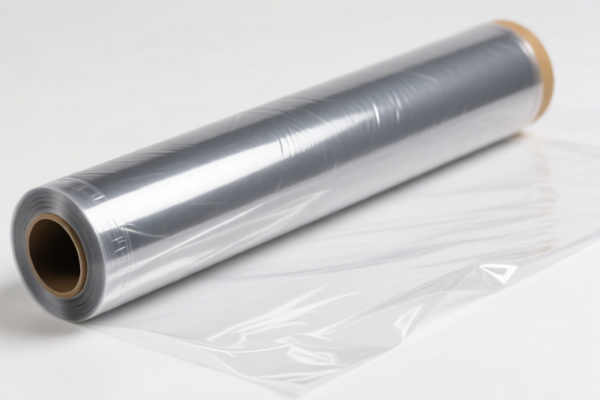
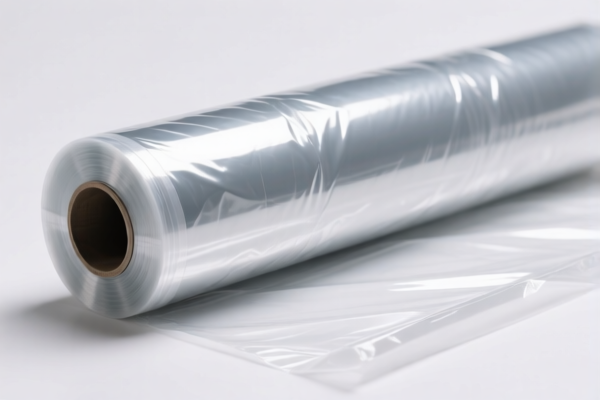
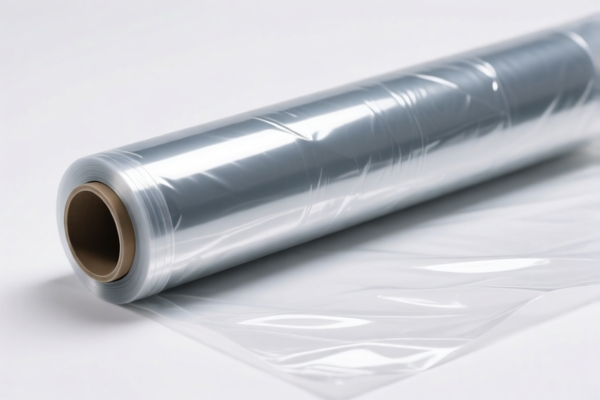
Extra wide Industrial Grade Film
CN → US| HS Code | Tariff Rate | Origin | Destination | Doc |
|---|---|---|---|---|
| 3921905050 | 39.8% | CN | US | Official Doc |
| 3921904010 | 39.2% | CN | US | Official Doc |
| 3920991000 | 41.0% | CN | US | Official Doc |
| 3920992000 | 39.2% | CN | US | Official Doc |
| 3923400010 | 40.3% | CN | US | Official Doc |
| 3923400050 | 40.3% | CN | US | Official Doc |
| 8485200000 | 38.1% | CN | US | Official Doc |
| 8485901000 | 38.1% | CN | US | Official Doc |
Product Images

AI Analysis
🎞️ Extra Wide Industrial Grade Film
🌐 HS Code Reference & Clearance Guide | 2026 Latest Tariff Analysis | Professional Logistics Strategy
📌 I. Product Definition & Classification: What is "Extra Wide Industrial Grade Film"?
Industrial Grade Film refers to plastic sheets, films, or strips used for packaging, conveyance, protection, or industrial insulation. Unlike consumer-grade films (like grocery bags), these are characterized by: * High Durability: Resistance to tearing, chemicals, and temperature variations. * Large Dimensions: "Extra wide" implies rolls or sheets exceeding standard consumer widths (often >1 meter). * Non-Cellular Structure: Typically solid, not foamed.
In international trade, the classification depends heavily on three factors: 1. Physical State: Is it in rolls or cut sheets? 2. Thickness: Is it thicker than 0.152 mm? 3. Reinforcement: Is it combined with paper or other materials?
⚠️ Key Distinction Point:
- Flexible Film < 0.152 mm or Reinforced with Paper: Usually falls under 3921.90 (Other plates/sheets/film).
- Non-Reinforced, Non-Cellular, > 0.152 mm, Not in Rolls: Falls under 3920.99.10.
- Non-Reinforced, Non-Cellular, > 0.152 mm, In Rolls/Other Flexible Sheets: Falls under 3920.99.20.
📦 II. HS Code Classification Details (2026 Latest Tariff Authority Comparison)
| HS Code | Product Description | Application Scenario | Thickness/Structure | Base Duty | Additional Duty | Total Tax |
|---|---|---|---|---|---|---|
3920.99.10.00 |
Other plates, sheets, film, foil, strip of plastics; Non-cellular, non-reinforced; Over 0.152 mm thickness, NOT in rolls | Thick industrial sheets, protection plates, custom-cut large panels | >0.152 mm, Solid, No Reinforcement | 0.0% | 0.0% | 0.0% |
3920.99.20.00 |
Other plates, sheets, film, foil, strip of plastics; Non-cellular, non-reinforced; Other (Includes rolls or flexible sheets <0.152mm not covered by 3920.99.10) | Standard industrial rolls, wide flexible films, packaging liners | Flexible, Solid, No Reinforcement | 4.2% | 25.0% | 29.2% |
3921.90.40.10 |
Other plates, sheets, film...: Reinforced with paper | Composite packaging, laminated insulation, paper-plastic hybrid bags | Reinforced with Paper | 4.2% | 25.0% | 29.2% |
3921.90.50.50 |
Other plates, sheets, film...: Other (Includes other plastics not specified elsewhere) | Other industrial plastic films/foils (e.g., PVC, PP, PET not falling into 3920.99) | Various | 4.8% | 25.0% | 29.8% |
🔍 Critical Reminder:
- If your film is strictly >0.152mm and cut into sheets (not rolls), it enjoys 0% tax. This is the "Golden Slot" for thick industrial sheets.
- If it is in rolls or flexible sheets (even if thick), it generally falls under 3920.99.20.00 or 3921.90, incurring 29.2%-29.8% tax.
- Do not confuse with packing articles like spools (3923.40) unless the item IS the spool, not the film itself.
💰 III. 2026 Latest Tariff Rate Details (Including Surtaxes)
✅ Applicable Country: United States (US)
✅ Origin: China (CN)
✅ Effective Time: 2025/2026 (Current Trade Policy)
🎯 1. 3920.99.10.00 —— Industrial Sheets/Plates (Thick, Non-Roll)
| Item | Content |
|---|---|
| Base Rate | 0.0% |
| USITC Surtax (Section 301) | 0.0% |
| IEEPA Surtax | 0.0% |
| Total Tax Rate | 0.0% |
| Calculation | CIF Value × 0% = $0 |
| De Minimis Eligibility | ❌ N/A (Generally not applicable for bulk industrial cargo) |
| Legal Basis | Harmonized Tariff Schedule (HTSUS) Chapter 39 |
📌 Explanation:
- This specific subheading (3920.99.10) is for non-cellular, non-reinforced plastic sheets that are over 0.152 mm thick AND not in rolls.
- Because it is a rigid/semi-rigid sheet structure often used for protection or insulation, it is exempt from the high Section 301 tariffs that apply to flexible films and other plastics.
- Strategy: If possible, modify your product form (e.g., ship as cut sheets instead of rolls) to leverage this 0% rate.
🎯 2. 3920.99.20.00 —— Other Non-Reinforced Plastic Films (Rolls/Flexible)
| Item | Content |
|---|---|
| Base Rate | 4.2% |
| USITC Surtax | +25.0% |
| IEEPA Surtax | Included in Total (See below) |
| Total Tax Rate | 29.2% |
| Calculation | CIF Value × 29.2% |
| De Minimis Eligibility | ❌ Not eligible (High duty volume) |
| Legal Basis | HTSUS 3920.99.20.00 + USITC Footnotes |
📌 Note:
- This covers most wide rolls of industrial film (PE, PP, PVC, etc.) that are flexible.
- The 25% surtax is standard for Chinese-origin plastic films under Section 301.
🎯 3. 3921.90.50.50 & 3921.90.40.10 —— Other Plastic Sheets/Films
| Item | Content |
|---|---|
| Base Rate | 4.8% (for 3921.90.50.50) / 4.2% (for 3921.90.40.10) |
| USITC Surtax | +25.0% |
| Total Tax Rate | 29.8% / 29.2% |
| Applicability | 3921.90.40.10: Reinforced with paper. 3921.90.50.50: Other plastic articles (e.g., laminated, supported). |
📌 Note:
- If your "Industrial Film" is a composite (e.g., plastic bonded to fabric or paper), it may fall under 3921.
- Be careful with 3923.40 (Spools/Bobbins). If you are shipping empty spools along with film, those have 0% tax, but the film itself is taxed.
🛠️ IV. Clearance Practical Advice (Real-World Pitfall Avoidance)
✅ 1. Preparation Checklist (Mandatory)
| Document | Mandatory? | Explanation |
|---|---|---|
| ✅ Product Specification Sheet | ✔️ | Must state: Material (e.g., LDPE, HDPE, PET), Thickness (mm), Width (mm), Roll Length. |
| ✅ Photos of Product & Label | ✔️ | Show the "Extra Wide" aspect, roll ends, and any markings indicating "Industrial Use". |
| ✅ Commercial Invoice | ✔️ | Clearly describe as "Plastic Film Rolls" or "Plastic Sheets", NOT generic "Plastic Parts". |
| ✅ Packing List | ✔️ | Specify if items are in rolls or cut sheets. This is CRITICAL for HS Code selection. |
| ✅ Certificate of Origin (CO) | ✔️ | Required to prove origin (China) for accurate surtax calculation. |
✅ 2. Declaration Tips (Key Mantra)
🔥 “Thick & Sheet = 0%; Roll & Flexible = 29%; Be Precise!”
| Scenario | Correct HS Code | Wrong Code | Consequence |
|---|---|---|---|
| Thick Plastic Sheets (>0.152mm), Cut to Size | 3920.99.10.00 |
3920.99.20.00 |
Saving 29.2% Tax! |
| Wide Plastic Rolls (Any Thickness, Flexible) | 3920.99.20.00 |
3921.90... |
Correct tax (29.2%). Misdeclaring as 3921 may trigger audit if structure differs. |
| Plastic Film Reinforced with Paper | 3921.90.40.10 |
3920.99... |
Tax 29.2%. Must prove paper reinforcement. |
| Empty Spools/Bobbins | 3923.40.00.10 |
3920.99... |
0% Tax. Do not tax the spool as film! |
✅ 3. Special Cases Handling
| Situation | Handling Advice |
|---|---|
| Custom Width Rolls | If width >1m, ensure description says "Wide Industrial Film Rolls".海关 may check if it's "Specialized Machinery Parts" (8485) vs. "Raw Material" (3920). Usually, raw film is 3920. |
| Composite Films | If plastic is laminated with foil or paper, it likely moves to 3921. Provide lamination structure proof. |
| Biodegradable Film | Still classified under 3920/3921 based on physical structure, not material biodegradability, unless specifically regulated. |
| Shipment as "Machinery Parts" | If the film is integral to a machine (e.g., a conveyor belt liner), it might be part of the machine. But generally, separate rolls are raw materials. |
🌍 V. Global Market Clearance Comparison (2026 Latest)
| Country/Region | Recommended HS Code | Tariff Rate (China Origin) | Key Certification | Notes |
|---|---|---|---|---|
| 🇺🇸 USA | 3920.99.10.00 (Sheets) |
0% | None | Maximize use of 0% rate by shipping sheets if possible. |
| 🇺🇸 USA | 3920.99.20.00 (Rolls) |
29.2% | None | Standard rate for plastic films. |
| 🇨🇳 China | 3920.99.10.00 |
0% | None | Import duty is low globally for raw plastics. |
| 🇪🇺 EU | 3920.99.10.00 / 3920.99.20.00 |
0% | REACH Compliance | No additional tariffs, but strict chemical regulations (REACH). |
| 🇬🇧 UK | 3920.99.10.00 |
0% | UKCA Mark (if applicable) | Post-Brexit rules align closely with EU for raw materials. |
📌 Conclusion:
- The USA is the only major market with significant punitive tariffs on these goods.
- Strategic Tip: If you export to the US, shipping as cut sheets (>0.152mm) instead of rolls can save nearly 30% in duties. If you must ship rolls, budget for the 29.2% surtax.
- For EU/China, focus on REACH/Chemical compliance rather than tariff costs.
📌 VI. Common Errors & Pitfall Guide (Lessons Learned)
❌ Mistake 1: Declaring "Plastic Roll" as 3920.99.10.00
👉 Result: Customs will reject because 3920.99.10 requires "Not in Rolls". You will be reclassified to 3920.99.20.00 and fined + back-taxed 29.2%.
❌ Mistake 2: Confusing "Industrial Film" with "Spools"
👉 Result: Taxing the film at 29.2% when you also shipped empty spools.
✅ Fix: Declare spools separately under 3923.40 (0% tax).
❌ Mistake 3: Ignoring Thickness Threshold (0.152 mm)
👉 Result: If your film is 0.150 mm but declared as >0.152 mm to get 0% tax, and Customs measures it as 0.150 mm, they will penalize you for misclassification.
✅ Fix: Ensure thickness measurement is accurate and documented.
❌ Mistake 4: Using Generic Description "Plastic Sheet"
👉 Result: Delays in customs clearance.
✅ Fix: Use precise terms: "HDPE Industrial Plastic Sheets, 0.2mm Thick, Cut to 60x60cm, Non-Reinforced".
🎯 VII. Conclusion: Precision Classification Saves Costs!
🎯 Remember the Mantra:
🔹 "Thick Sheets >0.152mm = 0% (USA)"
🔹 "Rolls/Flexible Films = 29.2% (USA)"
🔹 "Spools are Free = 0%"
🔹 "Paper Reinforcement = 29.2%"🔹 "HS Code Determines Duty, Thickness Determines Rate, Declaration Determines Speed!"
📌 Pro Tip:
If your film is <0.152mm but you want lower taxes, check if it qualifies for any specific Section 301 exclusions (though rare for standard plastic films). Always apply for an Advance Ruling (CBP Ruling) for large volume shipments to secure your HS Code and duty rate officially.
📣 Immediate Action:
📞 Consult your customs broker with thickness and form (roll vs. sheet) details.
📋 Prepare technical data sheets proving thickness and material composition.
🚀 Optimize packaging: Cut sheets to leverage 0% duty if feasible!
✨ Professional Clearance Starts with Accurate Classification!
💼 Every Percentage Point Saved is Pure Profit!
Customer Reviews
About HS Code Classification
The Harmonized System (HS) is an internationally standardized nomenclature developed by the World Customs Organization (WCO) to classify traded products. Over 200 countries use the HS system as the basis for customs tariffs, trade statistics, and import/export regulations.
Each HS code follows a hierarchical structure:
- Chapter (2 digits) — Broad category of goods (e.g., Chapter 84: Machinery and Mechanical Appliances)
- Heading (4 digits) — More specific grouping within the chapter
- Subheading (6 digits) — Internationally standardized breakdown, used by all WCO member countries
- National subdivisions (8-10 digits) — Country-specific extensions for further classification, such as US HTSUS 10-digit codes
Correct HS code classification is essential for smooth customs clearance, accurate duty payment, and compliance with trade regulations. Misclassification can lead to customs delays, overpayment of duties, or penalties.
When importing from CN to US, the applicable tariff rates may include:
- Most-Favored-Nation (MFN) rate — The standard duty rate applied to WTO members
- General rate — Applied to countries without trade agreements
- Trade remedy duties — Additional tariffs such as Section 301 (anti-dumping), Section 232 (national security), or countervailing duties
The information provided on this page is for reference purposes only. For official classification, please consult with your local customs authority or a licensed customs broker.