Extra wide Synthetic Fiber Reinforced Conveyor Belt
CN → US| HS Code | Tariff Rate | Origin | Destination | Doc |
|---|---|---|---|---|
| 8431390010 | 35.0% | CN | US | Official Doc |
| 5910001060 | 39.0% | CN | US | Official Doc |
| 5910001070 | 39.0% | CN | US | Official Doc |
Product Images
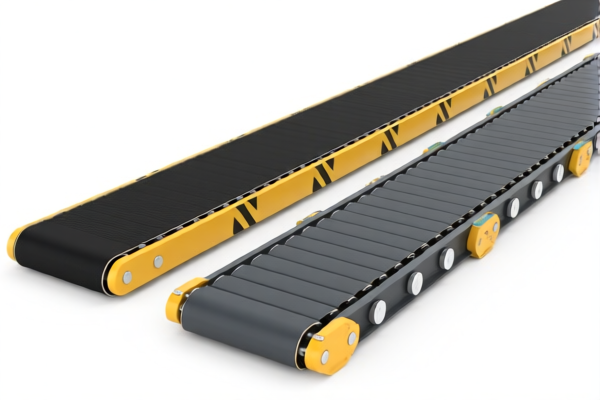
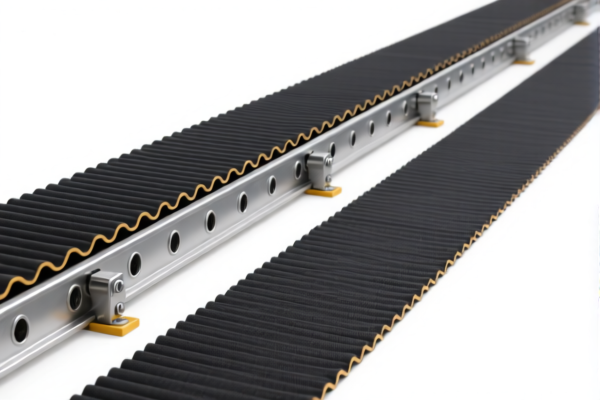
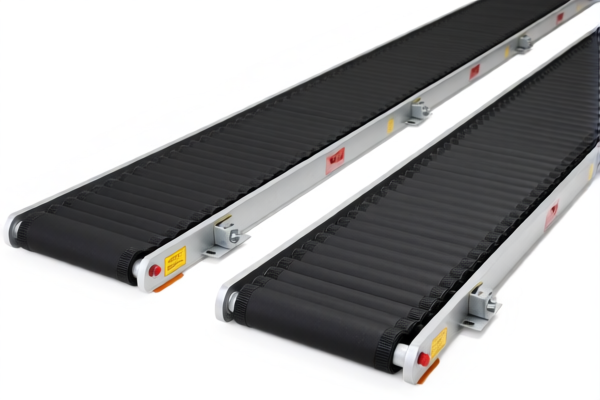
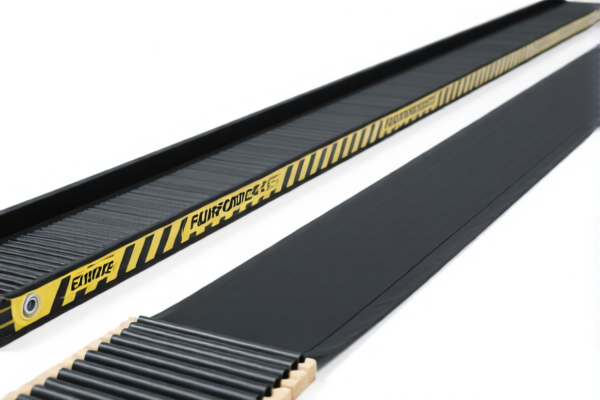
AI Analysis
🏗️ Conveyor Belts (Synthetic Fiber Reinforced, Extra Wide)
🌐 HS Code Reference & Customs Clearance Guide | 2026 Latest Tariff Analysis | Professional Clearance Strategy
📌 I. Product Definition & Classification: Do You Really Understand "Conveyor Belts"?
Extra wide synthetic fiber reinforced conveyor belts are critical components in industrial logistics, mining, and bulk material handling. In international trade, their classification depends heavily on whether they are viewed as the belt itself (a material product) or a part of a machine (a component).
- As a Belt (Material Good): Made of synthetic fibers, designed for transmission or conveying of materials. Classified under Chapter 59.
- As a Machine Part: Designed specifically for machinery (e.g., belt conveyors). Classified under Chapter 84.
⚠️ Critical Distinction Point:
- If the belt is classified primarily by its material composition (synthetic fiber reinforcement) and form (strip/belt) → It falls under 5910.00.10.60 / 5910.00.10.70.
- If the belt is classified primarily as a functional part/component of a specific machine (conveyor) → It falls under 8431.39.00.10.
📦 II. HS Code Classification Details (2026 Latest Tariff Authority Comparison)
| HS Code | Product Description | Applicable Scenario | Classification Logic |
|---|---|---|---|
8431.39.00.10 |
Parts & Accessories of Machinery for Sorting/Classifying Goods (Conveyor Parts) | Specifically identified as components for conveyor systems; functional parts. | ✅ Conveyor Part |
5910.00.10.60 |
Transmission/Conveyor Belts, Made of Synthetic Fibers, Strip Form | Broad classification based on material (synthetic fiber) and form (strip/belt). | ✅ Material/Strip |
5910.00.10.70 |
Transmission/Conveyor Belts, Made of Synthetic Fibers, Strip Form | Alternative sub-category for synthetic fiber belts, often based on specific width or technical specs. | ✅ Material/Strip |
🔍 Key Reminder:
- 8431.39.00.10 focuses on the function (part of a conveyor machine).
- 5910.00.10.60/70 focuses on the composition (synthetic fiber material, strip shape).
- Customs authorities may require technical documentation to distinguish between a "raw belt material" (5910) and a "finished machine part" (8431).
💰 III. 2026 Latest Tariff Rate Breakdown (Including Surcharges & Policy Add-ons)
✅ Applicable Country: United States (US)
✅ Origin: China (CN)
✅ Effective Time: 2025 onwards (including subsequent imports)
🎯 1. 8431.39.00.10 —— Conveyor Parts/Components
| Item | Content |
|---|---|
| Base Tariff Rate | 0% (ad valorem) |
| USITC Additional Tariff | +25% (Under USITC Footnote provisions for Chapter 84 parts) |
| Section 122 Additional Tariff | +10% (Specific to certain mechanical parts/components) |
| Total Tariff Rate | 35.0% |
| Tax Calculation | CIF Value × 35% |
| De Minimis Exemption | ❌ Not Available (deny_de_minimis) |
| Legal Basis Path | USITC:8431.39.00.10 → SECTION_122:10% → USITC:25% |
📌 Explanation:
- The 25% USITC tariff applies to parts and accessories of machinery listed in the trade remedy actions.
- The 10% Section 122 tariff is a specific additional levy on certain industrial components.
- Total 35% is a high rate, significantly impacting profit margins for industrial parts.
🎯 2. 5910.00.10.60 —— Synthetic Fiber Conveyor Belts (Material)
| Item | Content |
|---|---|
| Base Tariff Rate | 4.0% (ad valorem) |
| USITC Additional Tariff | +25% |
| Section 122 Additional Tariff | +10% |
| Total Tariff Rate | 39.0% |
| Tax Calculation | CIF Value × 39% |
| De Minimis Exemption | ❌ Not Available (deny_de_minimis) |
| Legal Basis Path | USITC:5910.00.10.60 → SECTION_122:10% → USITC:25% |
📌 Note:
- Compared to the parts classification, the base rate is higher (4%), leading to a higher total tariff (39%).
- This applies to belts classified primarily as textile/synthetic material products rather than machine parts.
🎯 3. 5910.00.10.70 —— Synthetic Fiber Conveyor Belts (Material Variant)
| Item | Content |
|---|---|
| Base Tariff Rate | 4.0% (ad valorem) |
| USITC Additional Tariff | +25% |
| Section 122 Additional Tariff | +10% |
| Total Tariff Rate | 39.0% |
| Tax Calculation | CIF Value × 39% |
| De Minimis Exemption | ❌ Not Available (deny_de_minimis) |
| Legal Basis Path | USITC:5910.00.10.70 → SECTION_122:10% → USITC:25% |
📌 Note:
- Same tariff structure as 5910.00.10.60.
- The distinction between.60and.70is often subtle and may depend on specific technical parameters (e.g., width, reinforcement type). Both are subject to 39% total tariff.
🛠️ IV. Customs Clearance Practical Advice (Real-World Pitfall Avoidance Guide)
✅ 1. Documentation Checklist (All Required)
| Document | Required? | Description |
|---|---|---|
| ✅ Product Specification Sheet | ✔️ | Must specify: Material (Synthetic Fiber), Width (Extra Wide), Reinforcement Type, Application (Conveyor/Transmission). |
| ✅ Technical Drawing / Structure Diagram | ✔️ | To prove whether it is a "part of a machine" (8431) or a "belt material" (5910). |
| ✅ Product Photos (with Label) | ✔️ | Clear images showing the belt, tags, and any branding. |
| ✅ Commercial Invoice | ✔️ | Clearly state: "Conveyor Belt, Synthetic Fiber Reinforced, Extra Wide". |
| ✅ Packing List | ✔️ | Indicate if sold as a single unit or part of a larger machine shipment. |
| ✅ Origin Certificate (CO) | ✔️ | Mandatory for US imports from China to verify origin. |
✅ 2. Declaration Strategy (Key Mantras)
🔥 "Define Function or Material? Choose Wisely!"
| Scenario | Correct Declaration | Wrong Approach | Consequence |
|---|---|---|---|
| Sold as a spare part for a conveyor | 8431.39.00.10 (35%) |
Misdeclare as "textile belt" | Risk of audit, potential penalties if misclassified. |
| Sold as raw belt material | 5910.00.10.60 or .70 (39%) |
Misdeclare as "machine part" | Overpaying 4% base tariff unnecessarily. |
| Conveyor System + Belt bundled | Declare separately or as machine part | Bundle as single item | Complex classification, potential delay. |
| "Synthetic Fiber Belt" | Use precise technical name | Vague name like "Rubber Belt" | If it's synthetic fiber, rubber classification is wrong → Refusal/Retrospective Tax. |
✅ 3. Special Handling Tips
| Situation | Handling Advice |
|---|---|
| OEM Custom Belts | Provide customer PO + technical specs to prove it is a specific machine part (8431). |
| Extra Wide Belts | Emphasize "Extra Wide" in description to ensure correct subheading under 5910 (if applicable). |
| Reinforced Structure | Clearly state "Synthetic Fiber Reinforced" to distinguish from textile or metallic belts. |
| Pre-Ruling Request | Given the 4% difference in base tax between 8431 (0%) and 5910 (4%), Apply for an Advance Ruling if unsure. |
🌍 V. Global Market Comparison (2026 Latest)
| Country/Region | Recommended HS Code | Tariff (China Origin) | Certification Req. | Notes |
|---|---|---|---|---|
| 🇺🇸 USA | 8431.39.00.10 or 5910.00.10.60/70 |
35% or 39% | None Specific | High tariffs due to Section 301 & 122. |
| 🇨🇳 China | 8431.39.00.10 or 5910.00.10.60/70 |
~10-13% (Import Duty) | CCC (if for domestic use) | Lower tariffs than US. |
| 🇪🇺 EU | 5910.00.90 or 8431.39 |
~3-4.5% | CE (if safety critical) | No additional US-style surcharges. |
| 🇦🇺 Australia | 5910.00.00 or 8431.39 |
~5% | RCM (if electrical components included) | Moderate tariffs. |
📌 Conclusion:
- The US market is the most expensive due to the combination of Base Tariff + USITC 25% + Section 122 10%.
- Classifying as a Part (8431) saves 4% base tariff compared to Classifying as a Belt (5910), but requires strong evidence of it being a "machine part."
📌 VI. Common Mistakes & Pitfall Guide (Lessons Learned)
❌ Mistake 1: Calling it "Rubber Belt" when it is "Synthetic Fiber"
👉 Result: Misclassification under rubber goods → Higher duty or rejection.
❌ Mistake 2: Not specifying "Reinforced"
👉 Result: Customs may classify as plain textile → Different HS code → Penalty.
❌ Mistake 3: Ignoring the 4% Base Tariff Difference
👉 Result: Paying 39% instead of 35% unnecessarily. 4% on large shipments is significant!
❌ Mistake 4: Vague Description "Conveyor Belt"
👉 Result: Customs request for additional info → Delay in clearance → Demurrage charges.
✅ Correct Practice:
"Synthetic Fiber Reinforced Conveyor Belt, Extra Wide, for Industrial Conveyor Systems, Model XYZ, US Origin: CN"
🎯 VII. Conclusion: Professional Declaration, Save Time, Save Money!
🎯 Remember the Mantra:
🔹 "Part or Material? Function or Fiber? Choose right, avoid the 4% hit!"
🔹 "35% for Parts, 39% for Belts – Documentation is your shield!"
🔹 "US Import: 35-39% Total. Plan your logistics accordingly!"
📌 Pro Tip:
If you are importing large volumes, apply for an Advance Ruling (APA) with US Customs and Border Protection (CBP). This legally binds the agency to accept your chosen HS Code, providing certainty and avoiding unexpected 4% variances or disputes.
📣 Immediate Action:
📞 Contact a licensed US Customs Broker.
📄 Provide Technical Data Sheets highlighting "Synthetic Fiber" and "Machine Part" function.
🚀 Optimize your HS Code choice to save 4% per shipment!
✨ Professional clearance starts with precise classification!
💼 Every percentage point counts in international trade!
Customer Reviews
About HS Code Classification
The Harmonized System (HS) is an internationally standardized nomenclature developed by the World Customs Organization (WCO) to classify traded products. Over 200 countries use the HS system as the basis for customs tariffs, trade statistics, and import/export regulations.
Each HS code follows a hierarchical structure:
- Chapter (2 digits) — Broad category of goods (e.g., Chapter 84: Machinery and Mechanical Appliances)
- Heading (4 digits) — More specific grouping within the chapter
- Subheading (6 digits) — Internationally standardized breakdown, used by all WCO member countries
- National subdivisions (8-10 digits) — Country-specific extensions for further classification, such as US HTSUS 10-digit codes
Correct HS code classification is essential for smooth customs clearance, accurate duty payment, and compliance with trade regulations. Misclassification can lead to customs delays, overpayment of duties, or penalties.
When importing from CN to US, the applicable tariff rates may include:
- Most-Favored-Nation (MFN) rate — The standard duty rate applied to WTO members
- General rate — Applied to countries without trade agreements
- Trade remedy duties — Additional tariffs such as Section 301 (anti-dumping), Section 232 (national security), or countervailing duties
The information provided on this page is for reference purposes only. For official classification, please consult with your local customs authority or a licensed customs broker.