Extra wide synchronous belt
CN → US| HS Code | Tariff Rate | Origin | Destination | Doc |
|---|---|---|---|---|
| 8483901050 | 37.8% | CN | US | Official Doc |
| 8483908080 | 37.8% | CN | US | Official Doc |
| 4010359000 | 38.3% | CN | US | Official Doc |
| 4010369000 | 38.3% | CN | US | Official Doc |
| 5910001020 | 39.0% | CN | US | Official Doc |
Product Images
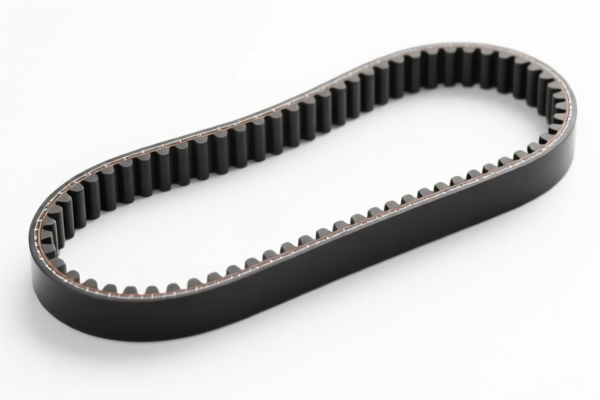
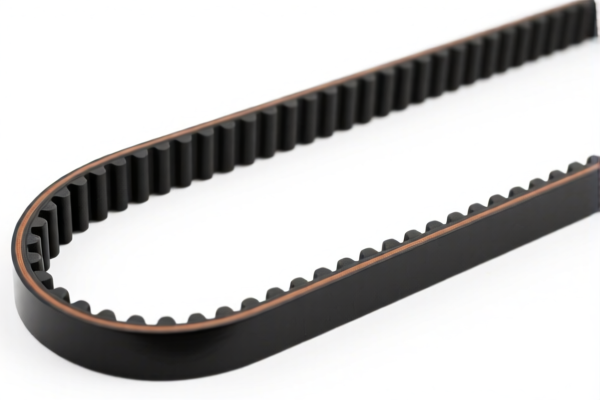
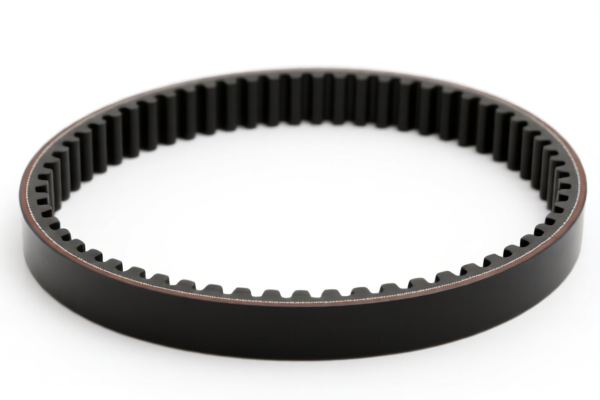
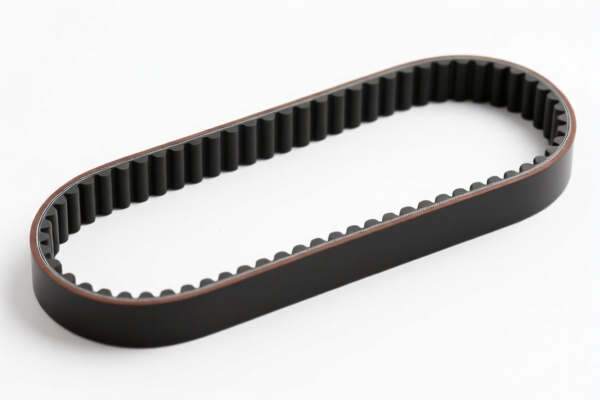
AI Analysis
⚙️ Extra Wide Synchronous Belt (Timing Belt) – HS Code Classification & US Customs Clearance Guide
🌐 HS Code Reference & Customs Clearance Strategy | 2026 Latest Tariff Analysis | Professional Import Compliance
📌 One Product, Five Potential Classifications: Why Does It Matter?
An "Extra Wide Synchronous Belt" (also known as a Timing Belt) is a mechanical transmission component used to transfer power and motion between shafts with precise synchronization. However, in US Customs terms, how you classify it drastically changes your duty rate.
Based on current trade data, there are 5 primary HS Code options depending on the belt’s material, intended use, and structural composition. The total applied tariff ranges from 37.8% to 39.0% for Chinese-origin goods due to Section 301 and IEEPA penalties.
⚠️ Critical Insight:
The difference between 37.8% and 39.0% may seem small, but on high-volume industrial imports, this is a significant cost variance. More importantly, incorrect classification leads to audits, penalties, and shipment delays.
📦 Section 1: HS Code Classification Breakdown (2026 Tariff Schedule)
Below are the five most relevant HS Codes for Extra Wide Synchronous Belts, based on material composition and functional definition.
🥇 Option 1: Classification as a "Transmission Component" (Mechanical Parts)
| HS Code | Summary | Material Assumption | Total Tariff Rate |
|---|---|---|---|
| 8483.90.10.50 | Synchronous belt falls under "Other transmission components." | Generic/Metal-Reinforced | 37.8% |
| 8483.90.80.80 | Synchronous belt fits under "Pulleys and related mechanical components." | Generic/Mixed Materials | 37.8% |
🔍 Explanation:
- 8483.90 covers "Parts of gears, gearing, and other transmission components."
- If your belt is marketed primarily as a mechanical part for machinery (e.g., CNC machines, industrial conveyors) and contains significant steel/cord reinforcement that defines its function as a transmission element, this classification is strong.
- Tax Detail: Base Duty (2.8%) + Section 301 Add-on (25%) + IEEPA 122 Clause (10%) = 37.8%.
🥈 Option 2: Classification as "Rubber Timing Belt" (Rubber Articles)
| HS Code | Summary | Material Assumption | Total Tariff Rate |
|---|---|---|---|
| 4010.35.90.00 | Synchronous belt matches shape/use; inferred as Rubber Material. | Rubber Core/Body | 38.3% |
| 4010.36.90.00 | Synchronous belt matches shape; inferred as Rubber Material (Other Category). | Rubber Core/Body | 38.3% |
🔍 Explanation:
- 4010 covers "Timing belts or V-belts of vulcanized rubber."
- If the belt’s primary body material is vulcanized rubber (even with fabric/steel cords embedded), US Customs may prefer this classification.
- This is often the default classification for standard polyurethane or rubber timing belts if not specifically defined as a mechanical part elsewhere.
- Tax Detail: Base Duty (3.3%) + Section 301 Add-on (25%) + IEEPA 122 Clause (10%) = 38.3%.
🥉 Option 3: Classification as "Textile/Fabric Belt" (Non-Rubber)
| HS Code | Summary | Material Assumption | Total Tariff Rate |
|---|---|---|---|
| 5910.00.10.20 | Synchronous belt usage matches exactly; inferred as Textile/Artificial Fiber. | Fabric/Kevlar/Non-Rubber | 39.0% |
🔍 Explanation:
- 5910 covers "Transmission belts or belting of textile material."
- If your "Extra Wide Synchronous Belt" is made primarily of textile, aramid (Kevlar), or synthetic fibers with minimal rubber coating, it may fall here.
- Warning: This category has the highest base duty (4.0%), leading to a total rate of 39.0%. Use this only if the material composition strictly supports it.
💰 Section 2: Detailed Tariff Structure & Legal Basis
For all the HS Codes above, the tariff calculation for Chinese-origin goods entering the United States follows a consistent additive model.
📊 Tariff Calculation Formula (2026)
$$ \text{Total Duty} = \text{Base Duty} + \text{Section 301 Duty} + \text{IEEPA 122 Clause Duty} $$
| Component | Rate | Source/Legal Basis | Description |
|---|---|---|---|
| Base Duty | 2.8% – 4.0% | HTSUS Chapter 84, 40, or 59 | Standard MFN (Most Favored Nation) rate depending on HS Code. |
| Section 301 Duty | 25.0% | USITC Footnote 9903.88.01 | Additional duty on Chinese goods under Trade Act Section 301. |
| IEEPA 122 Clause | 10.0% | IEEPA (International Emergency Economic Powers Act) | Additional tariff for specific Chinese imports (often applied to machinery parts/rubber/textiles). |
| TOTAL EFFECTIVE RATE | 37.8% – 39.0% |
⚠️ Key Constraint:
- De Minimis Exemption (Section 321): NOT APPLICABLE. These items are denied de minimis status due to the high aggregate tariff rate and Section 301 inclusion. You cannot use the $800 informal entry threshold for bulk shipments. - Country of Origin: Must be China (CN). Goods from Vietnam, Mexico, or Thailand may qualify for different rates if substantially transformed.
🛠️ Section 3: Customs Clearance Best Practices & Risk Mitigation
To ensure smooth clearance and avoid costly audits or misclassification penalties, follow these steps:
✅ 1. Documentation Checklist (Mandatory)
| Document | Requirement | Why It Matters |
|---|---|---|
| Product Specification Sheet | Must detail: Material Composition (% Rubber vs. % Steel vs. % Fabric), Width, Length, Pitch, Tooth Profile. | Determines if it belongs in Ch 40 (Rubber), Ch 84 (Mechanical Parts), or Ch 59 (Textiles). |
| Commercial Invoice | Clearly state: "Synchronous Transmission Belt," HS Code, Country of Origin (China), Unit Price, Total Value. | Customs must match invoice to HTSUS definition. |
| Material Safety Data Sheet (MSDS) | If the belt contains rubber compounds or adhesives. | Required for chemical compliance. |
| Technical Drawings | Show internal structure (e.g., steel cords embedded in rubber). | Proves whether it is a "rubber article" or a "mechanical part." |
| Certificate of Origin | Explicitly state "Made in China." | Triggers Section 301 and IEEPA tariffs. |
✅ 2. Naming & Description Strategy for Customs
🔥 Golden Rule: Be specific. Do not just write "Belt."
| ❌ Bad Description | ✅ Good Description |
|---|---|
| "Extra Wide Synchronous Belt" | "Rubber Synchronous Timing Belt, Steel Cord Reinforced, Extra Wide, for Industrial CNC Conveyor, HS 4010.35.90.00" |
| "Transmission Belt" | "Mechanical Transmission Component, Synchronous Belt, Composite Material (Rubber/Fabric), HS 8483.90.10.50" |
| "Timing Belt for Machine" | "Polyurethane Synchronous Belt, Textile Reinforced, Width 100mm, HS 5910.00.10.20" |
📌 Tip: Include the HS Code in the invoice description if possible. This signals to customs officers that you have pre-classified the item.
✅ 3. Common Pitfalls to Avoid
| Mistake | Consequence | Solution |
|---|---|---|
| Misidentifying Material | If you claim "Rubber" but Customs tests and finds it’s 90% textile, they may reclassify to 5910 (39.0%) + penalty. | Provide third-party material analysis reports. |
| Ignoring Section 301 | Assuming "Parts of Machines" are exempt. | Section 301 applies to most machinery parts from China. Verify all 84xx codes. |
| Splitting Shipments | Trying to use $800 de minimis for small samples. | Prohibited. High tariffs deny this exemption. Use formal entry. |
| Vague Invoice | "Gears and Belts" on one invoice. | Customs may audit the entire entry. List each item with its own HS Code. |
🌍 Section 4: Global Market Comparison (Quick Reference)
| Market | Likely HS Code | Est. Total Duty (China Origin) | Notes |
|---|---|---|---|
| 🇺🇸 USA | 8483.90 / 4010.35 | 37.8% – 39.0% | High due to Section 301 + IEEPA. De Minimis denied. |
| 🇨🇳 China | 8483.90 / 4010.35 | ~2.8% – 4.0% | Low base duty. No export tariffs on most belts. |
| 🇪🇺 EU | 4010.35 / 8483.90 | 0% – 4% | No Section 301 equivalent. Standard EU tariff. |
| 🇲🇽 Mexico | 8483.90 | 0% | Under USMCA, if manufactured in Mexico. |
| 🇻🇳 Vietnam | 4010.35 | 0% – 2.5% | No Section 301 tariffs. Lower risk. |
📌 Strategic Takeaway:
If importing into the US, consider sourcing from Vietnam or Mexico to avoid the 25%–37.8% surcharge. If sourcing from China, budget for ~38% duty and use formal customs brokers.
🎯 Section 5: Final Recommendation & Action Plan
🏆 Which HS Code Should You Choose?
-
If the belt is predominantly RUBBER with steel/fabric cords:
➡️ Use 4010.35.90.00 or 4010.36.90.00 (38.3%).
Why? Most timing belts are vulcanized rubber. This is the most common and defensible classification. -
If the belt is a COMPLEX MECHANICAL COMPONENT (e.g., integrated pulley/belt assembly):
➡️ Use 8483.90.10.50 or 8483.90.80.80 (37.8%).
Why? Slightly lower base duty (2.8% vs 3.3%). Requires proof that it’s a "part of machinery" rather than just a rubber article. -
If the belt is primarily TEXTILE/FABRIC (e.g., Kevlar/Armed with minimal rubber):
➡️ Use 5910.00.10.20 (39.0%).
Why? Only if material analysis confirms textile dominance. Otherwise, risk of reclassification.
🚀 Immediate Action Steps:
- Analyze Material: Get a lab report on % composition.
- Select HS Code: Choose between 4010 (Rubber) or 8483 (Mechanical Parts).
- Apply for Advance Ruling: If volume is high, file a Request for Advance Determination with US Customs to lock in your HS Code.
- Prepare Documentation: Ensure invoices explicitly state "Material: Vulcanized Rubber/Steel" or "Textile Reinforced."
- Budget Correctly: Include ~38% in your landed cost calculation.
✨ Pro Tip:
"Don't guess the HS Code. A 0.5% difference in base duty is negligible compared to a 10% penalty for misclassification. When in doubt, consult a licensed customs broker and provide full technical specs."
📞 Need Help?
Contact your customs broker with the product specs and material breakdown to finalize your HS Code before shipping.
✅ Clearance Success = Precise Classification + Complete Documentation
Disclaimer: This guide is for informational purposes only. Tariff rates and HS Code classifications are subject to change by US Customs and Border Protection (CBP). Always verify with a licensed customs broker or legal advisor.
Customer Reviews
About HS Code Classification
The Harmonized System (HS) is an internationally standardized nomenclature developed by the World Customs Organization (WCO) to classify traded products. Over 200 countries use the HS system as the basis for customs tariffs, trade statistics, and import/export regulations.
Each HS code follows a hierarchical structure:
- Chapter (2 digits) — Broad category of goods (e.g., Chapter 84: Machinery and Mechanical Appliances)
- Heading (4 digits) — More specific grouping within the chapter
- Subheading (6 digits) — Internationally standardized breakdown, used by all WCO member countries
- National subdivisions (8-10 digits) — Country-specific extensions for further classification, such as US HTSUS 10-digit codes
Correct HS code classification is essential for smooth customs clearance, accurate duty payment, and compliance with trade regulations. Misclassification can lead to customs delays, overpayment of duties, or penalties.
When importing from CN to US, the applicable tariff rates may include:
- Most-Favored-Nation (MFN) rate — The standard duty rate applied to WTO members
- General rate — Applied to countries without trade agreements
- Trade remedy duties — Additional tariffs such as Section 301 (anti-dumping), Section 232 (national security), or countervailing duties
The information provided on this page is for reference purposes only. For official classification, please consult with your local customs authority or a licensed customs broker.