Extruder Die and Nozzle
CN → US| HS Code | Tariff Rate | Origin | Destination | Doc |
|---|---|---|---|---|
| 8477908620 | 38.1% | CN | US | Official Doc |
| 8419903000 | 35.0% | CN | US | Official Doc |
| 8419909580 | 39.0% | CN | US | Official Doc |
Product Images
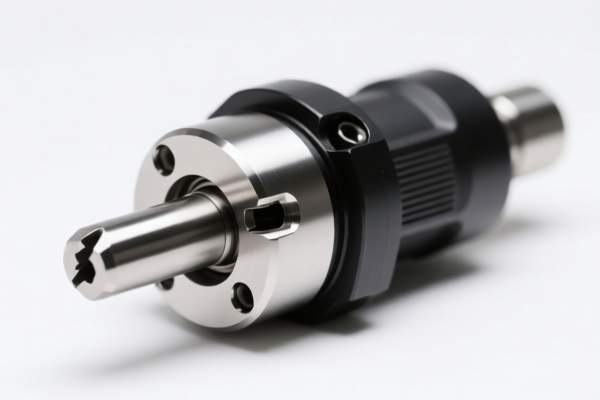
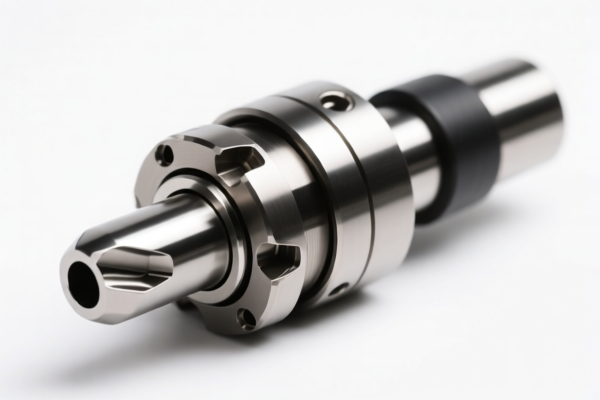
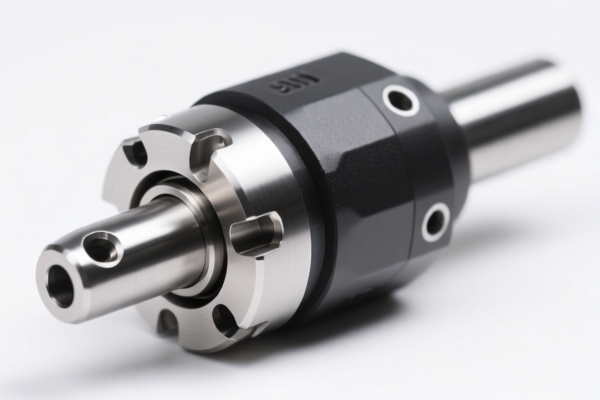
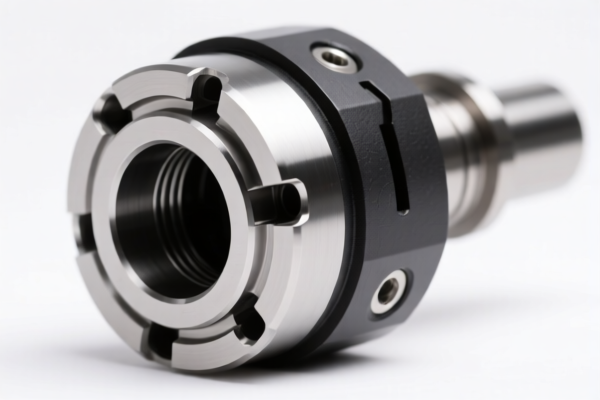
AI Analysis
🏭 Extruder Die & Nozzle (挤出机模头及喷嘴)
🌐 HS Code Reference & Customs Clearance Guide | 2026 Latest Tariff Analysis | Professional-Level Strategy
📌 Part 1: Product Definition & Classification: What Exactly Are They?
An Extruder Die and Nozzle is a critical component of plastic processing machinery. It is not a standalone machine but a precision part designed to shape molten material (plastic, rubber, etc.) as it exits the extruder barrel. In international trade, its classification depends heavily on its specific function and material attributes:
- Extruder Parts: Specifically designed for extrusion machines to shape the output profile.
- Heat Exchange/Mechanical Parts: If viewed broadly as components for general mechanical processing equipment.
- Metal Mechanical Parts: If the focus is on its metallic material and generic mechanical utility.
⚠️ Key Distinction Points:
- Is it specifically for an extruder? → Look at 8477.
- Is it a general mechanical part for heat treatment/processing? → Look at 8419.
- Is it a generic metal part for various machinery? → Look at 8419.95.
📦 Part 2: HS Code Classification Details (2026 Latest Tariff Authority Comparison)
| HS Code | Product Description | Application Scenario | Tariff Category |
|---|---|---|---|
8477.90.86.20 |
Parts specifically for extrusion machines | Matches the specific function of extruder dies/nozzles | Extruder Parts |
8419.90.30.00 |
Mechanical parts for heat exchange/processing equipment | Fits the broad category of mechanical parts for material processing | Heat Exchange Parts |
8419.90.95.80 |
Other mechanical parts (metal material) | Fits the attribute of other mechanical parts, metallic composition | General Mechanical Parts |
🔍 Key Reminder:
- 8477.90.86.20 is the most precise fit for "Extruder" applications;
- 8419.90.30.00 and 8419.90.95.80 are broader categories that may apply if the product’s function overlaps with general heat exchange or mechanical processing;
- Do not misdeclare as finished machines; these are strictly parts/components.
💰 Part 3: 2026 Latest Tariff Rate Breakdown (Including Surtaxes & Policy Add-ons)
✅ Applicable Country: United States (US)
✅ Origin: China (CN)
✅ Effective Date: 2025/2026 (Current Rates)
🎯 1. 8477.90.86.20 —— Extruder Parts (Most Precise Fit)
| Item | Content |
|---|---|
| Base Tariff | 3.1% |
| Section 301 Surtax | +25.0% |
| Section 122 Tariff | +10.0% |
| Total Tax Rate | 38.1% |
| Tax Calculation | CIF Value × 38.1% |
| De Minimis Exemption | ❌ Not Applicable |
| Legal Basis Path | USITC:8477.90.86.20 → Section 301 (25%) → Section 122 (10%) |
📌 Explanation:
- This code is recognized as specific to extruder machines;
- The 25% Section 301 tariff is applied due to Chinese origin;
- The 10% Section 122 tariff is an additional surcharge for certain industrial goods;
- Total 38.1% is high, but lower than alternative generic classifications.
🎯 2. 8419.90.30.00 —— Mechanical Parts for Heat Exchange/Processing
| Item | Content |
|---|---|
| Base Tariff | 0.0% |
| Section 301 Surtax | +25.0% |
| Section 122 Tariff | +10.0% |
| Total Tax Rate | 35.0% |
| Tax Calculation | CIF Value × 35.0% |
| De Minimis Exemption | ❌ Not Applicable |
| Legal Basis Path | USITC:8419.90.30.00 → Section 301 (25%) → Section 122 (10%) |
📌 Note:
- Although the base rate is 0%, the surtaxes remain the same;
- This classification views the die/nozzle as a mechanical part for heat-related processing;
- 35.0% is slightly lower than 38.1%, but may face higher scrutiny if not clearly defined as such.
🎯 3. 8419.90.95.80 —— Other Mechanical Parts (Metal)
| Item | Content |
|---|---|
| Base Tariff | 4.0% |
| Section 301 Surtax | +25.0% |
| Section 122 Tariff | +10.0% |
| Total Tax Rate | 39.0% |
| Tax Calculation | CIF Value × 39.0% |
| De Minimis Exemption | ❌ Not Applicable |
| Legal Basis Path | USITC:8419.90.95.80 → Section 301 (25%) → Section 122 (10%) |
📌 Caution:
- This is the highest total rate (39.0%) among the three options;
- It applies to generic metal mechanical parts not specifically tailored to extrusion or heat exchange;
- Only use this if no more specific code applies.
🛠️ Part 4: Customs Clearance Practical Advice (Avoid Pitfalls)
✅ 1. Required Documentation Checklist (Non-Negotiable)
| Document | Required | Notes |
|---|---|---|
| ✅ Product Specification Sheet | ✔️ | Include dimensions, material (steel/alloy), temperature range, compatibility with extruder models |
| ✅ Technical Drawings | ✔️ | Show internal flow channels, nozzle shape, mounting interface |
| ✅ Product Photos (with Label) | ✔️ | Clear view of model number, brand, material stamp |
| ✅ Commercial Invoice | ✔️ | Describe as "Extruder Die Assembly" or "Nozzle for Plastic Extruder" |
| ✅ Packing List | ✔️ | Detail individual components if sold as a kit |
| ✅ Certificate of Origin (CO) | ✔️ | Essential for proving Chinese origin and applying surtaxes correctly |
✅ 2. Declaration Tips (Key Strategy)
🔥 "Be Specific, Not Generic: Name It Right, Save the Cost!"
| Scenario | Correct Declaration | Wrong Approach |
|---|---|---|
| Standard Extruder Die | 8477.90.86.20 - "Extruder Die Part" |
Generic "Metal Part" → 39.0% |
| Heat-Exchange Nozzle | 8419.90.30.00 - "Mechanical Part for Heat Processing" |
"Extruder Part" → 38.1% |
| Generic Metal Nozzle | 8419.90.95.80 - "Other Mechanical Part" |
"Extruder Part" → 38.1% |
| Complete Extruder Machine | N/A (Different Code) | Declaring parts as machine → Penalty + 38-39% |
📌 Critical:
- If the product is clearly for extrusion, use 8477.90.86.20 (38.1%);
- If it can be argued as a heat-exchange mechanical part, 8419.90.30.00 (35.0%) is cheaper;
- Avoid 8419.90.95.80 (39.0%) unless necessary, as it has the highest total rate.
✅ 3. Special Case Handling
| Scenario | Recommendation |
|---|---|
| OEM Custom Dies | Provide customer design specs + order to prove specific use |
| Nozzles for Rubber Extrusion | Same classification as plastic extruders (8477.90.86.20) |
| Replacement Parts Kit | Declare as "Parts for Extruder" not "Machine" |
| Used/Refurbished Dies | Must declare as "Used" and provide condition report |
🌍 Part 5: Global Market Clearance Comparison (2026 Latest)
| Country/Region | Recommended HS Code | Tariff | Certification | Notes |
|---|---|---|---|---|
| 🇺🇸 USA | 8477.90.86.20 |
38.1% | None required | High due to Surtaxes |
| 🇺🇸 USA | 8419.90.30.00 |
35.0% | None required | Slightly cheaper alternative |
| 🇨🇳 China | 8477.90.86.20 |
~3.1% | CCC (if applicable) | No surtaxes domestically |
| 🇪🇺 EU | 8477.90.86.20 |
~0-4% | CE Marking | No Section 301/122 |
| 🇬🇧 UK | 8477.90.86.20 |
~0-4% | UKCA Marking | Post-Brexit rules apply |
| 🇦🇺 Australia | 8477.90.86.20 |
~5% | RCM | No major surtaxes |
📌 Conclusion:
- USA is the most expensive market due to Section 301 and Section 122 tariffs;
- EU/UK/Australia have significantly lower rates if imported from non-China origins or under trade agreements;
- For US imports, careful HS Code selection can save 3-4% of CIF value.
📌 Part 6: Common Mistakes & Pitfalls (Lessons Learned)
❌ Mistake 1: Declaring as "General Metal Part" without justification
👉 Result: Customs may reclassify to 8419.90.95.80 → 39.0% tax!
❌ Mistake 2: Using "Extruder Machine" as the description
👉 Result: Misdeclaration, penalties, and potential seizure.
❌ Mistake 3: Ignoring Section 122 Tariff
👉 Result: Unexpected 10% surcharge added to bill; underpayment risk.
❌ Mistake 4: Not providing technical drawings for borderline cases
👉 Result: Customs delays for classification review; storage fees incurred.
✅ Correct Approach:
"Extruder Die Assembly, Model XYZ, Stainless Steel, For Plastic Extrusion Line ABC, No Electronic Components"
🎯 Part 7: Conclusion: Precise Classification Saves Money!
🎯 Key Takeaway:
🔹 "Be Specific: Extruder Part = 38.1%, Heat Part = 35.0%, Generic = 39.0%"
🔹 "Surtaxes are unavoidable for China-origin: 25% + 10% always apply"
🔹 "Documentation is your shield: Drawings + Specs = Faster Clearance"
📌 Pro Tip:
- If your product can be argued as a heat-exchange mechanical part, consider 8419.90.30.00 for 3.1% savings;
- Always verify with a customs broker before shipment to avoid reclassification;
- For high-volume imports, consider Advance Ruling from US Customs.
📣 Immediate Action:
📞 Consult a licensed customs broker + Provide technical specs + Apply for Advance Ruling if possible
🚀 Ensure your Extruder Dies & Nozzles clear customs smoothly, efficiently, and cost-effectively!
✨ Professional Clearance Starts with Precise Classification!
💼 Every percentage point counts in your supply chain profitability!
Customer Reviews
About HS Code Classification
The Harmonized System (HS) is an internationally standardized nomenclature developed by the World Customs Organization (WCO) to classify traded products. Over 200 countries use the HS system as the basis for customs tariffs, trade statistics, and import/export regulations.
Each HS code follows a hierarchical structure:
- Chapter (2 digits) — Broad category of goods (e.g., Chapter 84: Machinery and Mechanical Appliances)
- Heading (4 digits) — More specific grouping within the chapter
- Subheading (6 digits) — Internationally standardized breakdown, used by all WCO member countries
- National subdivisions (8-10 digits) — Country-specific extensions for further classification, such as US HTSUS 10-digit codes
Correct HS code classification is essential for smooth customs clearance, accurate duty payment, and compliance with trade regulations. Misclassification can lead to customs delays, overpayment of duties, or penalties.
When importing from CN to US, the applicable tariff rates may include:
- Most-Favored-Nation (MFN) rate — The standard duty rate applied to WTO members
- General rate — Applied to countries without trade agreements
- Trade remedy duties — Additional tariffs such as Section 301 (anti-dumping), Section 232 (national security), or countervailing duties
The information provided on this page is for reference purposes only. For official classification, please consult with your local customs authority or a licensed customs broker.