Eyeglasses
CN → US| HS Code | Tariff Rate | Origin | Destination | Doc |
|---|---|---|---|---|
| 9004100000 | 19.5% | CN | US | Official Doc |
| 9003190000 | 17.5% | CN | US | Official Doc |
| 4202128980 | 52.6% | CN | US | Official Doc |
| 4202124000 | 41.3% | CN | US | Official Doc |
| 4202329300 | 52.6% | CN | US | Official Doc |
Product Images
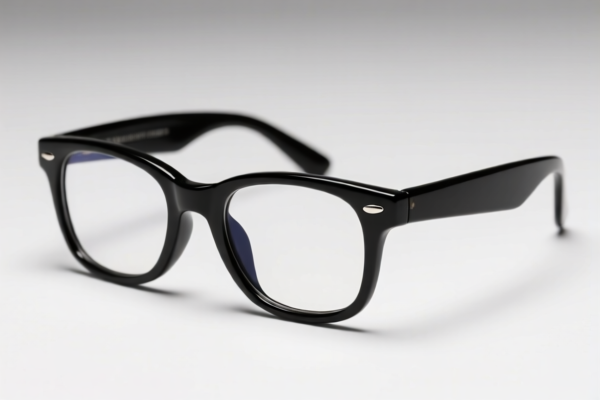
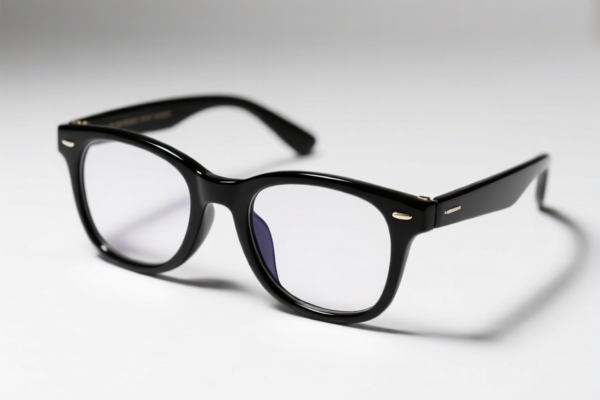
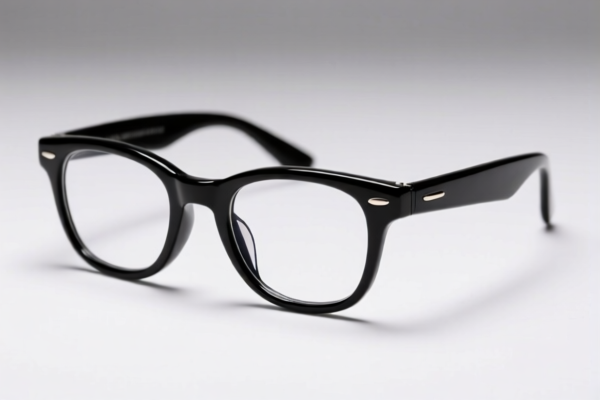
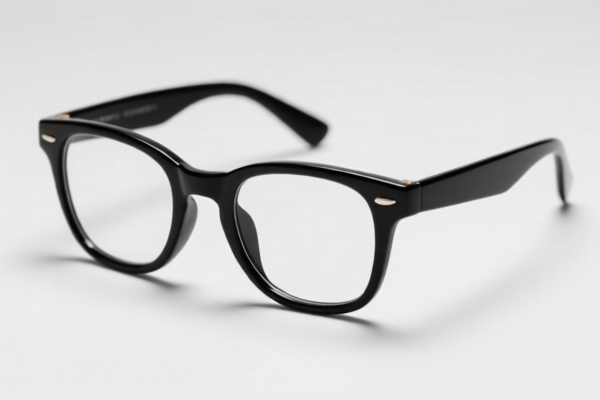
AI Analysis
🕶️ Eyeglasses & Accessories (Glasses Sets, Frames, Cases)
🌐 HS Code Reference & Customs Clearance Guide | 2026 Latest Tariff Analysis | Professional Clearance Strategy
📌 I. Product Definition & Classification: Do You Really Understand "Eyeglasses"?
In international trade, "Eyeglasses" is not a single entity but a complex ecosystem of optical devices and accessories. The classification depends entirely on the form, function, and material of the specific item being imported.
Under US Customs rules, these items fall into two main categories: 1. Optical Instruments (Chapter 90): Includes the lenses, frames, and complete sets. 2. Containers/Cases (Chapter 42): Includes glasses cases, pouches, and bags, classified by their outer material.
⚠️ Key Distinction Point:
- If it is a complete set (sunglasses + frame + purpose-matched): Classify under Chapter 90.
- If it is just the frame or apparatus without lenses: Classify under Chapter 90.
- If it is a case/pouch: Classify under Chapter 42 based on the outer textile material.
📦 II. HS Code Classification Details (2026 Latest Tariff Authority Comparison)
| HS Code | Product Description | Applicability | Key Feature |
|---|---|---|---|
9004.10.00.00 |
Sunglasses (Complete Sets) | Sun protection, fashion eyewear | Includes lenses & frames; purpose-matched |
9003.19.00.00 |
Frames & Apparatus | Prescription glasses, frames only | No lenses; structural component only |
4202.12.89.80 |
Glasses Cases (Textile Outer) | General use, non-premium textile | Outer surface is textile; container |
4202.12.40.00 |
Glasses Cases/Pouches (Textile) | Standard pouches, travel cases | Outer surface is textile; specific subheading |
4202.32.93.00 |
Glasses Bags/Pouches (Textile) | Soft bags, fabric cases | Outer surface is textile; bag category |
🔍 Important Reminder:
- Do NOT mix optical instruments (Ch. 90) with containers (Ch. 42) in the same line item if they are distinct products.
- For Cases/Pouches, the outer material dictates the HS Code. If the outer layer is textile, it falls under 4202.
- Sunglasses (9004.10.00.00) are treated as optical instruments, not fashion accessories, due to their functional lens component.
💰 III. 2026 Latest Tariff Rate Breakdown (Including Surtaxes, Policy Add-ons)
✅ Applicable Country: United States (US)
✅ Origin: China (CN)
✅ Effective Date: From November 10, 2025 (including subsequent imports)
🎯 1. 9004.10.00.00 —— Sunglasses (Complete Sets)
| Item | Content |
|---|---|
| Base Duty Rate | 2.0% (ad valorem) |
| Section 301 Surtax | +7.5% (USITC Section 301) |
| IEEPA Surtax (Section 122) | +10% (Targeted Chinese Products) |
| Total Rate | 19.5% |
| Tax Calculation | CIF Value × 19.5% |
| De Minimis Exemption | ❌ Not Eligible (deny_de_minimis) |
| Legal Basis Path | IEEPA:9903.01.25 → USITC:9004.10.00.00 → FOOTNOTE:301 |
📌 Explanation:
- Sunglasses are considered functional optical goods.
- Base Duty: Low at 2%, but the Section 301 (7.5%) and IEEPA 122 (10%) surtaxes push the total to 19.5%.
- No De Minimis: Even if shipped via courier (e.g., FedEx, DHL) under $800, these goods are excluded from the $800 de minimis exemption due to IEEPA restrictions.
🎯 2. 9003.19.00.00 —— Frames & Apparatus
| Item | Content |
|---|---|
| Base Duty Rate | 0.0% (ad valorem) |
| Section 301 Surtax | +7.5% (USITC Section 301) |
| IEEPA Surtax (Section 122) | +10% (Targeted Chinese Products) |
| Total Rate | 17.5% |
| Tax Calculation | CIF Value × 17.5% |
| De Minimis Exemption | ❌ Not Eligible (deny_de_minimis) |
| Legal Basis Path | IEEPA:9903.01.25 → USITC:9003.19.00.00 → FOOTNOTE:301 |
📌 Note:
- Frames alone have a 0% base duty, making them slightly cheaper than full sunglasses.
- However, the 17.5% total rate (7.5% + 10%) is still significant.
- No De Minimis: Same as sunglasses, excluded from $800 exemption.
🎯 3. 4202.12.89.80 / 4202.12.40.00 / 4202.32.93.00 —— Glasses Cases & Bags (Textile Outer)
| HS Code | Product | Base Duty | Surtax (301) | IEEPA (122) | Total Rate |
|---|---|---|---|---|---|
4202.12.89.80 |
Glasses Case (Textile) | 17.6% | +25.0% | +10% | 52.6% |
4202.12.40.00 |
Glasses Case/Pouch (Textile) | 6.3% | +25.0% | +10% | 41.3% |
4202.32.93.00 |
Glasses Bag (Textile) | 17.6% | +25.0% | +10% | 52.6% |
| Item | Content |
|---|---|
| Base Duty Rate | Varies (6.3% or 17.6%) |
| Section 301 Surtax | +25.0% (High Surtax for Textiles/Containers) |
| IEEPA Surtax (Section 122) | +10% |
| Total Rate | 41.3% – 52.6% |
| De Minimis Exemption | ❌ Not Eligible (deny_de_minimis) |
| Legal Basis Path | IEEPA:9903.01.25 → USITC:4202.12/32 → FOOTNOTE:301 |
📌 Critical Warning:
- Cases and bags are heavily taxed! The Section 301 surtax is 25%, not 7.5%.
- This makes importing glasses cases from China extremely expensive (41.3% to 52.6%).
- No De Minimis: Excluded from $800 exemption.
- Tip: If possible, source cases from non-China origins to avoid the 25% surtax, or factor this cost into your pricing strategy.
🛠️ IV. Customs Clearance Practical Advice (Battle-Tested Pitfall Avoidance Guide)
✅ 1. Required Document Checklist (None Missing)
| Document | Mandatory | Description |
|---|---|---|
| ✅ Product Specs Sheet | ✔️ | Material of lenses, frame type, case material |
| ✅ Product Photos | ✔️ | Clear shots of lenses, frame hinges, case exterior/interior |
| ✅ Commercial Invoice | ✔️ | Must specify "Sunglasses," "Frames," or "Glasses Case" separately |
| ✅ Packing List | ✔️ | Clearly separate optical goods from containers if shipped together |
| ✅ Origin Certificate | ✔️ | If non-China, to check for FTA benefits |
✅ 2. Declaration Tips (Key Mantras)
🔥 "Separate Items, Specify Material, Avoid Merging!"
| Scenario | Correct Declaration | Wrong Approach |
|---|---|---|
| Sunglasses + Case in one box | Two Line Items: 1. 9004.10.00.00 (Sunglasses) 2. 4202.12.xx.xx (Case) |
Declaring as one "Glasses Set" → Risk of Misclassification |
| Only Frames | 9003.19.00.00 |
Declaring as "Sunglasses" → 19.5% vs 17.5% (Minor diff, but accuracy matters) |
| Textile Case | 4202.12.xx.xx or 4202.32.xx.xx |
Declaring as "Plastic Case" → Wrong HS Code, Penalty Risk |
| Case with Logo | 4202.12.xx.xx |
Declaring as "Clothing Accessory" → Higher Duty Risk |
📌 Note:
- Always declare cases separately from glasses. Merging them can lead to disputes over the "primary function" and potential duty evasion accusations.
- For cases, explicitly state "Outer Surface: Textile" in the description to align with 4202.
✅ 3. Special Case Handling
| Scenario | Handling Advice |
|---|---|
| OEM Custom Glasses | Provide design blueprints + invoice showing separate values for lenses/frames vs. cases |
| Glasses Case with Hard Shell + Textile Exterior | Classify under 4202 (Textile Outer). Do not classify as "Hard Plastic Case" if the outer layer is fabric |
| Bulk Import (Palletized) | Ensure each carton has proper labeling. Mislabeling one box can delay the whole shipment |
| De Minimis Attempt ($800) | Do Not Attempt. IEEPA Section 122 explicitly denies de minimis for these HS Codes. Ship via formal entry only. |
🌍 V. Global Market Customs Comparison (2026 Latest)
| Country/Region | Recommended HS Code | Tariff (China Origin) | Certification | Notes |
|---|---|---|---|---|
| 🇺🇸 USA | 9004.10.00.00 / 4202.xx.xx |
17.5% – 52.6% | No specific | High Surtax: 25% for cases, 7.5% for glasses |
| 🇪🇺 EU | 9004.10.00 / 4202.xx.xx |
~2.5% - 12% | CE (if applicable) | No Section 301/IEEPA surtaxes |
| 🇨🇳 China | 9004.10.00 / 4202.xx.xx |
~5% - 10% | CCC (if applicable) | Lower base duties |
| 🇬🇧 UK | 9004.10.00 / 4202.xx.xx |
~5% - 10% | UKCA | Post-Brexit rules apply |
📌 Conclusion:
- USA is the most expensive market for eyeglasses and accessories due to Section 301 and IEEPA 122 surtaxes.
- Cases are taxed higher than glasses due to the 25% Section 301 rate.
- No De Minimis means even small shipments are subject to full duty and paperwork.
📌 VI. Common Errors & Pitfall Avoidance (Blood & Tears Lessons)
❌ Error 1: Combining Glasses and Cases into one HS Code
👉 Consequence: Classification Error → Goods detained, audit triggered.
❌ Error 2: Declaring Textile Cases as "Plastic" or "Other Material"
👉 Consequence: Wrong HS Code → Incorrect duty assessment, potential penalties.
❌ Error 3: Trying to use De Minimis ($800) for IEEPA-listed items
👉 Consequence: Shipment Rejected/Returned → Delays, storage fees, loss of goods.
❌ Error 4: Omitting "Sunglasses" vs "Prescription Glasses" distinction
👉 Consequence: Misclassification → 9004.10 (Sunglasses) vs other optical instruments.
✅ Correct Practice:
"Sunglasses, UV400, Plastic Frame, Model XYZ.
Glasses Case, Outer Material: Polyester, Zipper Closure, Model ABC."
🎯 VII. Conclusion: Precise Classification, Save Money, Smooth Clearance!
🎯 Remember the Mantra:
🔹 "Glasses 17-19%, Cases 41-52%, No De Minimis, Separate Lines!"
🔹 "Textile Outer? Then 4202. Lenses? Then 9004. Check IEEPA 122!"
📌 Pro Tip:
- If you are importing large volumes, consider supply chain diversification (e.g., source cases from Vietnam or India) to avoid the 25% Section 301 surtax on Chinese-origin containers.
- Apply for Advance Rulings if your product structure is complex (e.g., hybrid cases).
- Budget for 41-52% duty on cases if sourcing from China to the US.
📣 Immediate Action:
📞 Contact a Professional Customs Broker + Provide Product Photos + Verify HS Codes
🚀 Ensure Compliance, Avoid Delays, Protect Margins!
✨ Professional Clearance Starts with Accurate Classification!
💼 Every Percent Counts in International Trade!
Customer Reviews
About HS Code Classification
The Harmonized System (HS) is an internationally standardized nomenclature developed by the World Customs Organization (WCO) to classify traded products. Over 200 countries use the HS system as the basis for customs tariffs, trade statistics, and import/export regulations.
Each HS code follows a hierarchical structure:
- Chapter (2 digits) — Broad category of goods (e.g., Chapter 84: Machinery and Mechanical Appliances)
- Heading (4 digits) — More specific grouping within the chapter
- Subheading (6 digits) — Internationally standardized breakdown, used by all WCO member countries
- National subdivisions (8-10 digits) — Country-specific extensions for further classification, such as US HTSUS 10-digit codes
Correct HS code classification is essential for smooth customs clearance, accurate duty payment, and compliance with trade regulations. Misclassification can lead to customs delays, overpayment of duties, or penalties.
When importing from CN to US, the applicable tariff rates may include:
- Most-Favored-Nation (MFN) rate — The standard duty rate applied to WTO members
- General rate — Applied to countries without trade agreements
- Trade remedy duties — Additional tariffs such as Section 301 (anti-dumping), Section 232 (national security), or countervailing duties
The information provided on this page is for reference purposes only. For official classification, please consult with your local customs authority or a licensed customs broker.