Eyeglasses Anti slip Pads
CN → US| HS Code | Tariff Rate | Origin | Destination | Doc |
|---|---|---|---|---|
| 9615904000 | 15.3% | CN | US | Official Doc |
| 9615906000 | 21.0% | CN | US | Official Doc |
| 4016990500 | 20.9% | CN | US | Official Doc |
| 9005904000 | 0.0% | CN | US | Official Doc |
| 4016996050 | 37.5% | CN | US | Official Doc |
Product Images
AI Analysis
👓 Eyeglasses Anti-Slip Pads (Silicone/Hook Types)
🌐 HS Code Reference & Customs Clearance Guide | 2026 Latest Tariff Analysis | Strategic Clearance Strategy
📌 I. Product Definition & Classification: Do You Really Understand "Anti-Slip Pads"?
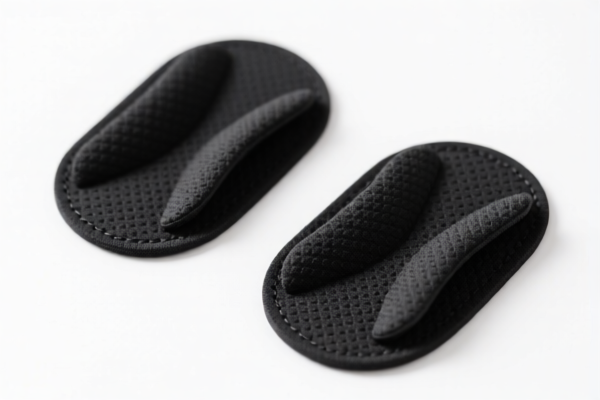
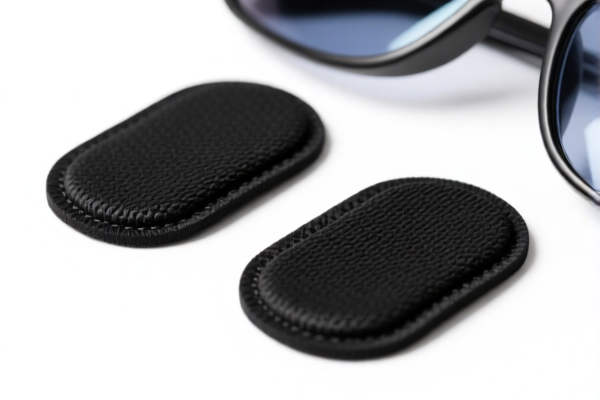
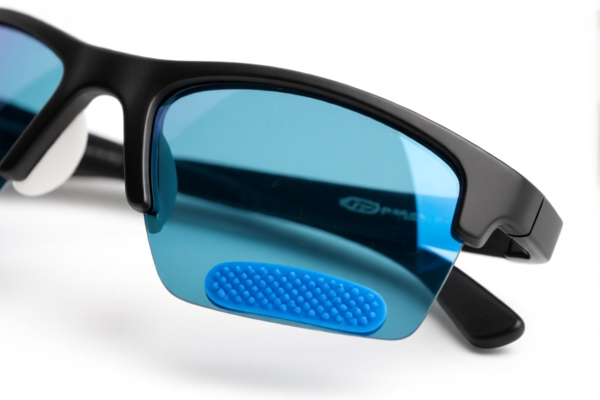
Eyeglasses anti-slip pads are small accessories designed to prevent glasses from sliding down the nose or ears. In international trade, their classification depends heavily on material (Plastic vs. Silicone/Rubber) and form (Hook vs. Pad).
Key Distinction:
- Plastic/Metal Hooks: Often classified under hair ornaments or accessories if made of plastic/metal.
- Silicone/Rubber Pads: Classified under rubber/plastic articles.
- Optical Accessories: Some silicone pads may be considered parts of optical instruments.
⚠️ Critical Differentiator:
- If made of plastic and shaped like a hook → Check Chapter 96 (Hair Ornaments/Accessories).
- If made of silicone/rubber → Check Chapter 40 (Rubber Articles).
- If explicitly marketed as an optical instrument part → Check Chapter 90 (Optical Instruments).
📦 II. HS Code Classification Details (2026 Latest Tariff Authority Comparison)
| HS Code | Product Description | Application Scenario | Material Type |
|---|---|---|---|
9615.90.40.00 |
Hair ornaments/accessories (e.g., plastic anti-slip hooks) | Small plastic hooks, decorative ear hooks | ✅ Plastic |
9615.90.60.00 |
Other hair ornaments/head accessories | Small auxiliary hooks, metal/plastic hybrids | ✅ Plastic/Metal |
4016.99.05.00 |
Other vulcanized rubber articles (home use) | Silicone nose pads, rubber ear hooks | ✅ Silicone/Rubber |
9005.90.40.00 |
Parts/Accessories of optical instruments | Silicone pads explicitly for glasses | ✅ Silicone (Optical Part) |
4016.99.60.50 |
Other rubber articles for non-motor vehicles | Silicone pads classified under broad rubber category | ✅ Silicone (Rubber) |
🔍 Key Reminder:
- Plastic Hooks fall under 9615 (Hair Ornaments) due to shape similarity.
- Silicone/Nose Pads fall under 4016 (Rubber Articles) or 9005 (Optical Parts).
- Misclassification Risk: Declaring silicone as "plastic" or vice versa leads to significant tax differences.
💰 III. 2026 Latest Tariff Rate Details (Including Surcharges, Policy Add-ons)
✅ Applicable Country: United States (US)
✅ Origin: China (CN)
✅ Effective Time: 2025-11-10 onwards (including subsequent imports)
🎯 1. 9615.90.40.00 —— Hair Ornaments/Accessories (Plastic Anti-Slip Hooks)
| Item | Content |
|---|---|
| Base Tariff | 5.3% (ad valorem) |
| USITC Surcharge (Section 301) | +0.0% (No additional 301 tariff for this specific HTSUS subheading in the provided data) |
| 122 Clause Surcharge | +10.0% |
| Total Tariff Rate | 15.3% |
| Tax Calculation | CIF Value × 15.3% |
| De Minimis Eligibility | ✅ Yes (Typically under $800) |
| Legal Basis Path | HTSUS:9615.90.40.00 → 122 Clause:10% |
📌 Explanation:
- Base Rate 5.3%: Standard MFN rate for plastic hair accessories.
- 122 Clause 10%: Specific surcharge applied to certain plastic/rubber articles from China.
- No 301 Surcharge: This category does not currently attract the higher Section 301 tariffs in the provided data.
🎯 2. 9615.90.60.00 —— Other Hair Ornaments (Metal/Plastic Hooks)
| Item | Content |
|---|---|
| Base Tariff | 11.0% (ad valorem) |
| USITC Surcharge (Section 301) | +0.0% |
| 122 Clause Surcharge | +10.0% |
| Total Tariff Rate | 21.0% |
| Tax Calculation | CIF Value × 21.0% |
| De Minimis Eligibility | ✅ Yes |
| Legal Basis Path | HTSUS:9615.90.60.00 → 122 Clause:10% |
📌 Note:
- Higher base rate due to different material/form classification.
- Still subject to the 10% 122 Clause surcharge.
🎯 3. 4016.99.05.00 —— Other Vulcanized Rubber Articles (Silicone Pads)
| Item | Content |
|---|---|
| Base Tariff | 3.4% (ad valorem) |
| USITC Surcharge (Section 301) | +7.5% |
| 122 Clause Surcharge | +10.0% |
| Total Tariff Rate | 20.9% |
| Tax Calculation | CIF Value × 20.9% |
| De Minimis Eligibility | ✅ Yes |
| Legal Basis Path | HTSUS:4016.99.05.00 → USITC:7.5% → 122 Clause:10% |
📌 Explanation:
- Base Rate 3.4%: Low base for rubber articles.
- USITC 7.5%: Partial Section 301 surcharge applied.
- 122 Clause 10%: Additional surcharge.
🎯 4. 9005.90.40.00 —— Parts of Optical Instruments (Silicone Optical Parts)
| Item | Content |
|---|---|
| Base Tariff | "Rate applicable to the article of which it is a part or accessory" (Variable, often 0-5%) |
| USITC Surcharge (Section 301) | +7.5% |
| 122 Clause Surcharge | +10.0% |
| Total Tariff Rate | Variable Base + 17.5% |
| Tax Calculation | (CIF × Base Rate) + (CIF × 17.5%) |
| De Minimis Eligibility | ✅ Yes |
| Legal Basis Path | HTSUS:9005.90.40.00 → USITC:7.5% → 122 Clause:10% |
📌 Note:
- Base Rate is Variable: Depends on the principal optical instrument (e.g., glasses lenses). Often low (0-5%).
- High Surcharge: Combined 17.5% in surcharges makes total cost significant.
🎯 5. 4016.99.60.50 —— Other Rubber Articles (Non-Motor Vehicle Specific)
| Item | Content |
|---|---|
| Base Tariff | 2.5% (ad valorem) |
| USITC Surcharge (Section 301) | +25.0% |
| 122 Clause Surcharge | +10.0% |
| Total Tariff Rate | 37.5% |
| Tax Calculation | CIF Value × 37.5% |
| De Minimis Eligibility | ✅ Yes |
| Legal Basis Path | HTSUS:4016.99.60.50 → USITC:25% → 122 Clause:10% |
📌 Warning:
- Highest Surcharge (25%): This category attracts the full Section 301 tariff.
- Total 37.5%: Significantly higher than other options. Avoid if possible.
🛠️ IV. Customs Clearance Practical Advice (Combat Pitfall Guide)
✅ 1. Document Checklist (Indispensable)
| Document | Required | Notes |
|---|---|---|
| ✅ Product Specification Sheet | ✔️ | Material (Silicone/Plastic), Shape, Size, Weight |
| ✅ Product Photos | ✔️ | Clear images showing usage (on glasses), material texture |
| ✅ Commercial Invoice | ✔️ | Describe as "Eyeglasses Accessories: Silicone Anti-Slip Pads" |
| ✅ Packing List | ✔️ | Ensure quantities match invoice |
| ✅ Certificate of Origin (if applicable) | ✔️ | For potential FTAA benefits (though limited for China origin) |
✅ 2. Declaration Tips (Key Mnemonics)
🔥 "Material Determines Code, Shape Determines Chapter, Surcharge Determines Cost!"
| Scenario | Correct Declaration | Wrong Practice |
|---|---|---|
| Plastic Hook Pads | 9615.90.40.00 (15.3%) |
Declare as "Rubber" → 20.9%+ |
| Silicone Nose Pads | 4016.99.05.00 (20.9%) |
Declare as "Optical Part" → Variable + 17.5% |
| Silicone Pads (Avoid) | 4016.99.60.50 (37.5%) |
Avoid this code unless necessary |
✅ 3. Special Handling
| Scenario | Advice |
|---|---|
| Mixed Materials | If product has both plastic and silicone parts, classify by essential character or predominant material. |
| Gift Sets | If sold as "Glasses + Anti-Slip Pads", declare as main item (Glasses) + accessory. Accessories may be duty-free if included. |
| OEM Customization | Provide design files to prove specific use (optical vs. cosmetic). |
🌍 V. Global Market Comparison (2026 Latest)
| Country/Region | Recommended HS Code | Tariff (China Origin) | Certification | Notes |
|---|---|---|---|---|
| 🇺🇸 USA | 9615.90.40.00 |
15.3% | None | Best option for plastic hooks. |
| 🇺🇸 USA | 4016.99.05.00 |
20.9% | None | Good for silicone pads. |
| 🇨🇳 China | 9615.90.40.00 |
5.3% | None | Low export tax. |
| 🇪🇺 EU | 9615.90.40.00 |
~0-5% | CE (if applicable) | Lower tariffs, no 122/301 clauses. |
| 🇯🇵 Japan | 9615.90.40.00 |
~5% | None | Moderate tariff. |
📌 Conclusion:
- USA is the most complex market due to 122 Clause and Section 301 surcharges.
- Plastic Hooks (9615.90.40.00) offer the lowest total tax (15.3%) in the US.
- Silicone Pads face higher surcharges but are still manageable (~20.9%).
- Avoid4016.99.60.50in the US due to 37.5% total tariff.
📌 VI. Common Errors & Pitfall Guide (Lessons Learned)
❌ Error 1: Declaring silicone pads as "Plastic"
👉 Consequence:海关可能要求补充材料证明,导致延误。若最终认定为橡胶,税率可能变化。
👉 Result: Delayed clearance, potential fine.
❌ Error 2: Declaring plastic hooks as "Optical Parts" (9005.90.40.00)
👉 Consequence: Base rate may be lower, but surcharge structure differs. Misclassification leads to penalties.
👉 Result: Penalty for incorrect HTSUS classification.
❌ Error 3: Ignoring 122 Clause Surcharge
👉 Consequence: Underpaying tariffs by 10%.
👉 Result: Back taxes + interest upon audit.
✅ Correct Practice:
"Silicone Eyeglasses Anti-Slip Nose Pads, Non-Medical, For Personal Use, Model XYZ"
🎯 VII. Conclusion: Professional Declaration, Cost Optimization!
🎯 Remember:
🔹 "Plastic Hooks = 15.3%, Silicone Pads = 20.9%, Avoid 37.5%!"
🔹 "122 Clause is 10%, Section 301 varies – Check Code First!"
📌 Tip:
If your product is originating from Vietnam or Malaysia, it may be exempt from 122 Clause and Section 301, reducing tariffs significantly.
Recommend Advance Ruling for complex mixed-material products.
📣 Act Now:
📞 Contact a Professional Customs Broker + Provide Product Specs + Apply for HTSUS Advance Ruling
🚀 Let your eyeglasses accessories clear smoothly, maximize profit!
✨ Professional Customs Clearance Starts with Accurate Classification!
💼 Every Cent of Your Cost Deserves Precise Calculation!
Customer Reviews
About HS Code Classification
The Harmonized System (HS) is an internationally standardized nomenclature developed by the World Customs Organization (WCO) to classify traded products. Over 200 countries use the HS system as the basis for customs tariffs, trade statistics, and import/export regulations.
Each HS code follows a hierarchical structure:
- Chapter (2 digits) — Broad category of goods (e.g., Chapter 84: Machinery and Mechanical Appliances)
- Heading (4 digits) — More specific grouping within the chapter
- Subheading (6 digits) — Internationally standardized breakdown, used by all WCO member countries
- National subdivisions (8-10 digits) — Country-specific extensions for further classification, such as US HTSUS 10-digit codes
Correct HS code classification is essential for smooth customs clearance, accurate duty payment, and compliance with trade regulations. Misclassification can lead to customs delays, overpayment of duties, or penalties.
When importing from CN to US, the applicable tariff rates may include:
- Most-Favored-Nation (MFN) rate — The standard duty rate applied to WTO members
- General rate — Applied to countries without trade agreements
- Trade remedy duties — Additional tariffs such as Section 301 (anti-dumping), Section 232 (national security), or countervailing duties
The information provided on this page is for reference purposes only. For official classification, please consult with your local customs authority or a licensed customs broker.