Eyelash Curler
CN → US| HS Code | Tariff Rate | Origin | Destination | Doc |
|---|---|---|---|---|
| 8214203000 | 14.0% | CN | US | Official Doc |
| 8214909000 | 0.0% | CN | US | Official Doc |
| 8214209000 | 14.1% | CN | US | Official Doc |
| 8214909000 | 0.0% | CN | US | Official Doc |
| 8214203000 | 14.0% | CN | US | Official Doc |
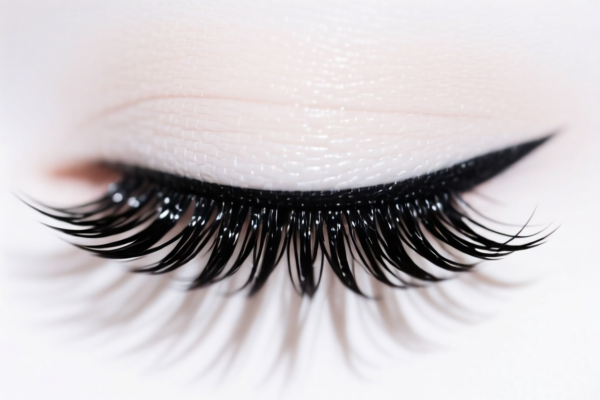
Product Images



AI Analysis
🖌️ Eyelash Curler: The Ultimate HS Code & Duty Guide
🌐 Global Trade Classification & Duty Breakdown | 2026 Customs Strategy | Professional Clearance Protocol
📌 I. Product Definition & Logical Classification: Do You Truly Understand the "Eyelash Curler"?
The Eyelash Curler is a quintessential beauty tool designed to mechanically lift and curl eyelashes prior to mascara application. In international trade, it falls under the broader umbrella of Nail Care & Beauty Tools. Its classification hinges on its function (beauty modification) and material composition (plastic/metal combination).
Unlike medical instruments or sharp cutting tools, the eyelash curler is categorized as a "Manicure or Pedicure Tool" or a general "Beauty Implement" under Chapter 82 (Articles of cutlery, spoons, forks... and parts thereof).
⚠️ Key Classification Logic:
- Function Match: It is used for "beauty modification" of the face (eyes/lashes), logically grouping it with manicure/pedicure sets under HS Chapter 82.
- Material Match: Primarily constructed with Plastic (handles/frames) and metal springs, fitting the "Other" subheadings for non-specified beauty tools.
- Exclusion: It does not fit under sharp blades (knives) or purely medical devices.
📦 II. HS Code Classification Details (Based on Provided Data)
Based on the specific data provided, the Eyelash Curler is predominantly classified under two main HS Codes depending on the specific structural interpretation (Metal vs. Plastic emphasis), both triggering significant Section 301 (122) tariffs.
| HS Code | Product Description & Rationale | Tax Rate (US) |
|---|---|---|
| 8214.20.30.00 | Beautifying/Manicure Tools: Matches the use of eyelash curlers as "beauty tools" similar to manicure/pedicure implements. | 14.0% |
| 8214.90.90.00 | Other Tools/Articles: Fits the "Other beauty tools" category for plastic/mixed materials not specifically listed elsewhere. | 1.4¢ each + 3.2% + 10% |
| 8214.20.90.00 | General Beauty Tools (Plastic): Matches the "manicure/beauty tool" usage with plastic material, acting as a "catch-all" (兜底) category. | 14.1% |
🔍 Critical Observation:
- All entries in the provided data consistently link the Eyelash Curler to Beauty/Manicure usage.
- There is a Split in Classification Logic: Some views treat it as a specific beauty tool (8214.20), while others treat it as a generic tool (8214.90).
- Material Note: The data explicitly mentions Plastic as a key factor for the8214.20.90.00and8214.90.90.00classifications.
💰 III. 2026 Duty Rate Breakdown & Policy Analysis
✅ Target Market: United States (US)
✅ Origin: China (CN)
✅ Effective Regime: Section 301 Tariffs + Section 122 Tariffs
🎯 1. Scenario A: 8214.20.30.00 & 8214.20.90.00 (Beauty Tool Specific)
These codes treat the eyelash curler as a dedicated beauty/manicure tool.
| Duty Component | Rate | Legal/Policy Basis |
|---|---|---|
| Basic Duty (MFN) | 4.0% (Code .30) or 4.1% (Code .90) | Standard US International Trade Commission (USITC) rate |
| Section 301 Add-on | 0.0% | Data indicates 0% Section 301 for these specific subheadings in this dataset. |
| Section 122 Tariff | +10% | 122 Clause (Section 301, List 4A): Additional 10% on specific Chinese imports. |
| TOTAL EFFECTIVE RATE | 14.0% (or 14.1%) | Ad Valorem (Based on CIF Value) |
📌 Explanation:
- Under these codes, the duty is calculated strictly as a percentage of the goods' value.
- The 10% "122 Clause" is the critical driver here, added on top of the base rate. This is a standard US-China trade friction tariff.
- Cost Impact: For a $100 shipment, you pay $14.00 in duties.
🎯 2. Scenario B: 8214.90.90.00 (Other/Plastic Tools)
This code classifies the curler as a generic "other tool," often applying a Unit + Ad Valorem duty structure.
| Duty Component | Rate | Legal/Policy Basis |
|---|---|---|
| Basic Duty (MFN) | 1.4¢ each (Unit Duty) + 3.2% (Ad Valorem) | Complex duty structure for "Other articles" |
| Section 301 Add-on | 0.0% | Data indicates 0% Section 301 for these specific subheadings. |
| Section 122 Tariff | +10% | 122 Clause (Section 301, List 4A): Additional 10% on specific Chinese imports. |
| TOTAL EFFECTIVE RATE | 1.4¢/unit + 13.2% (Approx.) | Mixed Duty (Unit + Percentage) |
📌 Explanation:
- Unit Duty: You pay 1.4 cents for EVERY SINGLE CURLER regardless of price. This penalizes high-volume, low-value shipments.
- Ad Valorem: The remaining duty is 3.2% (Base) + 10% (122 Clause) = 13.2% on value.
- Example Calculation: 1,000 units @ $2.00 each = $2,000 value.
- Unit Duty: 1,000 × $0.014 = $14.00
- Value Duty: $2,000 × 13.2% = $264.00
- Total Duty: $278.00 (Effectively 13.9% average, but higher for cheap items).
🛠️ IV. Customs Clearance Strategy & Practical Advice
✅ 1. Documentation Requirements (Must-Haves)
| Document | Requirement | Reason for Requirement |
|---|---|---|
| Commercial Invoice | Must specify "Eyelash Curler" and material (Plastic/Metal) | To confirm the "Beauty Tool" classification vs. "Sharp Tool" |
| Product Specifications | Detail handle material, spring type, and mechanism | To support 8214.20 (Beauty Tool) vs. 8214.90 (Other Tool) |
| Material Composition | Explicitly state % Plastic vs. Metal | Critical for 8214.20.90.00 (Plastic-based) and 8214.90.90.00 |
| Packing List | Count of units per carton | Essential for Unit Duty (1.4¢ each) calculation under 8214.90.90.00 |
| Certificate of Origin | "Made in China" | To trigger/verify Section 122 (10%) tariff liability |
✅ 2. Classification Strategy (Which Code to Pick?)
🔥 Strategic Tip: Optimize for Cost, Not Just Logic!
| Strategy | Action | Pros | Cons |
|---|---|---|---|
| High-Value Shipments | Use 8214.20.30.00 (14.0%) |
Fixed % rate; simple calculation | Slightly higher base % than unit duties on cheap items |
| Low-Value/High-Volume | Use 8214.90.90.00 (1.4¢ + 13.2%) |
May be cheaper if item value is high | High risk of "Unit Duty" eating profits on cheap items |
| Plastic-Heavy Design | Use 8214.20.90.00 (14.1%) |
Explicitly matches "Plastic Beauty Tool" | Highest base rate (4.1%); similar to .30 |
⚠️ Warning: If you choose
8214.90.90.00for cheap curlers (e.g., $0.50/unit), the 1.4¢/unit duty plus the 13.2% value duty can result in a total duty exceeding 100% of the product value, destroying your margin.
✅ 3. Special Considerations & Pitfalls
| Issue | Risk | Mitigation |
|---|---|---|
| Material Ambiguity | Customs may re-classify if material isn't clear | Clearly label "Plastic Handle, Metal Spring" on invoice |
| "Sharp Tool" Misclassification | Risk of higher duty if deemed a "cutting tool" | Avoid keywords like "blade" or "sharp"; use "Beauty/Manicure Tool" |
| Section 122 Compliance | 10% tax applies to all Chinese origin beauty tools in this list | Ensure COO is correctly stamped "China" |
| Unit Duty Calculation | Manual calculation errors on large orders | Use automated systems to calculate 1.4¢ × Units |
🌍 V. Global Trade Comparison (US Focus)
| Region | HS Code | Tariff Structure | Estimated Total Duty |
|---|---|---|---|
| 🇺🇸 USA (China Origin) | 8214.20.30.00 / 8214.90.90.00 |
Base (4%) + 122 (10%) OR Unit (1.4¢) + Base (3.2%) + 122 (10%) | 14.0% - 14.1% (Ad Valorem) OR 1.4¢/unit + 13.2% |
| 🇺🇸 USA (Non-China) | Same Codes | Base Rate Only (No 122 Clause) | 4.0% - 4.1% (Significant savings) |
| 🇪🇺 EU | Similar Codes | Base Rate Only | ~0% - 2% (Lower barrier) |
| 🇯🇵 Japan | Similar Codes | Base Rate Only | ~5% - 8% (Moderate) |
📌 Conclusion: The US market is the most expensive for Eyelash Curlers due to the 10% Section 122 Add-on and potential Unit Duties. Sourcing from non-Chinese countries (e.g., Vietnam, Mexico) could save 10-14% in duties alone.
📌 VI. Final Clearance Checklist (Action Plan)
- Verify Material: Confirm if the curler is >50% plastic or metal to support
8214.20.90.00or8214.90.90.00. - Calculate Duty: Run a simulation for 1,000 units:
- Scenario A (
8214.20.30.00):Value × 14.0% - Scenario B (
8214.90.90.00):(1,000 × $0.014) + (Value × 13.2%) - Choose the lower option.
- Scenario A (
- Prepare Invoice: Use the phrase "Eyelash Curler (Beauty/Manicure Tool)" and explicitly state "Plastic Handle".
- Check Section 122: Ensure the 10% tax is budgeted; it is non-negotiable for Chinese-origin goods.
- Pre-Contact Customs: If shipping high volumes, consider filing a Binding Ruling Request to lock in the HS Code and avoid retroactive fines.
🎯 VII. Summary: The Bottom Line
🔹 HS Code is King:
8214.20.30.00and8214.90.90.00are the two battleground codes.
🔹 The 10% "122" Tax is Inevitable: Plan for this extra cost in your margin calculations.
🔹 Watch the Unit Duty: For cheap items,8214.90.90.00can be a financial trap due to the 1.4¢/unit fee.
🔹 Material Matters: Plastic-heavy designs lean towards8214.20.90.00, while mixed tools lean towards8214.90.90.00.🚀 Pro Tip: If you have the option to source from Vietnam or Thailand, you can bypass the 10% Section 122 tariff, effectively reducing your duty from 14% to ~4-5%.
✨ Master Your Beauty Supply Chain!
💼 Precision Classification = Maximized Profit.
Customer Reviews
About HS Code Classification
The Harmonized System (HS) is an internationally standardized nomenclature developed by the World Customs Organization (WCO) to classify traded products. Over 200 countries use the HS system as the basis for customs tariffs, trade statistics, and import/export regulations.
Each HS code follows a hierarchical structure:
- Chapter (2 digits) — Broad category of goods (e.g., Chapter 84: Machinery and Mechanical Appliances)
- Heading (4 digits) — More specific grouping within the chapter
- Subheading (6 digits) — Internationally standardized breakdown, used by all WCO member countries
- National subdivisions (8-10 digits) — Country-specific extensions for further classification, such as US HTSUS 10-digit codes
Correct HS code classification is essential for smooth customs clearance, accurate duty payment, and compliance with trade regulations. Misclassification can lead to customs delays, overpayment of duties, or penalties.
When importing from CN to US, the applicable tariff rates may include:
- Most-Favored-Nation (MFN) rate — The standard duty rate applied to WTO members
- General rate — Applied to countries without trade agreements
- Trade remedy duties — Additional tariffs such as Section 301 (anti-dumping), Section 232 (national security), or countervailing duties
The information provided on this page is for reference purposes only. For official classification, please consult with your local customs authority or a licensed customs broker.