Eyelash Extension Kit
CN → US| HS Code | Tariff Rate | Origin | Destination | Doc |
|---|---|---|---|---|
| 6704190000 | 17.5% | CN | US | Official Doc |
| 6704110000 | 17.5% | CN | US | Official Doc |
| 3926903500 | 16.5% | CN | US | Official Doc |
| 3926909989 | 22.8% | CN | US | Official Doc |
| 3304200000 | 35.0% | CN | US | Official Doc |
Product Images
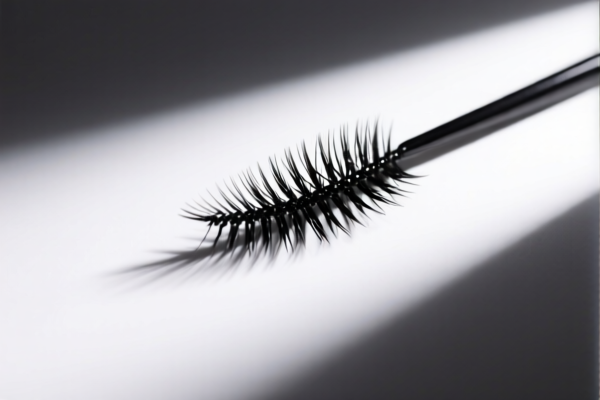
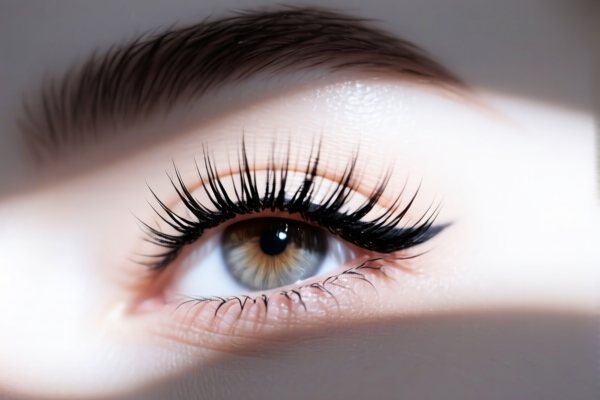

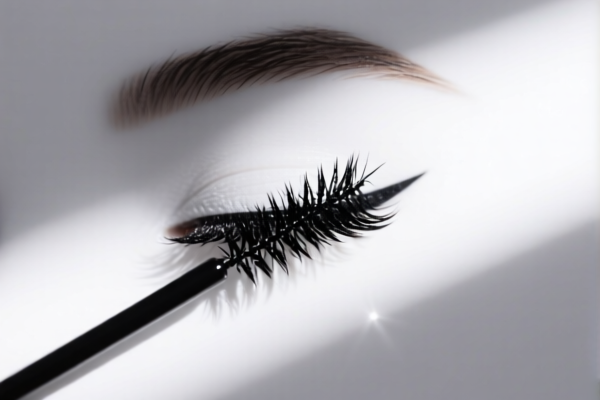
AI Analysis
👁️🗨️ Eyelash Extension Kit (Synthetic Fiber)
🌐 HS Code Reference & Customs Clearance Guide | 2026 Latest Tariff Analysis | Professional Strategy
📌 I. Product Definition & Classification: What Exactly is an "Eyelash Extension Kit"?
Synthetic fiber eyelash extensions are cosmetic accessories used to enhance the length, curl, and volume of natural lashes. In international trade, they are not a single monolithic product but are classified based on their material composition and end-use application.
The core distinction lies in whether they are viewed as: 1. Hair/Lash Articles: Classified under Chapter 67 (Artificial hair and articles thereof). 2. Plastic Decorative Items: Classified under Chapter 39 (Articles of plastics and articles of other materials of headings 3901 to 3914). 3. Cosmetics/Preparations: Classified under Chapter 33 (Essential oils and resinoids; perfumery, cosmetic or toilet preparations).
⚠️ Critical Distinction Point:
- If the lashes are pre-glued or part of a cosmetic kit intended for direct eye application, customs may view them as cosmetic preparations (Chapter 33) or plastic decorative items (Chapter 39).
- If they are standalone synthetic lash strands (unattached to plastic trays or bases), they are most accurately classified as Article 67 (Artificial lashes).
- Misclassification Risk: Declaring synthetic lashes as "Plastic Toys" or "Cosmetics" incorrectly can lead to massive duty differences (from 0% to 35%!).
📦 II. HS Code Classification Details (2026 Latest Tariff Mapping)
| HS Code | Product Description | Applicable Scenario | Duty Rate (Total) | Key Tax Components |
|---|---|---|---|---|
6704.19.00.00 |
Synthetic Fiber Eyelash Extensions (Other) | Standalone synthetic lashes, not mounted on other materials | 17.5% | Base: 0%, Sec 301: 7.5%, Section 122: 10% |
6704.11.00.00 |
Synthetic Fiber Eyelash Extensions (Textile Material Based) | Lashes mounted on or integrated with textile-based lash strips/trays | 17.5% | Base: 0%, Sec 301: 7.5%, Section 122: 10% |
3926.90.35.00 |
Synthetic Fiber Eyelash Extensions (Plastic Decorative Items) | Lashes attached to rigid plastic bases, trays, or decorative plastic kits | 16.5% | Base: 6.5%, Sec 301: 0%, Section 122: 10% |
3926.90.99.89 |
Synthetic Fiber Eyelash Extensions (Other Plastic Articles) | Lashes in miscellaneous plastic packaging or non-specific plastic containers | 22.8% | Base: 5.3%, Sec 301: 7.5%, Section 122: 10% |
3304.20.00.00 |
Synthetic Fiber Eyelash Extensions (Eye Cosmetics) | Pre-glued kits, liquid adhesives included, or classified as "eye cosmetic preparations" | 35.0% | Base: 0%, Sec 301: 25%, Section 122: 10% |
🔍 Key Insight:
- Chapter 67 (6704) is generally the most favorable for standalone synthetic lashes (0% base duty).
- Chapter 33 (3304) is the most expensive (0% base + 25% Sec 301 + 10% Sec 122 = 35%). This usually applies if the item is declared as a "cosmetic kit" rather than just "lashes."
- Chapter 39 (3926) falls in between. If the lashes are molded into or attached to a specific plastic display tray,3926.90.35.00might apply, avoiding the 7.5% Sec 301 surcharge but adding a 6.5% base duty.
💰 III. 2026 Latest Tariff Rate Breakdown (Including Surcharges & Policy Add-ons)
✅ Applicable Country: United States (US)
✅ Origin: China (CN)
✅ Effective Date: Post-2025 Trade Policy Adjustments
🎯 1. 6704.19.00.00 & 6704.11.00.00 —— Artificial Hair Articles (Lowest Risk)
| Item | Content |
|---|---|
| Base Duty | 0% (ad valorem) |
| Section 301 Duty (USITC) | +7.5% (Specific to Chapter 67 synthetic goods from China) |
| Section 122 Duty | +10% (Targeted duty on specific synthetic fiber imports) |
| Total Effective Rate | 17.5% |
| De Minimis Exemption | ❌ Not Eligible (Section 301 goods are excluded from de minimis under current enforcement trends for high-value imports, though small packages may slip through; high risk) |
| Legal Authority | USITC:6704.19.00.00 → Section 301: 7.5% → Section 122: 10% |
📌 Explanation:
- These codes treat the product as "Artificial Hair" (Section 67 of HTSUS).
- The 0% base duty is a significant advantage.
- However, Section 122 adds a punitive 10% layer, often targeted at countries perceived to be dumping synthetic fiber products.
🎯 2. 3926.90.35.00 —— Plastic Decorative Articles (The "Middle Ground")
| Item | Content |
|---|---|
| Base Duty | 6.5% |
| Section 301 Duty (USITC) | 0% (Many plastic decorative articles are exempt from the higher 301 tiers) |
| Section 122 Duty | +10% |
| Total Effective Rate | 16.5% |
| De Minimis Exemption | ❌ Not Eligible (Plastic articles from China often face stricter scrutiny) |
| Legal Authority | USITC:3926.90.35.00 → Section 122: 10% |
📌 Strategy:
- If your product is mounted on a plastic tray or sold as a "Plastic Cosmetic Holder with Lashes", this code may apply.
- It avoids the 7.5% Section 301 surcharge but incurs a 6.5% base duty.
- Net Result: Slightly lower than Chapter 67 (16.5% vs 17.5%), but only if the physical form factor justifies the "plastic article" classification.
🎯 3. 3926.90.99.89 & 3304.20.00.00 —— High-Risk Categories
A. 3926.90.99.89 (Other Plastic Articles)
| Item | Content |
|---|---|
| Base Duty | 5.3% |
| Section 301 Duty | +7.5% |
| Section 122 Duty | +10% |
| Total Effective Rate | 22.8% |
| Risk: High. Misclassification as a generic plastic item invites audits. |
B. 3304.20.00.00 (Eye Cosmetics)
| Item | Content |
|---|---|
| Base Duty | 0% |
| Section 301 Duty | +25% (High tariff for cosmetic preparations) |
| Section 122 Duty | +10% |
| Total Effective Rate | 35.0% |
| Risk: CRITICAL. Declaring synthetic lashes as "Cosmetics" triggers the highest punitive tariffs. |
📌 Warning:
- Do NOT classify standalone synthetic lashes as3304.20.00.00unless they are explicitly liquid adhesives or pre-applied cosmetic kits defined as "preparations" by customs.
- Lashes themselves are not "preparations" in the chemical sense. They are articles.
🛠️ IV. Customs Clearance Practical Advice (Avoiding Pitfalls)
✅ 1. Documentation Checklist (Non-Negotiable)
| Document | Requirement | Purpose |
|---|---|---|
| ✅ Product Specifications | ✔️ | Must clearly state: "100% Synthetic Fiber," "Not Medical Device," "No Glue Attached (if claiming 6704)" |
| ✅ Photos (Clear & Labeled) | ✔️ | Show the lashes without plastic backing (for 6704) or with plastic backing (for 3926). |
| ✅ Commercial Invoice | ✔️ | Description: "Synthetic Fiber Eyelash Extensions, Not Attached to Plastic Tray, For Cosmetic Use Only" |
| ✅ Packing List | ✔️ | Confirm quantity and weight. Ensure no "cosmetic kits" are implied if declaring as raw lashes. |
| ✅ Material Declaration | ✔️ | Explicitly state: "Material: Polybutylene Terephthalate (PBT) or Similar Synthetic Fiber." |
✅ 2. Classification Strategy (The Golden Rules)
🔥 "If it's loose, it's 6704. If it's on plastic, it's 3926. Never call it a 'Preparation'!"
| Scenario | Recommended HS Code | Why? |
|---|---|---|
| Loose synthetic lashes in a bag | 6704.19.00.00 |
Classified as "Artificial Hair." Lowest base duty (0%). |
| Lashes glued to a textile strip | 6704.11.00.00 |
Classified as "Artificial Hair on Textile." Still Chapter 67. |
| Lashes mounted on a rigid plastic display card | 3926.90.35.00 |
Considered a "Plastic Decorative Article." Avoids 301 surcharge. |
| Full Kit with Glue + Lashes + Mirror | Complex | Glue may push toward 3304. Lashes remain 6704. Consult Expert. |
| Pre-glued Individual Lashes | 6704.19.00.00 (Defendable) |
Argue it is still an "article of artificial hair," not a chemical preparation. |
✅ 3. Special Cases & Handling
| Situation | Handling Advice |
|---|---|
| De Minimis (Section 321) Imports | ⚠️ High Risk: Under current US enforcement, synthetic fiber articles from China are frequently scrutinized. Even if under $800, you may be flagged for Section 122 duties. Do not assume automatic clearance. |
| OEM Custom Brands | Provide OEM agreements to prove no trademark infringement, but do not change the HS code based on branding. |
| "Eco-Friendly" Lashes | Even if marketed as "biodegradable," if made of synthetic polymer fibers, they still fall under Chapter 67 or 39. Do not misdeclare as "natural hair" (different duty rates). |
🌍 V. Global Market Comparison (2026 Context)
| Market | Recommended HS Code | Estimated Duty (China Origin) | Key Requirement |
|---|---|---|---|
| 🇺🇸 USA | 6704.19.00.00 |
17.5% | Proof of synthetic material, avoid "cosmetic preparation" label. |
| 🇪🇺 EU | 6704.19 |
6% + VAT | No Section 301/122 equivalents. Simpler clearance. |
| 🇨🇳 China | 6704.19 |
0% - 5% | Low tariff for import; high volume. |
| 🇬🇧 UK | 6704.19 |
6% + VAT | Post-Brexit rules similar to EU. |
📌 Conclusion:
The USA is the most complex market for eyelash extensions due to Section 122 and Section 301 tariffs.
- Cheapest Route: Classify as Chapter 67 (Artificial Hair).
- Avoid: Classifying as Chapter 33 (Cosmetics) unless legally justified, as it doubles your duty costs.
📌 VI. Common Mistakes & Blood-Soaked Lessons
❌ Mistake 1: Declaring "Eyelash Kit" as 3304.20.00.00 (Cosmetics)
👉 Consequence: 35% Duty instead of 17.5%. Loss of profit margin!
❌ Mistake 2: Splitting a kit into "Lashes" (6704) and "Glue" (3304) to lower tax
👉 Consequence: Customs sees the primary use. If the kit is sold as a unit, it may be classified by the dominant component or rejected for inconsistency. Audit Risk: HIGH.
❌ Mistake 3: Claiming "Natural Hair" for Synthetic Lashes
👉 Consequence: Fraud. If tested and found to be synthetic, seizure, fines, and blacklisting.
❌ Mistake 4: Ignoring Section 122
👉 Consequence: Even if 301 doesn't apply (e.g., via 3926.90.35.00), Section 122 (10%) still applies. Budget accordingly!
✅ Correct Approach:
"Synthetic Fiber Eyelash Extensions, Unmounted, 100% PBT Fiber, For Cosmetic Use Only. HS Code: 6704.19.00.00."
🎯 VII. Conclusion: Precision in Classification, Profit in Clearance
🎯 Remember the Mantra:
🔹 "Loose lashes = Chapter 67 (17.5%). Plastic-mounted = Chapter 39 (16.5%). Glued Kits = Chapter 33 (35% - AVOID!).
🔹 "Never let 'Cosmetic' scare you, but don't let it trap you!"
🔹 "Section 122 is the silent killer—budget for the extra 10%!"
📌 Pro Tip:
For high-volume imports, request a Binding Ruling Letter from US Customs and Border Protection (CBP).
- Submit photos and samples.
- Ask for a definitive classification under 6704.19.00.00.
- This protects you from audits for 5 years.
📣 Immediate Action Required:
📞 Contact a Licensed Customs Broker
📝 Provide High-Resolution Photos of the Lashes (Mounted vs. Unmounted)
📦 Review Your Bill of Lading for Consistency
🚀 Clear Customs Smoothly, Keep Your Margins Healthy, and Grow Your Beauty Brand!
✨ Professional Customs Clearance Starts with the Right Code!
💼 Every 1% of Duty Saved is Pure Profit Gained!
Customer Reviews
About HS Code Classification
The Harmonized System (HS) is an internationally standardized nomenclature developed by the World Customs Organization (WCO) to classify traded products. Over 200 countries use the HS system as the basis for customs tariffs, trade statistics, and import/export regulations.
Each HS code follows a hierarchical structure:
- Chapter (2 digits) — Broad category of goods (e.g., Chapter 84: Machinery and Mechanical Appliances)
- Heading (4 digits) — More specific grouping within the chapter
- Subheading (6 digits) — Internationally standardized breakdown, used by all WCO member countries
- National subdivisions (8-10 digits) — Country-specific extensions for further classification, such as US HTSUS 10-digit codes
Correct HS code classification is essential for smooth customs clearance, accurate duty payment, and compliance with trade regulations. Misclassification can lead to customs delays, overpayment of duties, or penalties.
When importing from CN to US, the applicable tariff rates may include:
- Most-Favored-Nation (MFN) rate — The standard duty rate applied to WTO members
- General rate — Applied to countries without trade agreements
- Trade remedy duties — Additional tariffs such as Section 301 (anti-dumping), Section 232 (national security), or countervailing duties
The information provided on this page is for reference purposes only. For official classification, please consult with your local customs authority or a licensed customs broker.