Eyeshadow
CN → US| HS Code | Tariff Rate | Origin | Destination | Doc |
|---|---|---|---|---|
| 3304200000 | 35.0% | CN | US | Official Doc |
| 3304910050 | 35.0% | CN | US | Official Doc |
| 3304200000 | 35.0% | CN | US | Official Doc |
| 3304910050 | 35.0% | CN | US | Official Doc |
| 3304200000 | 35.0% | CN | US | Official Doc |
Product Images
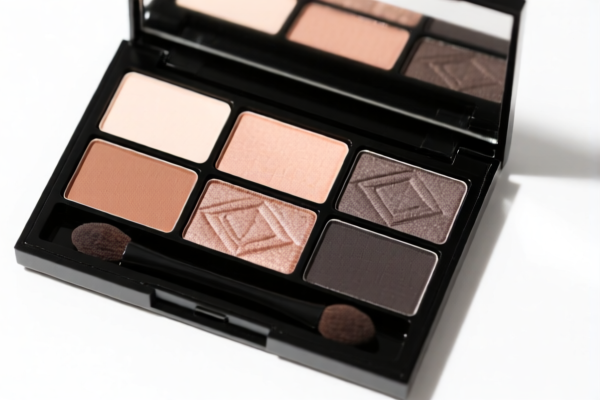
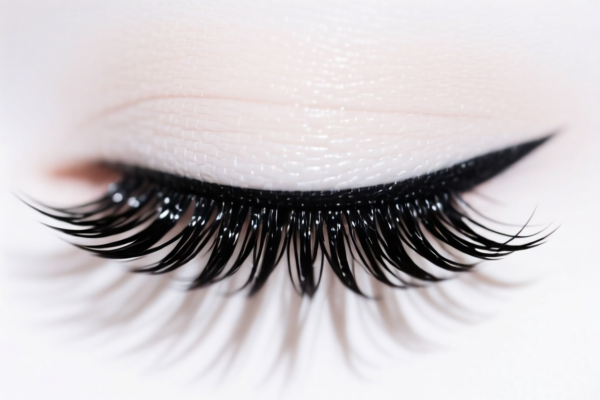
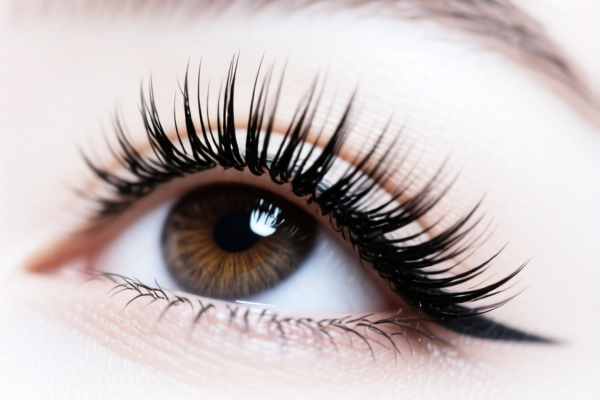

AI Analysis
👁️ Eyeshadow (Powder & Cream Cosmetic Pigments)
🌐 HS Code Reference & Customs Clearance Guide | 2026 Latest Tariff Analysis | Strategic Beauty Trade Compliance
📌 I. Product Definition & Classification: What Exactly is "Eyeshadow"?
Eyeshadow is a cosmetic product designed to enhance the appearance of the eyelids through color, texture, and finish. In international trade, it is primarily categorized under Chapter 33 (Essential Oils and Resins; Perfumery, Cosmetic or Toilet Preparations).
It generally falls into two main forms:
- Powdered Eyeshadow (Pressed or Loose): Dry pigment mixed with binders, pressed into pans or sold loose.
- Cream/Liquid Eyeshadow: Emulsified or gel-based formulas applied with fingers or brushes.
⚠️ Critical Classification Point:
- Powdered forms (pressed pans, loose powder, eyeshadow palettes) → typically classified under 3304.91.00.50.
- Eye-specific preparations (whether cream, gel, or powder) → may fall under 3304.20.00.00 if clearly defined as "preparations for the eyes."
📦 II. HS Code Classification Breakdown (2026 Customs Tariff Alignment)
| HS Code | Product Description | Application | Form |
|---|---|---|---|
3304.20.00.00 |
Preparations for the eyes (e.g., eye makeup, eyeshadow, eyeliner) | Any form: cream, gel, powder | ✅ Eye-specific |
3304.91.00.50 |
Other preparations of a kind used for beauty or makeup, in powder form | Eyeshadow palettes, loose/powder eyeshadow | ✅ Powder |
🔍 Key Clarification:
- If the product is explicitly marketed as an eye cosmetic (e.g., "Eyeshadow", "Eye Palette", "Eye Color"), it typically qualifies under 3304.20.00.00.
- If the product is a powdered cosmetic not specifically marketed as "eye" use (e.g., general face makeup powder used on eyes), it may be classified under 3304.91.00.50.
- Mixed palettes containing both eye and face products may still be classified under 3304.20.00.00 if the primary function is eye makeup.
💰 III. 2026 Tariff Rate Breakdown (Including Surcharges & Policy Add-ons)
✅ Applicable Country: United States (US)
✅ Country of Origin: China (CN)
✅ Effective Date: November 10, 2025 (and ongoing)
🎯 1. 3304.20.00.00 — Preparations for the Eyes (Eyeshadow)
| Item | Detail |
|---|---|
| Base Duty Rate | 0% (ad valorem) |
| Section 301 Add-on | +25% (USITC Footnote 9903.03) |
| Section 122 (IEEPA) Add-on | +10% (China-specific surcharge) |
| Total Duty Rate | 35% |
| Tax Calculation | CIF Value × 35% |
| De Minimis Exemption | ❌ Not Applicable (deny_de_minimis) |
| Legal Reference Path | IEEPA:9903.01.10 → USITC:3304.20.00.00 → FOOTNOTE:9903.03 |
📌 Explanation:
- The 25% 301 surcharge applies to most Chinese-origin cosmetics under US Section 301.
- The 10% IEEPA surcharge is a China-specific tariff for certain beauty and personal care products.
- Total = 35%, which is significantly high for cosmetic imports; pre-clearance planning is essential.
🎯 2. 3304.91.00.50 — Powdered Beauty Preparations (Eyeshadow Palettes)
| Item | Detail |
|---|---|
| Base Duty Rate | 0% |
| Section 301 Add-on | +25% |
| Section 122 (IEEPA) Add-on | +10% |
| Total Duty Rate | 35% |
| Tax Calculation | CIF Value × 35% |
| De Minimis Exemption | ❌ Not Applicable |
| Legal Reference Path | IEEPA:9903.01.10 → USITC:3304.91.00.50 → FOOTNOTE:9903.03 |
📌 Note:
- Both HS codes carry the same total duty rate of 35% for Chinese-origin goods.
- Whether it's a single-pan eyeshadow or a multi-pan palette, as long as it's powdered, the classification and tax remain consistent.
🛠️ IV. Customs Clearance Practical Tips (Avoid Common Pitfalls)
✅ 1. Required Documentation Checklist
| Document | Required? | Purpose |
|---|---|---|
| ✅ Product Specification Sheet | ✔️ | Shows form, ingredients, packaging type |
| ✅ Product Photos (Packaging + Label) | ✔️ | Must clearly show "Eyeshadow" and usage |
| ✅ Commercial Invoice | ✔️ | Must match HS Code description |
| ✅ Certificate of Origin (CO) | ✔️ | For potential origin-based exemptions |
| ✅ Ingredient List (INCI) | ✔️ | For FDA/USDA compliance checks |
| ✅ Testing Certificates (FDA, IFRA, etc.) | ✔️ | Ensures safety compliance |
✅ 2. Declaration Best Practices
🔥 "Form First, Function Second, Name Clear, Tax Clear!"
| Scenario | Correct Declaration | Incorrect Declaration |
|---|---|---|
| Powdered eyeshadow in a palette | 3304.91.00.50 |
3304.20.00.00 → Same tax, but inconsistent |
| Cream eyeshadow | 3304.20.00.00 |
3304.91.00.50 → Classification error |
| Mixed palette (face + eye) | 3304.20.00.00 (primary use) |
3304.91.00.50 → Risk of audit |
| Non-powdered (liquid/gel) | 3304.20.00.00 |
3304.91.00.50 → Wrong form |
✅ 3. Special Cases & Mitigation Strategies
| Situation | Recommendation |
|---|---|
| OEM Private Label Eyeshadow | Provide brand authorization + design specs |
| Multi-purpose Makeup Kits | Clearly indicate primary function (eye vs. face) |
| Samples/Small Shipments | Still subject to 35% duty; de minimis does not apply |
| Non-China Origin (e.g., Vietnam, Mexico) | May qualify for tariff relief if origin certified |
🌍 V. Global Market Comparison (2026 Tariff Snapshot)
| Country | Recommended HS Code | Duty Rate | Certification | Notes |
|---|---|---|---|---|
| 🇺🇸 USA | 3304.20.00.00 / 3304.91.00.50 |
35% (China) | FDA, INCI | High surcharge |
| 🇨🇳 China | 3304.20.00.00 / 3304.91.00.50 |
5% | CCC, Cosmetic备案 | No 301/122 |
| 🇪🇺 EU | 3304.20.00 / 3304.91.00 |
0–4% | CPNP, BPR | No US surcharges |
| 🇦🇺 Australia | 3304.20.00 / 3304.91.00 |
0–5% | TGA | No 301 |
| 🇯🇵 Japan | 3304.20.00 / 3304.91.00 |
0–6% | PMDA | Low tariff, strict labeling |
📌 Insight:
- USA is the only major market imposing 35% on Chinese eyeshadow;
- Consider re-routing through non-Chinese sourcing or using duty drawbacks to optimize costs.
📌 VI. Common Mistakes & Risk Avoidance (Real Lessons)
❌ Mistake 1: Classifying cream eyeshadow under powdered HS code
👉 Consequence: Audit risk + potential reclassification + fines
❌ Mistake 2: Assuming small shipments (under $800) are duty-free
👉 Consequence: De minimis does NOT apply to cosmetics under Section 301/122
❌ Mistake 3: Listing "Makeup Kit" without specifying "Eye" use
👉 Consequence: May be audited as general cosmetics, delaying customs
❌ Mistake 4: Using generic terms like "Color Powder" instead of "Eyeshadow"
👉 Consequence: Misclassification risk + customs delays
✅ Best Practice:
Use specific product names:
"Pressed Powder Eyeshadow, 12-Pan Palette, Eye Makeup, For Cosmetic Use, Made in China"
🎯 VII. Conclusion: Precision Classification = Profit Protection
🎯 Golden Rules:
🔹 "Eye First, Form Matters, Name Clear, Duty Predictable!"
🔹 "35% is real for China-origin eyeshadow – don't guess, declare right!"
📌 Pro Tip:
If your eyeshadow is sourced from Vietnam, Mexico, or Thailand, you may qualify for tariff exemptions under US trade agreements.
Always apply for Advance Rulings before large shipments to ensure smooth customs clearance.
📣 Take Action Now:
📞 Partner with a certified customs broker + submit product photos + request HS Code advance ruling
🚀 Ensure your eyeshadow clears US customs smoothly, avoids penalties, and keeps margins healthy!
✨ Precision Classification Is the Key to Global Beauty Trade Success!
💼 Every dollar of duty saved is a dollar of profit protected!
Customer Reviews
About HS Code Classification
The Harmonized System (HS) is an internationally standardized nomenclature developed by the World Customs Organization (WCO) to classify traded products. Over 200 countries use the HS system as the basis for customs tariffs, trade statistics, and import/export regulations.
Each HS code follows a hierarchical structure:
- Chapter (2 digits) — Broad category of goods (e.g., Chapter 84: Machinery and Mechanical Appliances)
- Heading (4 digits) — More specific grouping within the chapter
- Subheading (6 digits) — Internationally standardized breakdown, used by all WCO member countries
- National subdivisions (8-10 digits) — Country-specific extensions for further classification, such as US HTSUS 10-digit codes
Correct HS code classification is essential for smooth customs clearance, accurate duty payment, and compliance with trade regulations. Misclassification can lead to customs delays, overpayment of duties, or penalties.
When importing from CN to US, the applicable tariff rates may include:
- Most-Favored-Nation (MFN) rate — The standard duty rate applied to WTO members
- General rate — Applied to countries without trade agreements
- Trade remedy duties — Additional tariffs such as Section 301 (anti-dumping), Section 232 (national security), or countervailing duties
The information provided on this page is for reference purposes only. For official classification, please consult with your local customs authority or a licensed customs broker.