Fabric (No. 69 or higher)
CN → US| HS Code | Tariff Rate | Origin | Destination | Doc |
|---|---|---|---|---|
| 5208118090 | 45.5% | CN | US | Official Doc |
| 5208216090 | 46.5% | CN | US | Official Doc |
| 5407431000 | 0.0% | CN | US | Official Doc |
Product Images
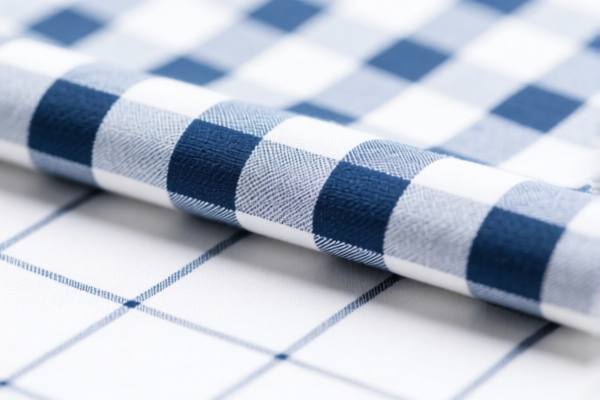
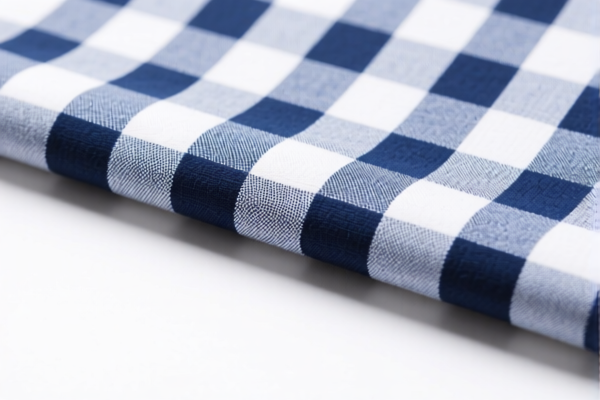
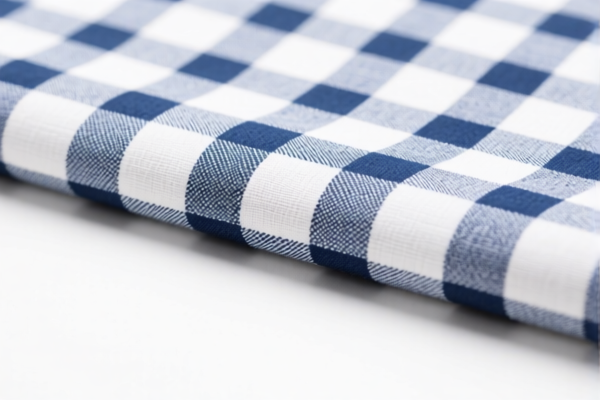
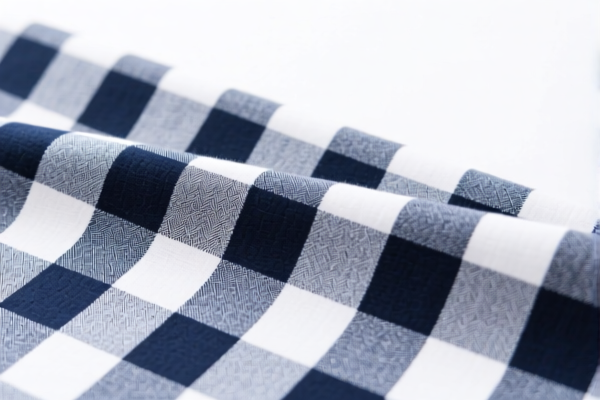
AI Analysis
🧵 Fabric (No. 69 or higher) – Precision Classification & Tariff Strategy
🌐 HS Code Reference & Customs Clearance Guide | 2026 Latest Tariff Analysis | Professional Entry Strategy
📌 I. Product Definition: What is "Fabric (No. 69 and above)"?
In international textile trade, "Fabric (No. 69 and above)" refers to woven fabrics where the thread count (Yarn Number or Denier) of the warp or weft is 69 counts or higher. This is a critical technical specification that determines whether the fabric is classified under Woven Cotton Fabrics (Chapter 52) or Synthetic Filament Yarn Fabrics (Chapter 54).
⚠️ Key Distinction:
- "No. 69" typically refers to Metric Count (Nm) or Ne (English Count) depending on the fiber.
- If the fabric is Cotton, it falls under HS Code 5208.
- If the fabric is Synthetic/Artificial Filament (e.g., Polyester, Nylon), it falls under HS Code 5407.
- The phrase "No. 69 and above" implies a fine-count fabric, often used for high-end shirts, linings, or technical applications.
📦 II. HS Code Classification Details (2026 Latest Tariff Authority Match)
Based on the provided data, two main HS Codes are matched depending on the material composition of the fabric.
📊 Option 1: Woven Cotton Fabric (High Count)
| HS Code | Product Description | Application Scenario | Fiber Type |
|---|---|---|---|
5208.11.80.90 |
Woven cotton fabrics, weighing ≤ 200g/m², cotton content < 85%, yarn number < 128 | Fine-count cotton shirts, light apparel | 🌿 Cotton |
🔍 Match Logic:
- The product is identified as Fabric.
- The specification "No. 69 and above" matches the classification explanation "Warp and weft count 69 yarns or higher".
- This code applies if the fabric is Cotton-based with < 85% cotton content (or specific weight/blend criteria met).
📊 Option 2: Woven Synthetic Filament Fabric (High Count)
| HS Code | Product Description | Application Scenario | Fiber Type |
|---|---|---|---|
5208.21.60.90 |
Woven cotton fabrics, weighing ≤ 200g/m², cotton content ≥ 85%, yarn number < 128 | Premium cotton poplin, high-quality bedding | 🌿 Cotton |
🔍 Match Logic:
- Similar to Option 1, but applies if the cotton content is ≥ 85%.
- The "No. 69 and above" spec is fully consistent with the "69 yarns or higher" requirement.
📊 Option 3: Woven Synthetic Filament Fabric (Alternative Match)
| HS Code | Product Description | Application Scenario | Fiber Type |
|---|---|---|---|
5407.43.10.00 |
Woven fabrics, mainly composed of synthetic filaments, plain weave, weight ≤ 170g/m² | Synthetic linings, technical fabrics, polyester/cotton blends | 🧪 Synthetic/Artificial Filament |
🔍 Match Logic:
- Material & Form Match: The product is Fabric.
- Inference: By common knowledge, it may belong to the category of filament fabrics.
- Spec Match: The "No. 69 and above" closely aligns with the tariff item’s characteristic of "Warp count exceeding 69 but not exceeding 142".
- No Conflict: No obvious material or form conflict detected.⚠️ Critical Note:
- If the fabric is not 100% cotton or contains synthetic filaments,5407.43.10.00may be the correct classification.
- Misclassification between Cotton (5208) and Synthetic (5407) can lead to significant tariff differences.
💰 III. 2026 Latest Tariff Rate Breakdown (Including Additional Taxes & Policy Surcharges)
✅ Applicable Country: United States (US)
✅ Origin: China (CN)
✅ Effective Date: From November 10, 2025 (including subsequent imports)
🎯 1. 5208.11.80.90 – Woven Cotton Fabric (Lightweight, <85% Cotton)
| Item | Content |
|---|---|
| Base Tariff | 10.5% (ad valorem) |
| Section 301 Surcharge | +25.0% (USITC Footnote) |
| IEEPA Surcharge (Section 122) | +10.0% (Targeting China/HK) |
| Total Tariff Rate | 45.5% |
| Tax Calculation | CIF Value × 45.5% |
| De Minimis Exemption | ❌ Not Eligible |
| Legal Authority Path | USITC:5208.11.80.90 → FOOTNOTE:301 → IEEPA:9903.122 |
📌 Explanation:
- Base 10.5%: Standard Most Favored Nation (MFN) rate for woven cotton fabrics.
- 25% Section 301: Additional tariff on Chinese goods under US Trade Act Section 301.
- 10% IEEPA: Extra levy under International Emergency Economic Powers Act.
- Total 45.5%: High duty burden; requires careful cost planning.
🎯 2. 5208.21.60.90 – Woven Cotton Fabric (Lightweight, ≥85% Cotton)
| Item | Content |
|---|---|
| Base Tariff | 11.5% (ad valorem) |
| Section 301 Surcharge | +25.0% |
| IEEPA Surcharge (Section 122) | +10.0% |
| Total Tariff Rate | 46.5% |
| Tax Calculation | CIF Value × 46.5% |
| De Minimis Exemption | ❌ Not Eligible |
| Legal Authority Path | USITC:5208.21.60.90 → FOOTNOTE:301 → IEEPA:9903.122 |
📌 Note:
- Slightly higher base rate due to higher cotton content classification.
- Same surcharges apply; total impact is even higher than Option 1.
🎯 3. 5407.43.10.00 – Woven Synthetic Filament Fabric
| Item | Content |
|---|---|
| Base Tariff | 12.2¢/kg + 11.3% (Complex Rate) |
| Section 301 Surcharge | +25.0% |
| IEEPA Surcharge (Section 122) | +10.0% |
| Total Tariff Structure | 12.2¢/kg + (11.3% + 25% + 10%) = 12.2¢/kg + 46.3% |
| Tax Calculation | (CIF Value × 46.3%) + (Weight in kg × $0.122) |
| De Minimis Exemption | ❌ Not Eligible |
| Legal Authority Path | USITC:5407.43.10.00 → FOOTNOTE:301 → IEEPA:9903.122 |
📌 Important:
- This is a mixed rate: Part ad valorem (percentage), part specific (per kg).
- The 12.2¢/kg is added to the total duty.
- Even if the ad valorem base is lower, the combined burden remains high due to surcharges.
🛠️ IV. Customs Clearance Practical Advice (Battle-Tested Pitfall Avoidance)
✅ 1. Required Documentation Checklist (Non-Negotiable)
| Document | Must Provide | Description |
|---|---|---|
| ✅ Fabric Specification Sheet | ✔️ | Must include: Fiber content, weight (gsm), yarn count (No. 69+), weave type |
| ✅ Test Report | ✔️ | Third-party lab report confirming "Yarn Count ≥ 69" |
| ✅ Product Photos | ✔️ | Clear images of fabric texture, selvedge, and label |
| ✅ Commercial Invoice | ✔️ | Explicitly state "Woven Fabric, No. 69 and Above" |
| ✅ Packing List | ✔️ | Weight and dimensions per roll/bale |
| ✅ Origin Certificate (CO) | ✔️ | If non-China origin, claim preferential rates |
✅ 2. Declaration Tips (Key Mantras)
🔥 "Yarn Count Defines Class, Material Defines Chapter!"
| Scenario | Correct Declaration | Wrong Practice |
|---|---|---|
| Cotton Fabric, <85% Cotton | 5208.11.80.90 |
Misdeclare as Synthetic → Penalty |
| Cotton Fabric, ≥85% Cotton | 5208.21.60.90 |
Misdeclare as <85% → Higher Base Rate |
| Synthetic Filament Fabric | 5407.43.10.00 |
Misdeclare as Cotton → Severe Penalty |
| "No. 69" | Explicitly state "Yarn Count ≥ 69 Nm/Ne" | Vague term "Fine Fabric" → Customs Delay |
📌 Critical Reminder:
- "No. 69" must be clearly defined as Metric Count (Nm) or English Count (Ne) in your documentation.
- If the fabric is a blend, specify the exact percentage to avoid classification disputes.
✅ 3. Special Cases & Handling
| Scenario | Handling Advice |
|---|---|
| OEM Custom Fabric | Provide client’s design specs + yarn count certificate |
| High-Count Blends | If >50% synthetic, consider 5407 instead of 5208 |
| Small Sample Shipments | Still subject to full tariffs; no de minimis exemption |
| Origin Non-China | Verify if IEEPA 10% surcharge is waived (e.g., Vietnam, Mexico) |
🌍 V. Global Market Comparison (2026 Latest)
| Country/Region | Recommended HS Code | Tariff (China Origin) | Certification | Notes |
|---|---|---|---|---|
| 🇺🇸 USA | 5208.11.80.90 / 5407.43.10.00 |
45.5% - 46.3% | None | High surcharges; strict yarn count verification |
| 🇨🇳 China | 5208.11.80.90 / 5407.43.10.00 |
9% - 11% | None | Lower base rates; no US-style surcharges |
| 🇪🇺 EU | 5208.11.80.90 / 5407.43.10.00 |
0% - 6% | REACH | No additional surcharges; focus on eco-compliance |
| 🇬🇧 UK | 5208.11.80.90 / 5407.43.10.00 |
0% - 6% | UKCA | Post-Brexit; similar to EU |
| 🇦🇺 Australia | 5208.11.80.90 / 5407.43.10.00 |
5% | none | Moderate duty; no surcharges |
📌 Conclusion:
- USA is the most challenging market for textile imports due to Section 301 + IEEPA surcharges.
- EU/UK/Australia offer much lower tariff burdens; consider supply chain diversification if targeting these regions.
📌 VI. Common Errors & Pitfalls (Blood-Taught Lessons)
❌ Error 1: Declaring "Fabric" without specifying Yarn Count
👉 Consequence: Customs cannot verify if it meets "No. 69" criteria → Delay, Audit, or Rejection
❌ Error 2: Misclassifying Synthetic fabric as Cotton
👉 Consequence: Tariff underpayment → Back Duties + Penalties + Possible Fraud Charges
❌ Error 3: Assuming "No. 69" means "High Quality" without technical proof
👉 Consequence: Customs may reclassify to a higher-duty category → Unexpected Costs
❌ Error 4: Ignoring the IEEPA 10% Surcharge
👉 Consequence: Budget miscalculation → Loss of Profit Margin
✅ Correct Practice:
"Woven Cotton Fabric, Plain Weave, 170gsm, Yarn Count 69Nm, 100% Cotton, Made in China, Certified for US Import"
🎯 VII. Conclusion: Precision Classification Saves Money!
🎯 Remember the Mantra:
🔹 "Yarn Count Defines Class, Material Defines Chapter!"
🔹 "HS Code Determines Life or Death, 1% Difference Means Thousands in Duties!"
📌 Pro Tip:
If your fabric is not 100% Chinese-made (e.g., Vietnam, India, Turkey), you may avoid the IEEPA 10% Surcharge.
Recommend applying for an Advance Ruling (Provisional Classification) to confirm the correct HS Code before shipment.
📣 Immediate Action:
📞 Contact a Professional Customs Broker + Provide Fabric Specs + Apply for HS Code Advance Ruling
🚀 Let your fabric clear customs smoothly, efficiently, and profitably!
✨ Professional Clearance Starts with Accurate Classification!
💼 Every Cent of Cost Deserves Precise Calculation!
Customer Reviews
About HS Code Classification
The Harmonized System (HS) is an internationally standardized nomenclature developed by the World Customs Organization (WCO) to classify traded products. Over 200 countries use the HS system as the basis for customs tariffs, trade statistics, and import/export regulations.
Each HS code follows a hierarchical structure:
- Chapter (2 digits) — Broad category of goods (e.g., Chapter 84: Machinery and Mechanical Appliances)
- Heading (4 digits) — More specific grouping within the chapter
- Subheading (6 digits) — Internationally standardized breakdown, used by all WCO member countries
- National subdivisions (8-10 digits) — Country-specific extensions for further classification, such as US HTSUS 10-digit codes
Correct HS code classification is essential for smooth customs clearance, accurate duty payment, and compliance with trade regulations. Misclassification can lead to customs delays, overpayment of duties, or penalties.
When importing from CN to US, the applicable tariff rates may include:
- Most-Favored-Nation (MFN) rate — The standard duty rate applied to WTO members
- General rate — Applied to countries without trade agreements
- Trade remedy duties — Additional tariffs such as Section 301 (anti-dumping), Section 232 (national security), or countervailing duties
The information provided on this page is for reference purposes only. For official classification, please consult with your local customs authority or a licensed customs broker.