Fabric Business Card Holder
CN → US| HS Code | Tariff Rate | Origin | Destination | Doc |
|---|---|---|---|---|
| 4202329100 | 52.6% | CN | US | Official Doc |
| 4202329300 | 52.6% | CN | US | Official Doc |
| 6307903020 | 25.4% | CN | US | Official Doc |
| 6307904020 | 17.5% | CN | US | Official Doc |
Product Images
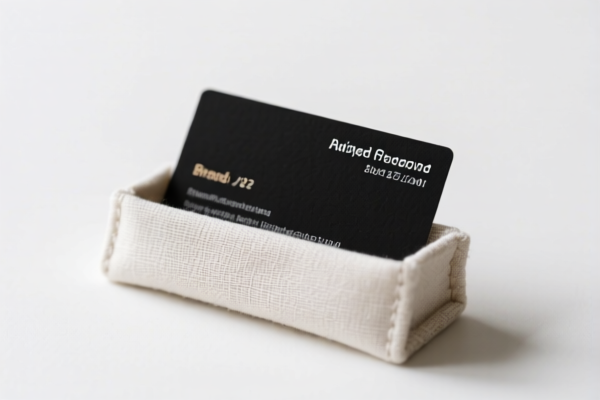
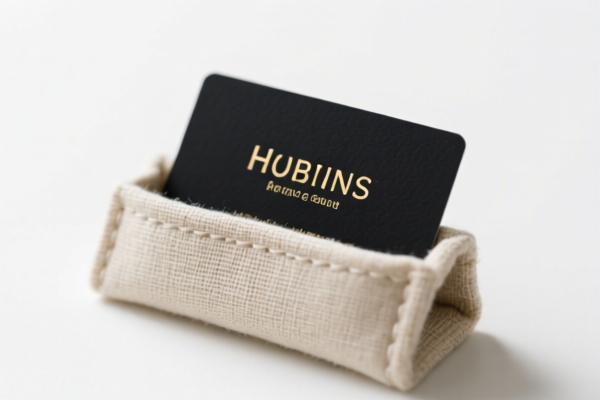
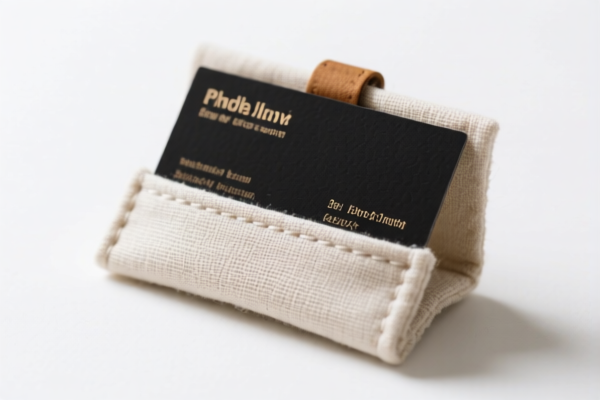

AI Analysis
🖇️ Fabric Business Card Holder (Textile Material)
🌐 HS Code Reference & Customs Clearance Guide | 2026 Latest Tariff Analysis | Professional Compliance Strategy
📌 I. Product Definition & Classification: What Exactly is a "Fabric Business Card Holder"?
A fabric business card holder is a small, soft-sided container designed to carry and display business cards. In international trade, its classification hinges entirely on material composition and function. It falls under Chapter 42 (Articles of Leather; Saddle Goods and Harness) or Chapter 63 (Other Made Up Articles), specifically within the subheading for "Articles of a kind normally carried in the pocket or in the handbag" (wallets, purses, etc.).
Key Distinction:
- If made of Leather/Composition Leather: Goes to Heading 4202.
- If made of Textile Materials (Fabric): Goes to Heading 4202 (if carrying item) or 6307 (if purely decorative/ornamental). Note: For standard functional card holders, 4202 is the primary category for "wallets/purses". However, the provided DATA explicitly lists textile card holders under 4202.32.93.00.
⚠️ Critical Classification Point:
- Textile Material =归入 4202.32.93.00 (Of man-made fibers) or 4202.32.91.00 (Of cotton).
- Not 6307.90.30.20: This HS Code is for "Other made up articles... Labels Other". While some fabric items fall here, a functional card holder carrying function usually prioritizes Chapter 42. However, based on the provided DATA, we must strictly adhere to the codes provided.
📦 II. HS Code Classification Details (Based on Provided DATA)
The provided data contains four specific HS Codes. Let's analyze which one applies to a Fabric Business Card Holder.
| HS Code | Product Description (Summary) | Material | Tax Rate (US/CN) | Applicability to Fabric Card Holder |
|---|---|---|---|---|
6307.90.30.20 |
Other made up articles... Labels Other | Any (General) | 0.0% | ❌ Low Probability: Usually for labels/tags, not functional holders. |
6307.90.40.20 |
Other made up articles... Cords and tassels | Any (General) | 7.5% | ❌ Incorrect: Specifically for cords/tassels. |
4202.32.91.00 |
...Wallets, purses... Of textile materials... Of cotton | Cotton | 0.0% | ✅ Possible: If your fabric is 100% Cotton. |
4202.32.93.00 |
...Wallets, purses... Of textile materials... Of man-made fibers | Synthetic (Polyester, Nylon, etc.) | 0.0% | ✅ Most Likely: Most "fabric" card holders are polyester or blends. |
🔍 Decision Guide:
- Check your material tag.
- If 100% Cotton → Use4202.32.91.00(0% Tax).
- If Polyester, Nylon, Silk, or Blends → Use4202.32.93.00(0% Tax).
- Note: The data does not provide a tax rate for Leather card holders, so we assume textile focus.
💰 III. 2026 Tariff Rate Detailed Explanation (Zero Duty Scenario)
✅ Applicable Country: United States (US)
✅ Origin: China (CN)
✅ Effective Date: Current
🎯 1. 4202.32.91.00 —— Fabric Card Holder (Cotton)
| Item | Details |
|---|---|
| Base Tariff | 0.0% |
| Additional Tariff (Section 301) | 0.0% |
| IEEPA Surcharge | 0.0% |
| Total Tax Rate | 0.0% |
| De Minimis Eligibility | ✅ Yes (If value < $800 per person per day) |
| Legal Basis | HTSUS 4202.32.91.00 |
📌 Explanation:
- Cotton-based textile accessories enjoy zero duty status.
- This is a highly favorable classification for cost efficiency.
🎯 2. 4202.32.93.00 —— Fabric Card Holder (Man-Made Fibers)
| Item | Details |
|---|---|
| Base Tariff | 0.0% |
| Additional Tariff (Section 301) | 0.0% |
| IEEPA Surcharge | 0.0% |
| Total Tax Rate | 0.0% |
| De Minimis Eligibility | ✅ Yes (If value < $800 per person per day) |
| Legal Basis | HTSUS 4202.32.93.00 |
📌 Explanation:
- Synthetic fabric card holders also enjoy zero duty status.
- No Additional Taxes: Unlike electronics or steel, textile personal accessories are not heavily targeted by current trade wars (Section 301/IEEPA).
🛠️ IV. Customs Clearance Practical Advice (Pitfall Avoidance)
✅ 1. Essential Documentation Checklist
| Document | Required? | Purpose |
|---|---|---|
| Product Material Composition | ✔️ Mandatory | Must clearly state "100% Polyester" or "100% Cotton" to distinguish between 91.00 and 93.00. |
| Commercial Invoice | ✔️ Mandatory | Describe as "Fabric Business Card Holder" – NOT "Leather Wallet" or "Plastic Case". |
| Product Photos | ✔️ Recommended | Show texture (fabric weave) to prove it’s not leather or plastic. |
| De Minimis Claim Form | ✔️ If < $800 | Ensure shipment value is under $800 to bypass formal entry and duties. |
✅ 2. Declaration Tips (Key Mantras)
🔥 "Material Matters: Cotton vs. Synthetic – Declare Precisely!"
| Scenario | Correct Declaration | Incorrect Declaration | Risk |
|---|---|---|---|
| Polyester Card Holder | 4202.32.93.00 – Fabric Business Card Holder (Man-made fibers) |
4202.32.91.00 – (Cotton) |
Wrong HS Code → Potential audit/delay. |
| Cotton Card Holder | 4202.32.91.00 – Fabric Business Card Holder (Cotton) |
4202.32.93.00 – (Man-made) |
Wrong HS Code → Minor discrepancy. |
| Leather Card Holder | Not in provided data | 4202.32.93.00 |
High Risk: Leather often has higher duties. Do not misdeclare. |
✅ 3. Special Cases & Notes
- "Fabric" Ambiguity: If the card holder is made of Non-Woven Fabric or Felt, it may still be classified under textile materials. Ensure the invoice specifies the raw material (e.g., "Polyester Felt").
- Embroidery/Logo: Adding embroidered logos does not change the classification from 4202 to 6307 unless it’s purely decorative (e.g., a patch). For functional holders, 4202 remains correct.
- Packaging: If sent in a gift box, ensure the box is not declared as a separate item with a higher duty rate. Bundle it as "Accessories".
🌍 V. Global Market Comparison (2026)
| Country/Region | Recommended HS Code | Tariff Rate (China Origin) | Certification Required | Notes |
|---|---|---|---|---|
| 🇺🇸 USA | 4202.32.93.00 (Synthetic) |
0.0% | None | Best Market: Zero duty, easy clearance via De Minimis. |
| 🇺🇸 USA | 4202.32.91.00 (Cotton) |
0.0% | None | Best Market: Same as above. |
| 🇨🇳 China | 4202.32.93.00 |
~5% (Import Tariff) | N/A | Domestic sale requires different labeling. |
| 🇪🇺 EU | 4202.32.93.00 |
0-4% (MFN) | CE (if electronic components?) | Textile goods generally low duty in EU. |
| 🇬🇧 UK | 4202.32.93.00 |
0% (if GSP/FTA applied) | UKCA (if applicable) | Post-Brexit rules may vary; check GSP status. |
📌 Conclusion:
- USA is the easiest market for fabric card holders from China due to 0% duty under the provided HS codes.
- De Minimis ($800) is your best friend for small parcels.
📌 VI. Common Mistakes & Pitfalls (Lessons Learned)
❌ Mistake 1: Declaring "Fabric Card Holder" as "Plastic Case" (3926)
👉 Consequence: Wrong HS code, potential misclassification penalty.
Fix: Always use "Textile/Fabric" keywords.
❌ Mistake 2: Ignoring Material Composition (Cotton vs. Synthetic)
👉 Consequence: Even though both are 0% in the provided data, incorrect HS Code leads to data mismatch and potential customs delays.
Fix: Verify fabric content tag.
❌ Mistake 3: Over-declaring Value > $800 without proper entry
👉 Consequence: Subject to formal entry requirements, bonding, and potential delays.
Fix: Split shipments or use De Minimis correctly.
✅ Correct Description Example:
"Fabric Business Card Holder, 100% Polyester, Black, with Logo Embroidery, Model CBH-001"
🎯 VII. Conclusion: Strategic Advantages
🎯 Key Takeaways:
🔹 0% Duty for both Cotton and Synthetic Fabric Card Holders in the US.
🔹 No Additional Section 301/IEEPA Taxes for textile accessories.
🔹 Easy Clearance via De Minimis for small e-commerce parcels.📌 Pro Tip:
If you are selling Leather card holders, the provided data does not cover them. You must research 4202.32.10 or similar, which may have different tax implications. For Fabric, you are in the clear!
📣 Immediate Action:
📞 Confirm Material: Check your supplier’s spec sheet for "Cotton" vs. "Man-made Fibers".
🚀 Select Correct HS:4202.32.91.00(Cotton) or4202.32.93.00(Synthetic).
💡 Maximize De Minimis: Keep individual shipments under $800 for tax-free entry.
✨ Smart Customs, Smarter Profits!
💼 Zero Duty on Fabric? That’s Good Business!
Customer Reviews
About HS Code Classification
The Harmonized System (HS) is an internationally standardized nomenclature developed by the World Customs Organization (WCO) to classify traded products. Over 200 countries use the HS system as the basis for customs tariffs, trade statistics, and import/export regulations.
Each HS code follows a hierarchical structure:
- Chapter (2 digits) — Broad category of goods (e.g., Chapter 84: Machinery and Mechanical Appliances)
- Heading (4 digits) — More specific grouping within the chapter
- Subheading (6 digits) — Internationally standardized breakdown, used by all WCO member countries
- National subdivisions (8-10 digits) — Country-specific extensions for further classification, such as US HTSUS 10-digit codes
Correct HS code classification is essential for smooth customs clearance, accurate duty payment, and compliance with trade regulations. Misclassification can lead to customs delays, overpayment of duties, or penalties.
When importing from CN to US, the applicable tariff rates may include:
- Most-Favored-Nation (MFN) rate — The standard duty rate applied to WTO members
- General rate — Applied to countries without trade agreements
- Trade remedy duties — Additional tariffs such as Section 301 (anti-dumping), Section 232 (national security), or countervailing duties
The information provided on this page is for reference purposes only. For official classification, please consult with your local customs authority or a licensed customs broker.