Fabric ID Card Holder
CN → USProduct Images
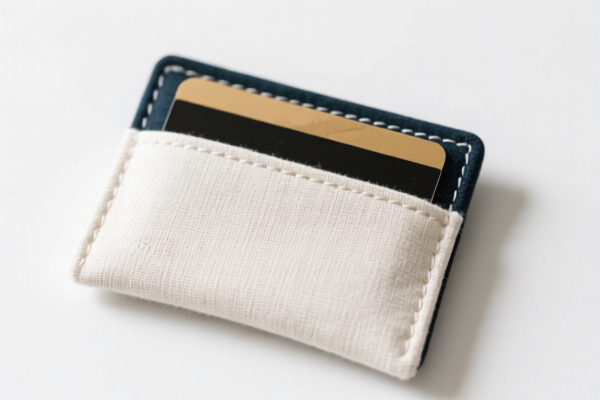
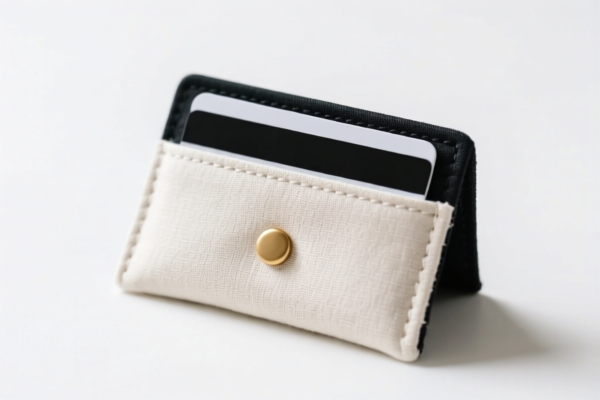
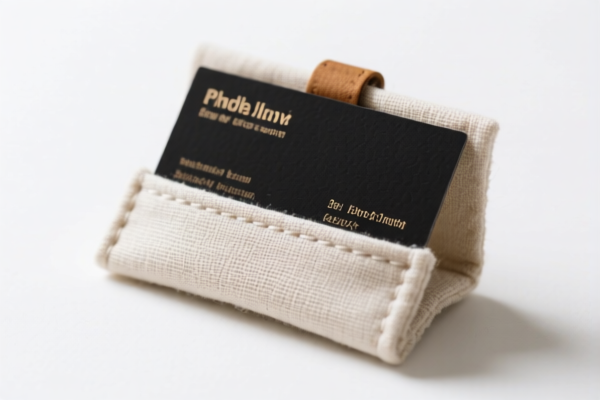

AI Analysis
🪪 Fabric ID Card Holder: Global Trade Classification & 2026 Customs Strategy
🌐 HS Code Reference & Clearance Guide | 2026 Tariff Decoded | Professional Clearance Tactics
Product Focus: Fabric-based Personal Identification Card Holders (Keychains, Lanyards, Pouches)
📌 1. Product Definition & Classification Logic: Is it "Textile" or "Leather"?
In international trade, a Fabric ID Card Holder is strictly defined by its primary material. Unlike leather or PVC holders which fall under Chapter 42, fabric-based holders fall under Chapter 63 (Other Textile Products) or Chapter 48 (Paper Products) depending on the exact composition.
Crucial Distinction:
Fabric (Textile) Holders: Made of nylon, polyester, cotton, canvas, or felt. → HS Code 6307.90 or 6307.10.
Leather/Vinyl Holders: Made of synthetic or genuine leather. → HS Code 4205.00.
Paper/Cardboard Holders: Made of paper only. → HS Code 4901.99*.
⚠️ Critical Warning for Customs:
Do NOT classify fabric ID holders as "Leather Goods" (4205) to save duties. If the material is textile, you must declare it as Chapter 63. Misclassification can lead to 100% fines, cargo seizure, or back-tariff assessments.
📦 2. HS Code Classification Matrix (2026 Latest Tariff Schedule)
| HS Code | Product Description | Applicable Material | Duty Scenario (US) |
|---|---|---|---|
6307.10.00.00 |
Textile Cleaning Cloths (Rarely used for ID holders unless defined as "wipers") | Textile | Low Duty |
6307.90.99.99 |
Other Made-Up Textile Articles (✅ Most Common for Fabric ID Holders) | Nylon, Polyester, Canvas, Felt | 25% + 10% (Section 301) |
6307.90.10.90 |
Woven Bags (If the holder is bag-like) | Woven Fabric | 25% + 10% |
4205.00.90.00 |
Other Articles of Leather or Composition Leather (❌ Wrong for Fabric) | Leather, PU, PVC | 20% (Base) |
4901.99.00.00 |
Other Books, Printed (❌ Wrong for Fabric) | Paper/Cardboard | 4.5% |
🔍 Deep Dive:
6307.90.99.99is the "catch-all" for textile products not specified elsewhere. This is where 90% of fabric ID holders land.
If the fabric is knitted (e.g., fleece), it might fall under 6117.10 (Accessories of knitwear), but usually, woven/flat fabric ID holders go to 6307.
Add-ons: If the holder has a plastic clip (carabiner) or metal badge, the classification usually remains 6307 unless the plastic/metal constitutes the essential character* (very rare for simple ID holders).
💰 3. 2026 US Tariff Rate Breakdown (China Origin)
✅ Target Market: United States (US)
✅ Origin: China (CN)
✅ Applicable Law: Section 301 (USITC) & IEEPA
🎯 Scenario A: Standard Fabric ID Holder (6307.90.99.99)
| Item | Content |
|---|---|
| Base Tariff (MFN) | 3.5% (Ad Valorem) |
| Section 301 (Footnote 9903.88.01) | +25% (Retaliatory tariff on Chinese textiles/apparel) |
| IEEPA Additional Tariff | +10% (Specific China surcharge) |
| Total Effective Rate | 38.5% |
| De Minimis Exemption? | ❌ No (Section 321 does not apply to textile goods) |
| Legal Reference | USITC:6307.90.99.99 → FOOTNOTE:9903.88.01 → IEEPA:9903.01.25 |
📌 Explanation:
- The 3.5% is the standard Most Favored Nation (MFN) rate.
- The +25% is the Section 301 tariff, heavily applied to "Made in China" textile products.
- The +10% is the recent IEEPA surcharge applied to many Chinese imports.
- Result: You pay 38.5% of the CIF value just in duties.
🎯 Scenario B: Fabric Holder with Plastic/Metal Hardware (Complex Case)
| Item | Content |
|---|---|
| Potential HS Code | 6307.90.99.99 (Primary material rule) |
| Alternative Risk | If the metal clip is the dominant feature, it could be misclassified as 7326.90.85 (Other articles of iron/steel). |
| Duty Risk | If misclassified as metal, base rate is 5.6% + 25% + 10% = 40.6%. |
| Key Takeaway | Stick to 6307. Fabric is the primary component. |
⚠️ Warning: Customs often challenges textile items with heavy hardware. Ensure your invoice clearly states: "Main Material: 100% Polyester Fabric, with minor plastic/metal clips."
🛠️ 4. Clearance Operational Advice (Real-World Pitfall Avoidance)
✅ 1. Document Checklist (Non-Negotiable)
| Document | Requirement | Why It Matters |
|---|---|---|
| ✅ Commercial Invoice | Must list: "Fabric ID Card Holder", Material: "100% Polyester/Nylon", HS Code: 6307.90.99.99 |
Prevents "Misdeclaration" penalties. |
| ✅ Product Material Declaration | Certificate stating % of Fabric vs. Plastic/Metal | Proves Chapter 63 classification (Textile). |
| ✅ Photos (Real vs. Stock) | Show the texture of the fabric clearly | Disproves "Leather/PVC" claims. |
| ✅ Packing List | Detail the count (e.g., 100 pcs per carton) | Helps verify duty calculation base. |
✅ 2. Strategic Declaration Tips (Golden Rules)
🔥 Rule: "Fabric Dominance is Key, Hardware is Secondary!"
| Situation | Correct Action | ❌ Dangerous Mistake |
|---|---|---|
| Fabric Holder + Metal Clip | Declare as 6307.90.99.99 (Textile) |
Declare as Metal (7326) → Higher duty, wrong quota. |
| Sample vs. Commercial | Clearly mark "No Commercial Value" for samples under $800 | Don't send commercial goods as samples to evade duty. |
| Origin Marking | Must read "Made in China" on the product itself (or tag) | Missing origin marking = Seizure or forced re-export. |
| Packaging | Do NOT package as "Leather Keychains" | Misleading marketing = Fraud alert. |
✅ 3. Special Scenarios & Workarounds
| Scenario | Strategy |
|---|---|
| Custom Printed Logos | If the fabric is printed, it remains 6307. Printing adds value but doesn't change HS Code. |
| Eco-Friendly/Recycled Fabric | Still 6307. No tariff discount yet, but useful for ESG marketing. |
| Third-Country Sourcing (e.g., Vietnam) | If fabric is made in China but assembled in Vietnam → Apply for Vietnam Origin. Avoids Section 301/IEEPA tariffs (Check Rule of Origin carefully!). |
🌍 5. Global Market Comparison (2026)
| Country | Recommended HS Code | Base Duty | China Section 301 Impact | Total Est. |
|---|---|---|---|---|
| 🇺🇸 USA | 6307.90.99.99 |
3.5% | +25% + 10% | ~38.5% |
| 🇪🇺 EU | 6307.90.98 |
12% | No 301 | 12% |
| 🇨🇦 Canada | 6307.90.00 |
15% | No 301 | 15% |
| 🇦🇺 Australia | 6307.90 |
5% | No 301 | 5% |
| 🇯🇵 Japan | 6307.90.00 |
10% | No 301 | 10% |
📌 Strategic Insight:
USA is the ONLY major market applying heavy Section 301/IEEPA surcharges.
Solution: If shipping to the US is too expensive, consider transshipment via Vietnam or Mexico (provided Rules of Origin are met), or pivot to EU/Asia markets where rates are significantly lower.
📌 6. Common Errors & "Blood & Tears" Lessons
❌ Error 1: Calling it "Leather Lanyard" to lower duty.
👉 Consequence: Customs detects "fabric" via X-ray/material scan. Fines up to 3x duty + seizure.
❌ Error 2: Classifying as "Accessories of Clothing" (6117.10).
👉 Consequence: Wrong code. 6117 is for wearable items, not carried ID holders.
❌ Error 3: Ignoring the "Made in China" label.
👉 Consequence: Seizure. All textile goods must be legibly marked.
✅ Correct Approach:
"100% Polyester Fabric ID Card Holder, with Plastic Clip. HS Code 6307.90.99.99. Made in China."
🎯 7. Conclusion: Smart Classification = Profit Protection
🎯 Remember the Mantra:
🔹 "Fabric First, Hardware Second."
🔹 "US Tariff on Textiles = 38.5%. Do the Math Before Shipping!"
🔹 "Origin Matters: Vietnam Assembly = Tariff Avoidance."
📌 Pro Tip:
If you are exporting Fabric ID Holders to the US:
1. Pre-calculate the 38.5% cost in your FOB price.
2. Verify material composition (is there >51% fabric?).
3. Consider "Made in Vietnam/Mexico" assembly if volume is high to bypass Section 301.
📣 Act Now:
📞 Contact a Customs Broker for a Binding Ruling on your specific fabric blend.
🚀 Optimize your supply chain to minimize the 38.5% US Tariff Trap!
✨ Precision Classification is the Key to Global Trade Success!
💼 Every cent saved on duty is pure profit.
Customer Reviews
About HS Code Classification
The Harmonized System (HS) is an internationally standardized nomenclature developed by the World Customs Organization (WCO) to classify traded products. Over 200 countries use the HS system as the basis for customs tariffs, trade statistics, and import/export regulations.
Each HS code follows a hierarchical structure:
- Chapter (2 digits) — Broad category of goods (e.g., Chapter 84: Machinery and Mechanical Appliances)
- Heading (4 digits) — More specific grouping within the chapter
- Subheading (6 digits) — Internationally standardized breakdown, used by all WCO member countries
- National subdivisions (8-10 digits) — Country-specific extensions for further classification, such as US HTSUS 10-digit codes
Correct HS code classification is essential for smooth customs clearance, accurate duty payment, and compliance with trade regulations. Misclassification can lead to customs delays, overpayment of duties, or penalties.
When importing from CN to US, the applicable tariff rates may include:
- Most-Favored-Nation (MFN) rate — The standard duty rate applied to WTO members
- General rate — Applied to countries without trade agreements
- Trade remedy duties — Additional tariffs such as Section 301 (anti-dumping), Section 232 (national security), or countervailing duties
The information provided on this page is for reference purposes only. For official classification, please consult with your local customs authority or a licensed customs broker.