Fabric Multifunctional Wallet
CN → US| HS Code | Tariff Rate | Origin | Destination | Doc |
|---|---|---|---|---|
| 4202329300 | 52.6% | CN | US | Official Doc |
| 6307909891 | 24.5% | CN | US | Official Doc |
| 6307909875 | 24.5% | CN | US | Official Doc |
| 4202329100 | 52.6% | CN | US | Official Doc |
Product Images
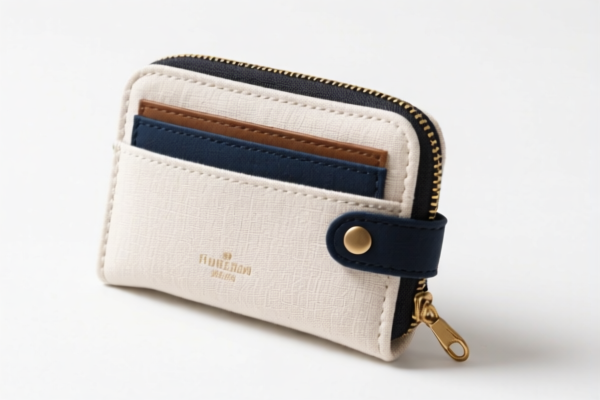
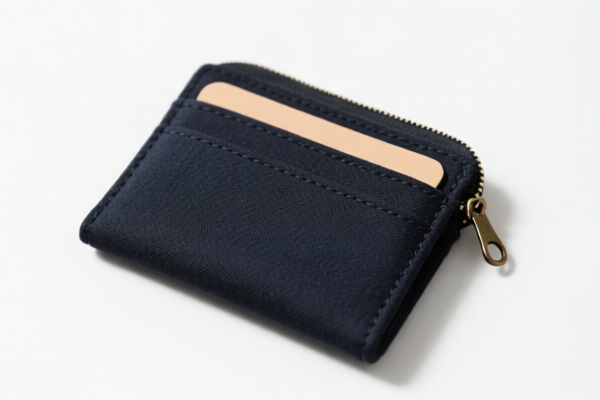
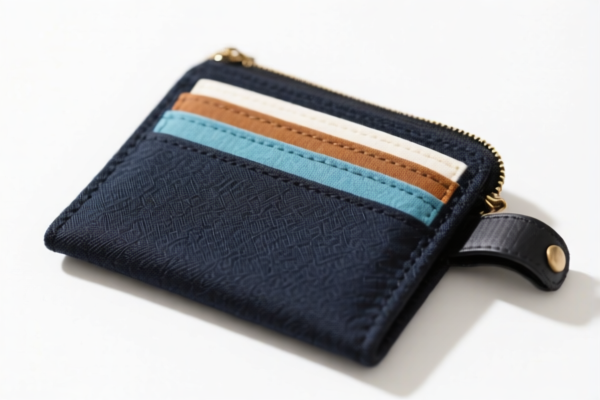
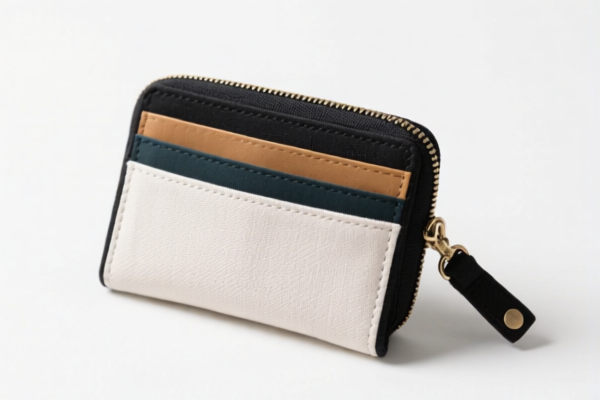
AI Analysis
👜 Fabric Multifunctional Wallet (布料多功能钱包)
🌐 HS Code Reference & Customs Clearance Guide | 2026 Latest Tariff Analysis | Professional-Level Pass Strategy
📌 I. Product Definition & Classification: Do You Truly Understand "Fabric Wallets"?
A "Fabric Multifunctional Wallet" is a personal accessory used for storing cards, cash, and small items, characterized by its exterior material. In international trade, classification depends heavily on the material composition and functional design.
Key Distinction: * Textile Exterior: If the outer surface is primarily fabric/textile, it may fall under Chapter 63 (Other Made-Up Textile Articles) if viewed as a general textile product, or Chapter 42 (Articles of Leather) if it mimics leather goods in form but uses fabric. * Conflict Check: The US Harmonized Tariff Schedule (HTSUS) has specific subheadings for "Wallets, Purse Cases, Key-Pouches..." under Chapter 42 (usually leather/vinyl/plastic) and Chapter 63 (other made-up textile articles).
⚠️ Critical Classification Point:
- If the item is predominantly classified as a "made-up textile article" without specific leather-like features, it often falls under 6307.90 (Other made-up articles).
- However, if Customs deems it a "wallet" specifically meant for money/cards and constructed of textile materials that resemble traditional wallet forms, it might be scrutinized under 4202.32 (Wallets, purse cases, etc., of textile materials).
- Note: The provided data indicates two distinct classification paths with significantly different tax implications.
📦 II. HS Code Classification Details (Authoritative 2026 Tariff Comparison)
| HS Code | Product Description | Applicable Scenario | Tax Implication |
|---|---|---|---|
6307.90.98.91 |
Other made-up textile articles; Other | Fabric wallet classified as a general textile accessory; no material/form conflict with specific "wallet" chapters. | 🟢 Lower Duty (24.5%) |
6307.90.98.75 |
Made-up wallet; Textile material | Classified under "Other made-up articles" specifically for textile wallets. | 🟢 Lower Duty (24.5%) |
4202.32.91.00 |
Wallet; Textile/Cotton material | Classified strictly as a "Wallet" under Chapter 42, meeting textile/cotton requirements. | 🔴 High Duty (52.6%) |
4202.32.93.00 |
Fabric Wallet; Textile Exterior | Classified as a "Wallet" with textile exterior; meets textile surface classification features. | 🔴 High Duty (52.6%) |
🔍 Key Insight:
- Chapter 63 vs. Chapter 42: The core debate is whether the item is a "Textile Article" (6307) or a "Wallet" (4202).
- Tax Disparity: Classification under 6307.90 results in a total tax of 24.5%, whereas 4202.32 results in 52.6%. This is a ~28% difference!
- Material Conflict: Entries under 6307 explicitly state "no material conflict," suggesting a safer, broader classification for generic fabric pouches/wallets.
💰 III. 2026 Latest Tariff Rate Details (Including Surcharges & Policy Add-ons)
✅ Applicable Country: United States (US)
✅ Origin: China (CN)
✅ Effective Time: Post-2025 Tariff Structure (Includes Section 301 & IEEPA)
🎯 1. 6307.90.98.91 & 6307.90.98.75 —— Fabric Wallets (Textile Articles)
| Item | Content |
|---|---|
| Base Tariff Rate | 7.0% (General Rate for Chapter 63 made-up articles) |
| Section 301 Surcharge | +7.5% (Specific to certain textile/harmonized codes) |
| IEEPA 122 Clause Surcharge | +10% (Targeted tariffs on specific Chinese imports) |
| Total Tax Rate | 24.5% |
| Tax Calculation | CIF Value × 24.5% |
| De Minimis Exemption | ❌ Not Applicable (High value/specific chapter exclusions often apply) |
| Legal Basis Path | USITC:6307.90.98 → Section 301: 7.5% → IEEPA: 122 Clause (10%) |
📌 Explanation:
- Base 7.0%: Standard duty for "Other made-up textile articles."
- Section 301 7.5%: A specific additional tariff applied to these textile subheadings.
- IEEPA 10%: The "122 Clause" tariff applies specifically to this group, adding another 10%.
- Total: 24.5%. This is the more favorable classification if the product can be argued as a general textile article.
🎯 2. 4202.32.91.00 & 4202.32.93.00 —— Fabric Wallets (Chapter 42 Wallets)
| Item | Content |
|---|---|
| Base Tariff Rate | 17.6% (Standard rate for Wallets/Purse Cases of Textile Materials) |
| Section 301 Surcharge | +25.0% (Standard Section 301 rate for Chapter 42 goods from China) |
| IEEPA 122 Clause Surcharge | +10% (Applicable to this category) |
| Total Tax Rate | 52.6% |
| Tax Calculation | CIF Value × 52.6% |
| De Minimis Exemption | ❌ Not Applicable |
| Legal Basis Path | USITC:4202.32.91/93 → Section 301: 25% → IEEPA: 122 Clause (10%) |
📌 Explanation:
- Base 17.6%: Duties for wallets/purse cases.
- Section 301 25%: The standard punitive tariff on Chinese Chapter 42 goods.
- IEEPA 10%: Additional 122 Clause tariff.
- Total: 52.6%. This is the high-risk, high-cost classification. Customs often defaults to this if the item is clearly identifiable as a "wallet" rather than a general "textile article."
🛠️ IV. Customs Clearance Practical Advice (Battle-Tested Pitfall Avoidance)
✅ 1. Documentation Checklist (Non-Negotiable)
| Document | Mandatory? | Description |
|---|---|---|
| ✅ Product Specification Sheet | ✔️ | Must detail material composition (e.g., "100% Cotton Outer, Polyester Lining"). |
| ✅ Product Photos | ✔️ | Clear images showing seams, zippers, and fabric texture to prove "textile" nature. |
| ✅ Commercial Invoice | ✔️ | Description should read: "Fabric Travel Wallet, Made-up Textile Article, Model XYZ." Avoid overly specific "Wallet" terms if possible. |
| ✅ Packing List | ✔️ | Item weight and volume. |
| ✅ Origin Certificate | ✔️ | Proof of CN origin. |
✅ 2. Declaration Strategy (Key Mnemonic)
🔥 "Claim Textile, Not Just Wallet; Lower Duty, Smarter Play!"
| Scenario | Correct Declaration | Incorrect Approach |
|---|---|---|
| Generic Fabric Pouch/Wallet | 6307.90.98.91 (Textile Article) |
Declaring as 4202.32 (Wallet) → 52.6% |
| Luxury Brand Fabric Wallet | 4202.32.93.00 |
Risk: High duty. Better to argue "Made-up Textile" if structurally simple. |
| Simple Fabric Key Fob | 6307.90.98.75 |
Avoid listing as "Wallet" if it's primarily for keys/small items. |
| Multi-compartment Organizer | 6307.90.98.91 |
Emphasize "Organizer" or "Case" rather than "Wallet." |
✅ 3. Special Handling Tips
| Situation | Handling Advice |
|---|---|
| Mixed Material (Fabric + Leather Trim) | If leather exceeds 10%, it may be reclassified under Chapter 42. Keep non-fabric parts minimal. |
| OEM Custom Wallets | Provide design files showing textile construction to support 6307 classification. |
| High-Volume Shipments | Consider applying for an Advance Ruling from CBP to lock in the 6307 classification and avoid audits. |
🌍 V. Global Market Comparison (2026 Latest)
| Country/Region | Recommended HS Code | Total Duty | Certification | Notes |
|---|---|---|---|---|
| 🇺🇸 USA | 6307.90.98.91 |
24.5% | None | Best option to minimize cost. |
| 🇺🇸 USA | 4202.32.93.00 |
52.6% | None | Risky, high cost. |
| 🇨🇳 China | 6307.90.98.91 |
18.0% | N/A | Import duty for fabric goods. |
| 🇪🇺 EU | 6307.90.98.91 |
6.0% | CE (if applicable) | No Section 301/IEEPA equivalents. |
📌 Conclusion:
- USA: The difference between 24.5% and 52.6% is massive. Strategy: Classify as "Made-up Textile Article" (6307) whenever structurally possible.
- EU/China: Much lower duties; focus on accurate material declaration rather than classification gaming.
📌 VI. Common Errors & Pitfalls (Lessons Learned)
❌ Error 1: Declaring a fabric wallet simply as "Wallet" under 4202.32 without justification.
👉 Consequence: CBP may audit and reclassify, imposing 52.6% duty + penalties.
❌ Error 2: Claiming 6307 for a complex, high-end wallet with leather accents.
👉 Consequence: CBP rejects textile classification due to "primary character" rule favoring Chapter 42.
❌ Error 3: Ignoring the IEEPA 122 Clause.
👉 Consequence: Even if base tariff is low, missing the 10% surcharge leads to underpayment penalties.
✅ Correct Practice:
"Fabric Travel Organizer Wallet, 100% Cotton Outer, Polyester Lining, Made-up Textile Article, Not of Leather."
🎯 VII. Conclusion: Professional Declaration, Cost Savings, Efficiency!
🎯 Remember the Mnemonic:
🔹 "Textile Article, Six-Two-Seven; Wallet, Four-Two-Oh-Two."
🔹 "24.5% vs 52.6% – Choose Wisely, Don't Lose Money!"
🔹 "IEEPA 122 Clause Adds 10% – Check Every Time!"
📌 Pro Tip:
If your fabric wallets are originating from Vietnam, Mexico, or Thailand, check for FTAA/USMCA exemptions. For China-origin goods, the 24.5% rate via 6307.90 is the optimal strategy.
Recommendation: Apply for a CBP Advance Ruling to secure the 6307 classification for future shipments.
📣 Immediate Action:
📞 Contact your customs broker + Provide Fabric SWatches + Request HS Code Advance Ruling
🚀 Let your fabric wallets clear customs smoothly, save 28% in duties, and boost your margins!
✨ Professional Customs Clearance Starts with Accurate Classification!
💼 Every percentage point counts!
Customer Reviews
About HS Code Classification
The Harmonized System (HS) is an internationally standardized nomenclature developed by the World Customs Organization (WCO) to classify traded products. Over 200 countries use the HS system as the basis for customs tariffs, trade statistics, and import/export regulations.
Each HS code follows a hierarchical structure:
- Chapter (2 digits) — Broad category of goods (e.g., Chapter 84: Machinery and Mechanical Appliances)
- Heading (4 digits) — More specific grouping within the chapter
- Subheading (6 digits) — Internationally standardized breakdown, used by all WCO member countries
- National subdivisions (8-10 digits) — Country-specific extensions for further classification, such as US HTSUS 10-digit codes
Correct HS code classification is essential for smooth customs clearance, accurate duty payment, and compliance with trade regulations. Misclassification can lead to customs delays, overpayment of duties, or penalties.
When importing from CN to US, the applicable tariff rates may include:
- Most-Favored-Nation (MFN) rate — The standard duty rate applied to WTO members
- General rate — Applied to countries without trade agreements
- Trade remedy duties — Additional tariffs such as Section 301 (anti-dumping), Section 232 (national security), or countervailing duties
The information provided on this page is for reference purposes only. For official classification, please consult with your local customs authority or a licensed customs broker.