Fabric Patch
CN → US| HS Code | Tariff Rate | Origin | Destination | Doc |
|---|---|---|---|---|
| 5807100510 | 42.9% | CN | US | Official Doc |
| 5807101500 | 39.5% | CN | US | Official Doc |
| 5810921000 | 0.0% | CN | US | Official Doc |
| 6307903010 | 25.4% | CN | US | Official Doc |
| 5810910020 | 0.0% | CN | US | Official Doc |
| 6307903020 | 25.4% | CN | US | Official Doc |
Product Images
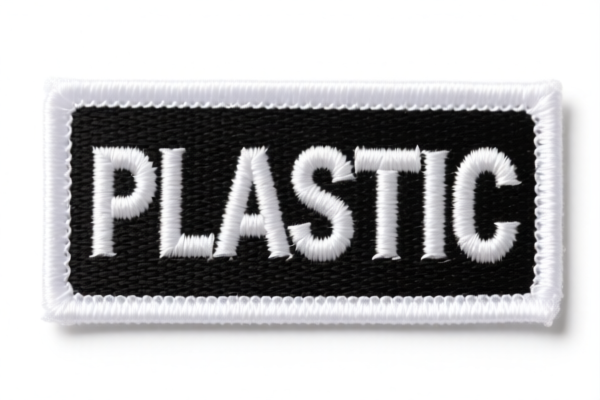
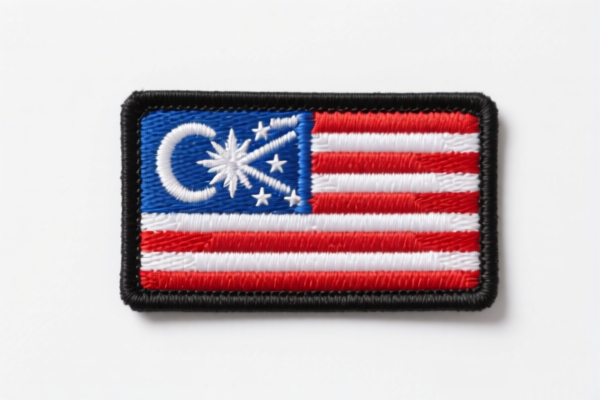
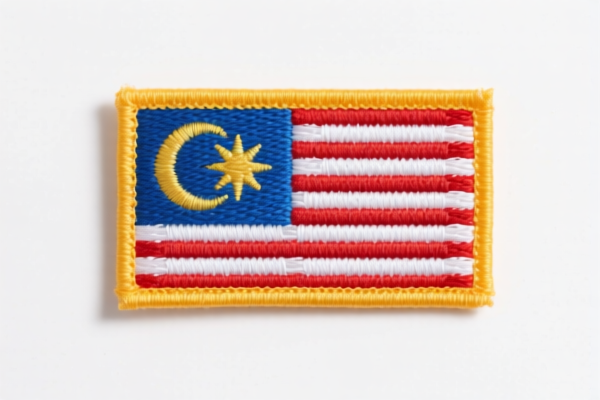
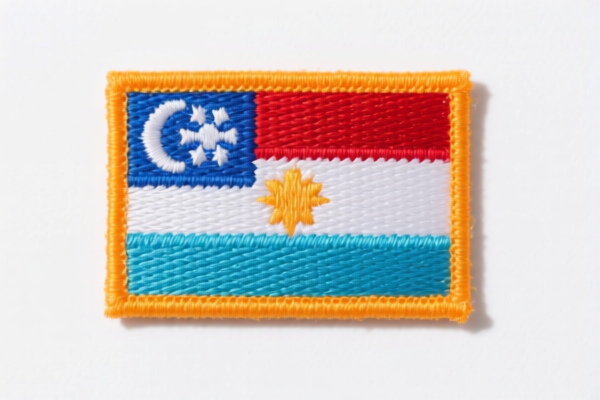
AI Analysis
🧵 Fabric Patches (Label, Badge & Embroidery)
🌐 HS Code Reference & Clearance Guide | 2026 Latest Tariff Analysis | Professional Customs Strategy
📌 I. Product Definition & Classification: Do You Really Understand "Fabric Patches"?
Fabric patches are small decorative or functional textile items used for branding, identification, or decoration on garments, bags, and accessories. In international trade, they are categorized based on material composition and manufacturing technique (woven vs. embroidered). Misclassification here can lead to significant duty discrepancies due to U.S. trade restrictions on Chinese textiles.
⚠️ Key Distinction:
- If the patch is non-embroidered (woven/textured) and made of cotton/synthetic fibers → Classified under 5807.
- If the patch is embroidered → Classified under 5810 or 6307 depending on specific construction and material conflicts.
📦 II. HS Code Classification Matrix (2026 Latest Tariff Authority)
| HS Code | Product Description | Material/Type | Tax Detail Breakdown |
|---|---|---|---|
5807.10.05.10 |
Woven Labels/Badges | Cotton or Man-made Fiber (Non-embroidered) | Base: 7.9% + Sec 301: 25% + 122: 10% = 42.9% |
5807.10.15.00 |
Woven Labels/Badges | Textile Material (Non-embroidered, Non-cotton specific) | Base: 4.5% + Sec 301: 25% + 122: 10% = 39.5% |
5810.92.10.00 |
Embroidered Patches | Fiber-based Embroidery (Other than Headgear/Caps) | Base: See Note 2 + Sec 301: 25% + 122: 10% = See Note 2 + 35.0% |
6307.90.30.10 |
Embroidered Patches | Finished Labels/Decals (Cotton/Textile) | Base: 7.9% + Sec 301: 7.5% + 122: 10% = 25.4% |
5810.91.00.20 |
Embroidered Patches | Cotton Fiber Embroidery | Base: See Note 1 + Sec 301: 25% + 122: 10% = See Note 1 + 35.0% |
6307.90.30.20 |
Embroidered Patches | Finished Labels (Non-Cotton/Unclear Conflict) | Base: 7.9% + Sec 301: 7.5% + 122: 10% = 25.4% |
🔍 Key Insight:
- Section 301 Tariffs (25% or 7.5%) vary significantly between 5807/5810 (usually 25%) and 6307 (usually 7.5%).
- Section 122 Tariffs (10%) apply uniformly across all these textile patch categories for Chinese origins.
- "See Additional U.S. Note" implies complex base duty rates depending on specific fiber content, often requiring precise material declaration.
💰 III. 2026 Latest Tariff Rate Breakdown (Including Surcharges)
✅ Applicable Country: United States (US)
✅ Origin: China (CN)
✅ Effective Date: Current regimes (including 122 Section and 301 Section)
🎯 1. 5807.10.05.10 & 5807.10.15.00 — Woven/Patch Labels (Non-Embroidered)
These codes apply to patches that are woven, printed, or textured but not embroidered.
| Item | Content |
|---|---|
| Base Duty Rate | 4.5% – 7.9% (Ad Valorem) |
| Section 301 Surcharge | +25.0% (Standard for these HS codes) |
| Section 122 Surcharge | +10.0% (Applicable to specific textile imports) |
| Total Effective Rate | 39.5% – 42.9% |
| Calculation | CIF Value × Total Rate |
| De Minimis Exemption | ❌ Not Eligible (Deny De Minimis) |
| Legal Basis | USITC:5807.10.xxxx → Section 301 → Section 122 |
📌 Explanation:
- The 25% Sec 301 is the major cost driver for woven patches.
- The 10% Sec 122 is a recent additional levy on certain textile products.
- Total burden: Nearly 43% for cotton-based woven patches.
🎯 2. 5810.92.10.00 & 5810.91.00.20 — Embroidered Patches (High Base Duty)
These codes apply to embroidered patches. The base duty is variable ("See Note 1/2"), but surcharges are fixed.
| Item | Content |
|---|---|
| Base Duty Rate | Variable (Depends on fiber content & US Note 1/2) |
| Section 301 Surcharge | +25.0% |
| Section 122 Surcharge | +10.0% |
| Total Effective Rate | See Note + 35.0% (Min. 35% above base) |
| Calculation | CIF Value × (Base Rate + 35%) |
| De Minimis Exemption | ❌ Not Eligible |
📌 Explanation:
- While the Sec 301 + 122 equals 35%, the base duty for embroidered items (5810) can be high depending on material.
- Risk: If base duty is 10%, total becomes 45%. Precise material declaration is critical.
🎯 3. 6307.90.30.10 & 6307.90.30.20 — Finished Embroidered Patches (Lower Sec 301)
These codes classify patches as finished articles (labels/decal-like), which often benefit from a lower Section 301 rate.
| Item | Content |
|---|---|
| Base Duty Rate | 7.9% |
| Section 301 Surcharge | +7.5% (Lower than 58xx codes!) |
| Section 122 Surcharge | +10.0% |
| Total Effective Rate | 25.4% |
| Calculation | CIF Value × 25.4% |
| De Minimis Exemption | ❌ Not Eligible |
📌 Strategic Advantage:
- If your embroidered patch can be legitimately classified under 6307 (as a "finished article" rather than "embroidery fabric"), you save ~10-15% in duties compared to 5810/5807.
- Condition: Must meet the definition of "made up" finished labels/decal, not just raw embroidery.
🛠️ IV. Clearance Practical Advice (Real-World Pitfall Guide)
✅ 1. Documentation Checklist (Non-Negotiable)
| Document | Required | Reason |
|---|---|---|
| ✅ Product Specification Sheet | ✔️ | Must clearly state: "Woven" vs. "Embroidered", Material (% Cotton, % Polyester, etc.) |
| ✅ High-Res Photos | ✔️ | Show texture (woven lines vs. thread pile) to prove classification |
| ✅ Commercial Invoice | ✔️ | Use precise description: "Cotton Woven Label" or "Embroidered Fabric Patch" |
| ✅ Supply Chain Declaration | ✔️ | Confirm Chinese origin for Sec 301/122 applicability |
| ✅ Structure Diagram | ✔️ | For 6307 claims, prove it is a "finished article" (e.g., with adhesive backing, cut-to-shape) |
✅ 2. Classification Strategy (The "Cost-Saving" Logic)
| Scenario | Recommended HS Code | Total Tax | Strategy |
|---|---|---|---|
| Simple Woven Label (Text/Logo) | 5807.10.15.00 |
39.5% | Lowest base duty (4.5%), but high Sec 301. |
| Complex Embroidered Patch (Thick Thread) | 5810.92.10.00 |
See Note + 35% | High base duty. Risky if material is mixed. |
| Flat Embroidered Patch (Label-like) | 6307.90.30.20 |
25.4% | BEST OPTION if legally defensible. Saves ~14% vs. 5807. |
| Cotton-Heavy Woven Patch | 5807.10.05.10 |
42.9% | Highest total tax due to higher base (7.9%). |
🔥 Pro Tip:
- Can you argue it's a "Finished Article" (6307)?
If your embroidered patch is cut, edged, and packaged as a standalone retail item (like a logo badge), it may qualify for 6307, triggering the lower 7.5% Sec 301 instead of 25%.
- Argument: It is a "made-up" textile product for labeling, not "embroidery fabric" per se.
- Risk: CBP may challenge this if it looks exactly like embroidery fabric samples.
✅ 3. Special Case Handling
| Situation | Handling Advice |
|---|---|
| Mixed Material (e.g., 50% Cotton, 50% Poly) | Use 5807.10.05.10 if cotton is primary, or 5807.10.15.00 if synthetic. Check fiber content % carefully. |
| Adhesive Backing | Strongly supports 6307 classification (as a "label/decal"). |
| Backed with Fabric | If the backing is significant, argue for 6307. If minimal, stick to 5810/5807. |
| Samples for Evaluation | Still subject to duties. No de minimis exemption for textile patches from China. |
🌍 V. Global Market Comparison (2026 Update)
| Market | Preferred HS Code | Total Tax (China Origin) | Notes |
|---|---|---|---|
| 🇺🇸 USA | 6307.90.30.20 |
25.4% | Best rate if classified as finished article. |
| 🇺🇸 USA | 5807.10.15.00 |
39.5% | Standard for woven labels. |
| 🇪🇺 EU | 5807 / 6307 | ~4-7% | No Section 301. Standard EU textile duty. |
| 🇨🇳 China (Import) | 5807 / 6307 | ~5-10% | Lower tariffs for domestic supply chain. |
📌 Conclusion:
- The U.S. market is the most costly due to Sec 301 and Sec 122.
- Classification as 6307 is the single most effective way to reduce U.S. duty from ~40% to ~25%.
📌 VI. Common Errors & Pitfalls (Blood Lessons)
❌ Error 1: Calling "Embroidered Patches" 5807 (Woven)
👉 Result: Customs rejection or reclassification to 5810/6307 with potential penalties.
👉 Fix: Clearly distinguish "Woven" (flat, printed texture) vs. "Embroidered" (raised thread).
❌ Error 2: Ignoring Section 122
👉 Result: Underpayment of 10% on all textile patches.
👉 Fix: Add 10% to all calculations for Chinese-origin patches.
❌ Error 3: Assuming De Minimis Applies
👉 Result: Package seized, fines issued. Textile patches from China are explicitly excluded.
👉 Fix: Always declare and pay duties, even for samples.
❌ Error 4: Vague Description "Fabric Patch"
👉 Result: Customs assigns worst-case HS code (often highest duty).
👉 Fix: Use "Cotton Woven Label" or "Embroidered Badge with Adhesive Backing".
✅ Correct Description Example:
"Embroidered Fabric Patch, Polyester Thread on Cotton Backing, with Adhesive Backing, Retail Packaged, For Use as Clothing Decoration."
➡️ Target HS Code:6307.90.30.20(Tax: 25.4%)
🎯 VII. Conclusion: Precision Classification Saves Money!
🎯 Key Takeaway:
🔹 "Woven = 5807 (High Duty), Embroidered = 5810 (Variable), Finished Label = 6307 (Saver!)"
🔹 "Sec 301 + 122 = ~35-43% Tax. Aim for 6307 to cut to 25.4%."
📌 Action Plan:
1. Audit Products: Separate woven vs. embroidered vs. finished labels.
2. Upgrade Descriptions: Add "Adhesive Backing" or "Retail Packaged" to support 6307.
3. Consult Broker: Request a Pre-Ruling for high-volume embroidered patches to confirm 6307 eligibility.
4. Calculate True Landed Cost: Include 25.4% (min) + 10% (Sec 122) + Base Duty.
📣 Immediate Action:
📞 Contact Your Customs Broker with product photos and material specs.
🚀 Optimize Your HS Code to save up to 18% in duties!
✨ Smart Tariff Planning, From Accurate Classification!
💼 Every Percent Saved is Pure Profit!
Customer Reviews
About HS Code Classification
The Harmonized System (HS) is an internationally standardized nomenclature developed by the World Customs Organization (WCO) to classify traded products. Over 200 countries use the HS system as the basis for customs tariffs, trade statistics, and import/export regulations.
Each HS code follows a hierarchical structure:
- Chapter (2 digits) — Broad category of goods (e.g., Chapter 84: Machinery and Mechanical Appliances)
- Heading (4 digits) — More specific grouping within the chapter
- Subheading (6 digits) — Internationally standardized breakdown, used by all WCO member countries
- National subdivisions (8-10 digits) — Country-specific extensions for further classification, such as US HTSUS 10-digit codes
Correct HS code classification is essential for smooth customs clearance, accurate duty payment, and compliance with trade regulations. Misclassification can lead to customs delays, overpayment of duties, or penalties.
When importing from CN to US, the applicable tariff rates may include:
- Most-Favored-Nation (MFN) rate — The standard duty rate applied to WTO members
- General rate — Applied to countries without trade agreements
- Trade remedy duties — Additional tariffs such as Section 301 (anti-dumping), Section 232 (national security), or countervailing duties
The information provided on this page is for reference purposes only. For official classification, please consult with your local customs authority or a licensed customs broker.