Fabric Reinforced Synchronous Belt
CN → US| HS Code | Tariff Rate | Origin | Destination | Doc |
|---|---|---|---|---|
| 4010354500 | 41.4% | CN | US | Official Doc |
| 5910001020 | 39.0% | CN | US | Official Doc |
| 4010364500 | 41.4% | CN | US | Official Doc |
| 5910009000 | 37.6% | CN | US | Official Doc |
| 5910001070 | 39.0% | CN | US | Official Doc |
Product Images
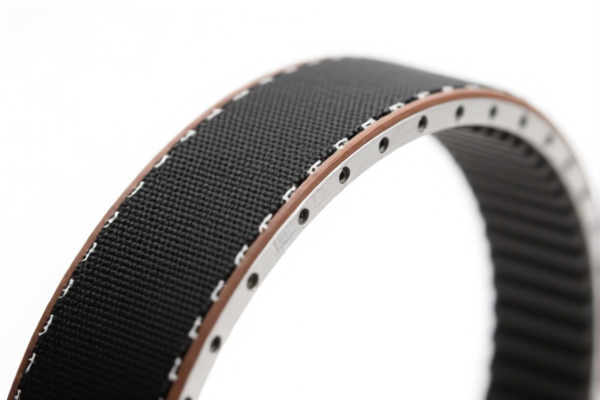
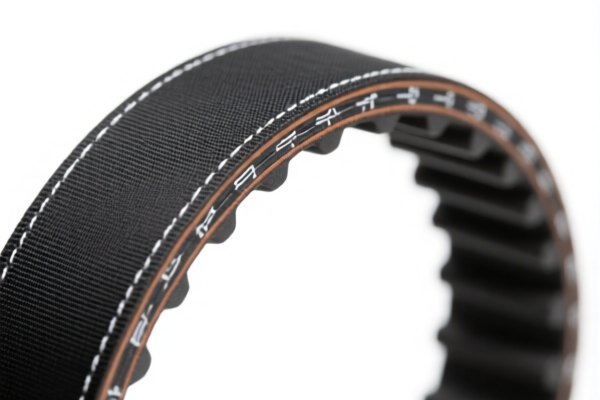
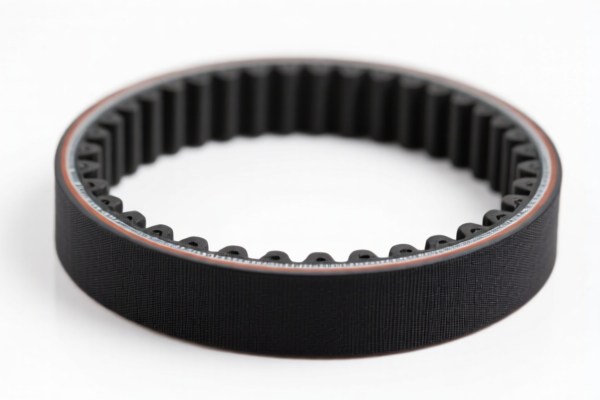
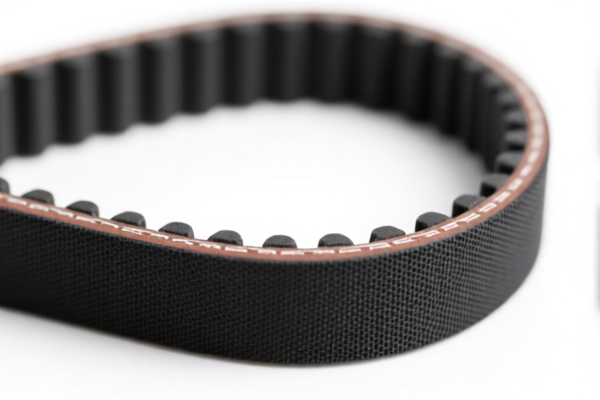
AI Analysis
🏭 Fabric Reinforced Synchronous Belts & Conveyor Belts
📦 Industrial Power Transmission & Material Handling Components
🌐 HS Code Reference & Customs Clearance Guide | 2024/2025 Latest Tariff Analysis | Professional Entry Strategy
📌 I. Product Definition & Classification: What Exactly Are You Importing?
Fabric Reinforced Synchronous Belts are critical mechanical components used in power transmission systems. They combine the precision of synchronous (timing) drives with the durability of textile reinforcement. However, their classification depends heavily on their primary material and specific function.
Two Main Categories:
1. Synchronous Belts (Timing Belts): Used for precise motion control (e.g., CNC machines, engines). The classification hinges on whether the belt is primarily "rubber" or "textile/artificial fiber."
2. Conveyor Belts: Used for moving materials. These are almost exclusively classified under Chapter 59 as "Textile Belts" because the fabric provides the tensile strength.
⚠️ Critical Distinction:
- If the belt is primarily rubber with textile reinforcement for strength → Chapter 40 (Rubber Products).
- If the belt is primarily textile/artificial fiber with rubber coating → Chapter 59 (Textile Articles).
- Do not confuse "Synchronous Belts" (Chapter 40) with generic "Conveyor Belts" (Chapter 59). Using the wrong HS Code leads to immediate customs holds or severe penalties.
📊 II. HS Code Classification Details (Based on Provided Data)
Below are the specific HS Codes derived from the provided dataset for Fabric Reinforced Synchronous Belts and related Conveyor Belts.
| HS Code | Product Description | Primary Material | Application | Total Tax Rate |
|---|---|---|---|---|
5910.00.10.20 |
Fabric Reinforced Synchronous Belt | Artificial Fiber | Synchronous Belt (Timing Drive) | 39.0% |
4010.35.45.00 |
Fabric Reinforced Synchronous Belt | Sulfurated Rubber (Textile Combined) | Non-endless Synchronous Belt | 41.4% |
4010.36.45.00 |
Fabric Reinforced Synchronous Belt | Sulfurated Rubber (Textile Combined) | Synchronous Belt | 41.4% |
5910.00.90.00 |
Fabric Reinforced Conveyor Belt | Textile Material | Conveyor Belt | 37.6% |
5910.00.10.70 |
Fabric Reinforced Conveyor Belt | Artificial Fiber / Textile | Transmission / Conveying | 39.0% |
🔍 Key Insight:
- Chapter 59 (5910) items are generally taxed at 37.6% – 39.0%.
- Chapter 40 (4010) items, specifically sulfurated rubber belts, are taxed at 41.4%.
- Why the difference? Rubber-based belts (4010) often incur higher base tariffs or are subject to different duty structures compared to textile-based belts (5910).
💰 III. 2024/2025 Tariff Rate Breakdown (Detailed Tax Clauses)
✅ Assumption: The tax details provided in the data reflect a specific trade scenario (likely US imports from China, given the "Section 122" and "Additional Tariff" structure mentioned in the tax details).
🎯 1. 5910.00.10.20 & 5910.00.10.70 (Textile/Artificial Fiber Belts)
| Component | Rate | Source/Description |
|---|---|---|
| Base Tariff | 4.0% | Standard MFN/General Rate for Chapter 59 textiles/belts. |
| Additional Tariff | 25.0% | Section 301 Tariff (US Trade Action). |
| Section 122 Tariff | 10.0% | Specific statutory provision (likely referring to a temporary or specific enforcement clause mentioned in the data). |
| TOTAL EFFECTIVE RATE | 39.0% |
📌 Explanation:
- The 4% base duty is standard for textile-reinforced belts.
- The 25% additional duty is the prominent Section 301 tariff applied to many Chinese goods.
- The 10% Section 122 tariff is a specific clause noted in the data. Note: Section 122 usually refers to 19 U.S.C. 1862, which allows the President to adjust duties for national security or international trade balance reasons. Its application here is specific to the provided dataset.
- Total: 4.0% + 25.0% + 10.0% = 39.0%.
🎯 2. 4010.35.45.00 & 4010.36.45.00 (Rubber-Based Synchronous Belts)
| Component | Rate | Source/Description |
|---|---|---|
| Base Tariff | 6.4% | Standard MFN/General Rate for Chapter 40 rubber belts. |
| Additional Tariff | 25.0% | Section 301 Tariff (US Trade Action). |
| Section 122 Tariff | 10.0% | Specific statutory provision. |
| TOTAL EFFECTIVE RATE | 41.4% |
📌 Explanation:
- The 6.4% base duty is higher than the textile counterpart (4.0%).
- The 25% additional duty and 10% Section 122 tariff are identical to the textile belts.
- Total: 6.4% + 25.0% + 10.0% = 41.4%.
- Cost Impact: Importing a rubber-based synchronous belt (4010) costs 2.4% more in total duty than an artificial fiber-based one (5910.10.20).
🎯 3. 5910.00.90.00 (Conveyor Belts - Other/General)
| Component | Rate | Source/Description |
|---|---|---|
| Base Tariff | 2.6% | Lower base rate for general conveyor belts. |
| Additional Tariff | 25.0% | Section 301 Tariff. |
| Section 122 Tariff | 10.0% | Specific statutory provision. |
| TOTAL EFFECTIVE RATE | 37.6% |
📌 Explanation:
- This is the most cost-effective option among the listed codes.
- Total: 2.6% + 25.0% + 10.0% = 37.6%.
- Strategy: If your product can be legally classified as a "Conveyor Belt" (5910.90.00) rather than a "Synchronous Belt," you save 1.4% compared to the5910.10.20code.
🛠️ IV. Customs Clearance Practical Advice (Avoiding Pitfalls)
✅ 1. Documentation Requirements (Must-Haves)
| Document | Requirement | Why It Matters |
|---|---|---|
| Product Specification Sheet | ✔️ Must Detail | Material Composition: Explicitly state % of rubber vs. fabric/artificial fiber. This determines if you belong in Ch. 40 or Ch. 59. |
| Technical Drawing | ✔️ Must Detail | Shows reinforcement layers, tooth profile (for sync belts), and end construction (endless vs. open). |
| Commercial Invoice | ✔️ Must Detail | HS Code: Must match the selected code. Description: "Fabric Reinforced Synchronous Belt, Material: Artificial Fiber, Use: Power Transmission." |
| Bill of Lading / Air Waybill | ✔️ Must Detail | Weight and quantity must match invoice. |
| Origin Certificate | ✔️ Optional but Recommended | If not from China, this may reduce/eliminate the 25% Section 301 tariff. |
✅ 2. Classification Strategy (How to Choose)
🔥 "Material is King, Function is Queen!"
| Scenario | Recommended HS Code | Reason |
|---|---|---|
| Belt is mostly Rubber + Fabric Reinforcement | 4010.35.45.00 or 4010.36.45.00 |
GTR (General Rules of Interpretation) states that if rubber is the essential character, Chapter 40 applies. |
| Belt is mostly Artificial Fiber/Textile + Rubber Coating | 5910.00.10.20 |
If the textile fabric provides the primary structural integrity, Chapter 59 applies. |
| Belt is used for Moving Materials (Conveyor) | 5910.00.90.00 |
Even if synchronous, if its primary use is conveying, and it's textile-heavy, this code may apply (37.6%). |
| Belt is used for Transmission AND Conveying | 5910.00.10.70 |
Dual-use textile belts fall here (39.0%). |
✅ 3. Critical Warnings & Pitfalls
❌ Pitfall 1: Misclassifying Rubber Belts as Textile Belts
👉 Risk: If you declare a 4010 rubber belt as 5910 to get a lower rate (39% vs 41.4%), customs may audit you, demand back taxes, and impose penalties.
✅ Solution: Accurately determine the "Essential Character" of the belt. If it's 80% rubber by volume/weight, it’s likely 4010.
❌ Pitfall 2: Ignoring Section 122 Tariff
👉 Risk: Many importers only factor in the 25% Section 301 tariff and forget the additional 10%. This leads to underpayment and interest charges.
✅ Solution: Always calculate Base + 25% + 10% for the total landed cost.
❌ Pitfall 3: Vague Product Descriptions
👉 Risk: Declaring simply "Belt" leads to customs officers choosing the worst-case scenario (highest duty) or delaying clearance.
✅ Solution: Use precise descriptions: "Synchronous Drive Belt, Sulfurated Rubber with Polyester Fabric Reinforcement, 10mm Width, 500mm Length."
🌍 V. Global Market Context (2024/2025)
| Market | Typical HS Code | Base Duty | US-Specific Notes |
|---|---|---|---|
| 🇺🇸 USA (from China) | 5910 or 4010 |
2.6% - 6.4% | +35% Total (25% Sec 301 + 10% Sec 122). Highest cost. |
| 🇺🇸 USA (from Vietnam/TH) | 5910 or 4010 |
2.6% - 6.4% | 0% Additional Tariff (if no transshipment violation). Total ~4-16%. |
| 🇪🇺 EU | 4010 or 5910 |
~5-8% | No Section 301. Standard EU duty applies. |
| 🇨🇳 China (Export) | Varies | Varies | Export duties may apply depending on specific product type. |
📌 Strategic Takeaway:
If you are importing to the USA, the 37.6% - 41.4% total duty is a significant cost factor. Consider:
1. Supply Chain Diversification: Sourcing from countries not subject to Section 301 (e.g., Vietnam, Thailand, Mexico) can save you the 25% + 10% = 35% additional tariffs.
2. Product Design: If possible, engineer belts to fall under Chapter 59 (Textile) (5910) rather than Chapter 40 (Rubber), as the base tariff is lower (2.6-4.0% vs 6.4%).
📌 VI. Common Mistakes & Best Practices
❌ Mistake: Using a generic HS Code like 5910.00.00 without the full 8/10-digit suffix.
✅ Fix: Use the specific codes provided (5910.00.10.20, etc.) to ensure accurate duty assessment.
❌ Mistake: Assuming all "Synchronous Belts" are the same.
✅ Fix: Distinguish between Rubber-based (4010) and Textile-based (5910). The material composition is the deciding factor.
✅ Best Practice:
"Get an Advance Ruling from CBP!"
Before shipping a large container, submit a request for a Binding Ruling with your product specs. This locks in the HS Code and duty rate, protecting you from future changes or disputes.
🎯 VII. Conclusion: Optimize Your Clearance
🎯 Remember:
🔹 "Material Determines Chapter, Function Determines Subheading."
🔹 "Rubber Belts (4010) = 41.4% Total Duty."
🔹 "Textile Belts (5910) = 37.6% - 39.0% Total Duty."
🔹 "Always Add 25% (Sec 301) + 10% (Sec 122) for China-Origin Imports to the US."
📌 Pro Tip:
If your belt can be described as a Conveyor Belt (5910.00.90.00) and meets the textile requirement, you save 1.4% compared to the synchronous textile belt. Always consult with a licensed customs broker to verify if your specific product design qualifies for the lower-duty conveyor category.
📣 Immediate Action:
📞 Review your Bill of Materials (BOM) to confirm the exact % of rubber vs. fabric.
📄 Choose the correct HS Code from the table above.
🚀 Calculate your Landed Cost including the 37.6% - 41.4% total duty.
✅ File for an Advance Ruling if importing in volume.
✨ Accurate Classification Saves Money. Clear Documentation Ensures Speed.
💼 Don't let customs delays cost you more than the duty itself!
Customer Reviews
About HS Code Classification
The Harmonized System (HS) is an internationally standardized nomenclature developed by the World Customs Organization (WCO) to classify traded products. Over 200 countries use the HS system as the basis for customs tariffs, trade statistics, and import/export regulations.
Each HS code follows a hierarchical structure:
- Chapter (2 digits) — Broad category of goods (e.g., Chapter 84: Machinery and Mechanical Appliances)
- Heading (4 digits) — More specific grouping within the chapter
- Subheading (6 digits) — Internationally standardized breakdown, used by all WCO member countries
- National subdivisions (8-10 digits) — Country-specific extensions for further classification, such as US HTSUS 10-digit codes
Correct HS code classification is essential for smooth customs clearance, accurate duty payment, and compliance with trade regulations. Misclassification can lead to customs delays, overpayment of duties, or penalties.
When importing from CN to US, the applicable tariff rates may include:
- Most-Favored-Nation (MFN) rate — The standard duty rate applied to WTO members
- General rate — Applied to countries without trade agreements
- Trade remedy duties — Additional tariffs such as Section 301 (anti-dumping), Section 232 (national security), or countervailing duties
The information provided on this page is for reference purposes only. For official classification, please consult with your local customs authority or a licensed customs broker.