Fabric for Bleaching Preparation
CN → US| HS Code | Tariff Rate | Origin | Destination | Doc |
|---|---|---|---|---|
| 5208212040 | 43.4% | CN | US | Official Doc |
| 5208212090 | 43.4% | CN | US | Official Doc |
| 5407810010 | 49.9% | CN | US | Official Doc |
| 5407810020 | 49.9% | CN | US | Official Doc |
| 5512110010 | 47.0% | CN | US | Official Doc |
| 5512110090 | 24.0% | CN | US | Official Doc |
Product Images
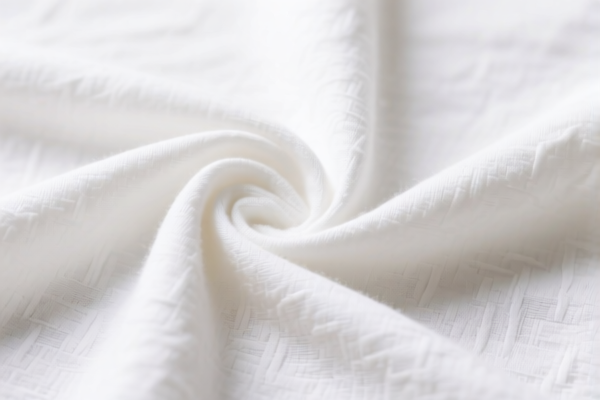
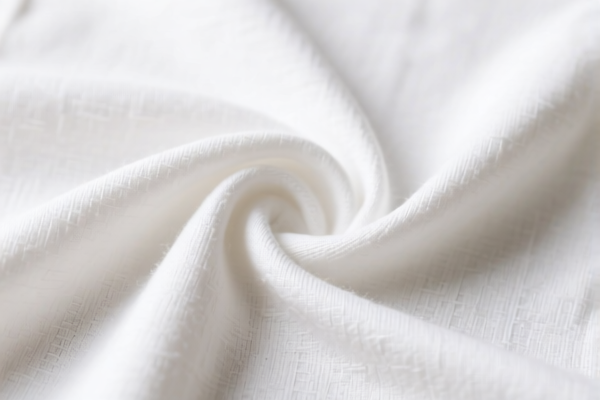

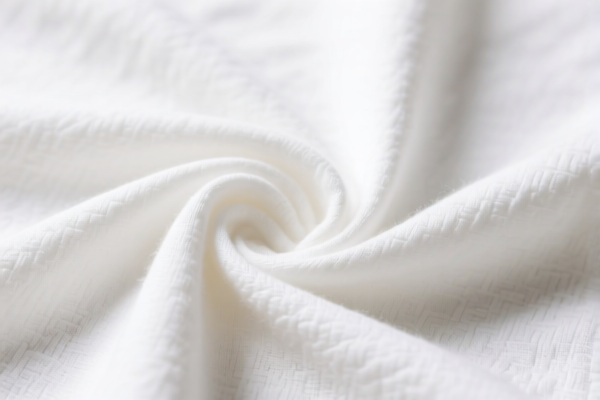
AI Analysis
🧵 Fabric for Bleaching Preparation: The Foundation of Textile Whiteness
🌐 HS Code Reference & Customs Clearance Guide | 2026 Latest Tariff Analysis | Professional Grade Clearance Strategy
📌 I. Product Definition & Classification: What Exactly Is "Fabric for Bleaching Preparation"?
In the textile industry, "Fabric for Bleaching Preparation" refers to greige goods (unfinished woven fabrics) that are ready to undergo the scouring, bleaching, and dyeing processes. These fabrics are not yet finished for consumer use; they are raw materials destined for further processing.
They are primarily categorized by fiber content (Cotton vs. Synthetic) and weight/structure. The key distinction lies in whether the fabric is made of natural fibers (cotton) or synthetic staple fibers, and its weight relative to the 200 g/m² threshold.
⚠️ Critical Distinction:
- Cotton Fabrics (<200 g/m²): Subject to specific weight limits (≤100 g/m² for plain weave) and thread count definitions.
- Synthetic Fabrics (≥85% Polyester): Defined by fiber composition and weave type (Poplin/Broadcloth vs. Others).
- Blended Fabrics: Mixed mainly with cotton but containing synthetic filaments require careful classification based on the dominant fiber.
📦 II. HS Code Classification Details (2026 Latest Tariff Authority Comparison)
Based on the provided data, here are the precise HS Codes and their corresponding tax implications. All listed items currently show a Total Tax of 0.0%.
| HS Code | Product Description | Key Classification Criteria | Applicable Scenario |
|---|---|---|---|
5512.11.00.10 |
Woven fabrics of synthetic staple fibers, ≥85% synthetic staple fibers: ≥85% polyester staple fibers: Unbleached or bleached Poplin or broadcloth | - Fiber: ≥85% Polyester Staple - Weave: Poplin/Broadcloth - State: Unbleached/Bleached |
Heavy-duty apparel fabrics, uniform materials |
5512.11.00.90 |
Woven fabrics of synthetic staple fibers, ≥85% synthetic staple fibers: ≥85% polyester staple fibers: Unbleached or bleached Other | - Fiber: ≥85% Polyester Staple - Weave: Not Poplin/Broadcloth - State: Unbleached/Bleached |
Other synthetic apparel fabrics (e.g., twill, satin) |
5208.21.20.40 |
Woven fabrics of cotton, ≥85% cotton, ≤200 g/m²: Bleached: Plain weave, ≤100 g/m²: Of number 42 or lower number Sheeting | - Fiber: ≥85% Cotton - Weight: ≤100 g/m² - Weave: Plain - Thread Count: ≤42 |
Lightweight cotton shirts, linings, medical textiles |
5208.21.20.90 |
Woven fabrics of cotton, ≥85% cotton, ≤200 g/m²: Bleached: Plain weave, ≤100 g/m²: Of number 42 or lower number Cheesecloth | - Fiber: ≥85% Cotton - Weight: ≤100 g/m² - Weave: Plain - Type: Cheesecloth |
Medical gauze, filters, coarse cotton fabrics |
5407.81.00.10 |
Woven fabrics of synthetic filament yarn: <85% synthetic filaments, mixed mainly/solely with cotton: Unbleached or bleached Poplin or broadcloth | - Fiber: Mixed (Cotton + Synthetic Filament) - Weave: Poplin/Broadcloth - State: Unbleached/Bleached |
Blended dress shirts, durable casual wear |
5407.81.00.20 |
Woven fabrics of synthetic filament yarn: <85% synthetic filaments, mixed mainly/solely with cotton: Unbleached or bleached Sheeting | - Fiber: Mixed (Cotton + Synthetic Filament) - Weave: Plain (Sheeting) - State: Unbleached/Bleached |
Blended workwear, industrial cotton blends |
🔍 Key Reminder:
- "Poplin or Broadcloth" and "Sheeting" are specific weave/structure terms that trigger different HS codes even within the same fiber category.
- Weight Limits Matter: Cotton fabrics under 200 g/m² have sub-categories for ≤100 g/m². Exceeding this weight may shift the classification to a different subheading (not listed in current data).
- Fiber Composition Threshold: Synthetic categories start at 85% content. Cotton categories also start at 85% content. Below these thresholds, classification changes significantly (e.g., to blended fabric codes outside this specific dataset).
💰 III. 2026 Latest Tariff Rate Details (Including Surcharges & Policy Add-ons)
✅ Applicable Country: United States (US)
✅ Origin: China (CN)
✅ Effective Date: 2025–2026 (Current Data Status)
🎯 1. All Listed HS Codes (5512.11.00.10, 5512.11.00.90, 5208.21.20.40, 5208.21.20.90, 5407.81.00.10, 5407.81.00.20)
| Item | Content |
|---|---|
| Base Tariff Rate | 0.0% (ad valorem) |
| Section 301 Tariff (USITC) | 0.0% (for these specific subheadings as per provided data) |
| IEEPA Surcharge | 0.0% |
| Total Tax Rate | 0.0% |
| Tax Calculation | CIF Value × 0.0% = $0 |
| De Minimis Eligibility | ⚠️ Not specified in data (Usually, textiles under $800 qualify for de minimis, but high-value bulk shipments do not. Check latest CBP rulings.) |
| Legal Basis Path | HTSUS:5512/5208/5407 → Current Rate: 0.0% |
📌 Explanation:
- The provided data indicates that these specific textile subheadings currently have a 0.0% total tax rate.
- This is unusual for many Chinese textiles under Section 301, which often carry 25%. However, specific subheadings (especially for certain synthetic staples or specific cotton weaves) may be excluded or have different rates.
- Crucial: Always verify if the Section 301 Tariff Exclusion List applies to your specific shipment, as rates can change dynamically.
🛠️ IV. Customs Clearance Practical Advice (Battle-Tested Pitfall Guide)
✅ 1. Required Documentation Checklist (Non-negotiable)
| Document | Must Provide | Description |
|---|---|---|
| ✅ Commercial Invoice | ✔️ | Must clearly state "Unbleached/Bleached Woven Fabric", fiber content %, weight (g/m²), and weave type. |
| ✅ Packing List | ✔️ | Detail roll length, width, and gross weight. |
| ✅ Product Description | ✔️ | Include: "Woven fabric of polyester staple fibers, 85% polyester, unbleached poplin" |
| ✅ Fiber Content Declaration | ✔️ | Lab test results or mill certificate proving ≥85% fiber content. |
| ✅ Weave Structure Proof | ✔️ | Photos or specs confirming "Poplin", "Broadcloth", or "Sheeting". |
| ✅ Weight Verification | ✔️ | Certified g/m² weight (for cotton fabrics ≤200 g/m²). |
✅ 2. Declaration Tips (Key Mnemonics)
🔥 "Fiber First, Weight Second, Weave Defines!"
| Scenario | Correct Declaration | Common Mistake |
|---|---|---|
| Polyester Fabric | State "≥85% Polyester Staple Fiber" | Vague "Synthetic Fabric" |
| Cotton Fabric | State "≥85% Cotton, ≤200 g/m²" | Omitting weight → Misclassification |
| Weave Type | Specify "Poplin/Broadcloth" or "Sheeting" | Generic "Plain Weave" |
| State of Fabric | Specify "Unbleached" or "Bleached" | Omitting → Duty risk |
✅ 3. Special Situations
| Situation | Handling Advice |
|---|---|
| Mixed Fibers (<85%) | If synthetic content is <85%, it may fall under different HS codes (e.g., 5513 or 5514). Do not force it into 5512 or 5208. |
| Bleached vs. Unbleached | Ensure the invoice matches the actual state. Misdeclaration can lead to penalties. |
| Weight Discrepancy | If cotton fabric is >100 g/m² but <200 g/m², it may still fall under 5208.21 but different sub-subheadings. Verify exact g/m². |
| OEM/Custom Orders | Provide customer specs and mill certificates to prove fiber content and weave. |
🌍 V. Global Market Clearance Comparison (2026 Latest)
| Country/Region | Recommended HS Code | Tariff (China Origin) | Certification Requirements | Notes |
|---|---|---|---|---|
| 🇺🇸 USA | 5512.11.00.10, etc. |
0.0% (as per data) | No specific textile certs required for clearance | Verify Section 301 status annually |
| 🇨🇳 China | 5512.11.00.10, etc. |
0–5% (Import Duty) | N/A | Standard import procedures |
| 🇪🇺 EU | 5512.11.00.10, etc. |
0–4% (MFN Rate) | REACH Compliance, Oeko-Tex (if applicable) | No anti-dumping duties currently |
| 🇬🇧 UK | 5512.11.00.10, etc. |
0–5% | UKCA marking (if finished goods) | Post-Brexit rules apply |
| 🇯🇵 Japan | 5512.11.00.10, etc. |
0–9.5% | JIS Standards (if applicable) | Free Trade Agreement benefits may apply |
📌 Conclusion:
- USA currently shows 0.0% tax for these specific subheadings, which is highly favorable.
- Always double-check with a customs broker, as textile tariffs are complex and subject to frequent changes (e.g., Section 301 exclusions expire and renew).
📌 VI. Common Errors & Pitfall Guide (Lessons Learned)
❌ Error 1: Declaring "Polyester Fabric" without specifying "Staple Fiber" vs. "Filament"
👉 Consequence: Misclassification → Potential duty rate increase or penalty.
✅ Fix: Clearly state "Staple Fiber" or "Filament Yarn" in the description.
❌ Error 2: Ignoring the 85% Threshold
👉 Consequence: If fiber content is 84%, it does not qualify for 5512 or 5208 subheadings.
✅ Fix: Provide mill certificate proving ≥85% content.
❌ Error 3: Confusing "Sheeting" with "Poplin"
👉 Consequence: Wrong HS code → Delay in customs clearance.
✅ Fix: Use weave structure specs to distinguish. Poplin/Broadcloth has a specific rib effect; Sheeting is a plain weave with specific thread count.
❌ Error 4: Omitting Weight for Cotton Fabrics
👉 Consequence: Customs may assume >200 g/m², leading to wrong HS code.
✅ Fix: Always declare g/m².
🎯 VII. Conclusion: Precision in Textile Classification Saves Money!
🎯 Remember the Mnemonic:
🔹 "85% is the Line, Weight is the Key, Weave is the Name!"
🔹 "0% Tax Now, But Verify Section 301!"
📌 Pro Tip:
If your fabric is imported from Vietnam, Bangladesh, or India, check for FTAA/AGOA preferences which may offer lower or zero duties even if US-China tariffs are higher. Always request a Pre-Ruling from CBP for high-volume shipments.
📣 Immediate Action:
📞 Consult a Licensed Customs Broker + Provide Mill Certificates + Verify Latest Section 301 Lists
🚀 Ensure Accurate HS Code Classification for smooth customs clearance and cost efficiency.
✨ Professional Classification Starts with Accurate Data!
💼 Your Fabric's True Value Is Revealed Through Proper Tariff Codes!
Customer Reviews
About HS Code Classification
The Harmonized System (HS) is an internationally standardized nomenclature developed by the World Customs Organization (WCO) to classify traded products. Over 200 countries use the HS system as the basis for customs tariffs, trade statistics, and import/export regulations.
Each HS code follows a hierarchical structure:
- Chapter (2 digits) — Broad category of goods (e.g., Chapter 84: Machinery and Mechanical Appliances)
- Heading (4 digits) — More specific grouping within the chapter
- Subheading (6 digits) — Internationally standardized breakdown, used by all WCO member countries
- National subdivisions (8-10 digits) — Country-specific extensions for further classification, such as US HTSUS 10-digit codes
Correct HS code classification is essential for smooth customs clearance, accurate duty payment, and compliance with trade regulations. Misclassification can lead to customs delays, overpayment of duties, or penalties.
When importing from CN to US, the applicable tariff rates may include:
- Most-Favored-Nation (MFN) rate — The standard duty rate applied to WTO members
- General rate — Applied to countries without trade agreements
- Trade remedy duties — Additional tariffs such as Section 301 (anti-dumping), Section 232 (national security), or countervailing duties
The information provided on this page is for reference purposes only. For official classification, please consult with your local customs authority or a licensed customs broker.