Facial Mask Paper
CN → US| HS Code | Tariff Rate | Origin | Destination | Doc |
|---|---|---|---|---|
| 3005901000 | 10.0% | CN | US | Official Doc |
| 3005905090 | 10.0% | CN | US | Official Doc |
| 3926909950 | 22.8% | CN | US | Official Doc |
| 3926909989 | 22.8% | CN | US | Official Doc |
| 4823908620 | 35.0% | CN | US | Official Doc |
| 4823908000 | 35.0% | CN | US | Official Doc |
Product Images

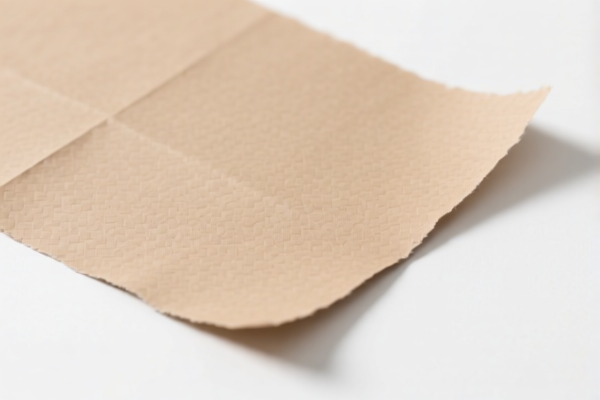

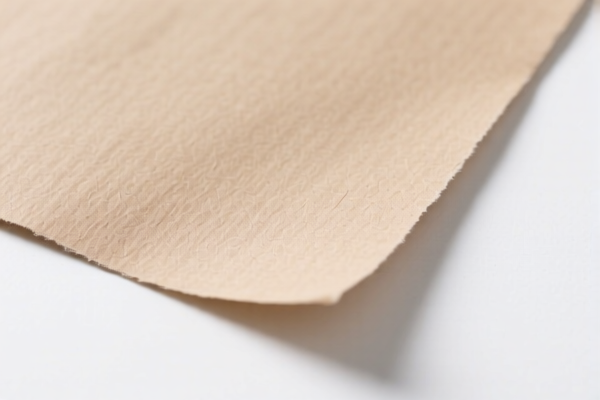
AI Analysis
🎭 Facial Mask Paper (Paper-based Face Masks/Shields)
🌐 HS Code Reference & Customs Clearance Guide | 2024 Latest Tariff Analysis | Professional Clearance Strategy
📌 Part I: Product Definition & Classification: Do You Really Know "Facial Mask Paper"?
"Facial Mask Paper" is a broad term that can refer to two distinct categories of goods in international trade: 1. Medical/Protective Face Masks: Made from non-woven fabric (often polypropylene) or paper-based materials, designed to cover the nose and mouth for hygiene or medical protection. 2. Paper Masks/Shields: Disposable paper face coverings, often used in food service, art, or novelty contexts, made primarily from paper, pulp, or cellulose.
In customs classification, the distinction is critical: * Medical/Surgical Masks: Usually classified under Chapter 30 (Pharmaceutical Products) or Chapter 63 (Other made-up articles) depending on impregnation and packaging. * Paper/Non-Woven Face Masks/Shields (Non-Medical): Often classified under Chapter 39 (Plastics) or Chapter 48 (Paper/Paperboard) depending on the primary material and use.
⚠️ Key Distinction Point: - If the mask is impregnated with pharmaceutical substances (e.g., antimicrobial agents) and put up in forms/packings for retail sale for medical purposes → Chapter 30. - If the mask is purely mechanical protection (no drug impregnation) and made of paper/paperboard → Chapter 48. - If the mask is made of plastics (e.g., polyethylene face shields) or plastic-coated paper → Chapter 39.
📦 Part II: HS Code Classification Details (2024 Latest Tariff Authority Comparison)
Based on the provided <DATA>, here are the relevant HS Codes for "Facial Mask Paper" and related articles:
| HS Code | Product Description | Applicable Scenario | Material/Impregnation |
|---|---|---|---|
3005.90.10.00 |
Wadding, gauze, bandages... impregnated or coated with pharmaceutical substances... for medical/surgical/dental/veterinary purposes: Other: Coated or impregnated with pharmaceutical substances | Medical face masks with antimicrobial coating, medicated masks | ✅ Yes, Impregnated with Pharma |
3005.90.50.90 |
Wadding, gauze, bandages... for medical/surgical/dental/veterinary purposes: Other: Other Other | Non-impregnated medical masks (if considered "wadding/bandages" in nature) | ❌ No Pharma Impregnation |
3926.90.99.50 |
Other articles of plastics...: Other: Other Face masks and shields... | Plastic face shields, plastic-coated paper masks, non-woven plastic face masks | ❌ Plastic/Plastic-based |
4823.90.86.20 |
Other paper, paperboard...: Other: Other Shoe covers... Other: Other: Other: Other: Other Shoe covers (booties) of a kind described in statistical note 2 to this chapter | Note: This code is for SHOE COVERS, NOT masks. Likely a data error in the source for masks. Skip for masks. | ⛔ Not Applicable |
4823.90.80.00 |
Other paper, paperboard...: Other: Other: Other: Other: Gaskets, washers and other seals | Note: This code is for GASKETS/SEALS. Likely a data error in the source for masks. Skip for masks. | ⛔ Not Applicable |
3926.90.99.89 |
Other articles of plastics...: Other: Other Other | Other plastic articles (not specifically face masks/shields) | ❌ Plastic-based |
🔍 Critical Clarification: The provided data contains codes for Shoe Covers (
4823.90.86.20) and Gaskets (4823.90.80.00), which are NOT face masks. These appear to be errors in the source data if applied to "Facial Mask Paper."For Facial Masks, the most relevant codes from the data are: 1.
3005.90.10.00: If the mask is medically impregnated. 2.3005.90.50.90: If the mask is medical but non-impregnated (and classified as wadding/bandage-like). 3.3926.90.99.50: If the mask is a plastic face shield or plastic-based face mask. 4.3926.90.99.89: For other plastic articles not specifically covered.Note: Pure paper face masks (non-medical) are often misclassified. If they are truly paper and not plastic-coated, they might fall under 4823.90.90 (Other), but the provided data does not include a specific "Paper Face Mask" code under Chapter 48. The closest match for "Face Masks" in the data is
3926.90.99.50(Plastic) or3005(Medical).
💰 Part III: 2024 Latest Tariff Rate Details (Including Additional Taxes)
✅ Applicable Country: United States (US)
✅ Origin: China (CN)
✅ Effective Date: Current as of 2024 (Note: Specific IEEPA dates may vary, but general 301 tariffs apply)
🎯 1. 3005.90.10.00 – Medical Face Masks (Impregnated)
| Item | Content |
|---|---|
| Base Tariff | 0.0% (ad valorem) |
| Section 301 Additional Tariff | 25.0% (from USITC Footnote 9903.88.01, applicable to many Chinese goods) |
| IEEPA Additional Tariff | 0.0% (Medical items often exempt from specific IEEPA surcharges, but verify current list) |
| Total Tariff | 25.0% |
| Tax Calculation | CIF Value × 25% |
| De Minimis Exemption | ❌ Not Applicable (Medical devices generally excluded from Section 321 de minimis) |
| Legal Basis Path | USITC:3005.90.10.00 → FOOTNOTE:9903.88.01 |
📌 Explanation:
- Medical masks impregnated with pharmaceutical substances are generally duty-free at the base rate but subject to 25% Section 301 tariff if originating from China. - No IEEPA surcharge typically applies to essential medical goods, but always verify current Executive Orders.
🎯 2. 3005.90.50.90 – Medical Face Masks (Non-Impregnated)
| Item | Content |
|---|---|
| Base Tariff | 0.0% |
| Section 301 Additional Tariff | 0.0% |
| IEEPA Additional Tariff | 0.0% |
| Total Tariff | 0.0% |
| Tax Calculation | CIF Value × 0% |
| De Minimis Exemption | ❌ Not Applicable |
| Legal Basis Path | USITC:3005.90.50.90 |
📌 Note:
- If classified under this code, tariffs are 0%. This is advantageous for non-impregnated medical masks.
🎯 3. 3926.90.99.50 – Plastic Face Masks/Shields
| Item | Content |
|---|---|
| Base Tariff | 0.0% |
| Section 301 Additional Tariff | 0.0% |
| IEEPA Additional Tariff | 0.0% |
| Total Tariff | 0.0% |
| Tax Calculation | CIF Value × 0% |
| De Minimis Exemption | ❌ Not Applicable |
| Legal Basis Path | USITC:3926.90.99.50 |
📌 Note:
- Plastic face shields and masks are generally duty-free with no additional tariffs.
🎯 4. 3926.90.99.89 – Other Plastic Articles
| Item | Content |
|---|---|
| Base Tariff | 5.3% |
| Section 301 Additional Tariff | 7.5% |
| IEEPA Additional Tariff | 0.0% (Assuming not in specific IEEPA list) |
| Total Tariff | 12.8% |
| Tax Calculation | CIF Value × 12.8% |
| De Minimis Exemption | ❌ Not Applicable |
| Legal Basis Path | USITC:3926.90.99.89 |
📌 Note:
- This applies to other plastic articles not specifically listed. If your "Facial Mask Paper" is made of plastic and doesn't fit3926.90.99.50, it may fall here.
🛠️ Part IV: Customs Clearance Practical Advice (Real-World Pitfall Guide)
✅ 1. Required Documentation Checklist (Non-Negotiable)
| Document | Mandatory | Description |
|---|---|---|
| ✅ Product Specification Sheet | ✔️ | Material composition (paper vs. plastic vs. non-woven), dimensions, layers |
| ✅ Certificate of Analysis (COA) | ✔️ | If medical, show no pharmaceutical impregnation (for 0% tariff) |
| ✅ FDA Registration (if medical) | ✔️ | Required for medical masks in the US |
| ✅ Commercial Invoice | ✔️ | Clearly state "Face Mask, Paper/Plastic, Medical/Non-Medical" |
| ✅ Packing List | ✔️ | Detail quantity, weight, and packaging type |
| ✅ Origin Certificate | ✔️ | If claiming exemption, though most face masks are subject to Section 301 |
| ✅ Third-Party Test Report | ✔️ | ASTM, EN standards compliance for medical masks |
✅ 2. Declaration Tips (Key Mantras)
🔥 "Material Matters, Use Defines Code, Medical Needs Proof!"
| Scenario | Correct Declaration | Incorrect Practice |
|---|---|---|
| Medical Mask (Impregnated) | 3005.90.10.00 + "Impregnated with Antimicrobial Agent" |
Misdeclare as plastic mask → 12.8% vs 25% (or vice versa) |
| Medical Mask (Non-Impregnated) | 3005.90.50.90 + "Non-Impregnated Surgical Mask" |
Misdeclare as plastic → Risk of audit |
| Plastic Face Shield | 3926.90.99.50 + "Plastic Face Shield" |
Misdeclare as paper → Incorrect chapter |
| Paper Face Mask (Non-Medical) | Not directly in data, likely 4823.90.90 or 3926.90.99.89 |
Misdeclare as medical → FDA violation |
✅ 3. Special Case Handling
| Scenario | Handling Advice |
|---|---|
| OEM Custom Masks | Provide client order + design drawings to prove non-medical use if claiming lower tariff |
| Masks with Packaging | Declare as a set. If primary use is mask, classify as mask |
| Masks for Healthcare Workers | Provide FDA registration and medical device classification to justify Chapter 30 |
| Masks for Food Service | Declare as "Food Service Face Covering" under Chapter 48 or 39, not medical |
🌍 Part V: Global Market Customs Comparison (2024 Latest)
| Country/Region | Recommended HS Code | Tariff | Certification | Remarks |
|---|---|---|---|---|
| 🇺🇸 USA | 3005.90.10.00 (Medical) |
25% (CN Origin) | FDA + Section 301 | High tariff for impregnated masks |
| 🇺🇸 USA | 3926.90.99.50 (Plastic) |
0% | None | Duty-free for plastic shields |
| 🇨🇳 China | 3005.90.10.00 |
5% | None | Low base tariff |
| 🇪🇺 EU | 3005.90.10.00 |
0% (if CE Marked) | CE + MDR | No Section 301 equivalent |
| 🇦🇺 Australia | 3005.90.10.00 |
5% | TGA | No additional tariffs |
| 🇯🇵 Japan | 3005.90.10.00 |
0% | PMDA | No additional tariffs |
📌 Conclusion:
- USA imposes the highest tariffs on Chinese-origin medical masks due to Section 301. - Plastic face shields (3926.90.99.50) are duty-free in the USA, offering a cost advantage over impregnated medical masks. - EU, Japan, and Australia have no additional tariffs on medical masks, making them more attractive for Chinese exporters.
📌 Part VI: Common Errors & Pitfall Guide (Lessons Learned)
❌ Error 1: Declaring impregnated medical masks as plastic masks (3926.90.99.50)
👉 Consequence: 25% tariff evasion → Seizure, fines, and legal action
❌ Error 2: Declaring non-medical paper masks as medical masks (3005.90.50.90)
👉 Consequence: FDA violation → Import ban and product destruction
❌ Error 3: Using "Facial Mask Paper" as the declaration name without material details
👉 Consequence: Customs delay → Required to provide specifications and material composition
❌ Error 4: Assuming all face masks are duty-free
👉 Consequence: Underpayment of tariffs → Back taxes, penalties, and interest
✅ Correct Practice:
"Medical Face Mask, Non-Impregnated, Surgical Grade, ASTM F2100 Compliant, Model XYZ, FDA Registered"
OR
"Plastic Face Shield, Clear Polycarbonate, Anti-Fog Coating, Model ABC, No FDA Registration"
🎯 Part VII: Conclusion: Precise Classification, Time-Saving, Cost-Efficient!
🎯 Remember the Mantras:
🔹 "Medical Needs Proof, Material Defines Code, Tariff Differs by Origin!"
🔹 "Impregnated Masks = 25% in USA, Plastic Shields = 0%, Paper Masks = Check Chapter 48/39!"
📌 Tips:
- If your face mask is plastic-based, consider declaring under 3926.90.99.50 for 0% tariff in the USA.
- If it is medical and impregnated, expect 25% tariff under 3005.90.10.00.
- Always verify FDA registration for medical claims to avoid legal issues.
📢 Immediate Action:
📞 Consult a Customs Broker + Provide Product Samples + Apply for Advance Ruling if unsure
🚀 Let your face masks clear smoothly, export efficiently, and maximize profits!
✨ Professional Clearance Starts with Accurate Classification!
💼 Every Dollar Saved is a Dollar Earned!
Customer Reviews
About HS Code Classification
The Harmonized System (HS) is an internationally standardized nomenclature developed by the World Customs Organization (WCO) to classify traded products. Over 200 countries use the HS system as the basis for customs tariffs, trade statistics, and import/export regulations.
Each HS code follows a hierarchical structure:
- Chapter (2 digits) — Broad category of goods (e.g., Chapter 84: Machinery and Mechanical Appliances)
- Heading (4 digits) — More specific grouping within the chapter
- Subheading (6 digits) — Internationally standardized breakdown, used by all WCO member countries
- National subdivisions (8-10 digits) — Country-specific extensions for further classification, such as US HTSUS 10-digit codes
Correct HS code classification is essential for smooth customs clearance, accurate duty payment, and compliance with trade regulations. Misclassification can lead to customs delays, overpayment of duties, or penalties.
When importing from CN to US, the applicable tariff rates may include:
- Most-Favored-Nation (MFN) rate — The standard duty rate applied to WTO members
- General rate — Applied to countries without trade agreements
- Trade remedy duties — Additional tariffs such as Section 301 (anti-dumping), Section 232 (national security), or countervailing duties
The information provided on this page is for reference purposes only. For official classification, please consult with your local customs authority or a licensed customs broker.