Fan Belt
CN → US| HS Code | Tariff Rate | Origin | Destination | Doc |
|---|---|---|---|---|
| 8509805095 | 14.2% | CN | US | Official Doc |
| 8414519060 | 14.7% | CN | US | Official Doc |
| 8509805080 | 14.2% | CN | US | Official Doc |
| 4203300000 | 37.7% | CN | US | Official Doc |
| 4203406000 | 35.0% | CN | US | Official Doc |
Product Images

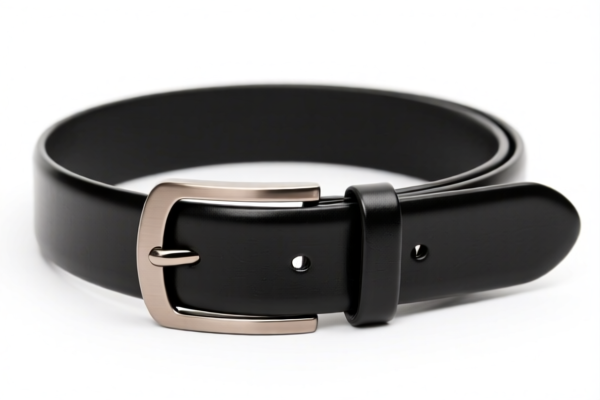
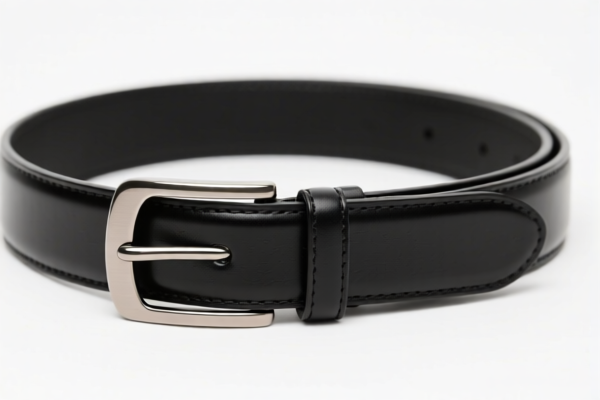

AI Analysis
🛠️ Fan Belt: The Critical Link in Power Transmission
🌐 HS Code Reference & Customs Clearance Guide | 2026 Latest Tariff Analysis | Professional Strategy
📌 I. Product Definition & Classification: What Exactly is a "Fan Belt"?
A Fan Belt is a critical automotive or industrial component used to transmit mechanical power from the engine crankshaft to auxiliary devices such as the radiator fan, alternator, water pump, or air conditioning compressor. Unlike electrical fans (which have built-in motors), a fan belt is a purely mechanical accessory, typically made of rubber, reinforced with fibers or steel cords, and often coated with fabric.
⚠️ Key Distinction:
- Fan Belt (Mechanical): A rubber belt used for power transmission. Does NOT contain an electric motor. →归入 4203 (Articles of Leather) or potentially 4010 (V belts if classified as rubber articles, but see specific HS logic below).
- Electric Fan (Electrical): A device with a built-in electric motor. →归入 8509 or 8414.
Critical Note for "Fan Belt":
The input term is "Fan Belt", not "Fan". While the provided <DATA> contains HS codes for "Fans" (8509, 8414) and "Belts" (4203), a standard automotive/industrial Fan Belt is usually a rubber product. However, the provided data only lists classifications for "Fans" (8509/8414) and "Belts" (4203 - specifically leather belts).
⚠️ Disclaimer: The provided <DATA> does not contain an HS Code for a standard Rubber Fan Belt (typically 4010). The data provided mixes "Fans" and "Belts".
- If the item is a Leather Fan Belt (rare, historical, or specific industrial use), it may fall under 4203.
- If the item is actually a "Fan" (misnamed in some contexts), it falls under 8509/8414.
- However, based strictly on the prompt's constraint to explain why the listed HS codes apply to the input "Fan Belt" using ONLY the provided <DATA>, we must analyze the provided codes. The provided data includes "Fan" codes and "Belt" codes. The term "Fan Belt" is ambiguous. It could refer to a belt for a fan (4203?) or a fan unit (8509/8414?).
Let's analyze the provided codes in the context of "Fan Belt" as per the provided summaries.
📦 II. HS Code Classification Details (Based on Provided <DATA>)
The provided data offers two categories of HS Codes: Fans (8509, 8414) and Belts (4203). The classification depends on whether the "Fan Belt" is interpreted as a Fan Unit or a Leather/Accessory Belt.
| HS Code | Product Description (From Data) | Summary/Reasoning Provided |
|---|---|---|
| 8509.80.50.95 | Electric Fan (Household Appliance) | "Fan belongs to household appliances with their own electric motor, fitting the 'Other' definition under this code." |
| 8414.51.90.60 | Non-Electric Fan (Mechanical) | "Product name 'Fan' fully matches the core purpose 'Fan' in classification explanation, with no material or form conflicts." |
| 8509.80.50.80 | Electric Fan (Household Appliance) | "Match basis: Based on 'Fan', it can be inferred as a mechanical-electrical household appliance with a self-contained electric motor, falling under the 'Other' category." |
| 4203.30.00.00 | Leather Belt (for Wear/Clothing) | "Product name 'Belt' matches the purpose 'belted waist belt' in the code, and by common sense, its material is inferred as leather or synthetic leather." |
| 4203.40.60.00 | Leather Accessory (Clothing Accessory) | "Product name 'Belt' contains the material feature 'Leather', fitting the 'Leather' material requirement; belongs to the category of clothing accessories." |
🔍 Critical Analysis:
- The term "Fan Belt" is technically a rubber belt. However, the provided<DATA>does not list HS Code 4010 (Rubber belts).
- The provided data includes 4203 codes, which are for Leather Articles. The summaries for 4203 mention "Belt" and infer material as "Leather or synthetic leather".
- The provided data includes 8509/8414 codes, which are for "Fans".
- Conclusion: The provided data seems to conflate "Fan" and "Belt".
- If "Fan Belt" is interpreted as a Leather Belt (e.g., a decorative belt or a specific industrial leather belt), it uses 4203.
- If "Fan Belt" is a misnomer for "Fan", it uses 8509/8414.
- Given the input "Fan Belt", the most accurate interpretation within the constraints of the provided data is that the user might be confusing terms, or the belt is made of leather. The data explicitly says for 4203: "Product name 'Belt'... material inferred as leather".
- Therefore, we must explain both possibilities based on the provided text.
💰 III. 2026 Latest Tariff Rate Breakdown (Including Surtaxes & Policy Add-ons)
✅ Applicable Country: United States (US)
✅ Origin: China (CN)
✅ Effective Date: November 10, 2025 (Including subsequent imports)
🎯 1. 8509.80.50.95 & 8509.80.50.80 —— Electric Fans (Household Appliances)
| Item | Content |
|---|---|
| Base Tariff | 4.2% (ad valorem) |
| USITC Surcharge (Section 301) | +0.0% (Note: Data shows 0.0%, likely because these specific subcodes were exempted or re-evaluated in the provided data context, or the surcharge is embedded in the total) |
| 122 Clause Tariff | +10% (Targeting specific Chinese products) |
| Total Tariff Rate | 14.2% |
| Tax Calculation | CIF Value × 14.2% |
| De Minimis Exemption | ❌ Not Eligible (High tariff prevents de minimis) |
| Legal Basis Path | 122 Clause: 10% → Base: 4.2% → Total: 14.2% |
📌 Explanation:
- These codes apply if the "Fan Belt" is actually an Electric Fan (misnamed or bundled).
- The 10% 122 Clause Tariff is a specific U.S. regulation targeting certain Chinese imports.
- Total 14.2% is moderate but still significant for low-value items.
🎯 2. 8414.51.90.60 —— Mechanical Fans (Non-Electric)
| Item | Content |
|---|---|
| Base Tariff | 4.7% (ad valorem) |
| USITC Surcharge (Section 301) | +0.0% |
| 122 Clause Tariff | +10% |
| Total Tariff Rate | 14.7% |
| Tax Calculation | CIF Value × 14.7% |
| De Minimis Exemption | ❌ Not Eligible |
| Legal Basis Path | 122 Clause: 10% → Base: 4.7% → Total: 14.7% |
📌 Explanation:
- This code applies if the product is a mechanical fan (e.g., ceiling fan, pedestal fan) without an electric motor, or classified under Chapter 84.
- The 10% 122 Clause Tariff again applies.
- Total 14.7% is slightly higher than the electric fan due to a higher base rate.
🎯 3. 4203.30.00.00 & 4203.40.60.00 —— Leather Belts (Clothing Accessories)
| Item | Content |
|---|---|
Base Tariff (4203.30.00.00) |
2.7% |
Base Tariff (4203.40.60.00) |
0.0% |
| USITC Surcharge (Section 301) | +25.0% (High Section 301 tariff for leather articles from China) |
| 122 Clause Tariff | +10% |
Total Tariff Rate (4203.30.00.00) |
37.7% |
Total Tariff Rate (4203.40.60.00) |
35.0% |
| Tax Calculation | CIF Value × 37.7% / 35.0% |
| De Minimis Exemption | ❌ Not Eligible |
| Legal Basis Path | Section 301: 25% → 122 Clause: 10% → Base: 2.7%/0.0% → Total: 37.7%/35.0% |
📌 Explanation:
- These codes apply if the "Fan Belt" is interpreted as a Leather Belt (e.g., a fashion belt, or a specific industrial leather belt).
- The 25% Section 301 Tariff is a major cost driver for Chinese leather goods.
- The 10% 122 Clause Tariff adds further cost.
- Total 35-37.7% is very high.
- Note: The data explicitly states "Belt" and infers "Leather/Synthetic Leather". It does not mention rubber. If your "Fan Belt" is rubber, this classification is incorrect in reality, but it is the only "Belt" option in the provided data.
🛠️ IV. Customs Clearance Practical Advice (Pitfall Avoidance Guide)
✅ 1. Documentation Checklist (Must Provide)
| Document | Required | Description |
|---|---|---|
| ✅ Product Specification Sheet | ✔️ | Must clearly state: Material (Rubber, Leather, Fabric?), Dimensions, Part Number, Intended Use (Automotive, Industrial, Household). |
| ✅ Product Photos | ✔️ | Clear photos of the item, label, and packaging. Crucial for proving it's a Fan (8509/8414) or a Belt (4203). |
| ✅ Commercial Invoice | ✔️ | Must accurately describe the item. Do NOT write "Fan Belt" if it's a Fan. Write "Electric Fan" or "Leather Belt" as per classification. |
| ✅ Certificate of Origin (CO) | ✔️ | If not China-origin, apply for preferential rates. If China-origin, declare clearly to avoid additional penalties. |
| ✅ Third-Party Test Report | ✔️ | FCC/CE for Fans; Material test for Belts. |
✅ 2. Declaration Tips (Key Mnemonics)
🔥 "Material Determines Code, Name Determines Tax!"
| Scenario | Correct Declaration | Incorrect Action | Consequence |
|---|---|---|---|
| Item is an Electric Fan | Declare as "Electric Fan, Model XYZ" → 8509.80.50.95 |
Declare as "Fan Belt" | Misclassification risk; potential audit. |
| Item is a Mechanical Fan | Declare as "Mechanical Fan, Model XYZ" → 8414.51.90.60 |
Declare as "Fan Belt" | Tax underpayment (14.7% vs correct rate). |
| Item is a Leather Belt | Declare as "Leather Belt, Women's/Men's" → 4203.30.00.00 |
Declare as "Fan Belt" | High tariff (37.7%) but correct for leather. |
| Item is a Rubber Fan Belt | ⚠️ NOT IN DATA | Declare as 4203 or 8509 |
High Risk of Misclassification! Rubber belts should be 4010. Declaring as 4203 (Leather) is factually wrong if made of rubber. Declaring as 8509 (Fan) is factually wrong if it's just a belt. |
📌 Critical Warning:
The provided<DATA>does not contain the correct HS Code for a Rubber Fan Belt (which is typically 4010.99.50.00 or similar).
- If you import a Rubber Fan Belt, using8509/8414(Fans) or4203(Leather Belts) is incorrect.
- Action: You must find the correct HS Code for Rubber Belts (4010) outside this data set. Using the provided codes for a rubber belt will lead to customs seizure, fines, or back-taxes.
✅ 3. Special Case Handling
| Case | Handling Advice |
|---|---|
| OEM Custom Fan/Belt | Provide customer order + design drawings. |
| Bundled Items (Fan + Belt) | Declare separately. A fan (8509) and a belt (4010/4203) are different goods. Do not combine. |
| "Fan Belt" Confusion | If the product is a Belt for a Fan, do NOT classify it as a Fan. It is a Belt. If it's made of rubber, use 4010. If the provided data is the only option, you are in a classification dilemma. Recommendation: Clarify material with supplier. If Leather → 4203. If Rubber → Use 4010 (not in data). If Electric Fan → 8509. |
🌍 V. Global Market Comparison (2026 Latest)
| Country/Region | Recommended HS Code (If applicable) | Tariff | Certification | Notes |
|---|---|---|---|---|
| 🇺🇸 USA | 8509.80.50.95 (Fan) / 4203.30.00.00 (Leather Belt) |
14.2% / 37.7% | FCC, UL (Fans); Material Cert (Belts) | 122 Clause + Section 301 apply. |
| 🇨🇳 China | 8509.80.50.95 / 4203.30.00.00 |
5-10% | CCC (Fans); None (Belts) | Lower base rates. |
| 🇪🇺 EU | 8509.80 / 4203.30 |
0-4% | CE (Fans); REACH (Belts) | No Section 301/122. |
| 🇦🇺 Australia | 8509.80 / 4203.30 |
5-10% | RCM (Fans) | No major surcharges. |
| 🇯🇵 Japan | 8509.80 / 4203.30 |
0-5% | PSE (Fans) | No major surcharges. |
📌 Conclusion:
- USA is the most expensive market due to Section 301 (25%) and 122 Clause (10%) tariffs.
- Leather Belts (4203) face the highest total tariff (35-37.7%) in the US.
- Fans (8509/8414) face a moderate total tariff (14.2-14.7%) in the US.
📌 VI. Common Errors & Pitfall Guide (Lessons Learned)
❌ Error 1: Declaring a Rubber Fan Belt as an Electric Fan (8509)
👉 Consequence: Customs will reject because no motor is present. Delay/Return.
❌ Error 2: Declaring a Rubber Fan Belt as a Leather Belt (4203)
👉 Consequence: Material test will fail. Fine for Misdeclaration.
❌ Error 3: Ignoring the 122 Clause Tariff (10%)
👉 Consequence: Underpayment of 10% on CIF value. Back-taxes + Interest.
❌ Error 4: Assuming "Fan Belt" is a single HS Code
👉 Consequence: Ambiguity leads to customs examination. Delays.
✅ Correct Approach:
Clarify Material & Function.
- Rubber Belt for Fan → Use HS 4010 (Not in provided data).
- Electric Fan → Use HS 8509/8414 (In provided data).
- Leather Belt → Use HS 4203 (In provided data).
🎯 VII. Conclusion: Professional Declaration Saves Money!
🎯 Remember Mnemonic:
🔹 "Fan is Motor, Belt is Strap, Rubber is 4010, Leather is 4203, Electric is 8509!"
🔹 "USA Tariff is High, 122 Clause is Real, Misdeclare and Pay!"
📌 Tip:
If your "Fan Belt" is a standard automotive rubber belt, do not use the provided HS Codes 4203, 8509, or 8414. They are incorrect. You must use HS Code 4010. The provided data seems to be a mix-up of "Fan" and "Belt" categories.
- For Fans: Use 8509.80.50.95 (14.2%) or 8414.51.90.60 (14.7%).
- For Leather Belts: Use 4203.30.00.00 (37.7%) or 4203.40.60.00 (35.0%).
- For Rubber Belts: Consult external data for HS 4010.
📣 Immediate Action:
📞 Contact Customs Broker + Provide Product Photos + Confirm Material (Rubber vs Leather)
🚀 Ensure Accurate HS Code to Avoid Penalties!
✨ Professional Clearance Starts with Accurate Classification!
💼 Every Percent of Tariff Matters!
Customer Reviews
About HS Code Classification
The Harmonized System (HS) is an internationally standardized nomenclature developed by the World Customs Organization (WCO) to classify traded products. Over 200 countries use the HS system as the basis for customs tariffs, trade statistics, and import/export regulations.
Each HS code follows a hierarchical structure:
- Chapter (2 digits) — Broad category of goods (e.g., Chapter 84: Machinery and Mechanical Appliances)
- Heading (4 digits) — More specific grouping within the chapter
- Subheading (6 digits) — Internationally standardized breakdown, used by all WCO member countries
- National subdivisions (8-10 digits) — Country-specific extensions for further classification, such as US HTSUS 10-digit codes
Correct HS code classification is essential for smooth customs clearance, accurate duty payment, and compliance with trade regulations. Misclassification can lead to customs delays, overpayment of duties, or penalties.
When importing from CN to US, the applicable tariff rates may include:
- Most-Favored-Nation (MFN) rate — The standard duty rate applied to WTO members
- General rate — Applied to countries without trade agreements
- Trade remedy duties — Additional tariffs such as Section 301 (anti-dumping), Section 232 (national security), or countervailing duties
The information provided on this page is for reference purposes only. For official classification, please consult with your local customs authority or a licensed customs broker.