Fan Light
CN → US| HS Code | Tariff Rate | Origin | Destination | Doc |
|---|---|---|---|---|
| 8414519060 | 14.7% | CN | US | Official Doc |
| 9405198020 | 38.9% | CN | US | Official Doc |
| 9405198010 | 38.9% | CN | US | Official Doc |
Product Images
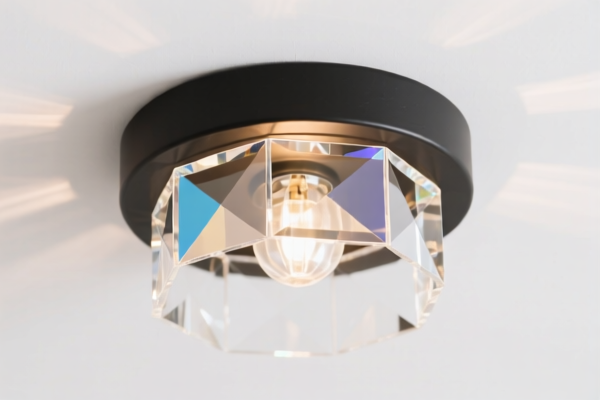


AI Analysis
💡🌀 Fan Light: The Ultimate HS Code & Customs Clearance Guide (2026 Edition)
🌐 HS Code Reference & Clearance Strategy | 2026 Tariff Breakdown | Expert通关 Protocol
📌 I. Product Definition & Classification: Do You Really Know Your "Fan Light"?
The Fan Light (Ceiling Fan with Light Kit) is a hybrid appliance combining air circulation (fan function) and illumination (lighting function). In international trade, its classification depends entirely on its primary function and design intent:
- Ceiling Fan (Fan-First): If the fan function is dominant and the light is merely an accessory.
- HS Code Path: 8414.51.90.60 (Fans for ceiling mounting).
- Chandelier/Light Fixture (Light-First): If the lighting component is dominant, or the design is primarily aesthetic.
- HS Code Path: 9405.19.80.10 / 9405.19.80.20 (Chandeliers, ceiling lamps).
⚠️ Critical Distinction:
- If the fan blades and motor are the main selling point → 8414.51.90.60 (Lower Tax: 14.7%).
- If the lighting fixture is the main selling point (e.g., ornate crystal + small fan) → 9405.19.80.x0 (High Tax: 38.9%).
- Risk: Misclassification as a "light" when it's a "fan" can lead to seizure, back-tariffs, and fines.
📦 II. HS Code Classification Details (2026 Latest Tariff Schedule)
| HS Code | Product Description | Primary Function | Total Tax Rate | Tax Composition Breakdown |
|---|---|---|---|---|
8414.51.90.60 |
Ceiling Fan (Fan Light classified as ceiling fan) | Air Circulation (Fan) | 14.7% | • Base Duty: 4.7% • Section 301 (Add-on): 0.0% • Section 122 Duty: 10% |
9405.19.80.20 |
Chandelier (Fan Light classified as lighting component) | Illumination (Light) | 38.9% | • Base Duty: 3.9% • Section 301 (Add-on): 25.0% • Section 122 Duty: 10% |
9405.19.80.10 |
Ceiling Lamp / Chandelier (Fan Light classified as light) | Illumination (Light) | 38.9% | • Base Duty: 3.9% • Section 301 (Add-on): 25.0% • Section 122 Duty: 10% |
🔍 Key Insight:
- The tax difference is massive: 14.7% vs. 38.9%. A difference of 24.2 percentage points on a $1,000 shipment means $242 extra cost!
- 8414.51.90.60 is the only path to avoid the steep 25% Section 301 tariff.
- The other two codes (9405 series) are treated strictly as Lighting Products and attract the full punitive trade duty.
💰 III. 2026 Tariff Rate Breakdown (Detailed Policy Analysis)
✅ Applicable Country: United States (US)
✅ Origin: China (CN)
✅ Effective Date: 2026 Tariff Schedule (Including Section 301 & 122 Measures)
🎯 Scenario A: Classifying as "Ceiling Fan" (8414.51.90.60)
Why choose this? It avoids the heavy Section 301 penalty.
| Item | Detail |
|---|---|
| Base Duty Rate | 4.7% (Standard MFN rate for fans) |
| Section 301 Duty (Add-on) | 0.0% (Fans are generally exempt from the 25% penalty) |
| Section 122 Duty | 10% (Additional 10% tariff for specific Chinese products) |
| Total Effective Tax | 14.7% |
| Tax Calculation | CIF Value × 14.7% |
| De Minimis Exemption | ❌ No (Duty applies) |
| Legal Basis Path | USITC: 8414.51.90.60 → Section 122: 10% |
📌 Expert Explanation:
- The 0% Section 301 rate is the golden ticket. While the base duty is 4.7%, the absence of the 25% penalty saves you a fortune.
- The 10% Section 122 is a specific anti-dumping/subsidy measure often applied to fans.
- Strategy: Ensure marketing and technical docs emphasize "Fan Performance" (CFM, blade speed) over "Light Quality."
🎯 Scenario B: Classifying as "Lighting Fixture" (9405.19.80.10 / 80.20)
Why is this dangerous? It triggers the highest tariffs.
| Item | Detail |
|---|---|
| Base Duty Rate | 3.9% (Standard MFN rate for lamps) |
| Section 301 Duty (Add-on) | 25.0% (Heavy penalty for Lighting Products) |
| Section 122 Duty | 10% (Additional 10% tariff) |
| Total Effective Tax | 38.9% |
| Tax Calculation | CIF Value × 38.9% |
| De Minimis Exemption | ❌ No (Duty applies) |
| Legal Basis Path | USITC: 9405.19.80.x0 → Section 301: 9903.xx.xx → Section 122: 10% |
📌 Expert Explanation:
- If Customs determines the item is "primarily a light," they apply the 25% Section 301 tariff.
- Even if you claim it's a fan, if the lighting is prominent, you risk a re-classification audit leading to 38.9% instead of 14.7%.
- Risk: A $10,000 shipment could cost $3,890 in taxes vs. $1,470.
🛠️ IV. Customs Clearance Strategy (Practical "Anti-Pitfall" Guide)
✅ 1. Preparation Checklist (Non-Negotiable)
| Document | Required? | Why? |
|---|---|---|
| Product Specification Sheet | ✔️ | Must highlight Fan CFM, RPM, and Light Wattage separately. |
| Functionality Test Report | ✔️ | Proof that the fan works independently of the light. |
| Product Photos (Labeled) | ✔️ | Show fan blades, motor housing, and light kit separately. |
| Marketing Brochure/Website | ✔️ | Crucial: If website says "Decorative Chandelier with Fan," you will be taxed as Lighting (38.9%). If it says "High-Performance Ceiling Fan with Light," aim for Fan (14.7%). |
| Commercial Invoice | ✔️ | Description must be precise: e.g., "Ceiling Fan with Integrated LED Kit." Avoid "Light Fixture." |
| Assembly Diagram | ✔️ | Show motor is the core component, light is an attachment. |
✅ 2. Declaration Strategy (The "Golden Rules")
🔥 Mantra: "Fan First, Light Second; Motor Core, Bulb Accessory."
| Situation | Correct Declaration | Risky Declaration |
|---|---|---|
| Main Feature | "Ceiling Fan with Light" | "Chandelier with Fan" |
| HS Code | 8414.51.90.60 |
9405.19.80.20 |
| Tax Rate | 14.7% | 38.9% |
| Documentation | Emphasize Airflow (CFM), Motor Speed | Emphasize Lumens, Crystal Design |
| Risk | Low (Standard Fan Rate) | High (Re-classification + Back-tariff) |
✅ 3. Special Cases & Handling
| Scenario | Handling Advice |
|---|---|
| OEM Customization | Provide design sketches showing the motor is the central unit; light is a "kit" added later. |
| Smart Fan Lights | If it has a "Smart Hub," still classify as Fan if the hub controls the motor primarily. |
| Mixed Shipments | Do not ship "Fan Lights" mixed with "Regular Lamps." Separate invoices. |
| Customs Audit | If audited, argue "Fan Function is Primary" based on technical specs (CFM vs. Lumens). |
🌍 V. Global Market Comparison (2026)
| Market | Recommended HS Code | Tariff (China Origin) | Key Requirement | Note |
|---|---|---|---|---|
| 🇺🇸 USA | 8414.51.90.60 |
14.7% | FCC + UL | Avoid 9405 (38.9% is brutal) |
| 🇨🇳 China | 8414.51.90.60 |
5% | CCC | No Section 301 |
| 🇪🇺 EU | 8414.51.90.60 |
0% (RoHS/CE) | CE + RoHS | No Section 301 |
| 🇯🇵 Japan | 8414.51.90.60 |
5% | PSE | No Section 301 |
📌 Conclusion:
- USA is the only market where this classification split matters hugely due to Section 301.
- Strategy: Always aim for8414.51.90.60in the US market to save 24.2% in taxes.
📌 VI. Common Errors & "Blood & Tears" Lessons
❌ Mistake 1: Marketing the product as "Crystal Chandelier with Fan" on the website.
👉 Result: Customs classifies as Lighting (9405) → 38.9% Tax.
👉 Fix: Rename to "Ceiling Fan with LED Light Kit."
❌ Mistake 2: Invoice description: "Lighting Fixture with Fan Accessory."
👉 Result: Automatic classification as Lighting → 38.9% Tax.
👉 Fix: Invoice description: "Ceiling Fan, Model X, with Light Kit."
❌ Mistake 3: Ignoring Section 122 (10% extra).
👉 Result: Underestimating costs by 10%.
👉 Fix: Factor 10% into all US shipping quotes for Chinese-made fans.
✅ Correct Approach:
"Ceiling Fan (Class 8414) with Integrated Lighting Kit (Accessory)"
Tax Strategy: Target 14.7%, avoid 38.9%.
🎯 VII. Final Verdict: Professional Declaration = Profit Protection!
🎯 Key Takeaway:
🔹 "Fan First, Tax Low. Light First, Tax High."
🔹 "8414 saves 24% tax. 9405 costs you 24%."
🔹 "One word change in the invoice: 'Fan' vs 'Light' = $2,400 difference on $10k shipment."
📌 Pro Tip:
If your product is a hybrid, submit a Binding Ruling Request (BRO) to US Customs before shipping. Ask specifically:
"Is the product 'primarily a fan' or 'primarily a light'?"
This locks in the 14.7% rate and avoids surprise audits.
📣 Call to Action:
📞 Contact a Customs Broker today to review your product specs.
🚀 Optimize your HS Code now to save 24.2% on every shipment to the US.
💰 Don't let 'Fan Light' become 'Tax Light'!
✨ Precision Classification: The Key to Global Trade Success!
💼 Every percentage point counts. Every HS code decides your margin!
Customer Reviews
About HS Code Classification
The Harmonized System (HS) is an internationally standardized nomenclature developed by the World Customs Organization (WCO) to classify traded products. Over 200 countries use the HS system as the basis for customs tariffs, trade statistics, and import/export regulations.
Each HS code follows a hierarchical structure:
- Chapter (2 digits) — Broad category of goods (e.g., Chapter 84: Machinery and Mechanical Appliances)
- Heading (4 digits) — More specific grouping within the chapter
- Subheading (6 digits) — Internationally standardized breakdown, used by all WCO member countries
- National subdivisions (8-10 digits) — Country-specific extensions for further classification, such as US HTSUS 10-digit codes
Correct HS code classification is essential for smooth customs clearance, accurate duty payment, and compliance with trade regulations. Misclassification can lead to customs delays, overpayment of duties, or penalties.
When importing from CN to US, the applicable tariff rates may include:
- Most-Favored-Nation (MFN) rate — The standard duty rate applied to WTO members
- General rate — Applied to countries without trade agreements
- Trade remedy duties — Additional tariffs such as Section 301 (anti-dumping), Section 232 (national security), or countervailing duties
The information provided on this page is for reference purposes only. For official classification, please consult with your local customs authority or a licensed customs broker.