Fan shaped Paper Fan
CN → US| HS Code | Tariff Rate | Origin | Destination | Doc |
|---|---|---|---|---|
| 4420908000 | 38.2% | CN | US | Official Doc |
| 4823905000 | 35.0% | CN | US | Official Doc |
| 4823908680 | 35.0% | CN | US | Official Doc |
Product Images
AI Analysis
🪭 Fan-shaped Paper Fans (Wooden Frame & Paper Leaf)
🌐 HS Code Reference & Customs Clearance Guide | 2026 Latest Tariff Analysis | Professional Clearance Strategy
📌 I. Product Definition: What is a "Fan-shaped Paper Fan"?
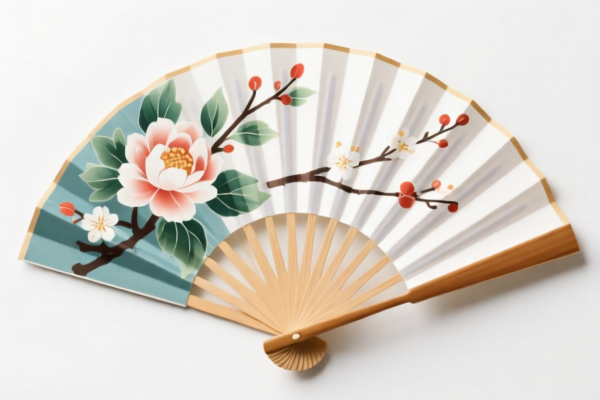
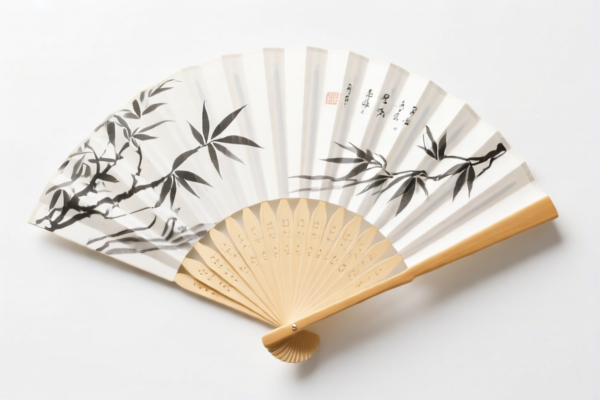
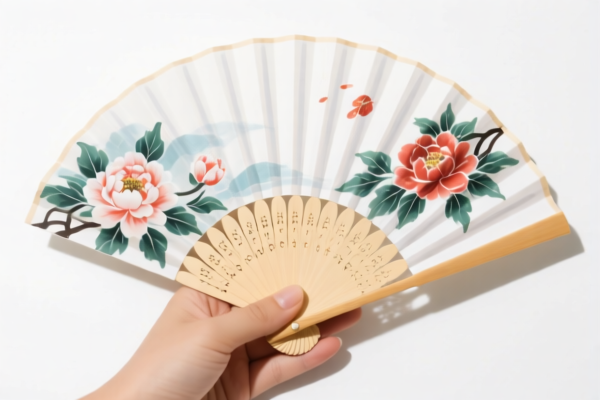
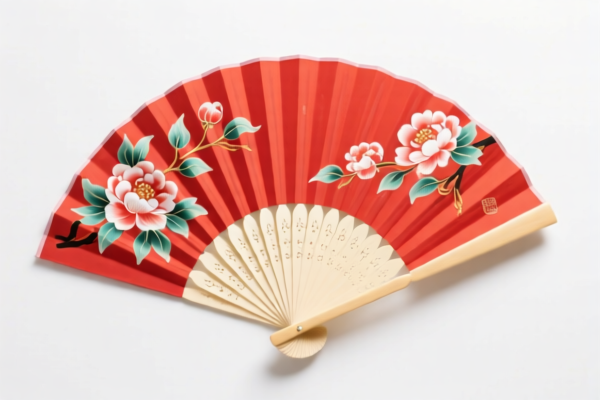
A fan-shaped paper fan is a traditional hand-held cooling or decorative item, typically composed of a wooden skeleton/frame and a paper surface. In international trade, the classification depends heavily on the primary material and functional purpose.
⚠️ Key Classification Dilemma:
- Is it a Wooden Product (based on the structural frame)?
- Is it a Paper Product (based on the visible surface and primary use)?Based on current data, two main paths exist: Chapter 44 (Wood) and Chapter 48 (Paper).
📦 II. HS Code Classification Details (2026 Latest Tariff Authority)
The following HS codes are derived from the provided dataset for "Wooden-framed Paper Fans."
| HS Code | Product Description | Basis for Classification | Total Tax Rate |
|---|---|---|---|
4420.90.80.00 |
Wooden Articles (Decorative) | Based on the wooden skeleton/frame as the defining structure. | 38.2% |
4823.90.50.00 |
Other Paper Products (Hand Fans) | Based on the paper surface and hand-held cooling function. | 35.0% |
4823.90.86.80 |
Other Paper Products (Miscellaneous) | Based on paper material and form without specific conflict. | 35.0% |
🔍 Critical Note:
- Path A (Wood): If the fan is considered a "wooden article" due to the prominence of the wooden frame, it falls under 4420.90.80.00.
- Path B (Paper): If the fan is considered a "paper article" due to the paper surface and utilitarian function, it falls under 4823.90.50.00 or 4823.90.86.80.
- Tax Difference: The Paper path offers a 3.2% lower total tax rate (35.0% vs. 38.2%) compared to the Wood path.
💰 III. 2026 Latest Tariff Rate Breakdown (Including Surcharges & Policy Add-ons)
✅ Applicable Country: United States (US)
✅ Origin: China (CN)
✅ Effective Time: 2025/2026 (Based on latest 122 & Section 301 data)
🎯 1. 4420.90.80.00 —— Wooden Articles (Decorative)
| Item | Content |
|---|---|
| Base Tariff | 3.2% (ad valorem) |
| Section 301 Surcharge | +25.0% |
| 122 Clause Surcharge | +10.0% |
| Total Tax Rate | 38.2% |
| Tax Calculation | CIF Value × 38.2% |
| De Minimis Exemption | ❌ Not Applicable (High rate exceeds de minimis threshold logic) |
| Legal Basis Path | HTSUS:4420.90.80.00 → Section 301 → 122 Clause |
📌 Explanation:
- The 3.2% base tariff applies to wooden decorative articles.
- The 25% Section 301 tariff is the standard US trade war surcharge on Chinese goods.
- The 10% "122 Clause" tariff is an additional penalty/add-on applied to specific Chinese imports.
- Total: 38.2%. This is a high-cost classification.
🎯 2. 4823.90.50.00 —— Other Paper Products (Hand Fans)
| Item | Content |
|---|---|
| Base Tariff | 0.0% (ad valorem) |
| Section 301 Surcharge | +25.0% |
| 122 Clause Surcharge | +10.0% |
| Total Tax Rate | 35.0% |
| Tax Calculation | CIF Value × 35.0% |
| De Minimis Exemption | ❌ Not Applicable |
| Legal Basis Path | HTSUS:4823.90.50.00 → Section 301 → 122 Clause |
📌 Note:
- The base tariff is 0% because hand-held paper fans are not subject to a standard import duty in Chapter 48.
- However, the 25% Section 301 and 10% 122 Clause still apply.
- Total: 35.0%. This is the preferred classification for cost savings.
🎯 3. 4823.90.86.80 —— Other Paper Products (Miscellaneous)
| Item | Content |
|---|---|
| Base Tariff | 0.0% |
| Section 301 Surcharge | +25.0% |
| 122 Clause Surcharge | +10.0% |
| Total Tax Rate | 35.0% |
| Tax Calculation | CIF Value × 35.0% |
| De Minimis Exemption | ❌ Not Applicable |
| Legal Basis Path | HTSUS:4823.90.86.80 → Section 301 → 122 Clause |
📌 Note:
- This is a fallback category for paper products not specifically listed elsewhere.
- Tax rate is identical to4823.90.50.00(35.0%).
- Use this if the fan does not fit the "hand fan" description strictly but is still clearly paper-based.
🛠️ IV. Customs Clearance Practical Advice (Real-World Pitfall Guide)
✅ 1. Preparation Checklist (Missing Items = Delays)
| Document | Required | Description |
|---|---|---|
| ✅ Product Photos | ✔️ | Clear images showing both the wooden frame and paper surface. |
| ✅ Product Specification Sheet | ✔️ | Detail materials: % wood, % paper, glue type, dimensions. |
| ✅ Commercial Invoice | ✔️ | Must clearly state: "Hand-held Paper Fan with Wooden Frame." |
| ✅ Packing List | ✔️ | Confirm no other materials (e.g., metal rods, plastic handles) that could change classification. |
| ✅ Origin Certificate | ✔️ | If non-China origin, apply for preferential rates. |
| ✅ Third-Party Test Report | ✔️ | If for children’s toys, include safety certifications (CPC, ASTM). |
✅ 2. Declaration Tips (Key Mnemonic)
🔥 "Paper Surface, Wood Frame, Declare as Paper for Savings!"
| Scenario | Correct Declaration | Wrong Practice |
|---|---|---|
| Standard Hand Fan | 4823.90.50.00 |
Declare as "Wooden Craft" → 38.2% |
| Decorative Fan (Non-use) | 4420.90.80.00 |
Declare as "Paper Product" → Risk of rejection if clearly decorative wood |
| Mixed Material Fan | Primary Material Test | Guessing → High audit risk |
📌 Key Insight:
- If the fan is functional (used for cooling), Chapter 48 (Paper) is generally more appropriate and cheaper.
- If the fan is purely decorative (e.g., wall hanging, elaborate wooden carving with minimal paper), Chapter 44 (Wood) may be required.
✅ 3. Special Cases
| Case | Handling Advice |
|---|---|
| OEM Custom Fans | Provide design files to prove intent. If marketed as "cooling device," lean towards 4823.90.50.00. |
| Eco-Friendly/Bamboo Frame | If frame is bamboo, it may still fall under Chapter 44 or 46. Verify material. |
| Toy Fans | If marketed for children, ensure compliance with CPSC regulations. HS Code remains same, but documentation is stricter. |
| High-Value Collectibles | If value is high due to artistic value, consider 4420.90.80.00 as "luxury wooden article," but expect higher tax. |
🌍 V. Global Market Comparison (2026 Latest)
| Country/Region | Recommended HS Code | Tariff (China Origin) | Certification | Note |
|---|---|---|---|---|
| 🇺🇸 USA | 4823.90.50.00 |
35.0% | No special certs | 38.2% if Wood-classified |
| 🇨🇳 China | 4823.90.50.00 |
0% (Export) | N/A | Export tax rebate applies |
| 🇪🇺 EU | 4823.90.50.00 |
0% - 2% | CE (if toy) | No Section 301 |
| 🇬🇧 UK | 4823.90.50.00 |
0% - 2% | UKCA (if toy) | Post-Brexit rules apply |
| 🇯🇵 Japan | 4823.90.50.00 |
0% - 5% | PSE (if toy) | Low tariffs generally |
📌 Conclusion:
- USA is the most expensive market due to Section 301 and 122 Clause tariffs.
- Correct classification as "Paper Product" saves 3.2% on every shipment.
- Other markets have minimal or no additional surcharges.
📌 VI. Common Errors & Pitfalls (Lessons Learned)
❌ Error 1: Declaring as "Wooden Craft" without justification
👉 Consequence: Pay 38.2% instead of 35.0%.
Result: Unnecessary cost increase.
❌ Error 2: Declaring as "Paper Product" for a fully wooden fan
👉 Consequence: Customs audit, delay, potential penalty.
Result: Clearance failure if no paper is present.
❌ Error 3: Omitting "122 Clause" in cost calculation
👉 Consequence: Underestimating landed cost.
Result: Profit margin erosion.
✅ Correct Approach:
"Hand-held Paper Fan, Wooden Frame, Paper Surface, For Cooling Use, Model XYZ, Origin China"
🎯 VII. Conclusion: Professional Declaration, Save Cost, Ensure Clearance!
🎯 Remember the Mnemonic:
🔹 "Paper for Function, Wood for Decoration!"
🔹 "35% vs 38.2%, Choose Paper for Savings!"
🔹 "HS Code Decides Destiny, 3.2% Saves Big, Declare Step by Step!"
📌 Pro Tip:
If your fans are originally from Vietnam, Mexico, Thailand, or Malaysia, you may qualify for IEEPA Exemptions or lower tariffs.
Recommendation: Apply for an Advance Ruling (Ruling Letter) from U.S. Customs to confirm the HS Code before shipment to avoid risks.
📣 Immediate Action:
📞 Contact a Professional Broker + Provide Product Photos + Apply for HS Code Pre-Ruling
🚀 Let your Paper Fans Clear Smoothly, Export Efficiently, and Double Profits!
✨ Professional Clearance Starts with Accurate Classification!
💼 Every Cent of Your Cost Deserves Precision!
Customer Reviews
About HS Code Classification
The Harmonized System (HS) is an internationally standardized nomenclature developed by the World Customs Organization (WCO) to classify traded products. Over 200 countries use the HS system as the basis for customs tariffs, trade statistics, and import/export regulations.
Each HS code follows a hierarchical structure:
- Chapter (2 digits) — Broad category of goods (e.g., Chapter 84: Machinery and Mechanical Appliances)
- Heading (4 digits) — More specific grouping within the chapter
- Subheading (6 digits) — Internationally standardized breakdown, used by all WCO member countries
- National subdivisions (8-10 digits) — Country-specific extensions for further classification, such as US HTSUS 10-digit codes
Correct HS code classification is essential for smooth customs clearance, accurate duty payment, and compliance with trade regulations. Misclassification can lead to customs delays, overpayment of duties, or penalties.
When importing from CN to US, the applicable tariff rates may include:
- Most-Favored-Nation (MFN) rate — The standard duty rate applied to WTO members
- General rate — Applied to countries without trade agreements
- Trade remedy duties — Additional tariffs such as Section 301 (anti-dumping), Section 232 (national security), or countervailing duties
The information provided on this page is for reference purposes only. For official classification, please consult with your local customs authority or a licensed customs broker.