Farm Raised Raccoon Skins (Undyed)
CN → US| HS Code | Tariff Rate | Origin | Destination | Doc |
|---|---|---|---|---|
| 4103902000 | 20.8% | CN | US | Official Doc |
| 4103901190 | 17.5% | CN | US | Official Doc |
| 4302206000 | 38.5% | CN | US | Official Doc |
Product Images
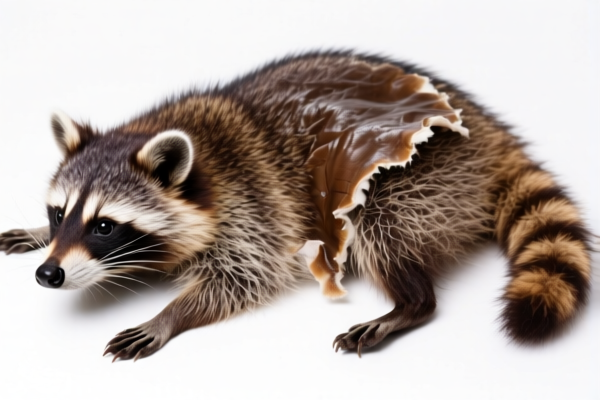
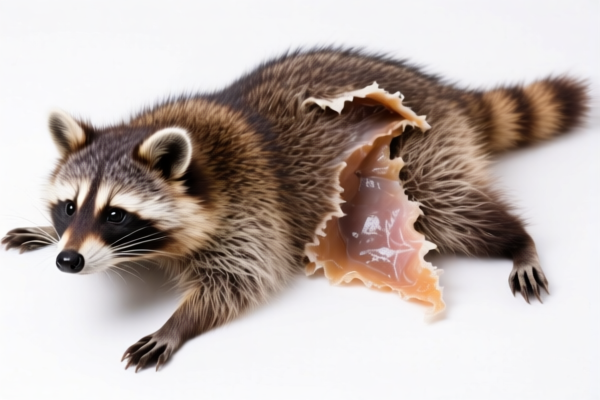
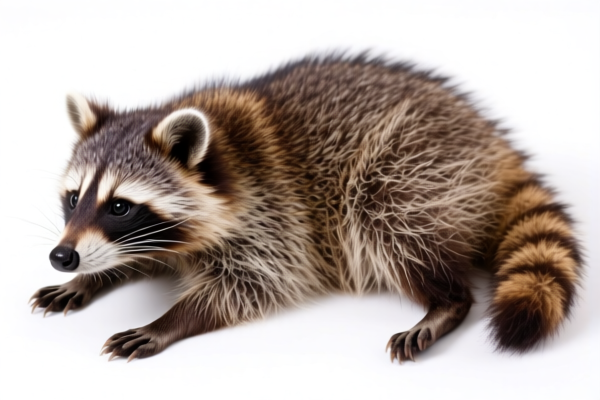
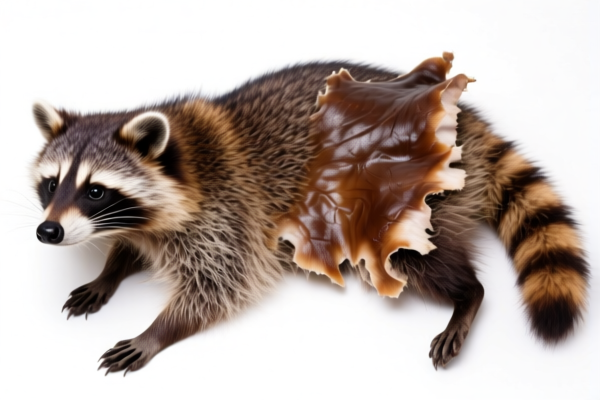
AI Analysis
🦝 Farm Raised Raccoon Skins (Undyed)
🌐 HS Code Reference & Customs Clearance Guide | 2026 Latest Tariff Analysis | Professional Clearance Strategy
📌 I. Product Definition & Classification: Do You Really Understand "Raccoon Skins"?
Raccoon Skins, particularly those from farm-raised sources, are a critical raw material in the fur industry. In international trade, they are strictly regulated under Chapter 43 (Real Fur) or Chapter 41 (Raw Hides and Skins), depending on their state of preparation.
Key Distinction: Tanned/Dressed vs. Raw 1. Tanned or Dressed Skins (Chapter 43): If the skin has undergone tanning, dressing, or any process to preserve it as fur (even if unassembled), it falls under Heading 4302. * Specifics: Raccoon skins are explicitly listed. If unassembled (whole skins, heads, tails, pieces), they are classified here. * Condition: "Undyed" means the natural color is preserved, but the tanning process is complete. 2. Raw Hides and Skins (Chapter 41): If the skin is fresh, salted, dried, limed, pickled, or otherwise preserved but NOT tanned, it falls under Heading 4103. * Specifics: These are raw materials that have NOT yet been converted into durable leather/fur.
⚠️ Critical Differentiation Point:
- If the skin is tanned/dressed (even if not dyed and unassembled) → HS Code 4302.xxxxxx
- If the skin is raw/salted/dried (NOT tanned) → HS Code 4103.90.xxxxxx
📦 II. HS Code Classification Details (2026 Latest Tariff Authority对照)
Based on the provided data, here are the precise HS Codes for Raccoon Skins and related raw materials:
| HS Code | Product Description | Application Scenario | Tanning Status |
|---|---|---|---|
4302.19.30.40 |
Whole skins, with/without head, tail, or paws, not assembled; Of raccoon; Other; Not dyed | Whole farm-raised raccoon skins, tanned/dressed but undyed, unassembled | ✅ Tanned/Dressed |
4302.20.60.00 |
Heads, tails, paws, and other pieces or cuttings, not assembled; Other; Not dyed | Raccoon heads, tails, or cuttings (unassembled), tanned/dressed but undyed | ✅ Tanned/Dressed |
4103.90.11.90 |
Other raw hides and skins... Not pretanned Other | Raw raccoon skins (fresh/salted/dried) that are NOT tanned or pretanned | ❌ Raw |
4103.90.20.00 |
Other raw hides and skins... Other; Other; Other | Raw skins classified under "Other" (general raw hide category if not specifically exempted) | ❌ Raw |
🔍 Key Reminder:
- "Undyed" does NOT mean "Raw". "Undyed" refers to color treatment, while "Tanned" refers to the preservation process. A skin can be Tanned + Undyed (Chapter 43).
- Farm-raised status does not change the HS Code classification; the processing state (raw vs. tanned) is the decisive factor.
💰 III. 2026 Latest Tariff Rate Detailed Analysis (Including Surtaxes & Policy Add-ons)
✅ Applicable Country: United States (US)
✅ Origin: China (CN) (Assumed based on data context)
✅ Effective Date: 2025年11月10日起 (From Nov 10, 2025)
🎯 1. 4302.19.30.40 —— Raccoon Skins, Whole, Undyed, Tanned/Dressed (Unassembled)
| Item | Content |
|---|---|
| Basic Tariff | 0.0% |
| Surtax (Section 301/IEEPA) | 0.0% |
| Total Tax Rate | 0.0% |
| Tax Calculation | CIF Value × 0.0% = $0 |
| De Minimis Eligibility | ❌ No (Check specific de minimis rules for furs) |
| Legal Basis Path | HS:4302.19.30.40 → Tax: 0.0% |
📌 Explanation:
- Raccoon skins (tanned/dressed) fall under a specific subheading that currently enjoys 0% total tariff under the provided data.
- This is a high-value advantage compared to raw skins or other furs.
- Ensure the description explicitly states "Tanned or Dressed" to avoid reclassification to Chapter 41 (which has higher taxes).
🎯 2. 4302.20.60.00 —— Raccoon Parts (Heads, Tails, Cuttings), Undyed, Tanned/Dressed (Unassembled)
| Item | Content |
|---|---|
| Basic Tariff | 0.0% |
| Surtax (Section 301/IEEPA) | 0.0% |
| Total Tax Rate | 0.0% |
| Tax Calculation | CIF Value × 0.0% = $0 |
| De Minimis Eligibility | ❌ No |
| Legal Basis Path | HS:4302.20.60.00 → Tax: 0.0% |
📌 Note:
- Even if the skins are cut into heads, tails, or pieces, as long as they are tanned/dressed and unassembled, they qualify for 0% tax.
- Do not mix raw and tanned parts in the same shipment if possible, to avoid classification confusion.
🎯 3. 4103.90.11.90 —— Raw Raccoon Skins (Not Pretanned)
| Item | Content |
|---|---|
| Basic Tariff | 0.0% |
| Surtax (Section 301/IEEPA) | 7.5% |
| Total Tax Rate | 7.5% |
| Tax Calculation | CIF Value × 7.5% |
| De Minimis Eligibility | ❌ No |
| Legal Basis Path | HS:4103.90.11.90 → Tax: 7.5% |
📌 Warning:
- If the skins are NOT tanned (only salted/dried), the tariff jumps to 7.5%.
- This applies to "Not pretanned" raw skins.
- Cost Impact: Significant increase if you misdeclare tanned skins as raw.
🎯 4. 4103.90.20.00 —— Other Raw Hides and Skins (Not Tanned)
| Item | Content |
|---|---|
| Basic Tariff | 3.3% |
| Surtax (Section 301/IEEPA) | 7.5% |
| Total Tax Rate | 10.8% |
| Tax Calculation | CIF Value × 10.8% |
| De Minimis Eligibility | ❌ No |
| Legal Basis Path | HS:4103.90.20.00 → Tax: 10.8% |
📌 Caution:
- This is the highest tax rate in the provided data.
- Apply only if the skins are raw, not tanned, and do not fit the "Not pretanned" specific category (4103.90.11.90).
- Avoid this classification for tanned raccoon skins.
🛠️ IV. Customs Clearance Practical Advice (Real-World Pitfall Avoidance Guide)
✅ 1. Preparation Checklist (Missing items lead to delays)
| Document | Required? | Description |
|---|---|---|
| ✅ Commercial Invoice | ✔️ | Must clearly state "Tanned or Dressed Raccoon Skins, Undyed" vs. "Raw Salted Raccoon Skins" |
| ✅ Packing List | ✔️ | Detail whether skins are whole, heads, tails, or cuttings |
| ✅ Processing Certificate | ✔️ | From the tannery: Confirm tanning/dressing process (e.g., chrome-tanned, vegetable-tanned) |
| ✅ Photos | ✔️ | Show texture and finish: Tanned skins look supple and preserved; raw skins look stiff, salted, or fresh |
| ✅ CITES Permit | ✔️ | CRITICAL: Raccoons may be listed under CITES. Check if international trade requires an export/import permit. |
| ✅ Origin Certificate | ✔️ | If claiming preferential rates (though current rates are 0% for tanned) |
✅ 2. Declaration Tips (Key Mnemonics)
🔥 “Tanned = 0%, Raw = 7.5-10.8%; Specify ‘Undyed’ but ‘Tanned’!”
| Scenario | Correct Declaration | Incorrect Action |
|---|---|---|
| Tanned, Undyed, Whole Skin | 4302.19.30.40 |
Declaring as 4103.90.20.00 → Pays 10.8% instead of 0% |
| Tanned, Undyed, Cuttings | 4302.20.60.00 |
Declaring as 4103.90.11.90 → Pays 7.5% instead of 0% |
| Raw, Salted, Not Tanned | 4103.90.11.90 |
Declaring as "Fur Skin" without specifying "Raw" → Penalty for misclassification |
| Mixed Shipment (Raw + Tanned) | Split Declaration | Mixing in one HS Code → Customs seizure or audit |
✅ 3. Special Handling
| Situation | Handling Advice |
|---|---|
| Farm-Raised Proof | Provide breeding farm certificates if requested for ethical sourcing, but HS Code depends on processing, not origin of animal. |
| CITES Compliance | Check CITES Appendix: Some raccoon species may require permits. Non-compliance leads to confiscation. |
| Undyed Clarification | Explicitly state "Not Dyed" to avoid confusion with processed dyed furs, which may have different regulatory requirements. |
| Unassembled vs. Assembled | Ensure goods are unassembled if declaring under 4302.19/4302.20. Assembled furs (clothing/jackets) fall under 4303 (not in provided data, but different tax). |
🌍 V. Global Market Comparison (2026 Latest)
| Country/Region | Recommended HS Code | Tariff (China Origin) | Certification | Remarks |
|---|---|---|---|---|
| 🇺🇸 USA | 4302.19.30.40 (Tanned) |
0.0% | CITES (if applicable) | Best rate for tanned skins |
| 🇪🇺 EU | 4302.19 (Tanned) |
Varies (Check EU Tariff) | CITES + REACH | Strict on raw hides |
| 🇨🇳 China | 4302.19 (Tanned) |
~5-10% (Import Duty) | Animal Quarantine | Import raw skins heavily regulated |
📌 Conclusion:
- USA offers 0% tariff for Tanned/Dressed Raccoon Skins under4302.19.30.40and4302.20.60.00.
- Raw skins are penalized with 7.5%–10.8%.
- Accurate classification is vital to save 10.8% in taxes.
📌 VI. Common Mistakes & Pitfall Guide (Lessons from Experience)
❌ Mistake 1: Declaring Tanned Skins as Raw Skins (4103.90.20.00)
👉 Consequence: Pay 10.8% instead of 0% → 10.8% unnecessary cost!
❌ Mistake 2: Failing to specify "Tanned or Dressed"
👉 Consequence: Customs may reclassify to raw skins → Delay + Audit + Back Taxes
❌ Mistake 3: Ignoring CITES Regulations
👉 Consequence: Seizure of goods and potential fines for wildlife trade violation.
❌ Mistake 4: Mixing Raw and Tanned skins in one HS Code
👉 Consequence: Customs rejection → Must separate and redeclare.
✅ Correct Practice:
"Farm-Raised Raccoon Skins, Tanned and Dressed, Undyed, Unassembled, Whole, Model XYZ, CITES Compliant"
🎯 VII. Conclusion: Precise Classification Saves Money!
🎯 Remember the Mnemonic:
🔹 “Tanned = 0%, Raw = 7.5-10.8%; Specify ‘Undyed’ but ‘Tanned’!”
🔹 “HS Code determines cost; a 10% difference is huge!”
📌 Pro Tip:
- If your raccoon skins are tanned, always use HS Code 4302.19.30.40 (Whole) or 4302.20.60.00 (Parts) to enjoy 0% tax.
- If they are raw, prepare for 7.5%-10.8% tax.
- Always provide a Tanning Certificate to prove processing status.
- Check CITES requirements before shipping.
📣 Immediate Action:
📞 Contact your customs broker + Provide Tanning Certificate + Declare "Tanned, Undyed, Unassembled"
🚀 Ensure 0% Tax and smooth clearance!
✨ Professional Clearance Starts with Accurate Classification!
💼 Every Percent Counts in International Trade!
Customer Reviews
About HS Code Classification
The Harmonized System (HS) is an internationally standardized nomenclature developed by the World Customs Organization (WCO) to classify traded products. Over 200 countries use the HS system as the basis for customs tariffs, trade statistics, and import/export regulations.
Each HS code follows a hierarchical structure:
- Chapter (2 digits) — Broad category of goods (e.g., Chapter 84: Machinery and Mechanical Appliances)
- Heading (4 digits) — More specific grouping within the chapter
- Subheading (6 digits) — Internationally standardized breakdown, used by all WCO member countries
- National subdivisions (8-10 digits) — Country-specific extensions for further classification, such as US HTSUS 10-digit codes
Correct HS code classification is essential for smooth customs clearance, accurate duty payment, and compliance with trade regulations. Misclassification can lead to customs delays, overpayment of duties, or penalties.
When importing from CN to US, the applicable tariff rates may include:
- Most-Favored-Nation (MFN) rate — The standard duty rate applied to WTO members
- General rate — Applied to countries without trade agreements
- Trade remedy duties — Additional tariffs such as Section 301 (anti-dumping), Section 232 (national security), or countervailing duties
The information provided on this page is for reference purposes only. For official classification, please consult with your local customs authority or a licensed customs broker.