Farm Raised Raccoon Skins Undyed
CN → US| HS Code | Tariff Rate | Origin | Destination | Doc |
|---|---|---|---|---|
| 4303100060 | 39.0% | CN | US | Official Doc |
| 4301800275 | 17.5% | CN | US | Official Doc |
| 4303900000 | 35.0% | CN | US | Official Doc |
| 4301900000 | 10.0% | CN | US | Official Doc |
| 4302193040 | 36.5% | CN | US | Official Doc |
| 4302194540 | 37.2% | CN | US | Official Doc |
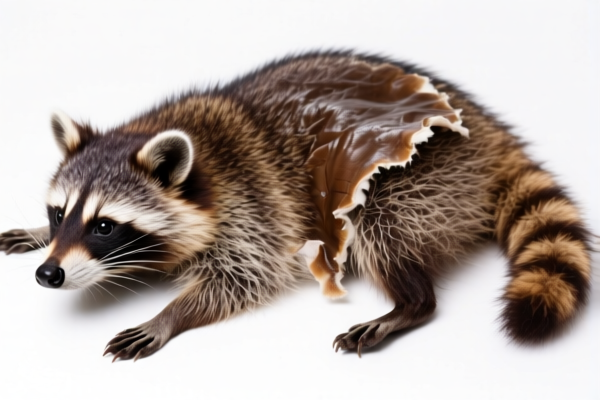
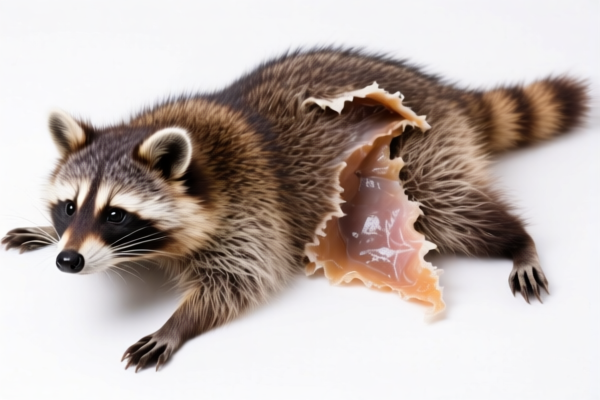
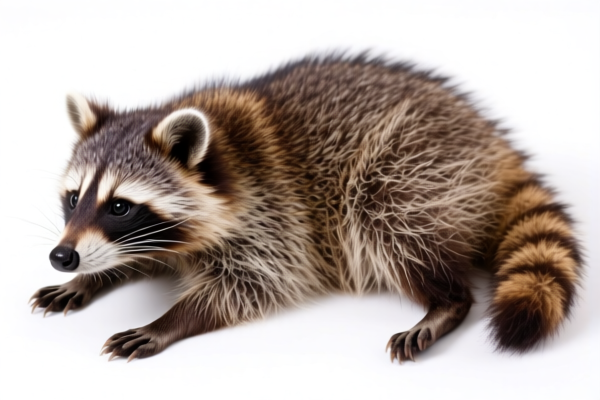
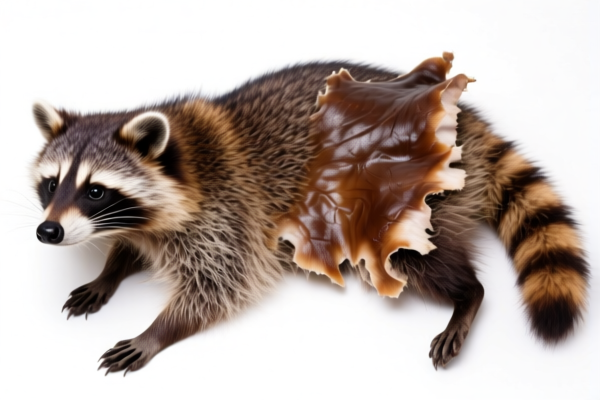
Product Images
AI Analysis
🦝 Raccoon Skins, Farmed, Undyed: HS Code Classification & US Customs Clearance Guide (2026)
🌐 HS Code Reference & Customs Strategy | 2026 Latest Tariff Analysis | Professional Clearance Protocol
📌 Part I: Product Definition & Classification – Understanding "Farmed Raccoon Skins"
In international trade, Raccoon Skins are classified under Chapter 43 of the Harmonized System (HS), which covers "Furskins and Artificial Fur." The distinction between "Raw/Untanned" (for further processing by furriers) and "Dressed/Tanned" (finished leather/pelt) is critical for accurate classification.
Key Distinctions: * Raw Skins (Chapter 43.01): Skins that are merely salted, dried, or limed but not fully tanned or dressed for direct retail use. They are considered "skins suitable for use in the fur trade." * Dressed Skins (Chapter 43.02/43.03): Skins that have been tanned, dyed, or otherwise processed into finished furskins or articles of fur.
⚠️ Critical Classification Point:
- If the skin is undyed and in a raw/un-dressed state suitable for fur manufacturers → Typically falls under 4301.xx (Furskins, unworked or simply prepared).
- If the skin is dyed, tanned, or made into articles (jackets, collars) → Falls under 4302.xx (Dressed furskins) or 4303.xx (Articles of furskin).
- "Farmed" status does not change the HS code but may affect country of origin documentation and CITES permits if applicable (though farmed raccoons are generally exempt from strict CITES restrictions compared to wild-caught, documentation is still key).
📦 Part II: HS Code Classification Details (2026 Latest Tariff Mapping)
Based on the provided data, here are the applicable HS Codes for Undyed Farm-Raised Raccoon Skins, ranging from raw materials to finished goods.
| HS Code | Product Description | Application Scenario | State of Skin |
|---|---|---|---|
4301.90.00.00 |
Furskins, unworked or simply prepared (excluding badger, martens, etc.) | Raw raccoon pelts, salted/dried, ready for furriers to process. Best for "undyed, farm-raised" raw material. | ✅ Raw/Undyed |
4301.80.02.75 |
Other furskins, unworked or simply prepared | Fits raccoon skins perfectly. Specifically categorizes raccoon under "other" non-premium fur categories. | ✅ Raw/Undyed |
4302.19.30.40 |
Dressed furskins of raccoons, not sewn together | If the skin is tanned but not dyed. Note: "Undyed" in the prompt might imply raw, but if tanned, this code applies. | ⚠️ Tanned/Undyed |
4302.19.45.40 |
Other dressed furskins of raccoons | Tanned, prepared, but not yet made into articles. Explicitly mentions "raccoon and pelt form." | ⚠️ Tanned/Undyed |
4303.10.00.60 |
Articles of furskin (excluding coats, etc.) | If the skin is made into an article (e.g., a collar, lining, or trim) but not a full coat. Non-mink fur. | ❌ Finished Article |
4303.90.00.00 |
Other articles of furskin | Miscellaneous fur products (e.g., stuffed animals, decorative items) made from raccoon fur. | ❌ Finished Article |
🔍 Key Insight:
- For "Undyed, Farm-Raised Raccoon Skins" in their rawest form (salted/dried),4301.90.00.00or4301.80.02.75are the most accurate classifications.
- If the skins are tanned but not dyed, they shift to4302.19.30.40or4302.19.45.40.
-4303codes are for finished products, not raw skins. Misclassification here leads to significant tax penalties.
💰 Part III: 2026 US Customs Duty Rate Breakdown (Including Add-ons)
✅ Applicable Country: United States (US)
✅ Origin: China (CN) [Assumed based on 122 Clause & USITC 301 Section references in data]
✅ Effective Date: Current 2026 Tariff Structure
🎯 1. 4301.90.00.00 – Best Fit for Raw Undyed Skins
| Item | Detail |
|---|---|
| Base Duty Rate | 0.0% (Ad Valorem) |
| Section 301 Additional Duty | 0.0% (No additional 301 tariff for this specific subheading under current mapping) |
| Section 122 Duty (IEEPA) | +10.0% (Specific to certain fur products from China) |
| Total Effective Duty | 10.0% |
| Tax Calculation | CIF Value × 10% |
| De Minimis Eligibility | ❌ Not Eligible (Furskins are excluded from de minimis exemptions under US law) |
| Legal Authority | USITC:4301.90.00.00 → Section 122: 10% |
📌 Explanation:
- Raw furskins under4301.90enjoy a 0% base duty.
- However, a 10% Section 122 duty applies specifically to certain fur imports.
- No 301 Section tariff is applied here, making it the most cost-effective option for raw skins.
🎯 2. 4301.80.02.75 – Alternative for Raccoon Skins
| Item | Detail |
|---|---|
| Base Duty Rate | 0.0% |
| Section 301 Additional Duty | +7.5% |
| Section 122 Duty | +10.0% |
| Total Effective Duty | 17.5% |
| Tax Calculation | CIF Value × 17.5% |
| De Minimis Eligibility | ❌ Not Eligible |
| Legal Authority | USITC:4301.80.02.75 → Section 301: 7.5% → Section 122: 10% |
📌 Explanation:
- Slightly higher than4301.90due to a 7.5% Section 301 tariff.
- Still lower than dressed fur categories.
🎯 3. 4302.19.30.40 – If Tanned but Undyed
| Item | Detail |
|---|---|
| Base Duty Rate | 1.5% |
| Section 301 Additional Duty | +25.0% |
| Section 122 Duty | +10.0% |
| Total Effective Duty | 36.5% |
| Tax Calculation | CIF Value × 36.5% |
| De Minimis Eligibility | ❌ Not Eligible |
📌 Explanation:
- Dressed furskins (4302) attract a 25% Section 301 tariff + 10% Section 122.
- Significantly higher cost than raw skins.
🎯 4. 4302.19.45.40 – Other Dressed Raccoon Skins
| Item | Detail |
|---|---|
| Base Duty Rate | 2.2% |
| Section 301 Additional Duty | +25.0% |
| Section 122 Duty | +10.0% |
| Total Effective Duty | 37.2% |
| Tax Calculation | CIF Value × 37.2% |
| De Minimis Eligibility | ❌ Not Eligible |
🎯 5. 4303.10.00.60 – Finished Fur Articles (Non-Mink)
| Item | Detail |
|---|---|
| Base Duty Rate | 4.0% |
| Section 301 Additional Duty | +25.0% |
| Section 122 Duty | +10.0% |
| Total Effective Duty | 39.0% |
| Tax Calculation | CIF Value × 39.0% |
🎯 6. 4303.90.00.00 – Other Fur Articles
| Item | Detail |
|---|---|
| Base Duty Rate | 0.0% |
| Section 301 Additional Duty | +25.0% |
| Section 122 Duty | +10.0% |
| Total Effective Duty | 35.0% |
| Tax Calculation | CIF Value × 35.0% |
🛠️ Part IV: Customs Clearance Practical Advice (Avoiding Pitfalls)
✅ 1. Required Documentation Checklist
| Document | Mandatory? | Purpose |
|---|---|---|
| ✅ Commercial Invoice | ✔️ | Must clearly state: "Raccoon Skins, Farmed, Undyed, Raw/Salted" |
| ✅ Packing List | ✔️ | Detail weight, number of skins, and packaging type |
| ✅ Certificate of Origin | ✔️ | Prove country of origin (critical for 122/301 tariffs) |
| ✅ Filing Declaration (CBP Form 7501) | ✔️ | Accurate HS Code selection |
| ✅ CITES Permit (If Applicable) | ⚠️ Check | While farmed raccoons are often exempt, US Customs may still require proof of legal farm origin to distinguish from wild-caught |
| ✅ Product Photos | ✔️ | Show skins in raw, undyed state to justify 4301 over 4302 |
✅ 2. Classification Strategy (Key Tips)
🔥 "Raw is Right, Tanned is Taxed, Finished is Costly!"
| Scenario | Recommended HS Code | Duty Rate | Why? |
|---|---|---|---|
| Raw, Salted, Undyed Skins | 4301.90.00.00 |
10.0% | Lowest tax burden; correctly reflects "unworked" state |
| Tanned, But Not Dyed | 4302.19.30.40 |
36.5% | Higher tax due to "dressed" status |
| Dyed, Tanned Skins | 4302.19.45.40 |
37.2% | Similar to above, slight base rate difference |
| Made into Coats/Articles | 4303.10.00.60 |
39.0% | Highest cost; avoid if possible for raw material imports |
📌 Critical Warning:
- Do NOT misclassify tanned skins as raw skins (4301). US Customs uses visual inspection and chemical tests. If the skin is tanned but declared as raw, you face penalties, seizure, and back-taxes.
- Farm-raised must be documented. If you claim "farmed" to avoid CITES, have farm certification ready.
✅ 3. Special Handling Tips
| Situation | Advice |
|---|---|
| High-Value Shipments | Consider applying for an Advance Ruling from CBP to lock in the HS Code and duty rate before shipment |
| Mixed Shipments | If you have both raw and dressed skins, separate shipments or clear separate line items. Mixing can lead to blanket higher duties |
| De Minimis Exemption | DO NOT attempt to use $800 de minimis (Section 321) for furskins. CBP explicitly excludes Chapter 43 from de minimis. You must file a formal entry |
| Section 122 vs 301 | Understand that Section 122 (10%) is specific to fur, while Section 301 (0-25%) depends on the HS subheading. Choose 4301.90 to avoid 301 |
🌍 Part V: Global Market Comparison (2026)
| Market | Recommended HS Code | Effective Duty (China Origin) | Key Certification |
|---|---|---|---|
| 🇺🇸 USA | 4301.90.00.00 |
10.0% | CBP Entry, CITES (if required) |
| 🇨🇳 China | 4301.90.00.00 |
10.0% (Import) | None special |
| 🇪🇺 EU | 4301.90.00.00 |
12.0% (Standard) + Potential Anti-Dumping | CE Mark (if accessories), REACH |
| 🇬🇧 UK | 4301.90.00.00 |
12.0% | UKCA Mark (if applicable) |
📌 Conclusion:
- The USA offers the lowest effective duty (10%) for raw, undyed raccoon skins under4301.90.00.00.
- EU and UK have higher base rates (12%) and no Section 122/301 equivalents, but may have other regulatory hurdles.
📌 Part VI: Common Mistakes & Pitfalls
❌ Mistake 1: Classifying tanned skins as raw skins (4301)
👉 Consequence: 26%+ back-taxes, fines, and potential seizure.
❌ Mistake 2: Attempting de minimis clearance for furskins
👉 Consequence: Shipment held, returned, or destroyed. Furskins are excluded from de minimis.
❌ Mistake 3: Not declaring "Farmed" status
👉 Consequence: Customs may assume wild-caught, triggering CITES permit requirements and delays.
❌ Mistake 4: Using generic terms like "Fur" instead of "Raccoon Skins"
👉 Consequence: Customs will reclassify, leading to wrong duty rates and penalties.
✅ Correct Declaration Example:
"Raccoon Skins, Farm-Raised, Undyed, Raw/Salted, for Fur Manufacturing, HS Code: 4301.90.00.00"
🎯 Part VII: Conclusion – Maximize Savings, Minimize Risk
🎯 Key Takeaway:
🔹 Raw = 10% Duty (
4301.90.00.00)
🔹 Tanned = 36.5%+ Duty (4302.xx)
🔹 Finished = 35-39% Duty (4303.xx)
📌 Pro Tip:
If you are importing undyed skins, ensure they are in a raw/un-dressed state to qualify for the 10% duty rate. If they are tanned, be prepared for 36.5%+. Always document farm origin to avoid CITES complications.
📣 Immediate Action:
📞 Engage a licensed customs broker.
📄 Prepare CITES/Farm Origin Certificates.
🧾 Accurately classify under4301.90.00.00if raw.
🚀 Clear customs smoothly, save costs, and expand your fur business!
✨ Professional Classification Starts with Precision!
💼 Every Dollar Saved in Duty is Pure Profit!
Customer Reviews
About HS Code Classification
The Harmonized System (HS) is an internationally standardized nomenclature developed by the World Customs Organization (WCO) to classify traded products. Over 200 countries use the HS system as the basis for customs tariffs, trade statistics, and import/export regulations.
Each HS code follows a hierarchical structure:
- Chapter (2 digits) — Broad category of goods (e.g., Chapter 84: Machinery and Mechanical Appliances)
- Heading (4 digits) — More specific grouping within the chapter
- Subheading (6 digits) — Internationally standardized breakdown, used by all WCO member countries
- National subdivisions (8-10 digits) — Country-specific extensions for further classification, such as US HTSUS 10-digit codes
Correct HS code classification is essential for smooth customs clearance, accurate duty payment, and compliance with trade regulations. Misclassification can lead to customs delays, overpayment of duties, or penalties.
When importing from CN to US, the applicable tariff rates may include:
- Most-Favored-Nation (MFN) rate — The standard duty rate applied to WTO members
- General rate — Applied to countries without trade agreements
- Trade remedy duties — Additional tariffs such as Section 301 (anti-dumping), Section 232 (national security), or countervailing duties
The information provided on this page is for reference purposes only. For official classification, please consult with your local customs authority or a licensed customs broker.