Fashion Cotton Handbags
CN → US| HS Code | Tariff Rate | Origin | Destination | Doc |
|---|---|---|---|---|
| 6305200000 | 23.7% | CN | US | Official Doc |
| 4202224020 | 42.4% | CN | US | Official Doc |
| 6305900000 | 23.7% | CN | US | Official Doc |
| 4202228930 | 52.6% | CN | US | Official Doc |
Product Images
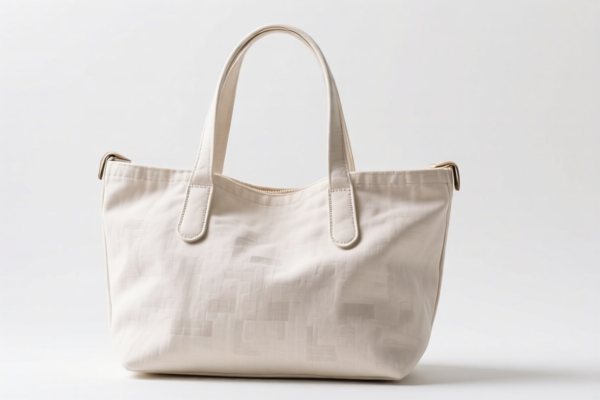
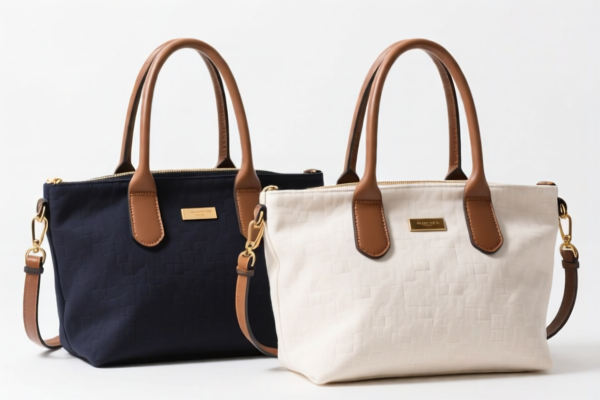
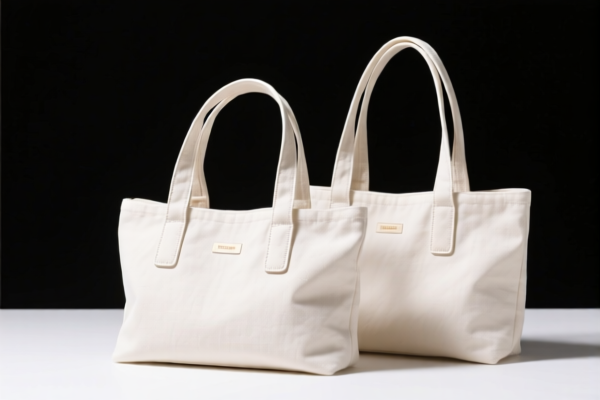
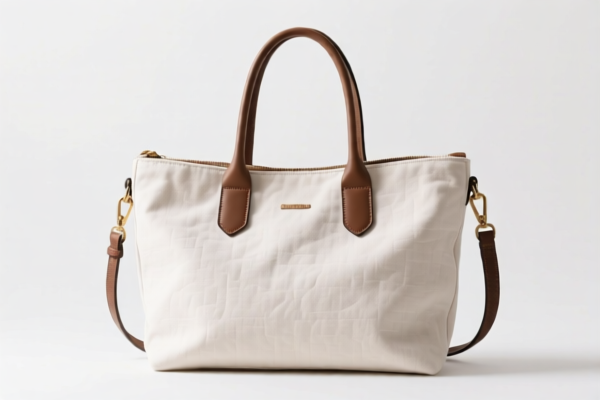
AI Analysis
👜 Fashion Cotton Handbags (Pure Cotton Fabric Totes)
🌐 HS Code Reference & Customs Clearance Guide | 2026 Latest Tariff Analysis | Professional Entry Strategy
📌 I. Product Definition & Classification: Do You Really Understand "Cotton Handbags"?
Fashion Cotton Handbags are portable accessories made primarily of cotton textile materials. In international trade, their classification depends heavily on whether they are considered "Articles of bedding or similar household articles" (Ch. 63) or "Travel goods, handbags and similar containers" (Ch. 42). This distinction significantly impacts duty rates, especially under current US trade policies (Section 301 and Section 122).
⚠️ Key Distinction Point:
- If classified under Chapter 63 (Other made-up textile articles): Generally lower base duty (6.2%), but subject to Section 122 tariffs.
- If classified under Chapter 42 (Articles of leather or similar materials, or textile outer surface): Higher base duty (up to 17.6%) and higher Section 301 tariffs (25%).
- Critical Factor: The precise definition of "outer surface material" and "use case" determines if it falls into the more favorable Ch. 63 or the stricter Ch. 42.
📦 II. HS Code Classification Details (2026 Latest Tariff Authority Comparison)
Based on the provided data, here are the four possible HS Codes for "Fashion Cotton Handbags," ranging from lowest to highest tax burden:
| HS Code | Product Description | Classification Logic | Total Tax Rate |
|---|---|---|---|
6305.20.00.00 |
Cotton fabric tote bags, shaped as sacks/bags | Classified as "Other made-up textile articles" (Ch. 63). Assumes the bag is treated more like a generic textile sack than a luxury handbag. | 23.7% |
6305.90.00.00 |
Cotton fabric tote bags, categorized under other textile materials | Also classified under Chapter 63, but under "Other" rather than specific cotton sacks. Similar logic to above. | 23.7% |
4202.22.40.20 |
Cotton fabric tote bags, outer surface textile material, made of cotton | Classified under Chapter 42 (Handbags). Base duty is higher (7.4%), and Section 301 tariff is maxed at 25%. | 42.4% |
4202.22.89.30 |
Cotton fabric tote bags, outer surface textile material, pure cotton | Classified under Chapter 42, but with the highest base duty (17.6%) due to specific sub-heading nuances. Section 301 tariff remains 25%. | 52.6% |
🔍 Critical Reminder:
- Chapter 42 (HS 4202) is the standard for "Handbags" in the US Harmonized Tariff Schedule. However, some simpler cotton bags may be classified under Chapter 63 if they lack the structure or branding of a traditional handbag. - Misclassification Risk: Declaring a structured handbag as a "sack" (Ch. 63) to save taxes can lead to customs audits, penalties, and retroactive duties. - Tax Variance: The difference between the lowest (23.7%) and highest (52.6%) rate is ~29%. This is a significant cost saving opportunity if legally justifiable.
💰 III. 2026 Latest Tariff Rate Breakdown (Including Surtaxes & Policy Add-ons)
✅ Applicable Country: United States (US)
✅ Country of Origin: China (CN)
✅ Effective Date: Current rates apply (Section 122 & Section 301 active)
🎯 1. 6305.20.00.00 & 6305.90.00.00 —— Chapter 63 Classification (Lower Tax)
| Item | Content |
|---|---|
| Base Duty (MFN) | 6.2% |
| Section 301 Surtax | +7.5% |
| Section 122 Tariff | +10% (Specific to certain textile/apparel categories under recent executive orders) |
| Total Tax Rate | 23.7% |
| Tax Calculation | CIF Value × 23.7% |
| De Minimis Eligibility | ❌ No (Generally, textile imports from China do not qualify for $800 de minimis exemption under current enforcement) |
| Legal Pathway | HTSUS:6305.20.00.00 → USITC:301:7.5% → IEEPA:122:10% |
📌 Explanation:
- These codes benefit from a lower Section 301 surtax (7.5%) compared to the standard 25%. - Section 122 (10%) is a relatively new or specific add-on for certain textile imports. - Total 23.7% is significantly more competitive for high-volume, lower-margin cotton bags.
🎯 2. 4202.22.40.20 —— Chapter 42 Classification (Medium-High Tax)
| Item | Content |
|---|---|
| Base Duty (MFN) | 7.4% |
| Section 301 Surtax | +25.0% (Full Section 301 rate applies) |
| Section 122 Tariff | +10% |
| Total Tax Rate | 42.4% |
| Tax Calculation | CIF Value × 42.4% |
| De Minimis Eligibility | ❌ No |
| Legal Pathway | HTSUS:4202.22.40.20 → USITC:301:25% → IEEPA:122:10% |
📌 Note:
- Standard handbags under Ch. 42 face the full 25% Section 301 tariff. - The base duty is slightly higher than Ch. 63 (7.4% vs 6.2%). - Total 42.4% makes this category costly for direct imports from China.
🎯 3. 4202.22.89.30 —— Chapter 42 Classification (Highest Tax)
| Item | Content |
|---|---|
| Base Duty (MFN) | 17.6% |
| Section 301 Surtax | +25.0% |
| Section 122 Tariff | +10% |
| Total Tax Rate | 52.6% |
| Tax Calculation | CIF Value × 52.6% |
| De Minimis Eligibility | ❌ No |
| Legal Pathway | HTSUS:4202.22.89.30 → USITC:301:25% → IEEPA:122:10% |
📌 Warning:
- This code carries the highest base duty (17.6%) among all options. - Combined with 25% Section 301 and 10% Section 122, this is the most expensive classification. - Use this only if the product structurally and functionally demands this specific sub-heading (e.g., complex design, non-standard shape).
🛠️ IV. Customs Clearance Practical Advice (Real-World Pitfall Avoidance)
✅ 1. Required Documentation Checklist (All Must Be Provided)
| Document | Required? | Explanation |
|---|---|---|
| ✅ Product Specification Sheet | ✔️ | Must detail material composition (e.g., "100% Cotton Woven"), dimensions, and closure type. |
| ✅ High-Resolution Photos | ✔️ | Must show the bag’s structure, lining, handles, and any hardware. Crucial for distinguishing Ch. 42 vs Ch. 63. |
| ✅ Commercial Invoice | ✔️ | Must clearly state "Cotton Handbag" or "Cotton Tote Bag," not vague terms like "Fashion Item." |
| ✅ Packing List | ✔️ | Include net/gross weight and item count. |
| ✅ Origin Certificate | ✔️ | Proof of Chinese origin to apply (or avoid) preferential treatments (though none apply here for China-US). |
| ✅ Tariff Classification Ruling | ✔️ (Recommended) | An Advance Ruling from CBP confirming the HS Code (e.g., 6305.20.00.00) to prevent post-entry audits. |
✅ 2. Declaration Tips (Key Mantras)
🔥 "Structure Defines Chapter, Material Defines Sub-Heading, Honesty Saves Money!"
| Scenario | Correct Declaration | Incorrect Practice |
|---|---|---|
| Simple Cotton Tote (No rigid structure, no lining) | HS 6305.20.00.00 (23.7%) | Declare as Handbag (Ch. 42) → 42.4%-52.6% (Overpaying!) |
| Structured Handbag (With lining, stiffeners, branded) | HS 4202.22.40.20 (42.4%) | Declare as Sack (Ch. 63) → Risk of Penalty/Seizure |
| Complex/High-End Cotton Bag | HS 4202.22.89.30 (52.6%) | N/A |
| Mixed Material (Cotton + Leather Trim) | Ch. 42 (Generally) | Claiming 100% cotton when it has leather accents → Misclassification |
✅ 3. Special Case Handling
| Situation | Handling Advice |
|---|---|
| OEM/Private Label Bags | Provide brand authorization letters if applicable. CBP may scrutinize branded items more closely. |
| "Unbranded" Generic Bags | More likely to be accepted under Ch. 63 (6305) if they lack the "handbag" aesthetic. |
| Bundles with Other Items | If shipped with non-textile items, ensure they are not packaged in a way that makes the bag the "container" for the goods. |
| Samples vs. Commercial Goods | Samples may still be subject to duties if over $800 value or if they are regular commercial stock. |
🌍 V. Global Market Customs Comparison (2026 Latest)
| Country/Region | Recommended HS Code | Tariff Rate (China Origin) | Certification Requirements | Notes |
|---|---|---|---|---|
| 🇺🇸 USA | 6305.20.00.00 (if eligible) |
23.7% | None specific | Section 122 + 301 apply. Ch. 42 codes face 42-52% tax. |
| 🇪🇺 EU | 6305.20 or 4202.22 |
~4-7% (Ch. 63) ~4-7% (Ch. 42) |
CE (if safety critical), REACH | No Section 301/122. Lower overall burden. |
| 🇨🇳 China | 6305.20 |
~10-15% | N/A | Domestic import duties differ. |
| 🇬🇧 UK | 6305.20 |
~4-7% | UKCA (if applicable) | Post-Brexit rules. |
| 🇨🇦 Canada | 6305.20 |
~4-7% | None | CUSMA benefits may apply if originating in NA. |
📌 Conclusion:
- The US market is the most challenging due to Section 122 and Section 301 tariffs. - Strategic Advantage: If your cotton handbags are simple, unlined, or sack-like, fighting for Chapter 63 (6305) can save you ~19-29% in duties compared to Chapter 42. - Risk: If the bag is clearly a "handbag" (structured, lined, branded), US Customs may reclassify it to Chapter 42, leading to back-taxes and penalties.
📌 VI. Common Errors & Pitfall Guide (Lessons from Experience)
❌ Error 1: Declaring a structured, lined cotton handbag as a "Cotton Sack" (6305)
👉 Consequence: Customs audit, reassessment at 42.4%-52.6%, plus penalties and interest.
👉 Fix: Ensure the product lacks the structural elements of a handbag if claiming Ch. 63.
❌ Error 2: Not declaring Section 122 or 301 surtaxes
👉 Consequence: Underpayment, leading to seizure or delayed release.
👉 Fix: Always calculate total tax including all surcharges.
❌ Error 3: Vague product description ("Fashion Bag")
👉 Consequence: Customs officer has discretion to assign the highest duty code.
👉 Fix: Use precise descriptions: "Women's Cotton Tote Bag, 100% Cotton, Unlined, No Lining."
✅ Correct Approach:
"Cotton Tote Bag, 100% Cotton Woven Fabric, Open Top, No Lining, No Branding, For Retail Sale"
→ Supports classification under 6305.20.00.00 (23.7%)
🎯 VII. Conclusion: Professional Declaration, Cost Savings, Efficient Clearance!
🎯 Remember the Mantra:
🔹 "Simple Cotton Bag? Try Ch. 63 (23.7%). Structured Handbag? Ch. 42 (42-52%). Don't Gamble!"
🔹 "HS Code is King. A 29% difference changes everything. Get an Advance Ruling!"
📌 Pro Tip:
If your cotton handbags are originating from Vietnam, Mexico, or Thailand, you may qualify for USMCA or FTA benefits, potentially reducing or eliminating Section 301/122 tariffs.
Recommendation: Always apply for an Advance Ruling from US CBP before shipping large volumes. This provides legal certainty and protects against future audits.
📣 Immediate Action:
📞 Consult a licensed Customs Broker + Provide High-Res Photos + Request CBP Advance Ruling
🚀 Ensure your cotton handbags clear customs smoothly, efficiently, and profitably!
✨ Professional Customs Clearance Starts with Accurate Classification!
💼 Every dollar saved in duty is pure profit!
Customer Reviews
About HS Code Classification
The Harmonized System (HS) is an internationally standardized nomenclature developed by the World Customs Organization (WCO) to classify traded products. Over 200 countries use the HS system as the basis for customs tariffs, trade statistics, and import/export regulations.
Each HS code follows a hierarchical structure:
- Chapter (2 digits) — Broad category of goods (e.g., Chapter 84: Machinery and Mechanical Appliances)
- Heading (4 digits) — More specific grouping within the chapter
- Subheading (6 digits) — Internationally standardized breakdown, used by all WCO member countries
- National subdivisions (8-10 digits) — Country-specific extensions for further classification, such as US HTSUS 10-digit codes
Correct HS code classification is essential for smooth customs clearance, accurate duty payment, and compliance with trade regulations. Misclassification can lead to customs delays, overpayment of duties, or penalties.
When importing from CN to US, the applicable tariff rates may include:
- Most-Favored-Nation (MFN) rate — The standard duty rate applied to WTO members
- General rate — Applied to countries without trade agreements
- Trade remedy duties — Additional tariffs such as Section 301 (anti-dumping), Section 232 (national security), or countervailing duties
The information provided on this page is for reference purposes only. For official classification, please consult with your local customs authority or a licensed customs broker.