Fast Curing Agent
CN → US| HS Code | Tariff Rate | Origin | Destination | Doc |
|---|---|---|---|---|
| 3824401000 | 41.5% | CN | US | Official Doc |
| 3824405000 | 40.0% | CN | US | Official Doc |
| 3824995000 | 41.5% | CN | US | Official Doc |
| 3506915000 | 37.1% | CN | US | Official Doc |
| 3506990000 | 37.1% | CN | US | Official Doc |
Product Images
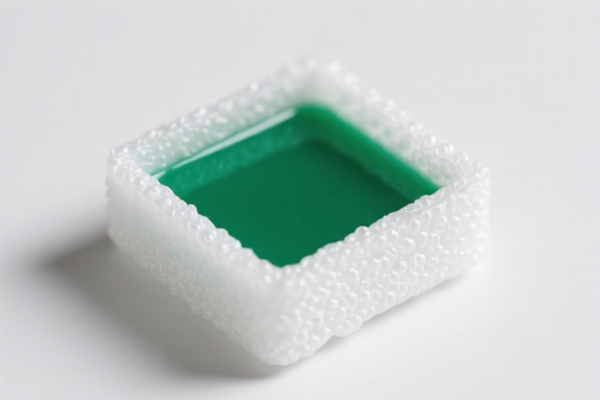
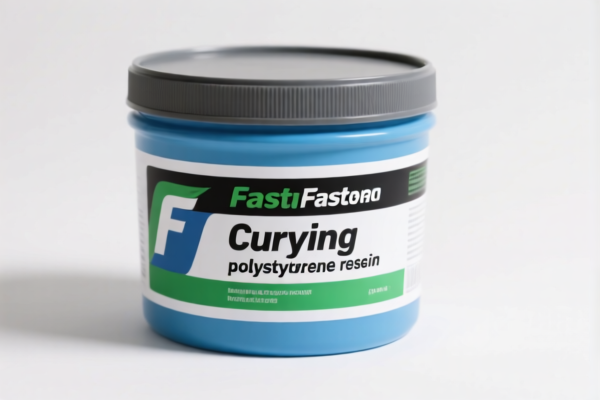


AI Analysis
⚡ Fast Curing Agent (快速凝固剂/粘合剂)
🌐 HS Code Classification & Clearance Strategy | 2026 Tariff Update | Critical Compliance Guide
📌 I. Product Definition & Complexity: Why is this "Glue" So Expensive?
"Fast Curing Agent" is a generic trade term that masks significant chemical differences. In international trade, especially between China and the US, this product can be classified in multiple ways depending on its chemical composition (e.g., chloride-based vs. polymer-based) and application (e.g., concrete additive vs. general adhesive).
Because the final product determines the HS Code, and the HS Code determines the tariff, misclassification can lead to massive duty discrepancies or customs holds.
The data below outlines 4 distinct HS Codes applicable to this product type, ranging from 37.1% to 41.5% total tariffs.
⚠️ Key Distinction:
- Is it a chemical additive for cement/concrete? → Look at 3824.
- Is it a chloride-based chemical preparation? → Look at 3824.99 or 3506.
- Is it a polymer adhesive? → Look at 3506.91.
📦 II. HS Code Classification Matrix (Data-Specific)
Based on the provided dataset, the "Fast Curing Agent" falls into one of the following four categories.
| HS Code | Product Description (Summary) | Key Classification Criteria | Total Tax Rate |
|---|---|---|---|
| 3824.40.10.00 | Quick-setting agent as a chemical additive for pre-mixed uses | Classified as a chemical additive for pre-mixed preparations | 41.5% |
| 3824.40.50.00 | Additive for cement, mortar, or concrete preparations | Specifically intended for construction materials (cement/mortar) | 40.0% |
| 3824.99.50.00 | Fast-curing chloride adhesive: Chemical prep containing chlorinated elements | Classified as a chloride-based chemical (other than halogenated organic/inorganic) | 41.5% |
| 3506.91.50.00 | Fast-curing chloride adhesive: Modified polymer adhesives | Classified as a polymer adhesive with specific modifications | 37.1% |
| 3506.99.00.00 | Fast-curing chloride adhesive: Other prepared adhesives | Classified as a general prepared adhesive (non-polymer specific) | 37.1% |
🔍 Analysis:
- The lowest tax rate (37.1%) applies if the product can be scientifically proven to be a polymer-based adhesive (HS 3506).
- The highest tax rates (40.0%-41.5%) apply if it is classified as a chemical additive (HS 3824).
- Crucial Decision Point: Does the product function primarily as a concrete additive or as a standalone adhesive? This distinction changes the HS Code and the Tariff.
💰 III. Detailed Tariff Breakdown (2026 US Import from China)
✅ Applicable Countries: United States (US)
✅ Origin: China (CN)
✅ Structure: Base Duty + Section 301 Duty (25%) + Section 122 Duty (10%)
All codes in the dataset are subject to the same additive tariff structure: - Base Duty: Varies by code (5.0% or 6.5% or 2.1%) - Section 301 Duty: +25.0% (Mandatory for most Chinese goods in these chapters) - Section 122 Duty: +10.0% (Specific additional duty)
🎯 1. 3824.40.10.00 & 3824.99.50.00 — The 41.5% Bracket
| Item | Details |
|---|---|
| Base Duty | 6.5% |
| Section 301 | +25.0% |
| Section 122 | +10.0% |
| Total Effective Rate | 41.5% |
| Calculation | CIF Value × 41.5% |
| De Minimis Eligibility | ❌ NO (These goods are not eligible for Section 321 de minimis entry under current enforcement) |
| Legal Basis | HTSUS 3824.40/3824.99 + USITC Footnotes for Sec 301/122 |
📌 Explanation:
- These codes classify the product as a chemical preparation.
- The base duty is higher (6.5%), leading to the highest total liability.
- Risk: High. If the chemical composition is not clearly defined as a "preparation" distinct from a pure chemical, Customs may challenge the classification.
🎯 2. 3824.40.50.00 — The 40.0% Bracket
| Item | Details |
|---|---|
| Base Duty | 5.0% |
| Section 301 | +25.0% |
| Section 122 | +10.0% |
| Total Effective Rate | 40.0% |
| Calculation | CIF Value × 40.0% |
| De Minimis Eligibility | ❌ NO |
| Legal Basis | HTSUS 3824.40.50 + USITC Footnotes |
📌 Explanation:
- This is the specific code for cement/mortar/concrete additives.
- If your product is sold explicitly as a "concrete accelerator" or "cement additive," this is the most accurate code.
- Slightly cheaper than the general chemical additive code (3824.40.10).
🎯 3. 3506.91.50.00 & 3506.99.00.00 — The 37.1% Bracket (Best Rate)
| Item | Details |
|---|---|
| Base Duty | 2.1% |
| Section 301 | +25.0% |
| Section 122 | +10.0% |
| Total Effective Rate | 37.1% |
| Calculation | CIF Value × 37.1% |
| De Minimis Eligibility | ❌ NO |
| Legal Basis | HTSUS 3506.91/3506.99 + USITC Footnotes |
📌 Explanation:
- This is the most favorable classification if the product can be legally defined as a prepared adhesive rather than a chemical additive.
- Key Requirement: You must prove the product is an adhesive (binds materials together) and not merely a chemical modifier for concrete.
- 3506.91.50.00 requires it to be a modified polymer.
- 3506.99.00.00 is for other prepared adhesives.
🛠️ IV. Customs Clearance & Practical Advice
✅ 1. Classification Strategy: How to Choose the Right Code?
To minimize tax and ensure smooth clearance, you must align your Technical Data Sheet (TDS) with the HS Code.
| If your product is... | Use this HS Code | Why? |
|---|---|---|
| Cement/Concrete Additive | 3824.40.50.00 |
It is explicitly defined as an additive for cement/mortar. |
| General Chemical Adhesive | 3506.99.00.00 |
It is a prepared adhesive but not a polymer. |
| Polymer-Based Adhesive | 3506.91.50.00 |
It contains modified polymers; allows for lower base duty. |
| Unclear/Complex Chemical Mix | 3824.99.50.00 |
Fallback for chloride-based chemicals that don't fit adhesive definitions. |
💡 Pro Tip:
- If you are importing Fast Curing Chloride Adhesives, try to justify classification under HS 3506 (Adhesives) rather than HS 3824 (Chemical Preparations) to save 2.9% - 4.4% in duties.
- However, if Customs determines it is not an adhesive (e.g., it only accelerates setting without bonding), they will reclassify it to HS 3824, leading to back-duties.
✅ 2. Required Documentation for Clearance
| Document | Purpose | Critical Detail |
|---|---|---|
| Technical Data Sheet (TDS) | Proves chemical composition | Must list ingredients, percentage of chlorides, and polymer content if claiming HS 3506. |
| Statement of Function | Clarifies use | Explicitly state: "Used as an adhesive" OR "Used as a concrete additive." |
| Commercial Invoice | Valuation | Ensure description matches the HS Code classification exactly. |
| Certificate of Analysis (COA) | Quality Control | Verifies the product matches the declared chemical profile. |
| Safety Data Sheet (SDS) | Safety Compliance | Must show proper hazard classifications for chloride-based chemicals. |
✅ 3. Common Pitfalls & Risks
- ❌ Mislabeling as "Glue": If the product is primarily a concrete accelerator and not an adhesive, declaring it as
3506.91(Adhesive) is risky. Customs may reject this and assess the higher3824rate. - ❌ Ignoring Chloride Content: Chloride-based adhesives (
3824.99.50or3506) require detailed chemical disclosure. Vague descriptions like "Fast Curing Agent" will lead to customs examinations. - ❌ De Minimis Abuse: Do not attempt to use Section 321 (De Minimis) for these items. The data shows high tariffs, and Customs is actively scrutinizing chemical/adhesive entries under $800.
📌 V. Conclusion & Action Plan
- Identify the Primary Function: Is it an Adhesive (bonds) or an Additive (modifies concrete)?
- Select the Best HS Code:
- For Adhesives: Aim for 3506.91.50.00 (37.1%) if polymer-based, or 3506.99.00.00 (37.1%) otherwise.
- For Additives: Use 3824.40.50.00 (40.0%) for cement/mortar.
- Prepare Documentation: Ensure your TDS supports the chosen classification. If claiming HS 3506, highlight the adhesive properties.
- Consult a Customs Broker: Given the narrow margin between 37.1% and 41.5%, a professional review of your product's chemical composition is highly recommended to avoid post-audit penalties.
🚀 Final Advice:
"Define the function first, then select the code. Don't let a vague name cost you 4% in duties."
Ensure your SDS and TDS are aligned with your Commercial Invoice description to prevent customs delays.
Customer Reviews
About HS Code Classification
The Harmonized System (HS) is an internationally standardized nomenclature developed by the World Customs Organization (WCO) to classify traded products. Over 200 countries use the HS system as the basis for customs tariffs, trade statistics, and import/export regulations.
Each HS code follows a hierarchical structure:
- Chapter (2 digits) — Broad category of goods (e.g., Chapter 84: Machinery and Mechanical Appliances)
- Heading (4 digits) — More specific grouping within the chapter
- Subheading (6 digits) — Internationally standardized breakdown, used by all WCO member countries
- National subdivisions (8-10 digits) — Country-specific extensions for further classification, such as US HTSUS 10-digit codes
Correct HS code classification is essential for smooth customs clearance, accurate duty payment, and compliance with trade regulations. Misclassification can lead to customs delays, overpayment of duties, or penalties.
When importing from CN to US, the applicable tariff rates may include:
- Most-Favored-Nation (MFN) rate — The standard duty rate applied to WTO members
- General rate — Applied to countries without trade agreements
- Trade remedy duties — Additional tariffs such as Section 301 (anti-dumping), Section 232 (national security), or countervailing duties
The information provided on this page is for reference purposes only. For official classification, please consult with your local customs authority or a licensed customs broker.