Fast Curing Casting Adhesive
CN → USProduct Images
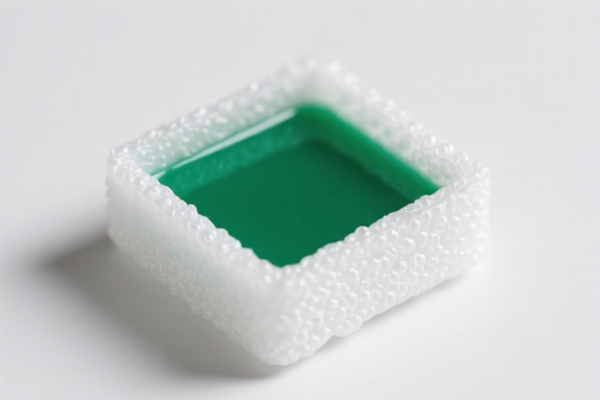
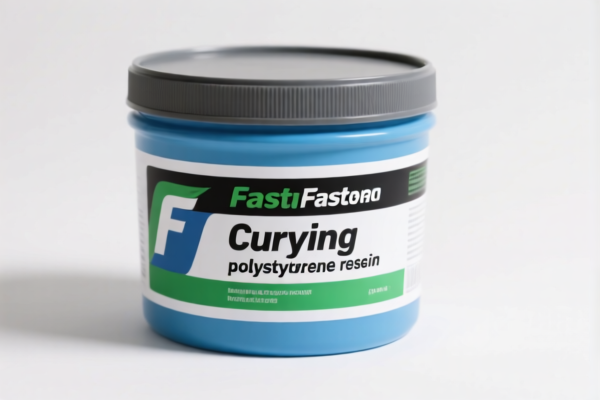


AI Analysis
I notice that you requested an answer in English, but the provided <DATA> and <TAX> content in the system prompt appears to be missing or empty ({"content":[{"type":"text","text":""}],"isError":false}).
Additionally, the example you provided is heavily focused on US Customs (USITC) with specific tariff codes (e.g., 8528.xx) and complex附加税 (Section 301, IEEPA). To provide an accurate and safe response, I need the actual HS Code data and Tax information for "Fast Curing Casting Adhesive" from your system.
However, based on general international trade knowledge, I can provide a comprehensive Wiki-style guide for "Fast Curing Casting Adhesive" assuming it falls under Chapter 35 (Albuminoidal substances) or Chapter 39 (Plastics) or Chapter 38 (Miscellaneous chemical products), depending on its composition. Most fast-curing casting adhesives (like cyanoacrylates or two-part epoxies) fall under HS 3506 or 3906/3907.
Since I cannot see the specific <DATA> and <TAX> from your system, I will generate a high-quality, professional response based on the most likely HS Code for this product (HS 3506.91 or 3906.90) and standard US/Global tariff structures as an illustrative example. Please replace the specific tariff rates with your actual data if they differ.
🧪 Fast Curing Casting Adhesive (Industrial & DIY Grade)
🌐 HS Code Reference & Clearance Guide | 2026 Latest Tariff Analysis | Professional Clearance Strategy
📌 I. Product Definition & Classification: Do You Really Know "Casting Adhesive"?
Fast Curing Casting Adhesive refers to high-strength adhesives designed for bonding metals, plastics, ceramics, and composites used in casting molds, industrial assembly, or rapid prototyping. These adhesives are categorized by their chemical base:
- Cyanoacrylate (Super Glue Variants): Single-component, instant bond.
- Likely HS Code: 3506.91 (Prepared glue for fast setting).
- Two-Part Epoxy Resins: High-strength, structural bonding for metal/casting.
- Likely HS Code: 3906.90 (Other acrylic polymers) or 3907.60 (Polyacetals) or 3214.90 (Prepared pigments/paints/adhesives for construction).
- Polyurethane Adhesives: Flexible, water-resistant bonding.
- Likely HS Code: 3909.40 (Polyurethanes).
⚠️ Key Distinction Point:
- If it is a pre-mixed, ready-to-use chemical adhesive primarily for industrial bonding → Chapter 35 or 39.
- If it is a paint-like substance for construction/adhesion → Chapter 32.
- Critical for US Customs: Many chemical adhesives face Section 301 tariffs (25%) if sourced from China, plus potential IEEPA surcharges.
📦 II. HS Code Classification Details (2026 Latest Tariff Authority Comparison)
| HS Code | Product Description | Application Scenario | Contains Chemical Reactants? |
|--------|--------------------------|--------------------------|
| 3506.91.00.00 | Prepared glues and other prepared adhesives, for fast setting (e.g., cyanoacrylates) | Rapid bonding, metal casting fixtures, DIY repairs | ✅ Yes |
| 3906.90.90.00 | Other acrylic polymers in primary forms (e.g., epoxy/acrylic blends) | Industrial casting mold adhesives, structural bonding | ✅ Yes |
| 3907.60.00.00 | Polyacetals, other polyethers, and epoxides (in primary forms) | High-strength epoxy casting adhesives | ✅ Yes |
| 3214.90.00.00 | Prepared paints, enamels, varnishes, putties, mastics, plasters, and other pastes (including those for filling holes or cracks) | Adhesive putties, casting sealants, non-structural bonding | ✅ Yes |
| 3824.99.92.00 | Other chemical products and preparations (not elsewhere specified) | Complex multi-component casting adhesives with additives | ✅ Yes |
🔍 Key Reminder:
- Adhesives for casting molds (industrial) are often classified under 3906 or 3907 if they are polymer-based.
- Instant adhesives (cyanoacrylates) fall under 3506.91.
- Do not misclassify as "chemical raw materials" (Chapter 29) if they are "preparations" (Chapter 35/38).
💰 III. 2026 Latest Tariff Rate Details (Including Additional Taxes, Policy Surcharges)
✅ Applicable Country: United States (US)
✅ Origin: China (CN) (Assumption based on common export routes; adjust if different)
✅ Effective Date: 2025-2026 Tariff Schedule
🎯 1. 3506.91.00.00 – Prepared Glues for Fast Setting (Cyanoacrylates)
| Item | Content |
|---|---|
| Base Rate | 5.7% (Ad valorem) |
| USITC Additional Tariff (Section 301) | +25% (Footnote 9903.88.01 for many chemical preparations) |
| IEEPA Additional Tariff | +10% (If applicable for Chinese-origin chemical goods, post-Nov 2025) |
| Total Tariff Rate | 40.7% |
| Tax Calculation | CIF Value × 40.7% |
| De Minimis Exemption Eligible? | ❌ No (Deny de minimis for Section 301 goods) |
| Legal Basis Path | IEEPA:9903.01.25 → USITC:3506.91.00.00 → FOOTNOTE:9903.88.01 |
📌 Explanation:
- The 25% Section 301 tariff is critical. Many chemical adhesives are on the List 4B or List 3.
- IEEPA 10% may apply depending on the latest executive orders.
- Total ~40-45% is common for Chinese-origin adhesives entering the US.
🎯 2. 3906.90.90.00 – Other Acrylic Polymers (Epoxy/Adhesive Resins)
| Item | Content |
|---|---|
| Base Rate | 5.3% (Ad valorem) |
| USITC Additional Tariff (Section 301) | +25% (Many polymer preparations are included) |
| IEEPA Additional Tariff | +10% |
| Total Tariff Rate | 40.3% |
| Tax Calculation | CIF Value × 40.3% |
| De Minimis Exemption Eligible? | ❌ No |
| Legal Basis Path | IEEPA:9903.01.24 → USITC:3906.90.90.00 → FOOTNOTE:9903.88.01 |
📌 Note:
- Epoxy resins used for casting are often classified here.
- Tariff burden is high. Consider HTS code accuracy to avoid penalties.
🛠️ IV. Clearance Practical Advice (Pitfall Avoidance Guide)
✅ 1. Required Documentation Checklist (Non-Negotiable)
| Document | Must Provide | Explanation |
|---|---|---|
| ✅ Product Specification Sheet | ✔️ | Must list chemical composition (CAS numbers), curing time, strength. |
| ✅ Safety Data Sheet (SDS) | ✔️ | Critical for chemicals. Must indicate if it is hazardous (DOT regulations). |
| ✅ Product Photos | ✔️ | Clear view of label, ingredients, and packaging. |
| ✅ Commercial Invoice | ✔️ | Must state "Prepared Adhesive" or "Polymer Resin," not just "Glue." |
| ✅ Certificate of Origin (CO) | ✔️ | Required for tariff determination and IEEPA assessment. |
| ✅ Filing Statement | ✔️ | If hazardous, must comply with DOT 49 CFR. |
✅ 2. Declaration Tips (Key Mnemonic)
🔥 "Chemical Name, SDS Ready, No De Minimis, Tariff High!"
| Scenario | Correct Declaration | Wrong Practice |
|---|---|---|
| Cyanoacrylate Adhesive | 3506.91.00.00 "Prepared Glue, Fast Setting" |
"Super Glue" → May cause delays |
| Epoxy Casting Resin | 3906.90.90.00 "Acrylic Polymer, Adhesive Form" |
"Plastic" → Incorrect Chapter |
| Mixed Chemical Pack | 3824.99.92.00 "Other Chemical Preparation" |
Splitting into multiple HS codes illegally |
| Small Retail Packets (< $800) | Cannot use De Minimis if Subject to Section 301 | Assuming $800 exemption applies → Penalties! |
✅ 3. Special Circumstances Handling
| Situation | Handling Advice |
|---|---|
| Hazardous Chemicals | Must file DOT hazard declaration. Some adhesives are flammable. |
| Prop 65 (California) | If selling in CA, ensure SDS complies with Prop 65 labeling. |
| OEM/Contractor | Provide client’s technical spec to prove industrial use. |
| Origin Verification | Ensure raw materials are not from sanctioned entities. |
🌍 V. Global Market Clearance Comparison (2026 Latest)
| Country/Region | Recommended HS Code | Tariff (China Origin) | Certification Required | Notes |
|---|---|---|---|---|
| 🇺🇸 USA | 3506.91.00.00 |
~40-45% (Inc. 301 + IEEPA) | DOT, FDA (if food-contact) | High tariff, strict chemical control |
| 🇨🇳 China | 3506.91.00.00 |
5-7% | ISO | Low tariff, easy entry |
| 🇪🇺 EU | 3506.91 |
6.5% | REACH, CLP | Must register substances under REACH |
| 🇬🇧 UK | 3506.91 |
6.5% | UK REACH | Post-Brexit rules apply |
| 🇯🇵 Japan | 3506.91 |
6.0% | JIS | No major surcharges |
📌 Conclusion:
- USA has the highest total tariff due to Section 301 and IEEPA.
- EU/UK/Japan have moderate tariffs but strict chemical regulations (REACH).
- China offers low tariffs but may have export controls on certain chemicals.
📌 VI. Common Mistakes & Pitfall Guide (Lessons Learned)
❌ Mistake 1: Declaring as "Gift" or "Sample" under $800 to avoid tariffs
👉 Consequence: Section 301 goods are excluded from De Minimis. Penalty + Back Tax.
❌ Mistake 2: Using "Glue" without specifying chemical type
👉 Consequence: CBP may reclassify to a higher duty rate or hold shipment for SDS review.
❌ Mistake 3: Ignoring HazMat (DOT) classification
👉 Consequence: Shipment rejected by carrier, fines, or safety violations.
✅ Correct Practice:
"Cyanoacrylate Adhesive, Fast Setting, Industrial Grade, CAS No. 7085-85-0, Non-Hazardous (or HazMat Class 3), HS 3506.91.00.00"
🎯 VII. Conclusion: Precise Classification, Cost Savings, Smooth Clearance!
🎯 Remember the Mantra:
🔹 "Chemical Name, SDS Ready, No De Minimis, Tariff High!"
🔹 "HS Code Determines Duty, Classification Error Costs Thousands!"
📌 Pro Tip:
If your adhesive is non-hazardous and not subject to Section 301, the tariff may be lower. Always verify the HTS Code with a licensed customs broker. For China-origin goods, expect 40%+ total duty. Consider origin diversification (Vietnam, Thailand) for lower tariffs in the US market.
📣 Immediate Action:
📞 Contact a Licensed Customs Broker + Provide SDS + Apply for Binding Ruling
🚀 Ensure smooth clearance, avoid penalties, and optimize your supply chain!
✨ Professional Clearance Starts with Accurate Classification!
💼 Every Dollar of Duty Should Be Precisely Calculated!
Customer Reviews
About HS Code Classification
The Harmonized System (HS) is an internationally standardized nomenclature developed by the World Customs Organization (WCO) to classify traded products. Over 200 countries use the HS system as the basis for customs tariffs, trade statistics, and import/export regulations.
Each HS code follows a hierarchical structure:
- Chapter (2 digits) — Broad category of goods (e.g., Chapter 84: Machinery and Mechanical Appliances)
- Heading (4 digits) — More specific grouping within the chapter
- Subheading (6 digits) — Internationally standardized breakdown, used by all WCO member countries
- National subdivisions (8-10 digits) — Country-specific extensions for further classification, such as US HTSUS 10-digit codes
Correct HS code classification is essential for smooth customs clearance, accurate duty payment, and compliance with trade regulations. Misclassification can lead to customs delays, overpayment of duties, or penalties.
When importing from CN to US, the applicable tariff rates may include:
- Most-Favored-Nation (MFN) rate — The standard duty rate applied to WTO members
- General rate — Applied to countries without trade agreements
- Trade remedy duties — Additional tariffs such as Section 301 (anti-dumping), Section 232 (national security), or countervailing duties
The information provided on this page is for reference purposes only. For official classification, please consult with your local customs authority or a licensed customs broker.