Fatty Acid (for Manufacturing)
CN → USProduct Images

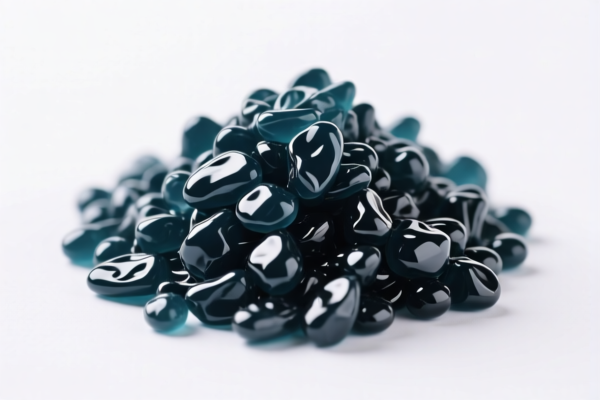


AI Analysis
🧪 Fatty Acids (Industrial/Manufacturing Grade)
🌐 HS Code Reference & Customs Clearance Guide | 2026 Tariff Analysis | Professional Clearance Strategy
📌 I. Product Definition and Classification: Do You Really Understand "Fatty Acids"?
Fatty acids are long-chain carboxylic acids derived from natural fats and oils (such as palm, coconut, soybean, or animal tallow). In international trade, they are critical raw materials for the chemical, food, cosmetic, and pharmaceutical industries.
For manufacturing purposes, they are typically classified into two main categories:
-
Mixed Fatty Acids (Crude Fatty Acids):
Directly obtained by hydrolyzing or fractionating fats/oils. They contain a mixture of saturated and unsaturated fatty acids (e.g., Stearic Acid, Oleic Acid, Palmitic Acid) without further chemical modification. > ⚠️ Key Distinction: If it is not chemically altered (esterified, amidated, etc.) and remains in its natural acid form, it generally falls under HS 2915. -
Specific Isolated Fatty Acids:
Highly purified or single-component fatty acids (e.g., pure Stearic Acid >99%, pure Palmitic Acid).
> ⚠️ Key Distinction: If the product is specified by name (e.g., "Stearic Acid") in the HS code list, it must be classified under its specific code, not the generic "Other organic acids" category.
⚠️ Critical Warning:
- If the fatty acid is esterified or chemically modified, it may fall under HS 3823 (Industrial monocarboxylic acids; chemical products of vegetable or animal origin, not elsewhere specified or included).
- If it is for food consumption, it might fall under HS 2106 or related food chapters, but the prompt specifies "for Manufacturing," so we focus on industrial grades.
📦 II. HS Code Classification Details (2026 Latest Tariff Authority)
| HS Code | Product Description | Application Scenario | Chemical Status |
|--------|--------------------------|--------------------------|
| 2915.39.00.00 | Saturated Acyclic Monocarboxylic Acids (e.g., Palmitic Acid, Stearic Acid) | High-purity industrial raw materials for plastics, cosmetics, lubricants | ✅ Specific Name |
| 2915.70.00.00 | Unsaturated Acyclic Monocarboxylic Acids and their anhydrides, halides, peroxides, and peroxy-acids (e.g., Oleic Acid, Linoleic Acid) | Biodiesel production, softeners, surfactant precursors | ✅ Specific Name |
| 2915.90.00.00 | Other Saturated Acyclic Monocarboxylic Acids (e.g., Lauric Acid, Myristic Acid) | Soap manufacturing, chemical synthesis | ✅ Specific Name |
| 2915.19.00.00 | Formic Acid (Not for Manufacturing Fatty Acids) | — | — |
| 3823.60.00.00 | Industrial Monocarboxylic Acids; Acid Oils from Refining | Crude mixed fatty acids, acid oils, low-purity mixes | ✅ Mixed/Crude |
🔍 重点提醒 (Key Notes):
- Pure Stearic/Palmitic Acid: Must use2915.39.00.00or specific sub-headings if available in your country’s tariff.
- Mixed/Impure Fatty Acids (often called "Acid Oils" or "Mixed Fatty Acids"): Often classified under3823.60.00.00if they are by-products or mixtures not specified by name.
- Oleic Acid: Specifically falls under2915.70.00.00.
- Do NOT classify refined edible fatty acids under 2915 if they are intended for direct human consumption (they may fall under Chapter 15 or 21), but for manufacturing, Chapter 29 is standard.
💰 III. 2026 Latest Tariff Rate Analysis (US Imports from China)
✅ Applicable Country: United States (US)
✅ Origin: China (CN)
✅ Effective Date: 2025/2026 Tariff Schedules (Section 301 & IEEPA)
🎯 1. 2915.39.00.00 —— Palmitic/Stearic Acid (Saturated)
| Item | Details |
|---|---|
| Base MFN Rate | 5.3% (Ad Valorem) |
| Section 301 Rate | +25% (List 3/4 Items) |
| IEEPA Rate | +10% (China-specific surcharge, if applicable per latest updates) |
| Total Effective Rate | ~40.3% - 45.3% |
| De Minimis Eligibility | ❌ No (High tariff items usually exempt from de minimis) |
| Legal Basis | USITC:2915.39.00.00 → Section 301: Footnote 9903.03.01 |
📌 Explanation:
- Saturated fatty acids like Stearic Acid are considered industrial chemicals.
- The 25% Section 301 tariff applies to most chemical products from China.
- IEEPA 10% may apply depending on the latest executive orders extending China tariffs.
🎯 2. 2915.70.00.00 —— Oleic Acid (Unsaturated)
| Item | Details |
|---|---|
| Base MFN Rate | 5.3% (Ad Valorem) |
| Section 301 Rate | +25% |
| IEEPA Rate | +10% |
| Total Effective Rate | ~40.3% - 45.3% |
| De Minimis Eligibility | ❌ No |
| Legal Basis | USITC:2915.70.00.00 → Section 301 |
📌 Note:
- Oleic Acid is widely used in biodiesel and lubricants.
- Same high tariff structure as saturated acids.
🎯 3. 3823.60.00.00 —— Mixed Fatty Acids / Acid Oils (Crude)
| Item | Details |
|---|---|
| Base MFN Rate | 6.5% (Ad Valorem) |
| Section 301 Rate | +25% |
| IEEPA Rate | +10% |
| Total Effective Rate | ~41.5% - 46.5% |
| De Minimis Eligibility | ❌ No |
📌 Why This Matters:
- If you import crude mixed fatty acids (common in palm oil processing), you might use3823.60.00.00.
- The tariff burden is similar, but the Base Rate is slightly higher (6.5% vs 5.3%).
- Customs may scrutinize the purity level to determine if it should be2915(higher purity, specific name) vs3823(mixture/by-product).
🛠️ IV. Customs Clearance Practical Advice (Avoiding Pitfalls)
✅ 1. Required Documentation Checklist
| Document | Mandatory? | Notes |
|---|---|---|
| ✅ Product Specification Sheet | ✔️ | Must list % composition of C12-C18 acids, purity level, flash point. |
| ✅ Certificate of Origin (CO) | ✔️ | Essential for verifying China origin and applying potential FTA rates (if any, though limited for US). |
| ✅ Safety Data Sheet (SDS) | ✔️ | Required for chemical imports. Confirm no hazardous classification (usually non-hazardous if pure). |
| ✅ Commercial Invoice | ✔️ | Clearly state: "Fatty Acids for Chemical Manufacturing, Not for Human Consumption." |
| ✅ Bill of Lading | ✔️ | Ensure proper weight and package type (drums, tanks, or bulk). |
| ✅ FDA Prior Notice | ✔️ | If used in food/pharma manufacturing, FDA Prior Notice is required even for industrial grades. |
✅ 2. Declaration Tips (Crucial for Accuracy)
🔥 "Purity Determines Code, Purity Dictates Duty!"
| Scenario | Correct HS Code | Wrong Declaration | Consequence |
|---|---|---|---|
| Pure Stearic Acid (99%) | 2915.39.00.00 |
"Fatty Acid Mixture" → 3823.60.00.00 |
Potential under/over-classification; audit risk. |
| Oleic Acid (85%+) | 2915.70.00.00 |
"Oils, Refined" → 1509 |
Wrong chapter; fines & delays. |
| Crude Palm Fatty Acid Distillate | 3823.60.00.00 |
"Stearic Acid" → 2915.39.00.00 |
Misdeclaration; customs may reclassify and penalize. |
| Hydrogenated Fatty Alcohol | 3823.70.00.00 |
"Fatty Acid" → 2915 |
Wrong product type; chemical structure differs. |
✅ 3. Special Considerations
| Situation | Handling Advice |
|---|---|
| Biodiesel Feedstock | If imported specifically for biodiesel production, ensure the HS code reflects the chemical state (2915 or 3823), not the end-use. |
| Food vs. Industrial | If the fatty acid is edible grade, declare "For Food Manufacturing." If industrial grade, declare "For Chemical/Surfactant Manufacturing." Mixing these can trigger FDA/USDA audits. |
| Hydrogenated Products | Do not confuse Fatty Acids with Fatty Alcohols (used in surfactants). Fatty Alcohols are 3823.70.00.00. |
| Packaging | Bulk tankers vs. IBC drums may affect logistics but not HS code. Ensure packaging is food-grade or industrial-grade as declared. |
🌍 V. Global Market Comparison (2026)
| Country/Region | Recommended HS Code | Tariff (China Origin) | Key Requirements |
|---|---|---|---|
| 🇺🇸 USA | 2915.39 / 2915.70 |
~40-45% (incl. 301) | FDA Prior Notice, SDS, Section 301 Duties |
| 🇨🇳 China | 2915.39 / 2915.70 |
6.5% - 8.5% | CCC (if for certain uses), Quality Inspection |
| 🇪🇺 EU | 2915.39 / 2915.70 |
0% - 5.3% | REACH Registration (critical for chemicals) |
| 🇯🇵 Japan | 2915.39 / 2915.70 |
0% - 3.1% | FSCA (Food Safety) if food-grade |
| 🇮🇳 India | 2915.39 / 2915.70 |
7.5% - 10% | Import Duty + SWS, BIS Certification |
📌 Conclusion:
- The US imposes the highest effective duty (~40-45%) on Chinese fatty acids due to Section 301 tariffs.
- The EU and Japan are more tariff-friendly but require strict chemical registration (REACH) or safety approvals.
- China’s domestic tariff is relatively low, making China a major exporter.
📌 VI. Common Mistakes & Pitfalls (Lessons Learned)
❌ Mistake 1: Classifying Fatty Acids as Vegetable Oils (1509, 1514)
👉 Result: Severe penalty. Fatty acids are chemically different from oils (triglycerides). Oils are esters; acids are free acids.
👉 Correct: 2915 or 3823.
❌ Mistake 2: Ignoring FDA Prior Notice
👉 Result: Cargo detained at US port. Even industrial chemicals used in food processing require prior notice.
👉 Correct: Submit FDA Prior Notice 2-5 days before arrival.
❌ Mistake 3: Confusing Fatty Acids with Fatty Alcohols
👉 Result: Wrong HS code (3823.70 vs 2915).
👉 Correct: Check the chemical structure. Alcohol (-OH) vs Acid (-COOH).
❌ Mistake 4: Not specifying Purity Level on Invoice
👉 Result: Customs may assume the highest duty rate or require re-inspection.
👉 Correct: Clearly state "90% Min Stearic Acid" or "Mixed Fatty Acids 85%."
🎯 VII. Conclusion: Smart Sourcing & Compliance
🎯 Remember These Keys:
🔹 "Fatty Acids ≠ Oils" – Chemically distinct.
🔹 "Purity Dictates Code" – Pure acids go to2915; mixed/crude may go to3823.
🔹 "US Tariff Burden is High" – Budget for ~40-45% total duty.
🔹 "FDA Prior Notice is Mandatory" – Even for industrial use in food-adjacent applications.
📌 Pro Tip:
If you are importing high-purity Stearic or Oleic Acid for pharmaceutical or high-end cosmetic manufacturing, ensure you have REACH (for EU) or TSCA (for US) compliance documents ready. Customs may request proof of chemical safety.
📣 Immediate Action:
📞 Engage a Licensed Customs Broker to verify the exact HS code based on your product’s purity and composition.
📄 Prepare SDS and FDA Prior Notice before shipment.
🚀 Optimize your supply chain by considering tariff engineering (e.g., processing in third countries if feasible and rules of origin allow) to mitigate Section 301 impacts.
✨ Professional Clearance Starts with Accurate Classification!
💼 Your Cost Control Depends on Every Digit of the HS Code!
Customer Reviews
About HS Code Classification
The Harmonized System (HS) is an internationally standardized nomenclature developed by the World Customs Organization (WCO) to classify traded products. Over 200 countries use the HS system as the basis for customs tariffs, trade statistics, and import/export regulations.
Each HS code follows a hierarchical structure:
- Chapter (2 digits) — Broad category of goods (e.g., Chapter 84: Machinery and Mechanical Appliances)
- Heading (4 digits) — More specific grouping within the chapter
- Subheading (6 digits) — Internationally standardized breakdown, used by all WCO member countries
- National subdivisions (8-10 digits) — Country-specific extensions for further classification, such as US HTSUS 10-digit codes
Correct HS code classification is essential for smooth customs clearance, accurate duty payment, and compliance with trade regulations. Misclassification can lead to customs delays, overpayment of duties, or penalties.
When importing from CN to US, the applicable tariff rates may include:
- Most-Favored-Nation (MFN) rate — The standard duty rate applied to WTO members
- General rate — Applied to countries without trade agreements
- Trade remedy duties — Additional tariffs such as Section 301 (anti-dumping), Section 232 (national security), or countervailing duties
The information provided on this page is for reference purposes only. For official classification, please consult with your local customs authority or a licensed customs broker.