Fatty Alcohol Mixture (Industrial Grade)
CN → US| HS Code | Tariff Rate | Origin | Destination | Doc |
|---|---|---|---|---|
| 381210 | 0.0% | CN | US | Official Doc |
| 381290 | 0.0% | CN | US | Official Doc |
| 3824999310 | 40.0% | CN | US | Official Doc |
| 3824999320 | 40.0% | CN | US | Official Doc |
Product Images


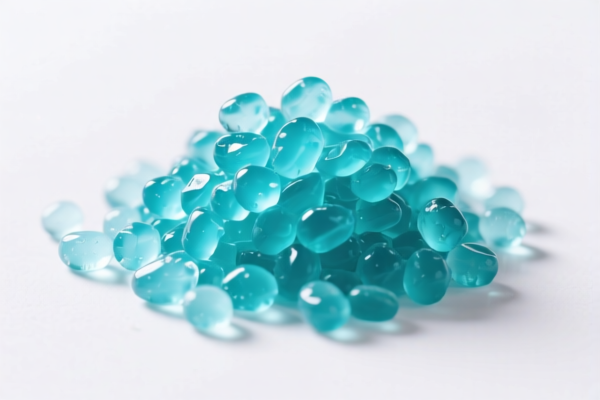
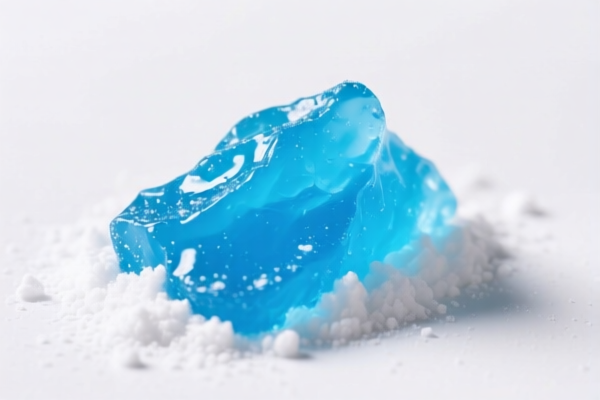
AI Analysis
🧪 Fatty Alcohol Mixtures (Industrial Grade)
🌐 HS Code Reference & Customs Clearance Guide | 2026 Latest Tariff Analysis | Professional Clearance Strategy
📌 I. Product Definition & Classification: Do You Really Understand "Fatty Alcohol Mixtures"?
Fatty alcohol mixtures are complex chemical substances derived from natural fats and oils or petroleum. In international trade, the classification depends heavily on the carbon chain length and industrial application.
Industrial Grade: Specifically intended for use as surfactants, emulsifiers, or chemical intermediates in manufacturing processes. NOT for cosmetic or pharmaceutical use.
⚠️ Key Distinction Point:
- If the mixture contains C₁₁ or lower alcohols only → Classified under 3824.99.93.10
- If the mixture contains C₁₂ or higher alcohols only → Classified under 3824.99.93.20
- If the product is a generic "chemical product not elsewhere specified" without specific alcohol composition details → May fall under 3812.10 or 3812.90 (Note: Tax data unavailable for these codes in the reference database, requiring verification with current customs).
📦 II. HS Code Classification Details (2026 Latest Tariff Authority Comparison)
| HS Code | Product Description | Applicable Scenario | Alcohol Composition |
|---|---|---|---|
3812.10 |
Fatty alcohol mixtures, industrial grade; used in industrial applications such as surfactants, emulsifiers, and chemical intermediates | Industrial surfactants, emulsifiers | Not specified (General industrial use) |
3812.90 |
Other chemical products not elsewhere specified, including fatty alcohol mixtures of industrial grade, used in industrial processes and chemical manufacturing | General chemical manufacturing | Not specified (General industrial use) |
3824.99.93.10 |
Mixtures of acyclic, monohydric, unsubstituted alcohols: Containing C₁₁ or lower alcohols only | Specific chemical intermediates, low-chain fatty alcohols | Low Chain (C≤11) |
3824.99.93.20 |
Mixtures of acyclic, monohydric, unsubstituted alcohols: Containing C₁₂ or higher alcohols only | High-chain fatty alcohols, surfactant precursors | High Chain (C≥12) |
🔍 Important Reminder:
- The distinction between 3812.xx and 3824.99.93.xx is critical. If the product is specifically described as a "mixture of acyclic, monohydric, unsubstituted alcohols," it should be classified under 3824.99.93.xx based on carbon chain length. - Misclassification can lead to significant tax differences and customs delays. - If the exact carbon chain composition is unknown or mixed, customs may require laboratory analysis to determine the primary component.
💰 III. 2026 Latest Tariff Rate Details (Including Additional Taxes & Policy Add-ons)
✅ Applicable Country: China (CN)
✅ Import/Export Context: Based on available tax data in the reference.
✅ Note: Codes3812.10and3812.90have no tax information retrieved in the provided data. For these codes, please consult local customs for the latest rates. Codes3824.99.93.10and3824.99.93.20have clear tax structures.
🎯 1. 3824.99.93.10 —— Fatty Alcohol Mixtures (C₁₁ or Lower)
| Item | Content |
|---|---|
| Base Tariff | 5.0% |
| Additional Tariff | 25.0% |
| Total Tariff | 30.0% |
| Tax Calculation | CIF Value × 30% |
| Legal Basis | Base Tariff + Additional Tariff |
📌 Explanation:
- This code applies to fatty alcohol mixtures where the alcohol chains are 11 carbons or shorter. - The total tariff burden is 30%, which includes a base rate of 5% and a significant additional tariff of 25%. - Cost Impact: High. Importers must factor in this 30% cost when pricing.
🎯 2. 3824.99.93.20 —— Fatty Alcohol Mixtures (C₁₂ or Higher)
| Item | Content |
|---|---|
| Base Tariff | 0.0% |
| Additional Tariff | 0.0% |
| Total Tariff | 0.0% |
| Tax Calculation | No tax |
| Legal Basis | Base Tariff + Additional Tariff |
📌 Explanation:
- This code applies to fatty alcohol mixtures where the alcohol chains are 12 carbons or longer. - The total tariff burden is 0%. - Cost Impact: Low. This is a highly favorable classification for importers/exporters.
🛠️ IV. Customs Clearance Practical Suggestions (Battlefield Pitfall Avoidance Guide)
✅ 1. Preparation Material Checklist (Missing Items Will Cause Delays)
| Material | Must Provide | Explanation |
|---|---|---|
| ✅ Product Specification Sheet | ✔️ | Must include carbon chain distribution (C1-C12 breakdown), purity, and industrial application. |
| ✅ Chemical Structure Analysis | ✔️ | Laboratory report proving the mixture contains acyclic, monohydric, unsubstituted alcohols. |
| ✅ Product Photos (Including Label) | ✔️ | Clear view of the label, warning signs, and batch numbers. |
| ✅ Commercial Invoice | ✔️ | Must clearly state "Fatty Alcohol Mixture (Industrial Grade)" and specify carbon chain composition. |
| ✅ Packing List | ✔️ | Detailed list of contents, weights, and dimensions. |
| ✅ Certificate of Origin (CO) | ✔️ | If applicable for preferential treatment under free trade agreements. |
| ✅ Safety Data Sheet (SDS) | ✔️ | Required for chemical products to ensure safe handling and transport. |
✅ 2. Declaration Tips (Key Mnemonic)
🔥 "Chain Length Decides, 12+ is Free, 11- is Heavy, Label Clearly!"
| Scenario | Correct Declaration | Wrong Practice |
|---|---|---|
| Fatty alcohols with C≥12 | 3824.99.93.20 (0% Tax) |
Misdeclare as 3824.99.93.10 → Pay 30% extra! |
| Fatty alcohols with C≤11 | 3824.99.93.10 (30% Tax) |
Misdeclare as 3824.99.93.20 → Customs penalty + back tax! |
| General industrial fatty alcohol mix (composition unknown) | 3812.10 or 3812.90 (Verify Tax) |
Assume 0% tax → High risk of customs hold. |
✅ 3. Special Case Handling
| Scenario | Handling Suggestion |
|---|---|
| Mixed Carbon Chains | Provide a detailed breakdown of carbon chain distribution. Customs may classify based on the major component or require further analysis. |
| OEM Custom Products | Provide customer orders and design specs to avoid being classified as "generic" products. |
| Chemical Intermediate | Clearly state its use in chemical synthesis to support classification under 3824.99.93.xx. |
| Cosmetic/Pharma Grade | DO NOT use this classification. These products fall under different HS codes (e.g., 3402, 3004) with different tax rates and regulations. |
🌍 V. Global Market Customs Clearance Comparison (2026 Latest)
| Country/Region | Recommended HS Code | Tariff | Certification Requirements | Notes |
|---|---|---|---|---|
| 🇨🇳 China | 3824.99.93.10 / 3824.99.93.20 |
30% / 0% | SDS, COA | Tax difference is significant based on chain length. |
| 🇺🇸 USA | Varies | Varies | EPA, TSCA | Check USITC for latest rates. |
| 🇪🇺 EU | Varies | Varies | REACH Registration | Strict chemical regulations apply. |
| 🇦🇺 Australia | Varies | Varies | NHMRC | Check for biosecurity requirements. |
| 🇯🇵 Japan | Varies | Varies | FSC | Check for specific chemical controls. |
📌 Conclusion:
- Carbon chain length is the key factor determining the tariff rate. - C₁₂+ mixtures enjoy 0% tax, while C₁₁- mixtures face a 30% tax. - Ensure accurate chemical analysis and documentation to avoid misclassification.
📌 VI. Common Mistakes & Pitfall Avoidance Guide (Blood-Soaked Lessons)
❌ Mistake 1: Declaring "Fatty Alcohol" without specifying carbon chain composition.
👉 Consequence: Customs will likely classify under the higher tax code (3824.99.93.10) or require additional analysis, causing delays.
❌ Mistake 2: Using cosmetic-grade products in industrial declarations.
👉 Consequence: Illegal declaration. Penalties, fines, and potential blacklisting. Cosmetic and pharma products have different regulatory requirements.
❌ Mistake 3: Assuming all fatty alcohol mixtures are tax-free.
👉 Consequence: Paying 30% tax when you thought it was 0%. Underpayment of taxes leads to penalties.
❌ Mistake 4: Missing the SDS (Safety Data Sheet).
👉 Consequence: Customs will hold the shipment until proper safety documentation is provided.
✅ Correct Approach:
"Fatty Alcohol Mixture, Industrial Grade, C12-C16 Primary Component, SDS Attached, COA Available, For Surfactant Production"
🎯 VII. Conclusion: Professional Declaration, Save Time, Save Money, Increase Efficiency!
🎯 Remember the Mnemonic:
🔹 "Chain Length Decides, 12+ is Free, 11- is Heavy, Label Clearly!"
🔹 "HS Code Determines Destiny, Tax Rate Differs by 30%, Declaration Error Costs Thousands!"
📌 Tips:
- If your fatty alcohol mixture has a mixed carbon chain, provide a detailed laboratory analysis to prove the dominant component.
- For C₁₂+ mixtures, take advantage of the 0% tax rate by ensuring accurate classification.
- For C₁₁- mixtures, factor in the 30% tax in your cost calculations.
📣 Immediate Action:
📞 Contact professional customs brokers + Provide product photos + Request HS Code Advance Ruling
🚀 Let your fatty alcohol mixture, smooth customs clearance, efficient global trade, profit maximization!
✨ Professional Customs Clearance Starts with Accurate Classification!
💼 Every cent of your cost deserves to be precisely calculated!
Customer Reviews
About HS Code Classification
The Harmonized System (HS) is an internationally standardized nomenclature developed by the World Customs Organization (WCO) to classify traded products. Over 200 countries use the HS system as the basis for customs tariffs, trade statistics, and import/export regulations.
Each HS code follows a hierarchical structure:
- Chapter (2 digits) — Broad category of goods (e.g., Chapter 84: Machinery and Mechanical Appliances)
- Heading (4 digits) — More specific grouping within the chapter
- Subheading (6 digits) — Internationally standardized breakdown, used by all WCO member countries
- National subdivisions (8-10 digits) — Country-specific extensions for further classification, such as US HTSUS 10-digit codes
Correct HS code classification is essential for smooth customs clearance, accurate duty payment, and compliance with trade regulations. Misclassification can lead to customs delays, overpayment of duties, or penalties.
When importing from CN to US, the applicable tariff rates may include:
- Most-Favored-Nation (MFN) rate — The standard duty rate applied to WTO members
- General rate — Applied to countries without trade agreements
- Trade remedy duties — Additional tariffs such as Section 301 (anti-dumping), Section 232 (national security), or countervailing duties
The information provided on this page is for reference purposes only. For official classification, please consult with your local customs authority or a licensed customs broker.