Faux Leather Document Box
CN → US| HS Code | Tariff Rate | Origin | Destination | Doc |
|---|---|---|---|---|
| 4205008000 | 35.0% | CN | US | Official Doc |
| 4202316000 | 43.0% | CN | US | Official Doc |
| 4205001000 | 35.0% | CN | US | Official Doc |
| 4205008000 | 35.0% | CN | US | Official Doc |
| 4202399000 | 55.0% | CN | US | Official Doc |
Product Images

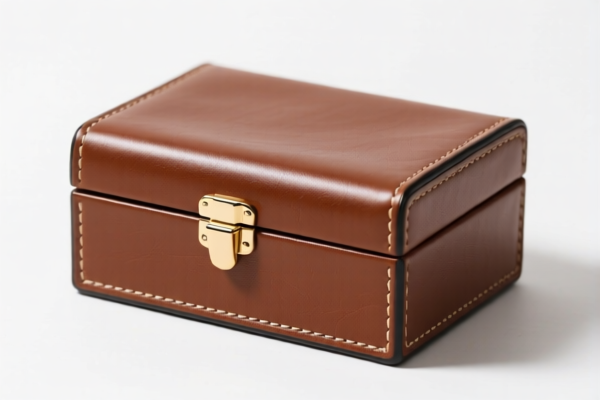


AI Analysis
📦 Faux Leather Document Box: HS Code Classification & 2026 U.S. Customs Clearance Guide
🌐 HS Code Reference & Clearance Strategy | 2026 Tax Decoded | Expert Entry Protocol
📌 I. Product Definition: Is it a "Document Box" or a "Case"?
The Faux Leather Document Box is a versatile storage solution for office and home use, typically crafted from synthetic leather materials. In international trade, its classification hinges on Form (Is it a rigid box or a soft bag?) and Specific Use (Is it primarily for documents or general carry?).
Crucial Distinctions: * Rigid/Structured Form: Often falls under "Other Leather Articles" (Chapter 42, Heading 4205). * Soft/Carry-All Form: If designed to be carried in a hand or pocket, it may be classified under "Handbags, Suitcases, or similar containers" (Chapter 42, Heading 4202). * Material Definition: "Faux Leather" (Synthetic Leather) is generally treated the same as genuine leather under Chapter 42 HS classifications regarding tax rates.
⚠️ Key Classification Point: * Rigid Box / Desktop Organizer → Likely 4205.00.80.00 (Other Leather Articles). * Soft Bag / Pocket Carrier → Likely 4202.31.60.00 or 4202.39.90.00. * Generic "Leather Goods" (No specific form) → Likely 4205.00.10.00.
📊 II. HS Code Classification Matrix (2026 U.S. Tariff Data)
Based on the provided data, here is the precise breakdown for Faux Leather Document Boxes and related items.
| HS Code | Product Description & Form | Classification Category | Base Duty | USITC (Section 301) | IEEPA (China Specific) | Total Tax Rate |
|---|---|---|---|---|---|---|
4205.00.80.00 |
Faux Leather Document Box (Material: Leather; Form: Finished Article; Type: Other Leather Articles) |
Other Leather Articles | 0.0% | +25.0% | +10.0% | 35.0% |
4202.31.60.00 |
Faux Leather Case/Bag (Material: Leather; Form: Similar Container; Type: Hand/Pocket Carry) |
Hand/Pocket Containers | 8.0% | +25.0% | +10.0% | 43.0% |
4205.00.10.00 |
Faux Leather Pouch/Bag (Material: Leather; Form: Bag; Use: Storage) |
Other Leather Articles | 0.0% | +25.0% | +10.0% | 35.0% |
4202.39.90.00 |
Faux Leather Carry Bag (Material: Leather; Form: Storage Bag; Use: Pocket/Handbag Carry) |
Hand/Pocket Containers (Other) | 20.0% | +25.0% | +10.0% | 55.0% |
🔍 Critical Observation: The tax rate varies significantly based on Shape and Function. * A rigid Document Box (
4205.00.80.00) has a 35% rate. * A soft Carry Bag (4202.39.90.00) has a staggering 55% rate due to a higher base duty. * Do not confuse "Box" (4205) with "Bag/Case" (4202) if you wish to optimize costs!
💰 III. 2026 U.S. Tariff Breakdown (Section 301 & IEEPA Details)
✅ Applicable Market: United States (US) ✅ Origin: China (CN) ✅ Effective Date: Current (including 122 Clause & Section 301)
🎯 Scenario A: 4205.00.80.00 (The Document Box)
- Base Duty: 0% (Most "Other leather articles" are duty-free).
- Section 301 (USITC): +25.0% (Added tariff on Chinese goods under the Trade Act).
- 122 Clause (IEEPA): +10.0% (Additional tariff on Chinese products under International Emergency Economic Powers Act).
- 🔥 Total Effective Rate: 35.0%
- De Minimis Exemption: ❌ NO (All values >$800 are taxed; even if < $800, Section 301 applies to direct shipments).
🎯 Scenario B: 4202.39.90.00 (The High-Cost Carry Bag)
- Base Duty: 20.0% (High base rate for specific soft containers).
- Section 301 (USITC): +25.0%
- 122 Clause (IEEPA): +10.0%
- 🔥 Total Effective Rate: 55.0%
- Calculation:
(Base 20% + 35% Add-ons) = 55%on CIF value.
📌 Legal Pathway:
Section 301(USITC Footnotes) +IEEPA(122 Clause) +HTSUS 4202.39.90.00→ Highest Risk Category.
🛠️ IV. Clearance Practical Guide: Avoiding the 55% Trap
✅ 1. Preparation Checklist (Must-Haves)
| Document | Requirement | Why? |
|---|---|---|
| Product Photos | ✔️ High-res, showing shape (Rigid vs. Soft) | Determines if it's a "Box" (4205) or "Bag" (4202). |
| Material Sheet | ✔️ Explicitly state "Faux Leather" / "Synthetic" | Confirms Chapter 42 classification. |
| Usage Statement | ✔️ "For desktop document storage" vs. "For pocket carry" | Crucial: "Pocket carry" triggers higher taxes. |
| Commercial Invoice | ✔️ Clear description matching HS Code | Prevents "Misdeclaration" penalties. |
| Bill of Lading | ✔️ Correct HS Code entry | Avoids customs examination delays. |
✅ 2. Declaration Strategy (The Golden Rule)
🔥 Motto: "Rigid is Cheap, Soft is Expensive; Shape Defines the Rate!"
| Scenario | Recommended HS Code | Resulting Rate | Action |
|---|---|---|---|
| Rigid Document Box (Holds papers on a desk) | 4205.00.80.00 |
35.0% | Best Option. Ensure it looks like a box, not a pouch. |
| Soft Pouch (Held in hand, folds flat) | 4205.00.10.00 |
35.0% | Acceptable if truly a "Bag" for storage. |
| Pocket-Sized Case (Fits in jacket/handbag) | 4202.39.90.00 |
55.0% | ⚠️ AVOID unless product design forces this. |
| Cigarette/Tool Case (Small, soft) | 4202.31.60.00 |
43.0% | Slightly better than 55%, but still high. |
✅ 3. Special Handling Tips
- Avoid "Cigarette Case" Confusion: Even if the item holds documents, if it looks like a cigarette case, Customs may classify it under
4202.31.60.00(43% tax). Emphasize "Document" in the description. - Structural Integrity: If your "Document Box" has a stiff back and rigid sides, explicitly state "Rigid Structure" in the commercial invoice to support
4205.00.80.00. - Packaging: Do not ship "Documents" inside the box if the box itself is classified as a "Bag." The box is the article.
🌍 V. Global Market Comparison (2026)
| Destination | Recommended HS Code | Base Duty | Total Tax (China Origin) | Notes |
|---|---|---|---|---|
| 🇺🇸 USA | 4205.00.80.00 |
0% | 35% | Highest impact due to 301+122 clauses. |
| 🇺🇸 USA (Bag) | 4202.39.90.00 |
20% | 55% | Avoid if possible. |
| 🇪🇺 EU | 4205.00.80.00 |
6% - 10% | ~16% | No Section 301, but standard duties apply. |
| 🇨🇦 Canada | 4205.00.80.00 |
3% - 5% | ~13% | CPTPA/FDA may reduce rates. |
📌 Conclusion: The U.S. market is the most expensive due to the 35% - 55% combined tariff. Product designers should aim for a rigid "Box" shape to utilize the 35% rate rather than the 55% "Bag" rate.
📌 VI. Common Pitfalls & Lessons Learned
❌ Mistake 1: Misclassifying a Box as a Bag * Result: Tax jumps from 35% to 55%. * Fix: Ensure the product has a defined "box" shape (sides, bottom, top) and is not a flexible pouch.
❌ Mistake 2: Vague Descriptions * Result: Customs audits the shipment, demanding a "Reason for Form" justification. * Fix: Use specific terms: "Rigid Faux Leather Document Organizer".
❌ Mistake 3: Ignoring the 122 Clause * Result: Unexpected 10% surprise charge at the border. * Fix: Factor the 122 Clause (10%) into all cost calculations for China-origin goods.
✅ Pro Tip:
If you can design your product to be a rigid desktop organizer (
4205.00.80.00), you save 20% compared to a soft carrier (4202.39.90.00). Design matters!
🎯 VII. Final Verdict: Action Plan
- Product Audit: Is your "Document Box" rigid or soft?
- Rigid → Declare
4205.00.80.00(35% Tax). - Soft/Carry → Declare
4202.31.60.00or4202.39.90.00(43% or 55% Tax).
- Rigid → Declare
- Cost Calculation: Apply 35% to your CIF value for rigid boxes.
- Documentation: Label clearly: "Synthetic Leather Document Box, Rigid Form".
🚀 Final Advice: Do not let "Faux Leather" hide a "55% Tax Bag"! Optimize your product design for Rigid Classification (
4205.00.80.00) to save 20% on every shipment.
✨ Precision Classification = Maximum Profit. 💼 Your Supply Chain, Secured & Optimized.
Customer Reviews
About HS Code Classification
The Harmonized System (HS) is an internationally standardized nomenclature developed by the World Customs Organization (WCO) to classify traded products. Over 200 countries use the HS system as the basis for customs tariffs, trade statistics, and import/export regulations.
Each HS code follows a hierarchical structure:
- Chapter (2 digits) — Broad category of goods (e.g., Chapter 84: Machinery and Mechanical Appliances)
- Heading (4 digits) — More specific grouping within the chapter
- Subheading (6 digits) — Internationally standardized breakdown, used by all WCO member countries
- National subdivisions (8-10 digits) — Country-specific extensions for further classification, such as US HTSUS 10-digit codes
Correct HS code classification is essential for smooth customs clearance, accurate duty payment, and compliance with trade regulations. Misclassification can lead to customs delays, overpayment of duties, or penalties.
When importing from CN to US, the applicable tariff rates may include:
- Most-Favored-Nation (MFN) rate — The standard duty rate applied to WTO members
- General rate — Applied to countries without trade agreements
- Trade remedy duties — Additional tariffs such as Section 301 (anti-dumping), Section 232 (national security), or countervailing duties
The information provided on this page is for reference purposes only. For official classification, please consult with your local customs authority or a licensed customs broker.