Faux Leather Folder
CN → US| HS Code | Tariff Rate | Origin | Destination | Doc |
|---|---|---|---|---|
| 4202110030 | 43.0% | CN | US | Official Doc |
| 4202110090 | 43.0% | CN | US | Official Doc |
| 4820300040 | 35.0% | CN | US | Official Doc |
Product Images
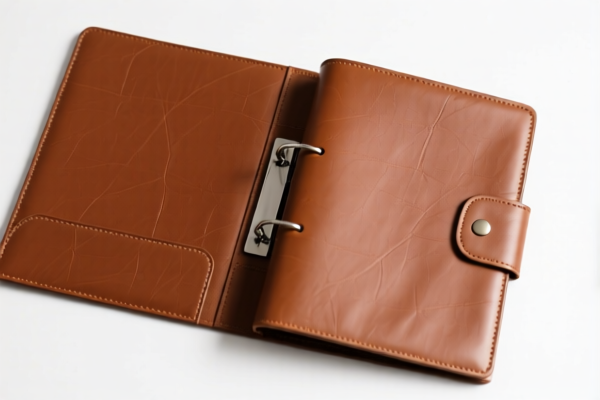
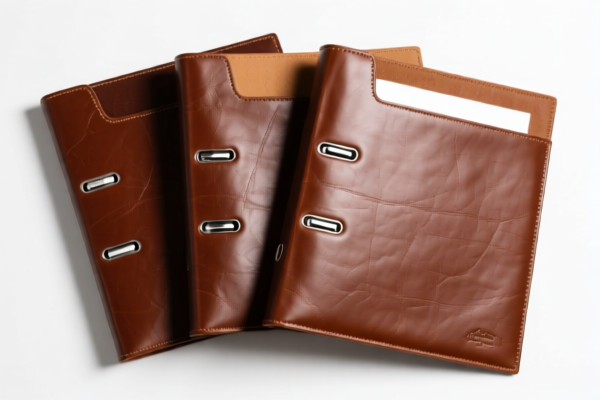
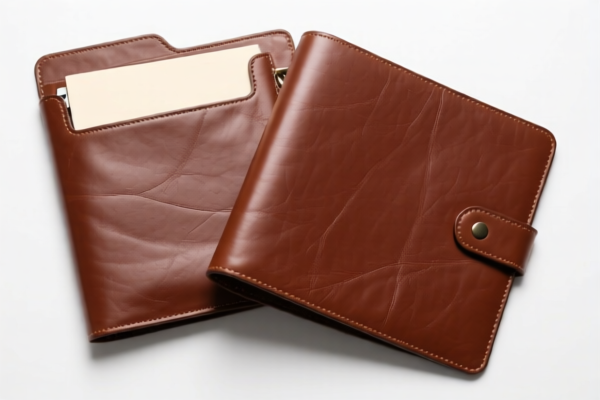
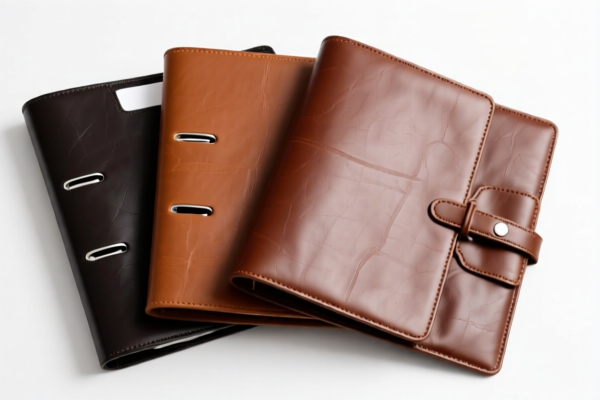
AI Analysis
📂 Faux Leather Folder (Synthetic Leather Document Holder)
🌐 HS Code Reference & Customs Clearance Guide | 2026 Latest Tariff Analysis | Professional-Level Clearance Strategy
📌 I. Product Definition and Classification: Do You Really Understand "Faux Leather Folders"?
A Faux Leather Folder (also known as Synthetic Leather Folder or Artificial Leather Folder) is an office accessory used for organizing documents. In international trade, its classification hinges strictly on the outer surface material and the presence of internal supporting structures (such as cardboard, stiffboard, or metal).
Key Distinctions: 1. Pure Leather/Synthetic Leather Exterior: If the folder is primarily defined by its outer surface material (faux leather) and lacks significant structural reinforcement other than the material itself, it falls under Chapter 42 (Articles of Leather). 2. Cardboard/Paper Support Structure: If the folder relies on cardboard, paperboard, or thick paper for its shape and structure (even if covered in faux leather), it is classified as Stationery/Office Supplies under Chapter 48.
⚠️ Critical Differentiation Point:
- If the product is a soft folder or a structured portfolio where the faux leather is the dominant characteristic and defining feature → HS Code 4202.
- If the product is a standard office folder (like a lever-arch folder or a simple document holder) where cardboard/paper provides the primary structural integrity, even if wrapped in faux leather → HS Code 4820.
📦 II. HS Code Classification Details (2026 Latest Tariff Authority Comparison)
| HS Code | Product Description | Applicable Scenario | Structural Material |
|---|---|---|---|
4202.11.00.30 |
Similar containers of a kind, outer surface of leather, shape: Folder | High-end portfolios, structured faux leather cases | ✅ Leather/Faux Leather Dominant |
4202.11.00.90 |
Similar containers of a kind, outer surface of leather or synthetic leather, shape: Folder | General synthetic leather folders, business card holders | ✅ Synthetic Leather Dominant |
4820.30.00.40 |
Folders and file covers, usually containing cardboard support structure, stationery | Standard office file folders, document wallets with cardboard backing | ✅ Cardboard/Paper Structure |
🔍 Key Reminder:
- Do not misclassify a standard cardboard-based folder as a leather good just because it has a faux leather finish. If the cardboard is what keeps it standing, use 4820.
- If the product is a high-end, rigid case where the faux leather provides the shape and protection (like a laptop portfolio or a rigid document binder), use 4202.
💰 III. 2026 Latest Tariff Rate Breakdown (Including Additional Taxes, Policy Surcharges)
✅ Applicable Country: USA (US)
✅ Country of Origin: China (CN)
✅ Effective Date: From November 10, 2025 (and subsequent imports)
🎯 1. 4202.11.00.30 —— Folder, Outer Surface of Leather (Includes Faux Leather)
| Item | Content |
|---|---|
| Base Tax Rate | 8.0% (ad valorem) |
| Section 301 Surcharge | +25.0% (USITC Footnote 9903.88.01) |
| Section 122 IEEPA Surcharge | +10.0% (Against China/HK products, effective Nov 10, 2025) |
| Total Tax Rate | 43.0% |
| Tax Calculation | CIF Value × 43.0% |
| De Minimis Exemption Eligible? | ❌ No (deny_de_minimis) |
| Legal Basis Path | IEEPA:9903.01.25 → IEEPA:9903.01.24 → USITC:4202.11.00.30 → FOOTNOTE:9903.88.01 |
📌 Explanation:
- "Base Tariff 8%": Standard MFN rate for leather goods.
- "Section 301 25%": The major trade war tariff applied to most Chinese goods, including leather articles.
- "Section 122 10%": The new 2025 surcharge under the International Emergency Economic Powers Act (IEEPA).
- Total 43%: This is a high tariff cost. Accurate classification is vital. If misclassified as 4820, you might save 8% base but risk a 25% penalty for misdeclaration. However, if it is actually 4202, you must pay the full 43%.
🎯 2. 4202.11.00.90 —— Folder, Outer Surface of Synthetic Leather
| Item | Content |
|---|---|
| Base Tax Rate | 8.0% |
| Section 301 Surcharge | +25.0% |
| Section 122 IEEPA Surcharge | +10.0% |
| Total Tax Rate | 43.0% |
| Tax Calculation | CIF Value × 43.0% |
| De Minimis Exemption Eligible? | ❌ No (deny_de_minimis) |
| Legal Basis Path | IEEPA:9901.25 → IEEPA:9903.01.24 → USITC:4202.11.00.90 → FOOTNOTE:9903.88.01 |
📌 Note:
- Synthetic leather (PU, PVC, microfiber) is treated similarly to natural leather in Chapter 42 for tariff purposes in this context.
- The tax burden is identical to4202.11.00.30. Do not assume "synthetic" means cheaper tariffs; the trade penalties still apply.
🎯 3. 4820.30.00.40 —— Folders with Cardboard Support (Stationery)
| Item | Content |
|---|---|
| Base Tax Rate | 0.0% |
| Section 301 Surcharge | +25.0% |
| Section 122 IEEPA Surcharge | +10.0% |
| Total Tax Rate | 35.0% |
| Tax Calculation | CIF Value × 35.0% |
| De Minimis Exemption Eligible? | ❌ No (deny_de_minimis) |
| Legal Basis Path | IEEPA:9903.01.25 → IEEPA:9903.01.24 → USITC:4820.30.00.40 → FOOTNOTE:9903.88.01 |
📌 Key Insight:
- Base Rate is 0%! This is the main advantage of Classifying as Stationery (Chapter 48).
- However, the Section 301 (25%) and Section 122 (10%) surcharges still apply, bringing the total to 35%.
- Savings: 8% lower total tariff compared to Chapter 42 (43%vs35%).
- Risk: If the product is structurally a leather portfolio (no cardboard), misclassifying it here is customs fraud and leads to severe penalties. Only use this if the cardboard/paper structure is the primary defining feature.
🛠️ IV. Customs Clearance Practical Advice (Battle-Tested Pitfall Avoidance Guide)
✅ 1. Required Documentation Checklist (Nothing is Optional)
| Document | Must Provide | Explanation |
|---|---|---|
| ✅ Product Specification Sheet | ✔️ | Detail dimensions, material composition (e.g., "Outer: PU Leather; Inner: Cardboard Support"). |
| ✅ Material Composition Breakdown | ✔️ | Crucial for Chapter 42 vs 48 distinction. Specify % of leather vs cardboard. |
| ✅ Product Photos (Including Interior) | ✔️ | Show if there is rigid cardboard backing or if it's just soft leather folds. |
| ✅ Commercial Invoice | ✔️ | Clearly state "Synthetic Leather Folder" or "Cardboard Folder with Faux Leather Cover". Avoid vague terms like "Bag". |
| ✅ Packing List | ✔️ | Confirm if accessories (pens, clips) are included, as they may affect classification. |
| ✅ Origin Certificate (CO) | ✔️ | Essential for verifying Country of Origin (China) to apply correct surcharges. |
✅ 2. Declaration Tips (Key Mantra)
🔥 "Structure Determines Chapter, Material Determines Sub-heading, Origin Determines Surcharge!"
| Scenario | Correct Declaration | Wrong Practice |
|---|---|---|
| Rigid Portfolio with faux leather cover and internal stiffening (but no cardboard core) | 4202.11.00.30 / 90 |
Misclassify as 4820 → Risk of 8% base tariff refund request + penalty. |
| Standard Office Folder with cardboard inside and faux leather wrap | 4820.30.00.40 |
Misclassify as 4202 → Pay 8% unnecessary base tax. |
| Soft Document Sleeve (no support) | Check specific subheadings (e.g., 4202.92) |
Force into 4202.11 → Incorrect. |
| Mixed Packaging (Folders + Pens) | Declare folders and pens separately if different chapters | Bundle all → Complex clearance issues. |
✅ 3. Special Case Handling
| Case | Handling Advice |
|---|---|
| OEM Custom Faux Leather Folders | Provide design specs. If the "cardboard" is minimal (e.g., just a liner), argue for 4202. If it's a full rigid board, use 4820. |
| Faux Leather + Fabric Combination | Classify based on the outer surface material. If faux leather is visible and defines the product, use 4202. |
| Gift Sets (Folder + Pen + Notebook) | The folder's classification depends on its own structure. The pen goes to Chapter 96. Do not bundle into one HS Code. |
| Pre-Clearance Ruling | Strongly recommend applying for an Advance Ruling from CBP if the structural support is ambiguous. |
🌍 V. Global Market Comparison (2026 Latest)
| Country/Region | Recommended HS Code | Base Tariff | Additional Taxes | Notes |
|---|---|---|---|---|
| 🇺🇸 USA | 4202.11.00.30/90 or 4820.30.00.40 |
8% or 0% | +25% (301) +10% (122) | Total 43% or 35%. High barrier for Chinese goods. |
| 🇨🇳 China (Import) | 4202.11.00.30/90 |
~8-10% | None | Standard MFN rate. No section 301/122. |
| 🇪🇺 EU | 4202.11.00 or 4820.30 |
~4.0% - 6.0% | None | No equivalent to US Section 301/122. |
| 🇬🇧 UK | 4202.11.00 or 4820.30 |
~4.0% - 6.0% | None | Post-Brexit tariffs generally stable. |
| 🇦🇺 Australia | 4202.11.00 or 4820.30 |
~5.0% | None | No additional punitive tariffs. |
📌 Conclusion:
- The USA is the only major market with these cumulative punitive tariffs (35-43%).
- For other markets, the classification still matters for base rates, but the total cost impact is significantly lower.
- Strategic Advice: If targeting the US, optimize packaging to emphasize either the leather quality (justifying 4202) or the cardboard structure (enabling 4820) based on which yields better logistics margins, but accuracy is paramount to avoid audits.
📌 VI. Common Errors & Pitfall Guide (Lessons Learned the Hard Way)
❌ Error 1: Calling it a "Leather Bag" to avoid Chapter 48 scrutiny.
👉 Consequence: CBP will request proof of structure. If it's a folder, they may reclassify and adjust duties, plus penalties.
❌ Error 2: Assuming "Faux Leather" means it's not "Leather" for Chapter 42.
👉 Consequence: Incorrect. Chapter 42 includes artificial leather (e.g., 4202.11.00.90). Misclassifying it as textile (6307) would be a major error.
❌ Error 3: Ignoring Section 122 (10%) in 2026 cost calculations.
👉 Consequence: Underestimating landed cost by 10%. Your profit margin will be eaten by this new surcharge.
❌ Error 4: Using 4202.92 (Plastics) for Faux Leather.
👉 Consequence: 4202.92 is for products with outer surface of plastics. If it's classified as "Faux Leather" (often PVC/PU coated fabric/leather), 4202.11 (Leather) is more accurate per USITC notes. Check specific material definitions.
✅ Correct Approach:
"Synthetic Leather Document Folder, Rigid Cardboard Core, for Office Use, Model F-100, Origin: China"
🎯 VII. Conclusion: Precise Classification, Cost Efficiency!
🎯 Remember the Mantra:
🔹 "Structure First: Cardboard = 4820 (35% Total). Material First: Leather/Synthetic = 4202 (43% Total)."
🔹 "Don't Hide from Section 122: The 10% Surcharges are Real and Cumulative."
🔹 "Faux Leather is Still Leather for Chapter 42 in This Context."
📌 Pro Tip:
If your product is a hybrid (e.g., a laptop sleeve made of faux leather with no cardboard), ensure you are not using 4820. If it's a soft pouch, check 4202.92 or 4202.99 depending on material. For folders specifically, the distinction is binary: Cardboard Support vs. Leather Structure.
📣 Immediate Action:
📞 Consult your customs broker with photos of the interior structure.
🚀 Calculate Landed Cost with 35% vs 43% to determine pricing strategy for the US Market.
💼 Your profit depends on the HS Code digits!
✨ Professional Clearance Starts with Accurate Classification!
💼 Every Dollar of Tariff Saved is Pure Profit!
Customer Reviews
About HS Code Classification
The Harmonized System (HS) is an internationally standardized nomenclature developed by the World Customs Organization (WCO) to classify traded products. Over 200 countries use the HS system as the basis for customs tariffs, trade statistics, and import/export regulations.
Each HS code follows a hierarchical structure:
- Chapter (2 digits) — Broad category of goods (e.g., Chapter 84: Machinery and Mechanical Appliances)
- Heading (4 digits) — More specific grouping within the chapter
- Subheading (6 digits) — Internationally standardized breakdown, used by all WCO member countries
- National subdivisions (8-10 digits) — Country-specific extensions for further classification, such as US HTSUS 10-digit codes
Correct HS code classification is essential for smooth customs clearance, accurate duty payment, and compliance with trade regulations. Misclassification can lead to customs delays, overpayment of duties, or penalties.
When importing from CN to US, the applicable tariff rates may include:
- Most-Favored-Nation (MFN) rate — The standard duty rate applied to WTO members
- General rate — Applied to countries without trade agreements
- Trade remedy duties — Additional tariffs such as Section 301 (anti-dumping), Section 232 (national security), or countervailing duties
The information provided on this page is for reference purposes only. For official classification, please consult with your local customs authority or a licensed customs broker.