Felt Book
CN → US| HS Code | Tariff Rate | Origin | Destination | Doc |
|---|---|---|---|---|
| 6307909891 | 24.5% | CN | US | Official Doc |
| 6307909875 | 24.5% | CN | US | Official Doc |
| 9503000090 | 10.0% | CN | US | Official Doc |
Product Images
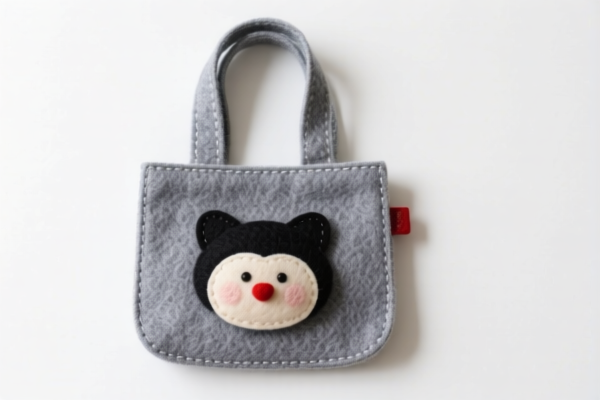
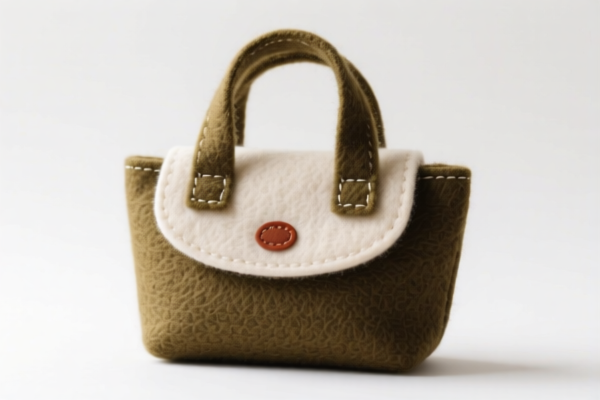
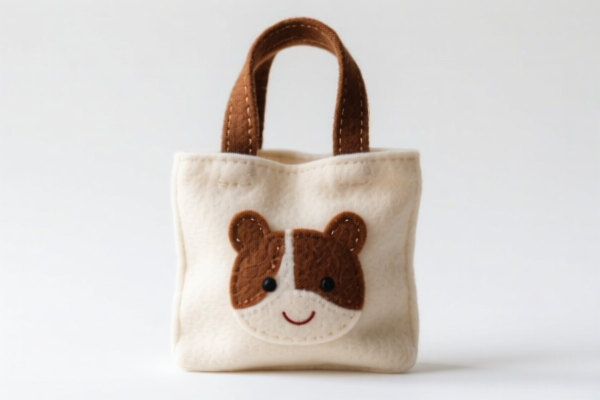
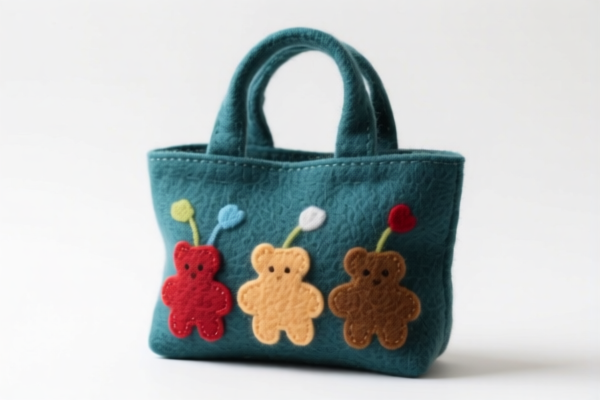
AI Analysis
📘 Felt Book (毛毡书)
🌐 HS Code Reference & Customs Clearance Guide | 2026 Latest Tariff Analysis | Professional Entry Strategies
📌 I. Product Definition & Classification: Do You Really Understand "Felt Books"?
A Felt Book is typically a soft, tactile educational toy or craft item made from non-woven fabric (felt). In international trade, its classification depends heavily on its intended use and physical characteristics. It can be classified either as a textile product or as a toy, leading to significantly different tariff outcomes.
⚠️ Key Distinction Point:
- If categorized as a craft/textile item (finished textile article) → Classified under 6307.90.98
- If categorized as a toy (educational toy for children) → Classified under 9503.00.00
- Note: The material (felt) does not dictate the HS code alone; the primary function (educational toy vs. textile accessory) determines the heading.
📦 II. HS Code Classification Details (2026 Latest Tariff Authority Comparison)
| HS Code | Product Description | Applicable Scenario | Primary Function | Total Tax Rate (US Origin: CN) |
|---|---|---|---|---|
6307.90.98.91 |
Felt Book as a Made-up Article (Textile) | Craft supplies, decorative items, non-toy textile goods | Textile/Finished Article | 24.5% |
6307.90.98.75 |
Felt Book as Fabric/Fiber Material | General textile classification for felt-based finished goods | Fabric/Fiber | 24.5% |
9503.00.00.90 |
Felt Book as a Toy | Educational toys, children’s play items, sensory books | Toy/Entertainment | 10.0% |
🔍 Critical Reminder:
- "Toy" Classification (9503) is significantly cheaper (10%) than "Textile" Classification (6307) (24.5%).
- To qualify for 9503, the product must clearly demonstrate play value (e.g., designed for children, includes educational elements like shapes/colors, marketed as a toy).
- If marketed as a "craft kit" or "decorative textile," customs may default to 6307, resulting in a 14.5% higher tax burden.
💰 III. 2026 Latest Tariff Rate Breakdown (Including Surtaxes & Policy Add-ons)
✅ Applicable Country: United States (US)
✅ Origin: China (CN)
✅ Effective Date: 2025/2026 (Current regulations)
🎯 1. 6307.90.98.91 & 6307.90.98.75 —— Felt Books as Textile Products (Made-up Articles)
| Item | Content |
|---|---|
| Base Tariff | 7.0% |
| Section 301 Surcharge | 7.5% |
| Section 122 Tariff | 10.0% |
| Total Tax Rate | 24.5% |
| Calculation Method | CIF Value × 24.5% |
| De Minimis Eligibility | ❌ No (Subject to full tariff) |
| Legal Basis Path | Base:6307 → 301:7.5% → 122:10% |
📌 Explanation:
- Base Tariff (7.0%): Standard rate for other made-up textile articles.
- Section 301 Surcharge (7.5%): Additional tariff on Chinese textiles under US trade remedy measures.
- Section 122 Tariff (10%): Emergency tariff imposed under Section 122 of the Trade Expansion Act of 1962 for national security reasons (specific to certain textile categories).
- Total 24.5% is a high tariff for low-value goods. Careful classification is essential to avoid overpayment.
🎯 2. 9503.00.00.90 —— Felt Books as Toys (Educational/Play Items)
| Item | Content |
|---|---|
| Base Tariff | 0.0% |
| Section 301 Surcharge | 0.0% |
| Section 122 Tariff | 10.0% |
| Total Tax Rate | 10.0% |
| Calculation Method | CIF Value × 10.0% |
| De Minimis Eligibility | ❌ No (Subject to full tariff) |
| Legal Basis Path | Base:9503 → 122:10% |
📌 Explanation:
- Base Tariff (0.0%): Toys generally have low or zero base tariffs to encourage education and entertainment.
- Section 301 Surcharge (0.0%): Toys are often exempt from certain Section 301 surcharges.
- Section 122 Tariff (10%): Still applies because felt books, even as toys, may fall under specific national security-related textile restrictions.
- Total 10.0% is significantly lower than the textile classification, making this the preferred classification if the product qualifies as a toy.
🛠️ IV. Customs Clearance Practical Advice (Real-World Pitfall Avoidance)
✅ 1. Required Documentation Checklist (Mandatory)
| Document | Required? | Notes |
|---|---|---|
| ✅ Product Specification Sheet | ✔️ | Must clearly state "Educational Toy" or "Craft Item" |
| ✅ Product Photos | ✔️ | Show design, colors, and any educational features (e.g., letters, shapes) |
| ✅ Marketing Materials | ✔️ | Brochures, websites, or Amazon listings showing target audience (children) |
| ✅ Commercial Invoice | ✔️ | Must specify "Felt Educational Book for Kids" if claiming Toy HS Code |
| ✅ Certificate of Origin | ✔️ | Required for tariff calculation |
| ✅ Packing List | ✔️ | Detail contents to avoid ambiguity |
✅ 2. Declaration Tips (Key Mnemonic)
🔥 "Toy Design, Toy Code; Toy Code, Lower Cost! Textile Description, Higher Cost!"
| Scenario | Correct Declaration | Wrong Approach |
|---|---|---|
| Felt Book with letters/numbers, for kids | 9503.00.00.90 (Toy) |
Declare as "Textile Craft" → 24.5% |
| Plain felt sheet used for crafts | 6307.90.98.91 (Textile) |
Declare as "Toy" → Risk of penalty |
| Felt Book marketed as "Educational Toy" | 9503.00.00.90 (Toy) |
Provide toy-specific photos and descriptions |
| Felt Book without educational features | 6307.90.98.75 (Textile) |
Force toy classification → Customs rejection |
✅ 3. Special Cases Handling
| Case | Handling Advice |
|---|---|
| OEM Custom Toys | Provide design drawings and target age group (e.g., "For ages 3-5") |
| Mixed Pack (Toy + Textile) | Declare separately if possible; otherwise, classify by primary function |
| Marketed as "Decorative" | Likely to be classified as Textile (6307) → Higher tax |
| Marketed as "Sensory Learning Tool" | Likely to be classified as Toy (9503) → Lower tax |
🌍 V. Global Market Comparison for Customs Clearance (2026 Latest)
| Country/Region | Recommended HS Code | Tariff Rate | Certification Requirements | Notes |
|---|---|---|---|---|
| 🇺🇸 USA | 9503.00.00.90 |
10.0% | CPSC, ASTM F963 | If classified as textile: 24.5% |
| 🇨🇳 China | 9503.00.00.90 |
0-6% | CCC (if applicable) | Lower base tariff |
| 🇪🇺 EU | 9503.00.00 |
0-4.7% | CE, EN71 | No Section 122 equivalent |
| 🇬🇧 UK | 9503.00.00 |
0-4.7% | UKCA, EN71 | Post-Brexit rules apply |
| 🇨🇦 Canada | 9503.00.00 |
0% | Health Canada | Free trade under CUSMA |
📌 Conclusion:
- USA has the highest variability based on classification.
- Toy classification (9503) saves 14.5% compared to textile classification.
- EU/UK/Canada generally have lower tariffs for toys, but still require strict safety certifications.
📌 VI. Common Mistakes & Pitfall Guide (Lessons Learned)
❌ Mistake 1: Declaring a "Felt Book" as a "Textile Craft" when it is clearly an educational toy
👉 Consequence: Pay 24.5% instead of 10% → Overpay by 14.5%!
❌ Mistake 2: Using vague descriptions like "Felt Item" without specifying function
👉 Consequence: Customs may assign 6307 by default → Higher tax
❌ Mistake 3: Not providing photos or marketing materials showing target audience
👉 Consequence: Inability to prove "Toy" status → Classified as Textile
❌ Mistake 4: Ignoring Section 122 Tariff (10%) even for toys
👉 Consequence: Underestimating total cost → Budget shortfall
✅ Correct Approach:
"Felt Educational Book for Children, Ages 3+, with Letters and Shapes, Designed for Sensory Learning, Model XYZ, CPSC Compliant"
🎯 VII. Conclusion: Professional Declaration, Save Time, Cut Costs!
🎯 Remember the Mnemonic:
🔹 "Toy Design, Toy Code; Toy Code, Lower Cost!"
🔹 "Textile Title, Higher Tax; Tax Differs by 14.5 Points!"
🔹 "HS Code Determines Fate, Declaration One Step Away, Savings Thousands!"
📌 Pro Tip:
- If your felt book is marketed as an educational toy, ensure your packaging, invoices, and product descriptions clearly reflect this.
- Consider applying for an Advance Ruling (Customs Ruling) to confirm the HS Code before shipment.
- For high-volume shipments, negotiate with customs brokers to ensure consistent classification under 9503.00.00.90.
📣 Immediate Action:
📞 Contact a professional customs broker + Provide product photos + Apply for HS Code Advance Ruling
🚀 Ensure your Felt Books clear customs smoothly, reduce costs, and maximize profits!
✨ Professional Clearance Starts with Accurate Classification!
💼 Every Penny Counts in International Trade!
Customer Reviews
About HS Code Classification
The Harmonized System (HS) is an internationally standardized nomenclature developed by the World Customs Organization (WCO) to classify traded products. Over 200 countries use the HS system as the basis for customs tariffs, trade statistics, and import/export regulations.
Each HS code follows a hierarchical structure:
- Chapter (2 digits) — Broad category of goods (e.g., Chapter 84: Machinery and Mechanical Appliances)
- Heading (4 digits) — More specific grouping within the chapter
- Subheading (6 digits) — Internationally standardized breakdown, used by all WCO member countries
- National subdivisions (8-10 digits) — Country-specific extensions for further classification, such as US HTSUS 10-digit codes
Correct HS code classification is essential for smooth customs clearance, accurate duty payment, and compliance with trade regulations. Misclassification can lead to customs delays, overpayment of duties, or penalties.
When importing from CN to US, the applicable tariff rates may include:
- Most-Favored-Nation (MFN) rate — The standard duty rate applied to WTO members
- General rate — Applied to countries without trade agreements
- Trade remedy duties — Additional tariffs such as Section 301 (anti-dumping), Section 232 (national security), or countervailing duties
The information provided on this page is for reference purposes only. For official classification, please consult with your local customs authority or a licensed customs broker.