Felt Vent
CN → US| HS Code | Tariff Rate | Origin | Destination | Doc |
|---|---|---|---|---|
| 5603949050 | 35.0% | CN | US | Official Doc |
| 6307909891 | 24.5% | CN | US | Official Doc |
| 6307909875 | 17.0% | CN | US | Official Doc |
| 5603949090 | 35.0% | CN | US | Official Doc |
Product Images
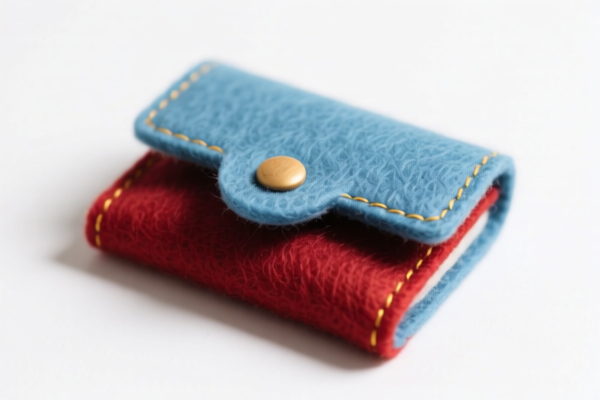
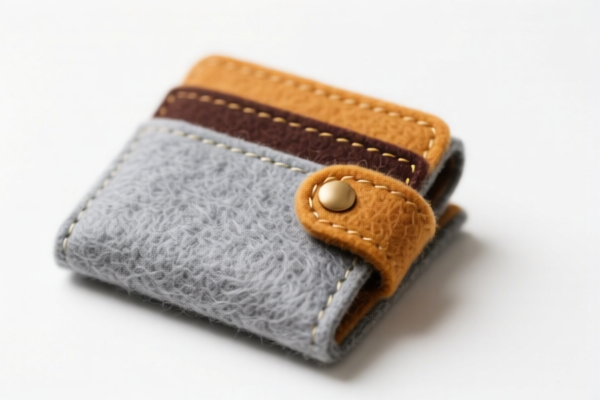

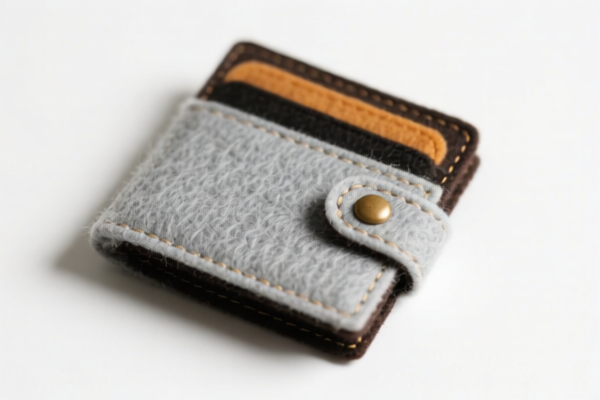
AI Analysis
🧶 Felt Vent (毛毡通风口)
🌐 HS Code Reference & Customs Clearance Guide | 2026 Latest Tariff Analysis | Professional Clearance Strategy 📌 I. Product Definition & Classification: Do You Really Understand "Felt Vents"?
Felt vents are specialized components typically used in HVAC systems, automotive interiors, or industrial machinery to allow airflow while filtering dust or reducing noise. In international trade, their classification hinges on two critical factors: 1. Material Structure: Is it a "non-woven fabric" (mechanically entangled fibers) or a "finished textile article"? 2. Specific End-Use: Is it a general accessory, a specific component for respirators, or just a generic textile product?
⚠️ Key Distinction Point: - If classified as Non-woven Fabric → Falls under Chapter 56 (
5603.xxxx) - If classified as Finished Textile Article → Falls under Chapter 63 (6307.xxxx) - Crucial Impact: The duty rate difference is massive, ranging from 17% to 35% for imports into the US from China.
📦 II. HS Code Classification Details (2026 Latest Tariff Authoritative Comparison)
Based on the provided data, here are the four possible classifications for Felt Vents:
| HS Code | Product Description | Summary/Logic | Total Tax Rate |
|---|---|---|---|
5603.94.90.50 |
Non-woven fabric products (Mechanically entangled) | Felt vents made of mechanically entangled non-woven fibers, matching weight and structural characteristics. | 35.0% |
5603.94.90.90 |
Non-woven fabric products (Other uses) | Felt vents classified as non-woven fabric made from short fibers,形态 as "other uses." | 35.0% |
6307.90.98.91 |
Other finished textile articles (General component) | Felt vents as finished components, made of felt, fitting the "catch-all" attribute under other finished articles. | 24.5% |
6307.90.98.75 |
Textile finished articles (Mask/Respirator accessory) | Felt vents as textile accessories matching the "other accessories/components" category for masks/respirators. | 17.0% |
🔍 Key Insight: - The lowest tax rate (17%) applies if the vent is specifically identified as an accessory for masks or respirators. - The highest tax rate (35%) applies if it is broadly classified as non-woven fabric. - The intermediate rate (24.5%) applies if it is treated as a general finished textile component.
💰 III. 2026 Latest Tariff Rate Breakdown (Including Surtaxes & Policy Add-ons)
✅ Applicable Country: United States (US) ✅ Origin: China (CN) ✅ Effective Time: Current regulations including Section 301 and IEEPA surcharges.
🎯 1. 5603.94.90.50 & 5603.94.90.90 —— Non-woven Fabric Products
Both codes share the same tax structure.
| Item | Content |
|---|---|
| Base Duty Rate | 0% (Ad valorem) |
| USITC Surtax (Section 301) | +25.0% |
| IEEPA Surtax (Section 122) | +10.0% |
| Total Tax Rate | 35.0% |
| Tax Calculation | CIF Value × 35% |
| De Minimis Eligibility | ❌ Not Eligible (High duty threshold usually excludes small packages from exemption) |
| Legal Basis Path | USITC:5603.94.90 → FOOTNOTE:9903.88.01 (301 Clause) → IEEPA:9903.01.25 (122 Clause) |
📌 Explanation: - Base 0%: Non-woven fabrics often have low base duties. - 25% Surtax: Standard USITC additional tariff for many textile/non-woven items from China. - 10% Surtax: Specific to Section 122 or IEEPA provisions affecting this category. - Total 35%: This is a very high effective rate. Misclassification here can severely impact profit margins.
🎯 2. 6307.90.98.91 —— Other Finished Textile Articles
| Item | Content |
|---|---|
| Base Duty Rate | 7.0% |
| USITC Surtax (Section 301) | +7.5% |
| IEEPA Surtax (Section 122) | +10.0% |
| Total Tax Rate | 24.5% |
| Tax Calculation | CIF Value × 24.5% |
| De Minimis Eligibility | ❌ Not Eligible |
| Legal Basis Path | USITC:6307.90.98.91 → FOOTNOTE:9903.88.01 → IEEPA:9903.01.25 |
📌 Explanation: - Higher base duty (7%) but significantly lower surtax (7.5%) compared to non-woven fabrics. - This classification is often more favorable if the product can be argued as a "finished component" rather than raw fabric.
🎯 3. 6307.90.98.75 —— Textile Finished Articles (Mask/Respirator Accessory)
| Item | Content |
|---|---|
| Base Duty Rate | 7.0% |
| USITC Surtax (Section 301) | 0.0% |
| IEEPA Surtax (Section 122) | +10.0% |
| Total Tax Rate | 17.0% |
| Tax Calculation | CIF Value × 17% |
| De Minimis Eligibility | ❌ Not Eligible |
| Legal Basis Path | USITC:6307.90.98.75 → IEEPA:9903.01.25 (Note: No 301 surtax listed in data) |
📌 Explanation: - Lowest Rate (17%): Achieved because the 301 surtax is 0% for this specific sub-category. - This is the most cost-effective classification IF the product is strictly used as an accessory for masks or respirators. - Risk: Requires robust documentation proving the "mask/respirator" connection. Generic "vents" may not qualify.
🛠️ IV. Customs Clearance Practical Advice (Battle-Tested Pitfall Guide)
✅ 1. Preparation Checklist (All Inevitable)
| Document | Must Provide | Explanation |
|---|---|---|
| ✅ Product Specification Sheet | ✔️ | Must clearly define material (felt vs. non-woven), weight per square meter, and dimensions. |
| ✅ Usage Declaration | ✔️ | Critical: State intended use. If for masks/respirators, emphasize this to target 6307.90.98.75. |
| ✅ Product Photos | ✔️ | Clear images showing texture (felt vs. woven/non-woven) and final form (finished component vs. fabric roll). |
| ✅ Commercial Invoice | ✔️ | Description must be precise: e.g., "Felt Vent Component for Respirator" vs. "Non-woven Fabric Sheet". |
| ✅ Packing List | ✔️ | Ensure no mixed shipments of different HS codes in one container without clear separation. |
✅ 2. Declaration Strategy (Key Mantras)
🔥 "Specify Use, Define Structure, Choose Rate Wisely!"
| Scenario | Recommended HS Code | Reason |
|---|---|---|
| Vent for Masks/Respirators | 6307.90.98.75 |
Lowest Tax (17%). Zero 301 surtax. Must prove end-use. |
| General HVAC/Auto Vent | 6307.90.98.91 |
Medium Tax (24.5%). Safe "finished article" classification. |
| Raw Felt/Non-woven Material | 5603.94.90.50 / .90 |
Highest Tax (35%). Avoid unless clearly unprocessed fabric. |
✅ 3. Special Handling Cases
| Case | Handling Advice |
|---|---|
| OEM Custom Vents | Provide end-user letters or design specs linking the vent to a specific product (e.g., mask manufacturer) to support 6307.90.98.75. |
| Mixed Shipments | If shipping both "fabric rolls" and "finished vents," separate them. Do not mix 5603 and 6307 codes in one BL without clear itemization. |
| USITC Footnote Checks | Always verify if the specific sub-heading has an active 301 surtax footnote. For 6307.90.98.75, data indicates 0% surtax, which is a huge advantage. |
🌍 V. Global Market Comparison (2026 Latest)
| Country/Region | Recommended HS Code | Est. Duty (China Origin) | Notes |
|---|---|---|---|
| 🇺🇸 USA | 6307.90.98.75 |
17.0% | Best rate if used for masks/respirators. |
| 🇺🇸 USA | 6307.90.98.91 |
24.5% | Safe default for general components. |
| 🇺🇸 USA | 5603.94.90.90 |
35.0% | Avoid if possible due to high surtax. |
| 🇨🇳 China | 5603.94.90.50 |
Varies (Import Duty) | Domestic clearance follows different rules. |
| 🇪🇺 EU | 6307.90 |
Varies (0-12%) | EU does not have Section 301/122 surtaxes. |
📌 Conclusion: - US Market: Classification is critical due to high punitive tariffs. - Strategy: Attempt to classify under
6307.90.98.75if the product is a mask/respirator accessory. If not,6307.90.98.91is safer than5603.
📌 VI. Common Mistakes & Pitfalls (Lessons Learned)
❌ Mistake 1: Classifying finished felt vents as "Non-woven Fabric" (5603)
👉 Result: 35% Tax. Unnecessary loss of profit.
👉 Fix: Prove it is a "finished article" (6307), not a raw material.
❌ Mistake 2: Ignoring the "End-Use" for 6307.90.98.75
👉 Result: Customs may reject the 17% rate and upgrade to 24.5% or 35%.
👉 Fix: Include "For Respirator/Mask Use" in the product description and provide supporting docs.
❌ Mistake 3: Assuming "Felt" always means Chapter 63
👉 Result: Confusion. Some felts are classified as non-wovens (5603) if mechanically entangled without stitching.
👉 Fix: Check the manufacturing process (needle punch vs. woven vs. stitched).
✅ Correct Approach:
"Felt Vent Component, Non-Woven Felt, For Use in Respirator Masks, Model XYZ, Made in China"
🎯 VII. Conclusion: Professional Declaration Saves Money!
🎯 Remember the Mantra:
🔹 "Finished Article > Raw Fabric" (Avoids 35%!) 🔹 "Mask Accessory > General Use" (Avoids 25% 301 Surcharge!) 🔹 "Total Tax: 17% (Best), 24.5% (Safe), 35% (Avoid)"
📌 Tips:
- If your volume is high, consider applying for an Advance Ruling from US Customs to confirm eligibility for 6307.90.98.75.
- Always keep photos and specs ready to prove the product is a "finished component" and not a raw fabric roll.
📣 Immediate Action:
📞 Consult your customs broker with the specific HS Code
6307.90.98.75if applicable. 🚀 Optimize your supply chain costs by mastering HS Code classification!
✨ Professional Clearance Starts with Accurate Classification! 💼 Every percentage point matters in the 2026 tariff landscape!
Customer Reviews
About HS Code Classification
The Harmonized System (HS) is an internationally standardized nomenclature developed by the World Customs Organization (WCO) to classify traded products. Over 200 countries use the HS system as the basis for customs tariffs, trade statistics, and import/export regulations.
Each HS code follows a hierarchical structure:
- Chapter (2 digits) — Broad category of goods (e.g., Chapter 84: Machinery and Mechanical Appliances)
- Heading (4 digits) — More specific grouping within the chapter
- Subheading (6 digits) — Internationally standardized breakdown, used by all WCO member countries
- National subdivisions (8-10 digits) — Country-specific extensions for further classification, such as US HTSUS 10-digit codes
Correct HS code classification is essential for smooth customs clearance, accurate duty payment, and compliance with trade regulations. Misclassification can lead to customs delays, overpayment of duties, or penalties.
When importing from CN to US, the applicable tariff rates may include:
- Most-Favored-Nation (MFN) rate — The standard duty rate applied to WTO members
- General rate — Applied to countries without trade agreements
- Trade remedy duties — Additional tariffs such as Section 301 (anti-dumping), Section 232 (national security), or countervailing duties
The information provided on this page is for reference purposes only. For official classification, please consult with your local customs authority or a licensed customs broker.