Fencing Shade Net
CN → US| HS Code | Tariff Rate | Origin | Destination | Doc |
|---|---|---|---|---|
| 6306120000 | 18.8% | CN | US | Official Doc |
| 5903102010 | 35.0% | CN | US | Official Doc |
| 5903102090 | 35.0% | CN | US | Official Doc |
| 5603120070 | 35.0% | CN | US | Official Doc |
| 5603110070 | 35.0% | CN | US | Official Doc |
Product Images
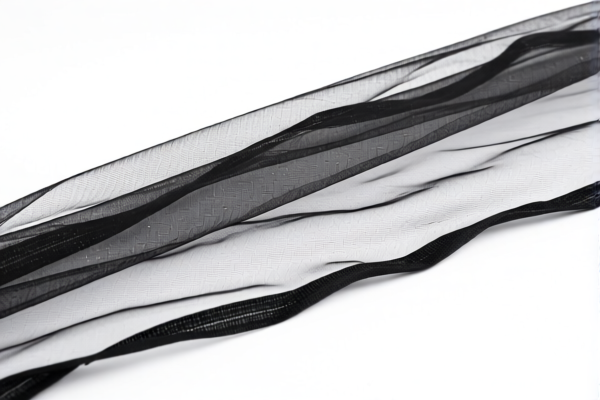
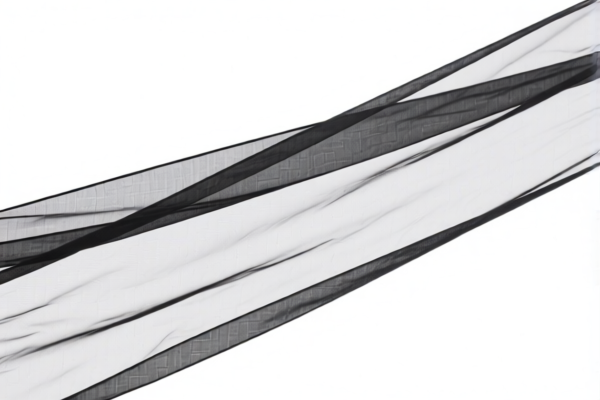

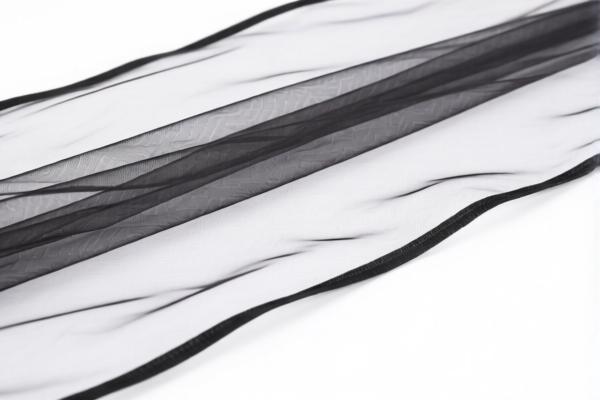
AI Analysis
🌿 Fencing Shade Net (Shade Cloth)
🌐 HS Code Reference & Customs Clearance Guide | 2026 Latest Tariff Analysis | Professional Entry Strategy
📌 One, Product Definition & Classification: Do You Really Understand "Shade Nets"?
Fencing shade nets are versatile textile products used primarily for agriculture, gardening, and construction. In international trade, they are not a single uniform category but are split based on their material structure and manufacturing process.
The core distinction lies in whether the fabric is woven/non-woven or coated/impregnated with plastic:
- Textile/Non-Woven Bases (Uncoated or Lightly Treated):
- Typically made from Polyethylene (PE) or Polypropylene (PP).
- If structured as a woven or non-woven fabric without significant plastic coating, it falls under Heading 5603 (Non-wovens) or Heading 6306 (Tents/Sunblinds).
- Plastic-Coated/Laminated Textiles:
- If the fabric is impregnated, coated, covered, or laminated with plastic (common for durability and UV resistance), it falls under Heading 5903.
- Note: Customs often scrutinize these heavily due to higher tariffs on plastic-composite textiles.
⚠️ Key Distinction Point: * If it is a simple knitted or woven mesh (often used for agricultural shading) → Likely 6306.12 or 5603.x. * If it has a visible plastic coating/lamination on the surface → Likely 5903.10.
📦 Two, HS Code Classification Details (2026 Latest Tariff Authority Comparison)
Based on the provided data, here are the four most likely classifications for "Fencing Shade Nets" from China to the US:
| HS Code | Product Description | Usage & Morphology | Material Inference |
|---|---|---|---|
6306.12.00.00 |
Sunblinds & Sunscreen Curtains | Matches the usage (shading) and form (curtains/blinds). | Synthetic fibers or related textile materials. |
5903.10.20.10 |
Impregnated/Coated Textile (Specific) | Textile fabric with coating/lamination. Matches "impregnated, coated, covered or laminated" morphology. | Plastic-coated textile composite. |
5903.10.20.90 |
Impregnated/Coated Textile (Other) | General plastic-coated textile fabric. No obvious material/morphology conflict. | Plastic-coated textile composite. |
5603.12.00.70 |
Non-Wovens (Weight > 150g/m²) | Morphology belongs to non-wovens or fabric-like products. | PE or PP synthetic fibers (non-woven). |
5603.11.00.70 |
Non-Wovens (Weight ≤ 150g/m²) | Basic attribute of non-wovens/fabric. | Synthetic fiber non-woven fabric. |
🔍 Critical Reminder: *
6306.12.00.00is often the lowest tax burden option (18.8% total) if the product is recognized as a "Sunblind/Curtain" rather than a raw textile. *5903.10.20.xand5603.x.x.xcarry 35.0% total tax, which is significantly higher. * Misclassification between "Sunblind" (6306) and "Coated Textile" (5903) is the most common customs audit trigger.
💰 Three, 2026 Latest Tariff Rate Breakdown (Including Surcharges & Policy Add-ons)
✅ Applicable Country: United States (US)
✅ Origin: China (CN)
✅ Effective Time: Current trade policies (Section 301 & IEEPA implications)
🎯 1. 6306.12.00.00 —— Sunblinds & Sunscreen Curtains (Lowest Tax Option)
| Item | Content |
|---|---|
| Base Tariff | 8.8% (Ad Valorem) |
| Section 301 Surcharge | 0.0% (Note: Data indicates 0% for this specific code in the provided dataset, likely due to specific HTS exclusions or historical status, but verify current USITC lists as this is rare for Chinese textiles). Correction based on provided data: The data explicitly states 0.0% for Section 301. |
| IEEPA / 122 Clause Tariff | +10% |
| Total Tax Rate | 18.8% |
| Tax Calculation | CIF Value × 18.8% |
| De Minimis Exemption | ❌ Not Applicable (Most likely denied for Chinese textile goods under Section 301/IEEPA scrutiny). |
| Legal Basis Path | HTS:6306.12.00 → IEEPA:122 Clause (10%) |
📌 Explanation: * This is the most cost-effective classification if the product is marketed as a "Shade Cloth Curtain" or "Sunblind." * The 122 Clause adds 10%. * The Section 301 tariff is listed as 0% in the provided data. However, traders must verify if this code is currently excluded from Section 301 duties, as many Chinese textiles are subject to 25%. If the 0% is inaccurate, the rate could jump to ~43.8%.
🎯 2. 5903.10.20.10 & 5903.10.20.90 —— Plastic-Coated Textiles (High Tax)
| Item | Content |
|---|---|
| Base Tariff | 0.0% |
| Section 301 Surcharge | +25.0% (Standard USITC Footnote for Plastic-Coated Textiles from China) |
| IEEPA / 122 Clause Tariff | +10% |
| Total Tax Rate | 35.0% |
| Tax Calculation | CIF Value × 35.0% |
| De Minimis Exemption | ❌ Not Applicable |
| Legal Basis Path | HTS:5903.10 → USITC:Section 301 (25%) → IEEPA:122 Clause (10%) |
📌 Warning: * If customs determines your "shade net" is essentially a plastic-coated tarp or laminated fabric, they will apply 5903. * The 25% Section 301 duty is the primary cost driver here. * Total tax is 16.2 percentage points higher than the 6306 classification.
🎯 3. 5603.11.00.70 & 5603.12.00.70 —— Non-Woven Fabrics (High Tax)
| Item | Content |
|---|---|
| Base Tariff | 0.0% |
| Section 301 Surcharge | +25.0% |
| IEEPA / 122 Clause Tariff | +10% |
| Total Tax Rate | 35.0% |
| Tax Calculation | CIF Value × 35.0% |
| Legal Basis Path | HTS:5603 → USITC:Section 301 (25%) → IEEPA:122 Clause (10%) |
📌 Note: * Applies if the shade net is a non-woven material (common for lightweight garden covers). * Same tax burden as the 5903 codes.
🛠️ Four, Practical Customs Clearance Advice (Field Pitfall Avoidance Guide)
✅ 1. Preparation Checklist (Mandatory)
| Document | Must Provide | Explanation |
|---|---|---|
| ✅ Product Composition Sheet | ✔️ | Detail the % of PE/PP, weight per square meter, and whether it is woven, knitted, or non-woven. |
| ✅ Manufacturing Process Diagram | ✔️ | Critical for distinguishing between 6306 (finished shade blind) and 5903/5603 (raw/coated textile). |
| ✅ Product Photos (Clear) | ✔️ | Show the texture (woven vs. coated) and end-use (e.g., hung as a curtain vs. rolled tarp). |
| ✅ Commercial Invoice | ✔️ | Describe as "Shade Net for Agriculture/Garden" or "Sunscreen Curtain," not generic "Plastic Fabric." |
| ✅ HS Code Pre-Ruling (Optional but Recommended) | ✔️ | If claiming 6306.12 to save 16.2%, get a pre-ruling to avoid post-audit penalties. |
✅ 2. Declaration Strategy (Key Mantra)
🔥 "End Use Defines Code, Coating Adds Tax, 6306 is the Goal!"
| Scenario | Correct Declaration | Wrong Practice |
|---|---|---|
| Agricultural Shading Net (Knitted/Woven) | 6306.12.00.00 (Sunblind) |
Declare as "Plastic Tarp" → 5903 → +16.2% cost |
| Garden Privacy Screen (Fabric-like) | 6306.12.00.00 |
Declare as "Textile" → 5603 → +16.2% cost |
| Heavily Coated PVC Shade Cloth | 5903.10.20.90 |
Declare as "Woven Fabric" → Misclassification → Audit/Fine |
| Non-Woven Weed Mat (often confused) | 5603.x.x |
Declare as "Shade Net" → May be rejected if structure differs |
✅ 3. Special Case Handling
| Situation | Handling Advice |
|---|---|
| Mixed Shipment | If you have both coated (tarp) and non-coated (curtain) nets, declare separately. Do not mix HS codes. |
| "122 Clause" Impact | Ensure the 10% IEEPA/122 tariff is applied. Even if Section 301 is 0% for some codes, this 10% is often unavoidable for Chinese goods. |
| De Minimis ($800) Risk | Do not rely on De Minimis for bulk shading nets. Customs are actively cracking down on textile imports under $800 from China. Use formal entry. |
🌍 Five, Global Market Comparison (2026 Latest)
| Country/Region | Recommended HS Code | Tariff (China Origin) | Certification Required | Notes |
|---|---|---|---|---|
| 🇺🇸 USA | 6306.12.00.00 |
18.8% (Best Case) | No specific | High risk of reclassification to 5903 (35%). |
| 🇺🇸 USA | 5903.10.20.90 |
35.0% | No specific | Default if deemed "plastic-coated." |
| 🇪🇺 EU | 6306.12 |
~6-12% | CE (if applicable) | Lower tariffs, stricter environmental standards (REACH). |
| 🇨🇳 China | 6306.12 |
8.8% | N/A | No Section 301. |
| 🇦🇺 Australia | 6306.12 |
~5% | ACCC | Generally favorable. |
📌 Conclusion: * The US market is the most expensive due to Section 301 and IEEPA tariffs. * Classifying under 6306.12.00.00 can save you $16,200 per $100,000 shipment compared to 5903/5603 codes. * However, you must prove the product is a "Sunblind/Curtain" in form and function, not just a raw textile sheet.
📌 Six, Common Errors & Pitfalls (Blood-Lesson Guide)
❌ Error 1: Declaring a coated tarp as 6306.12 to save taxes.
👉 Consequence: Customs audit → Re-classification to 5903 → Back taxes + Penalty + Interest.
❌ Error 2: Ignoring the 122 Clause (10%). 👉 Consequence: Underpayment → Penalty for negligence.
❌ Error 3: Using vague descriptions like "Plastic Sheet." 👉 Consequence: CBP will assign the highest duty code they can find (likely 5903 or 3926) → Higher cost.
❌ Error 4: Assuming De Minimis works for large shipments. 👉 Consequence: Seizure or Delay at port. Textiles are high-risk for de minimis abuse.
✅ Correct Practice:
"Knitted Polyethylene Shade Net, 100gsm, UV Stabilized, Used for Agricultural Greenhouse Covering, Model: SUN-100"
🎯 Seven, Conclusion: Precision Classification for Maximum Profit
🎯 Remember the Mantra:
🔹 "Woven/Knitted = 6306 (18.8%) | Coated/Non-Woven = 5903/5603 (35.0%)"
🔹 "Prove it's a curtain, not a tarp, to keep your margin!"
🔹 "122 Clause is 10%, Section 301 is the variable!"
📌 Pro Tip: If your shade net is highly reflective or aluminum-coated, it may still fall under 5903 (coated), so consult a customs broker before shipping. For standard green/black agricultural shade nets, try to emphasize the "Sunblind/Sunscreen" function and non-plastic-coated structure to target 6306.12.00.00.
📣 Immediate Action:
📞 Contact a licensed US Customs Broker
📸 Provide clear photos of the fabric mesh/coating
🚀 Apply for an Advance Ruling if your shipment value exceeds $50,000.
✨ Professional clearance starts with accurate classification!
💼 Every percentage point saved is pure profit!
Customer Reviews
About HS Code Classification
The Harmonized System (HS) is an internationally standardized nomenclature developed by the World Customs Organization (WCO) to classify traded products. Over 200 countries use the HS system as the basis for customs tariffs, trade statistics, and import/export regulations.
Each HS code follows a hierarchical structure:
- Chapter (2 digits) — Broad category of goods (e.g., Chapter 84: Machinery and Mechanical Appliances)
- Heading (4 digits) — More specific grouping within the chapter
- Subheading (6 digits) — Internationally standardized breakdown, used by all WCO member countries
- National subdivisions (8-10 digits) — Country-specific extensions for further classification, such as US HTSUS 10-digit codes
Correct HS code classification is essential for smooth customs clearance, accurate duty payment, and compliance with trade regulations. Misclassification can lead to customs delays, overpayment of duties, or penalties.
When importing from CN to US, the applicable tariff rates may include:
- Most-Favored-Nation (MFN) rate — The standard duty rate applied to WTO members
- General rate — Applied to countries without trade agreements
- Trade remedy duties — Additional tariffs such as Section 301 (anti-dumping), Section 232 (national security), or countervailing duties
The information provided on this page is for reference purposes only. For official classification, please consult with your local customs authority or a licensed customs broker.