Ferrosilicon
CN → US| HS Code | Tariff Rate | Origin | Destination | Doc |
|---|---|---|---|---|
| 7202215000 | 36.5% | CN | US | Official Doc |
| 7202217500 | 36.9% | CN | US | Official Doc |
Product Images
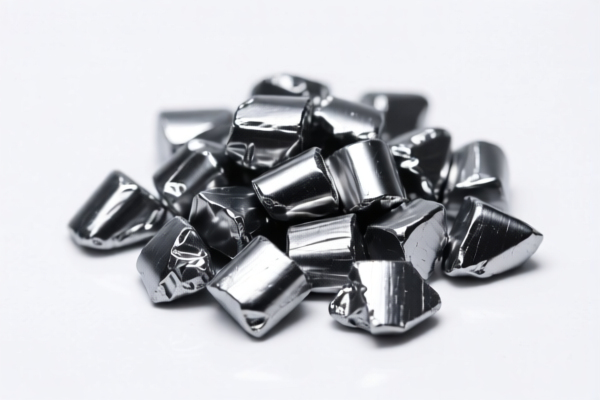
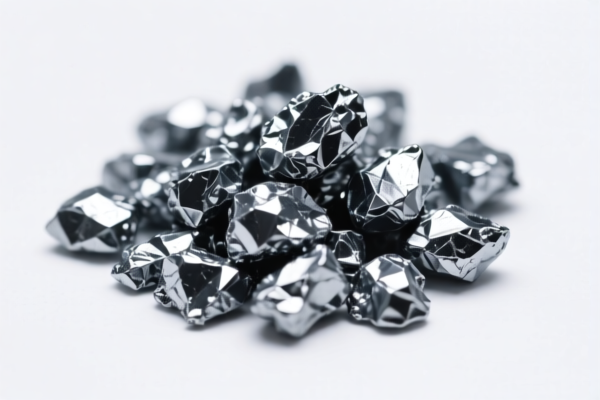
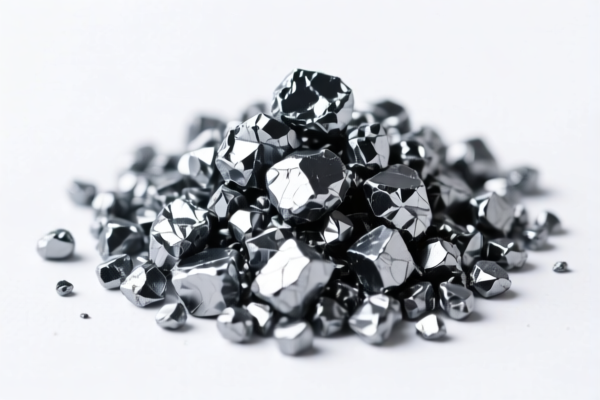
AI Analysis
⚗️ Ferrosilicon (High-Silicon Ferroalloys)
🌐 HS Code Reference & Customs Clearance Guide | 2026 Latest Tariff Analysis | Professional Entry Strategies
📌 I. Product Definition & Classification: Do You Really Understand "Ferrosilicon"?
Ferrosilicon is a ferroalloy of iron and silicon. It is primarily used as a deoxidizer in steelmaking and as an alloying element to improve magnetic properties or corrosion resistance. In international trade, it is strictly classified by Silicon (Si) Content by Weight.
Key Distinction based on Si%:
- High Silicon (55% - 80%): Typically used in general steelmaking and casting. Subject to specific additional tariffs in certain markets (e.g., US Section 301).
- Very High Silicon (> 80%): Often used in electronic-grade silicon production or special alloys. May have different tariff treatments depending on the specific subheading.
⚠️ Critical Identification Point:
- Si ≤ 80%: Generally falls under 7202.21 subheadings.
- Si > 80%: Falls under 7202.29 subheadings (in full HS nomenclature), but specific US HTS codes vary by percentage brackets.
📦 II. HS Code Classification Details (Based on Provided Data)
The provided data specifies two distinct US HTS Codes for Ferrosilicon. Note that the classification is strictly tied to the silicon percentage.
| HS Code | Product Description | Silicon Content | Key Characteristics |
|---|---|---|---|
7202.21.50.00 |
Ferrosilicon: >55% Si but ≤80% Si: Other | 55% < Si ≤ 80% | Standard industrial grade. Most common for deoxidation. |
7202.21.75.00 |
Ferrosilicon: >80% Si but ≤90% Si | 80% < Si ≤ 90% | High-purity grade. Often used for silicon metal production or specialized alloys. |
🔍 Important Note:
- The provided data does not include ferrosilicon with Si ≤ 55% (which would be7202.21.10or similar).
- The provided data does not include ferrosilicon with Si > 90%.
- You must verify the exact silicon content from the Mill Certificate or Safety Data Sheet (SDS) to select the correct code.
💰 III. 2026 Latest Tariff Rate Breakdown (US Import)
✅ Applicable Country: United States (US)
✅ Origin: China (CN) (Implied by the "Additional Duty" structure typical of Section 301)
✅ Effective Date: Current as of the provided data
🎯 1. 7202.21.50.00 – Ferrosilicon (55% < Si ≤ 80%)
| Item | Content |
|---|---|
| Base Duty Rate | 1.5% (Ad Valorem) |
| Additional Duty (Section 301) | +25.0% |
| Total Duty Rate | 26.5% |
| Tax Calculation | CIF Value × 26.5% |
| Legal Basis | Section 301 of the Trade Act of 1974 (List 3/4A items) |
📌 Explanation:
- Ferrosilicon with silicon content between 55% and 80% is subject to the 25% additional duty under US trade policy against Chinese imports.
- This is a high-cost item for importers. The base rate (1.5%) is negligible compared to the additional duty.
- No De Minimis Exemption: These goods are not eligible for the $800 de minimis exemption if shipped in bulk or commercial quantities.
🎯 2. 7202.21.75.00 – Ferrosilicon (80% < Si ≤ 90%)
| Item | Content |
|---|---|
| Base Duty Rate | 0.0% |
| Additional Duty (Section 301) | 0.0% |
| Total Duty Rate | 0.0% |
| Tax Calculation | $0 |
| Legal Basis | Exempt from Section 301 duties under current HTSUS listings |
📌 Explanation:
- Ferrosilicon with silicon content between 80% and 90% currently enjoys zero tariff.
- This makes it a cost-effective alternative for importers compared to the 55-80% grade, provided the application allows for higher silicon content.
- Warning: Do not misclassify lower-silicon goods as higher-silicon to avoid tariffs. Customs may inspect chemical composition.
🛠️ IV. Customs Clearance Practical Advice (Avoid Pitfalls)
✅ 1. Essential Documentation Checklist
| Document | Required? | Notes |
|---|---|---|
| ✅ Mill Certificate / Analysis Report | YES | Must explicitly state Silicon (Si) and Iron (Fe) percentages. |
| ✅ Commercial Invoice | YES | Must clearly describe the product as "Ferrosilicon" and specify Si%. |
| ✅ Packing List | YES | Net weight and gross weight must match. |
| ✅ Bill of Lading / Air Waybill | YES | Standard shipping docs. |
| ✅ Customs Declaration Form | YES | HS Code must match the Si% exactly. |
📌 Key Tip:
- Misclassification Risk: If you declare7202.21.50.00(26.5% tax) but your product is actually7202.21.75.00(0% tax), Customs may investigate for fraud.
- Correct Misclassification: If you declare7202.21.75.00but your product is 70% Si, you will owe back taxes, penalties, and interest. Accuracy is paramount.
✅ 2. Declaration Strategy
| Scenario | Correct Declaration | Wrong Declaration | Consequence |
|---|---|---|---|
| Si = 72% | 7202.21.50.00 |
7202.21.75.00 |
Underpayment of tax. Penalties + Back taxes. |
| Si = 85% | 7202.21.75.00 |
7202.21.50.00 |
Overpayment of tax. Can request refund, but delays shipment. |
| Si = 50% | Not in Data | 7202.21.50.00 |
Incorrect Classification. May be reclassified and taxed differently. |
🔥 Golden Rule:
"Check the Silicon % on the Mill Cert. If >80%, it’s Free. If ≤80%, it’s 26.5%."
🌍 V. Global Market Comparison (2026 Outlook)
| Market | Recommended HS Code (US) | Tariff (CN Origin) | Notes |
|---|---|---|---|
| 🇺🇸 USA | 7202.21.50.00 |
26.5% | High duty on 55-80% Si. |
| 🇺🇸 USA | 7202.21.75.00 |
0.0% | Zero duty on 80-90% Si. |
| 🇨🇳 China | 7202.21 |
Varies | Export duties may apply. |
| 🇪🇺 EU | 7202.21 |
Varies | Check for anti-dumping duties. |
📌 Conclusion:
- US Importers face a significant cost difference between the two grades.
- Strategy: If your manufacturing process allows, consider using 80-90% Si Ferrosilicon to avoid the 26.5% duty, provided it doesn’t affect product quality.
📌 VI. Common Errors & Pitfalls (Lessons Learned)
❌ Error 1: Declaring 70% Si Ferrosilicon as 85% Si to save taxes.
👉 Consequence: Customs audit, penalty, and possible import ban.
❌ Error 2: Ignoring the Mill Certificate.
👉 Consequence: If the Si% is borderline (e.g., 79.5% vs 80.5%), the wrong code leads to immediate audit.
❌ Error 3: Assuming all Ferrosilicon is taxed the same.
👉 Consequence: Overpaying 26.5% on a product that qualifies for 0%.
✅ Correct Approach:
"Verify Silicon Content. Match HS Code. Declare Truthfully."
🎯 VII. Conclusion: Professional Clearance, Cost Efficiency
🎯 Key Takeaway:
🔹 55-80% Si: Tax 26.5%. High cost.
🔹 80-90% Si: Tax 0.0%. Low cost.
🔹 Action: Consult your metallurgist. Can you use 80-90% Si? If yes, switch to7202.21.75.00to save 26.5% on every shipment.
📌 Pro Tip:
- Always request a recent Mill Analysis Report from your supplier.
- If your Si% is exactly 80%, clarify with the supplier whether it is "80.0%" or "79.9%". The boundary is critical.
- Consider Advance Rulings from US Customs if you have large volumes or borderline products.
📣 Immediate Action:
📞 Contact your customs broker with the Mill Certificate.
🚀 Optimize your supply chain by choosing the 0% duty grade if technically feasible.
💼 Save 26.5% on every ton of Ferrosilicon imported into the US.
✨ Precision in Classification, Profit in Clearance!
💼 Your Bottom Line Depends on the Decimal Point!
Customer Reviews
About HS Code Classification
The Harmonized System (HS) is an internationally standardized nomenclature developed by the World Customs Organization (WCO) to classify traded products. Over 200 countries use the HS system as the basis for customs tariffs, trade statistics, and import/export regulations.
Each HS code follows a hierarchical structure:
- Chapter (2 digits) — Broad category of goods (e.g., Chapter 84: Machinery and Mechanical Appliances)
- Heading (4 digits) — More specific grouping within the chapter
- Subheading (6 digits) — Internationally standardized breakdown, used by all WCO member countries
- National subdivisions (8-10 digits) — Country-specific extensions for further classification, such as US HTSUS 10-digit codes
Correct HS code classification is essential for smooth customs clearance, accurate duty payment, and compliance with trade regulations. Misclassification can lead to customs delays, overpayment of duties, or penalties.
When importing from CN to US, the applicable tariff rates may include:
- Most-Favored-Nation (MFN) rate — The standard duty rate applied to WTO members
- General rate — Applied to countries without trade agreements
- Trade remedy duties — Additional tariffs such as Section 301 (anti-dumping), Section 232 (national security), or countervailing duties
The information provided on this page is for reference purposes only. For official classification, please consult with your local customs authority or a licensed customs broker.