Fertilizer
CN → US| HS Code | Tariff Rate | Origin | Destination | Doc |
|---|---|---|---|---|
| 3105200000 | 35.0% | CN | US | Official Doc |
| 3102100050 | 35.0% | CN | US | Official Doc |
| 3102900100 | 35.0% | CN | US | Official Doc |
| 3104200050 | 35.0% | CN | US | Official Doc |
| 3104200010 | 35.0% | CN | US | Official Doc |
Product Images
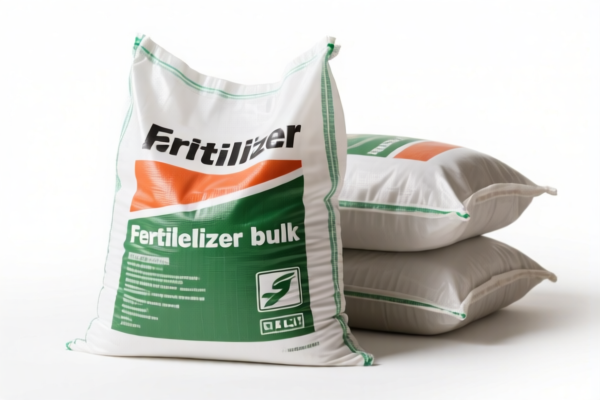

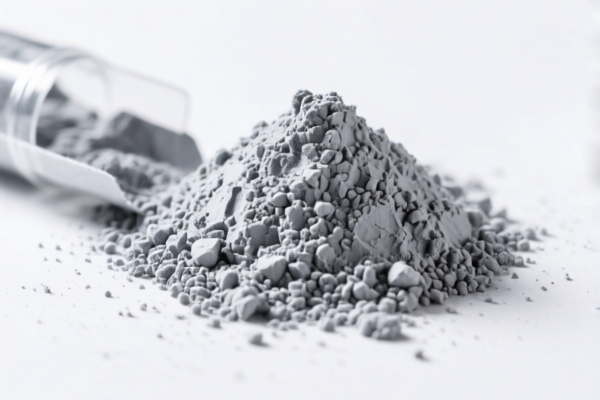
AI Analysis
🌱 Fertilizer (Mineral or Chemical) | 2026 Trade Compliance & Customs Guide
🚢 Global HS Code Reference & Duty Breakdown | China-Origin Strategic Analysis
⚠️ Critical 35% Tariff Structure: Avoiding the "Heavy Duty" Trap
Fertilizers are the backbone of global agriculture, ensuring food security through nutrient supply. In international trade, Mineral or Chemical Fertilizers are strictly categorized under Chapter 31.
⚠️ The "China-25%+" Reality: All fertilizers originating from China and exported to the US currently face a combined tariff rate of 35.0% due to the convergence of "Additional Tariffs" and "Section 122 Clause Tariffs".
Total Duty = 0% (Base) + 25% (Section 301 Additional) + 10% (Section 122) = 35%
There are NO exemptions for de minimis or standard base rates for these specific HS codes.
📦 II. HS Code Classification Matrix (Chapter 31)
Based on the specific commodity composition, fertilizers are sorted into two main families: Nitrogen-based and Potassium-based. Misclassification can lead to severe customs delays or penalties.
| HS Code | Product Description & Category | Key Characteristics | Total Duty Rate |
|---|---|---|---|
| 3105.20.00.00 | Fertilizer (Mineral/Chemical Category) | General mineral/chemical fertilizer not fitting specific N/K sub-categories. Broad inference category. | 35.0% |
| 3102.10.00.50 | Nitrogenous Fertilizers ("Other") | Specifically pure Ammonium Nitrate or similar "Other" Nitrogenous forms. High solubility. | 35.0% |
| 3102.90.01.00 | Nitrogenous Fertilizers ("Other") | Broad "Other" Nitrogenous category, excluding specific urea/ammonium nitrate exclusions. | 35.0% |
| 3104.20.00.50 | Potash Fertilizers (Mineral/Chemical) | Mineral or chemical Potassium salts (e.g., Muriate of Potash) not in specific sub-lists. | 35.0% |
| 3104.20.00.10 | Potash Fertilizers (Pure/K+) | Specific Potassium salts, likely high-grade MOP (Muriate of Potash) or SOP (Sulphate of Potash). | 35.0% |
🔍 Classification Logic: * Nitrogenous (3102 Series): Look for products rich in Nitrogen (N). If it's Ammonium Nitrate or a specific "Other" Nitrogen form, it falls here. * Potash (3104 Series): Look for products rich in Potassium Oxide (K₂O). Muriate of Potash (MOP) is the most common example. * General (3105 Series): If the fertilizer is a complex compound (NPK) that doesn't fit the specific "Nitrogen" or "Potash" definitions strictly, it often falls here, but check specific composition carefully.
💰 III. 2026 Duty Structure Deep Dive (China Origin → US)
✅ Applicable Country: USA (US) ✅ Origin: China (CN) ✅ Effective Time: Current (2025-2026 Season)
🎯 1. The 35% "Triple Penalty" Breakdown
| Tax Component | Rate | Legal Basis / Source | Description |
|---|---|---|---|
| Base Duty (MFN) | 0.0% | HTSUS Chapter 31 | No standard tariff for fertilizers under normal conditions. |
| "Section 301" Additional | +25.0% | USITC / Trade Action | The standard "China Tariff" applied to most Chinese goods (List 3 & 4). |
| "Section 122" Clause | +10.0% | Executive Order / Trade Policy | Specific tariff targeting Chinese agricultural inputs (often linked to trade disputes). |
| 🔴 TOTAL EFFECTIVE DUTY | 35.0% | Sum of Above | Must be paid on CIF Value. |
📌 Why the 10% "Section 122"? This specific 10% tariff is a distinct layer often applied to agricultural commodities to counter specific trade imbalances. Unlike standard "Section 301" duties, this is a targeted clause. It is non-negotiable for these HS codes.
🛠️ IV. Customs Clearance Strategy & Practical Advice
✅ 1. Essential Documentation Checklist
To avoid "Holding" or "Seizure" due to misclassification, prepare the following:
| Document | Requirement | Critical Detail |
|---|---|---|
| ✅ Commercial Invoice | Must be precise | Clearly state: "Mineral Fertilizer", "Nitrogenous Fertilizer", or "Potash Fertilizer". Do not use vague terms like "Agricultural Product". |
| ✅ Material Safety Data Sheet (MSDS) | Mandatory | Classify as "Non-Hazardous" or "Flammable" correctly. Ammonium Nitrate is often regulated (Explosives risk). |
| ✅ Certificate of Origin (CO) | Crucial | Must explicitly state "Made in China". If not, duty calculation fails. |
| ✅ Composition Analysis | High Priority | Must show % Nitrogen (N), % Potassium (K₂O), and other elements. This determines if it's 3102 or 3104. |
| ✅ Packing List | Accurate | Weight must match invoice. Fertilizers are heavy; weight discrepancies trigger audits. |
✅ 2. Declaration Tactics (The "Do's and Don'ts")
🔥 Golden Rule: "Be Specific, Not General!"
| Scenario | Correct Declaration | Wrong Declaration | Risk |
|---|---|---|---|
| Pure Ammonium Nitrate | 3102.10.00.50 |
"Fertilizer" (Generic) | 35% Duty + Audit/Seizure |
| Muriate of Potash (MOP) | 3104.20.00.10 |
"Potassium Fertilizer" | 35% Duty + Classification Review |
| Complex NPK Mixture | 3105.20.00.00 (or specific) |
"Other Fertilizer" | 35% Duty + Delay |
| OEM Custom Blend | Provide Recipe/Specs | Claim "General" | High Penalty |
✅ 3. Special Case: Explosive Risk (Ammonium Nitrate)
- Risk:
3102.10.00.50(Ammonium Nitrate) is often classified as an explosive precursor in certain jurisdictions. - Action: Ensure the Nitrogen content is below 28% (if stabilized) or provide a Certificate of Stability to prevent the container from being flagged as a "Bombing Material" by the Coast Guard or DOT.
🌍 V. Global Market Comparison (2026)
| Destination | Recommended HS Code | Base Rate | China Add-on | Total Cost | Notes |
|---|---|---|---|---|---|
| 🇺🇸 USA | 3102/3104/3105 Series | 0% | +35% (25% + 10%) | 35.0% | Highest Barrier. |
| 🇪🇺 EU | 3102/3104 Series | 0-4% | 0% (Mostly) | ~2% | Stable trade, high safety regs. |
| 🇯🇵 Japan | 3102/3104 Series | 0-3% | 0% | ~1.5% | Strict quality checks. |
| 🇧🇷 Brazil | 3102/3104 Series | 0-8% | 0% | ~4% | High volume, lower duty. |
📌 Conclusion: The US market is the most expensive for Chinese fertilizers due to the 35% combined duty.
📌 VI. Common Pitfalls & Solutions (Lessons Learned)
❌ Mistake 1: Vague Product Name * Description: Labeling as "Fertilizer" without specifying N or K content. * Consequence: Customs will assume the highest possible duty or require a costly re-inspection. * Fix: Use precise chemical names (e.g., "Ammonium Nitrate, 33.5% N").
❌ Mistake 2: Ignoring the "Section 122" Clause * Description: Calculating only the 25% tariff. * Consequence: Underpayment by 10%, leading to fines and shipment delays. * Fix: Always calculate Base (0%) + 25% + 10% = 35%.
❌ Mistake 3: Mixing HS Codes in One Container * Description: Putting Potash (3104) and Nitrogen (3102) in the same container without separation. * Consequence: Customs may seize the whole shipment if one part is misdeclared. * Fix: Split shipments or declare separate line items clearly.
🎯 VII. Final Verdict & Action Plan
🚀 Strategic Recommendations
- Verify Origin: If possible, source from non-China countries (e.g., Jordan, Canada, Morocco) to potentially avoid the 35% tariff.
- Pre-Audit: Before shipping, request a Binding Ruling from US Customs (CBP) to confirm the exact HS Code.
- Cost Calculation: Factor in 35% of the CIF value immediately. Do not underestimate the cost of entry.
- Compliance: Ensure MSDS and Stability Certificates are ready to avoid "Explosive" flagging.
💡 Pro Tip: "Fertilizer is a volume game. With a 35% duty, the margin is razor-thin. Only ship if the landed cost calculation shows a positive margin after the full 35% deduction."
✨ Secure Your Supply Chain. 💼 Accurate HS Codes Save Thousands in Unnecessary Taxes! 📞 Contact your freight forwarder today for a pre-clearance review.
Customer Reviews
About HS Code Classification
The Harmonized System (HS) is an internationally standardized nomenclature developed by the World Customs Organization (WCO) to classify traded products. Over 200 countries use the HS system as the basis for customs tariffs, trade statistics, and import/export regulations.
Each HS code follows a hierarchical structure:
- Chapter (2 digits) — Broad category of goods (e.g., Chapter 84: Machinery and Mechanical Appliances)
- Heading (4 digits) — More specific grouping within the chapter
- Subheading (6 digits) — Internationally standardized breakdown, used by all WCO member countries
- National subdivisions (8-10 digits) — Country-specific extensions for further classification, such as US HTSUS 10-digit codes
Correct HS code classification is essential for smooth customs clearance, accurate duty payment, and compliance with trade regulations. Misclassification can lead to customs delays, overpayment of duties, or penalties.
When importing from CN to US, the applicable tariff rates may include:
- Most-Favored-Nation (MFN) rate — The standard duty rate applied to WTO members
- General rate — Applied to countries without trade agreements
- Trade remedy duties — Additional tariffs such as Section 301 (anti-dumping), Section 232 (national security), or countervailing duties
The information provided on this page is for reference purposes only. For official classification, please consult with your local customs authority or a licensed customs broker.