Fiber Optic Cable
CN → US| HS Code | Tariff Rate | Origin | Destination | Doc |
|---|---|---|---|---|
| 8544700000 | 35.0% | CN | US | Official Doc |
| 9001100085 | 41.7% | CN | US | Official Doc |
| 9001100075 | 41.7% | CN | US | Official Doc |
| 8543908885 | 85.0% | CN | US | Official Doc |
Product Images
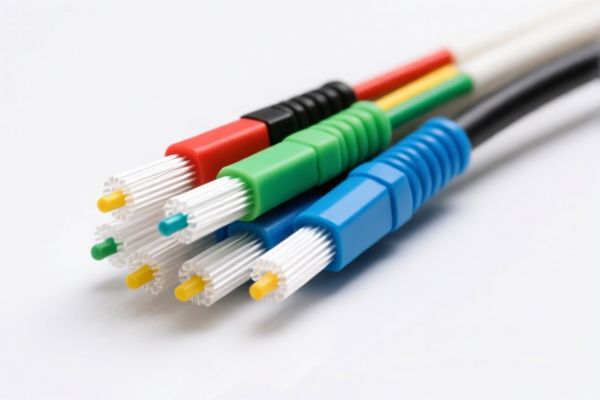
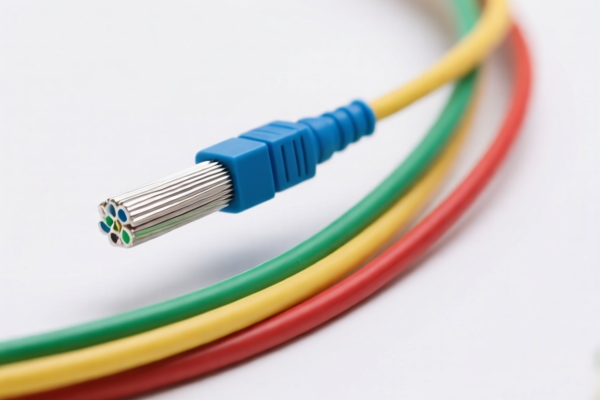
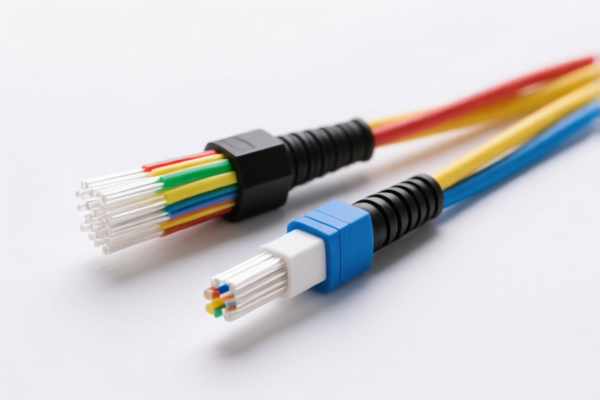
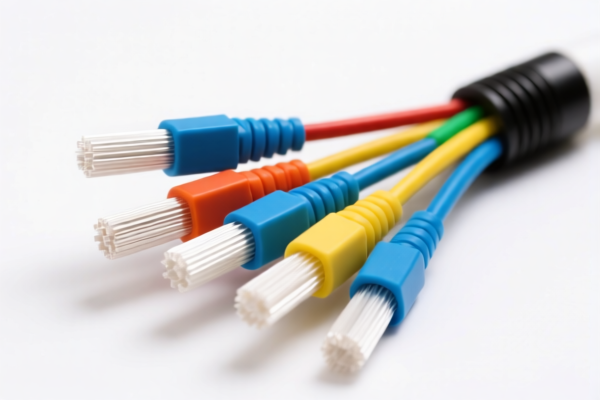
AI Analysis
🔌 Fiber Optic Cables: HS Code Classification & U.S. Customs Clearance Guide (2026)
🌐 HS Code Reference & Clearance Strategy | 2026 Tariff Rates & Compliance
📌 I. Product Definition & Classification: What Exactly is a "Fiber Optic Cable"?
In international trade, Fiber Optic Cables are not a single monolithic category. Their classification depends strictly on their material composition, physical form, and electrical characteristics. Misclassification is the #1 cause of duty overpayment or customs delays for this product.
There are two primary classification paths:
1. Optical Fibers as Optical Goods (Chapter 90): If the core function is light transmission without electrical conduction.
2. Insulated Wires/Cables (Chapter 85): If the cable structure resembles traditional electrical wiring (e.g., insulated conductors), even if the core is fiber.
3. Parts/Accessories (Chapter 85/90): If it is a sub-component for a larger machine.
⚠️ Key Distinction Point:
- Pure Optical Nature: Light signal transmission only → Chapter 90 (9001).
- Cable Structure with Insulation: Resembles electrical cable, often used for power/data hybrid or purely structured cabling → Chapter 85 (8544).
- Component Status: Not a standalone cable but a part of a device → Chapter 85/90 (Parts).
📦 II. HS Code Classification Matrix (Based on Provided Data)
| HS Code | Product Description | Summary from Data | Tax Detail (Breakdown) | Total Tax |
|---|---|---|---|---|
| 8544.70.00.00 | Fiber Optic Cable (Optical Material) | Matches the "optical cable" classification directly due to material being optical fiber. | Base: 0.0% Add-on (Sec 301): 25.0% Add-on (122 Clause): 10% |
35.0% |
| 9001.10.00.85 | Fiber Optic Cable (Unspecified Material) | Classified as "Other optical fibers & bundles" due to unspecified material. | Base: 6.7% Add-on (Sec 301): 25.0% Add-on (122 Clause): 10% |
41.7% |
| 9001.10.00.75 | Fiber Optic Cable (Polymer/Plastic Coated) | Fits characteristics of optical fibers bundles covered by plastic/polymer. | Base: 6.7% Add-on (Sec 301): 25.0% Add-on (122 Clause): 10% |
41.7% |
| 8543.90.88.85 | Fiber Optic Cable (Electrical Component) | Classified as "Other parts" for electrical equipment. | Base: 0.0% Add-on (Sec 301): 25.0% Add-on (122 Clause): 10% Steel/Al/Cu Add-on: 50% |
85.0% |
💰 III. Detailed Tariff Analysis & Tax Explanation
✅ Applicable Jurisdiction: United States (US)
✅ Origin: Likely China (CN) based on "122 Clause" and high add-ons
✅ Effective Time: Current 2026 Tariff Structure
🎯 1. 8544.70.00.00 — The "Pure Optical" Cable (Lowest Risk)
- Why this code? The summary states it "fully matches the optical cable classification" because the material is explicitly optical fiber. This is the most favorable code if the product is a standard, standalone fiber optic cable.
- Tax Breakdown:
- Base Duty: 0.0% (Fiber optics are often duty-free or low duty).
- Section 301 Add-on: +25.0% (Standard US-China trade war tariff).
- Section 122 Add-on: +10.0% (Specific administrative tariff).
- Total Duty: 35.0%
- Strategic Insight: This is the most cost-effective classification for standard fiber optic cables. Ensure your product description emphasizes "Optical Fiber" as the primary material.
🎯 2. 9001.10.00.85 — The "Other Optical Bundle" (Medium Risk)
- Why this code? Used when the material is "unspecified" or ambiguous, leading customs to classify it under Chapter 90 (Optical Instruments) rather than Chapter 85 (Electrical).
- Tax Breakdown:
- Base Duty: 6.7% (Standard tariff for optical instruments).
- Section 301 Add-on: +25.0%.
- Section 122 Add-on: +10.0%.
- Total Duty: 41.7%
- Strategic Insight: Higher base rate makes this less desirable than
8544.70.00.00. Only use if the cable structure doesn't fit the "insulated cable" definition of Ch 85 but isn't clearly a "cable" in Ch 85 terms.
🎯 3. 9001.10.00.75 — Polymer-Coated Optical Fiber (Medium Risk)
- Why this code? Specifically for optical fibers covered in plastic or polymer, treated as "optical fiber bundles."
- Tax Breakdown:
- Base Duty: 6.7%.
- Section 301 Add-on: +25.0%.
- Section 122 Add-on: +10.0%.
- Total Duty: 41.7%
- Strategic Insight: Similar to above. Many consumer-grade fiber patch cords fall here. The tax burden is identical to
9001.10.00.85.
🎯 4. 8543.90.88.85 — The "Component/Part" Trap (Highest Risk!)
- Why this code? Classified as an electrical component or part. CRITICAL WARNING: This code triggers the 50% additional tariff for steel, aluminum, or copper products if applicable.
- Tax Breakdown:
- Base Duty: 0.0%.
- Section 301 Add-on: +25.0%.
- Section 122 Add-on: +10.0%.
- Metal Add-on (if applicable): +50.0% (Steel/Al/Cu).
- Total Duty: 85.0% (or potentially higher with metal surcharge).
- Strategic Insight: AVOID unless the item is definitively a "part" of a larger machine and not a standalone cable. The 85%+ rate is prohibitively expensive. This code is for components, not general-purpose cables.
🛠️ IV. Customs Clearance Practical Advice
✅ 1. Documentation Checklist (Essential for Compliance)
| Document | Requirement | Reason |
|---|---|---|
| Product Spec Sheet | Must explicitly state "Optical Fiber" as core material | To justify 8544.70.00.00 (0% base) over 9001 codes |
| Material Composition | Detail insulation, jacketing (PVC, LSZH, etc.) | Distinguishes between Ch 85 (cable) and Ch 90 (instrument) |
| Function Description | "For transmitting light signals," NOT "for electrical power" | Prevents misclassification as electrical wire |
| Commercial Invoice | Clear description: "Fiber Optic Cable, Mode: Single/Multi, Connector: LC/SC" | Helps customs officer verify HS Code |
| Certificate of Origin | Required for Section 301 & 122 tariff calculations | Proof of origin for add-on taxes |
✅ 2. Declaration Tips (Keyword Optimization)
🔥 "Declare the Material, Not Just the Form!"
-
Correct Declaration:
"Fiber Optic Cable, Core: Silica Optical Fiber, Jacket: Polyethylene, Single Mode, LC/UPC Connectors, for Data Transmission"
👉 Leads to8544.70.00.00(35% Total) -
Incorrect/Risky Declaration:
"Optical Fiber Bundle"(Vague)
👉 Leads to9001.10.00.85(41.7% Total) -
Dangerous Declaration:
"Cable Part for Server"(Ambiguous)
👉 Leads to8543.90.88.85(85% Total!)
✅ 3. Cost-Saving Strategy
- Prioritize
8544.70.00.00: If your product is a standard fiber optic cable, ensure the HS Code8544.70.00.00is used. It has the lowest base duty (0%). - Avoid "Component" Classification: Do not use
8543.90.88.85unless you are importing a specific part for repair. The 85%+ tax will destroy margins. - Clarify Material: If customs questions the code, provide lab tests or manufacturer specs showing the core is optical fiber, not copper/aluminum, to support the Ch 85/Ch 90 distinction.
🌍 V. Global Market Comparison (Quick Reference)
| Country | Preferred HS Code | Est. Total Duty (CN Origin) | Notes |
|---|---|---|---|
| 🇺🇸 USA | 8544.70.00.00 |
35.0% | High add-ons (301 + 122). Avoid 8543 at all costs. |
| 🇨🇳 China | 8544.70.00.00 |
~1-3% | Low import duty, no Section 301. |
| 🇪🇺 EU | 9001.40.00 |
0-4% | Usually low duty, no heavy add-ons like US. |
| 🇯🇵 Japan | 9001.40.00 |
0-5% | Generally favorable for optical goods. |
📌 Conclusion for US Importers:
The 35% total duty under8544.70.00.00is the standard realistic cost.
The 85% total duty under8543.90.88.85is a compliance trap for standalone cables.
Recommendation: Always use8544.70.00.00for standard fiber optic cables and ensure documentation supports "optical fiber" material.
🎯 VI. Common Mistakes & Pitfalls
❌ Mistake 1: Calling it "Copper Cable" by mistake.
👉 Result: Misclassification, potential penalties, and wrong tax calculation.
❌ Mistake 2: Using 8543.90.88.85 for a standalone cable.
👉 Result: 85% Duty. Immediate profit loss.
❌ Mistake 3: Ignoring the "122 Clause" tariff.
👉 Result: Underpaying duties by 10%, leading to audits and back-taxes.
✅ Correct Approach:
"Verify material -> Select
8544.70.00.00-> Declare 'Optical Fiber Cable' -> Pay 35% Total Duty."
📣 Final Advice
🔹 For Standard Fiber Optic Cables:
HS Code: 8544.70.00.00
Total Tax: 35.0%
Status: ✅ Recommended
🔹 For Ambiguous/Unspecified Optical Bundles:
HS Code: 9001.10.00.85 or 9001.10.00.75
Total Tax: 41.7%
Status: ⚠️ Acceptable but Costlier
🔹 For Parts/Components (NOT Standalone Cables):
HS Code: 8543.90.88.85
Total Tax: 85.0%
Status: ❌ Avoid for Cables
📌 Pro Tip:
Always request a Pre-Ruling (US CBP) if you are unsure. It is cheaper than paying 50% extra in duties!
✨ Accurate Classification Saves Money. Precision in Customs Wins.
💼 Your Supply Chain Success Starts with the Right HS Code!
Customer Reviews
About HS Code Classification
The Harmonized System (HS) is an internationally standardized nomenclature developed by the World Customs Organization (WCO) to classify traded products. Over 200 countries use the HS system as the basis for customs tariffs, trade statistics, and import/export regulations.
Each HS code follows a hierarchical structure:
- Chapter (2 digits) — Broad category of goods (e.g., Chapter 84: Machinery and Mechanical Appliances)
- Heading (4 digits) — More specific grouping within the chapter
- Subheading (6 digits) — Internationally standardized breakdown, used by all WCO member countries
- National subdivisions (8-10 digits) — Country-specific extensions for further classification, such as US HTSUS 10-digit codes
Correct HS code classification is essential for smooth customs clearance, accurate duty payment, and compliance with trade regulations. Misclassification can lead to customs delays, overpayment of duties, or penalties.
When importing from CN to US, the applicable tariff rates may include:
- Most-Favored-Nation (MFN) rate — The standard duty rate applied to WTO members
- General rate — Applied to countries without trade agreements
- Trade remedy duties — Additional tariffs such as Section 301 (anti-dumping), Section 232 (national security), or countervailing duties
The information provided on this page is for reference purposes only. For official classification, please consult with your local customs authority or a licensed customs broker.