Fiber Optic Cable Bundle
CN → US| HS Code | Tariff Rate | Origin | Destination | Doc |
|---|---|---|---|---|
| 8544700000 | 35.0% | CN | US | Official Doc |
| 9001100085 | 41.7% | CN | US | Official Doc |
| 9001100075 | 41.7% | CN | US | Official Doc |
| 8543908885 | 85.0% | CN | US | Official Doc |
| 9001100085 | 41.7% | CN | US | Official Doc |
Product Images
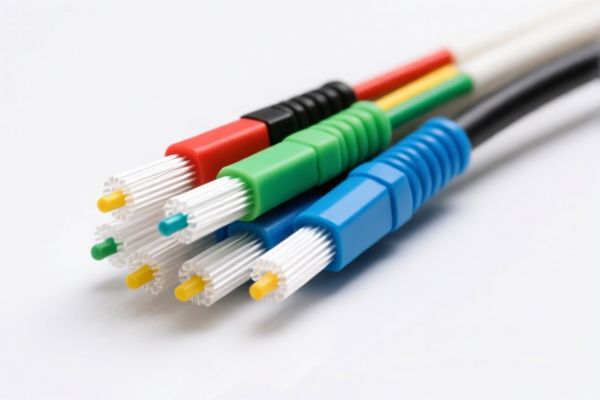
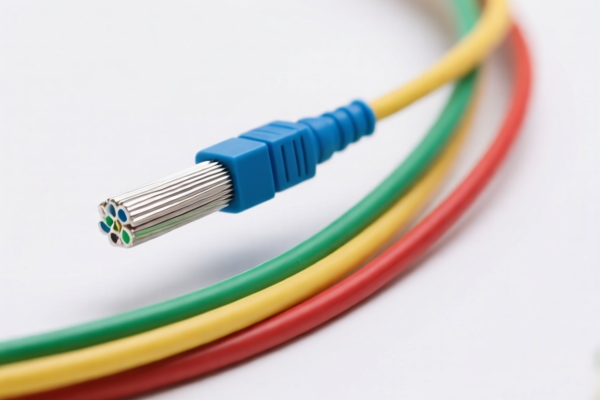
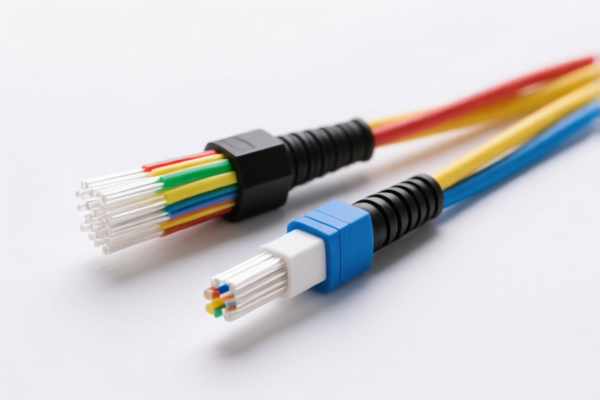
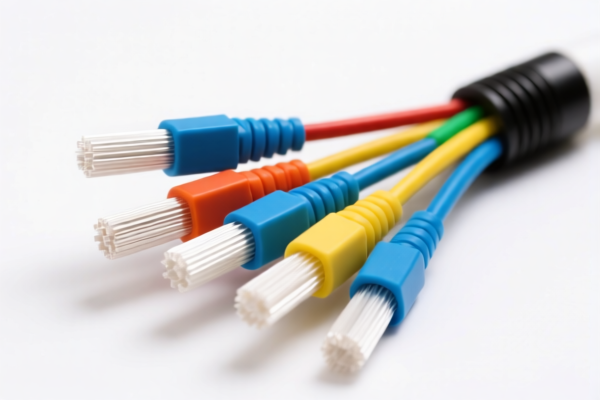
AI Analysis
📡 Fiber Optic Cable Bundle (光纤电缆束)
🌐 HS Code Reference & Customs Clearance Guide | 2026 Latest Tariff Analysis | Professional Classification Strategy
📌 I. Product Definition & Classification: Do You Truly Understand "Fiber Optic Cables"?
Fiber optic cables are the backbone of modern telecommunications, data centers, and high-speed internet infrastructure. In international trade, the classification hinges on two critical factors: Material Composition (Glass/Plastic vs. Metallic protection) and Structural Form (Is it a pure optical core or an integrated electrical component?).
Misclassification here is costly. If you classify a standard optical cable as a general electrical wire, you risk a 10x tax hike. If you classify a complex assembly as a simple wire, you face compliance audits.
⚠️ Key Distinction Points:
- If the item is purely optical (glass/plastic fibers) with standard jacketing →归入 8544.70 (Lowest Tax).
- If the item is a complex bundle or unspecified material →归入 9001.10 (High Tax).
- If the item is a sub-component of a larger electrical system →归入 8543.90 (Highest Tax).
📦 II. HS Code Classification Details (2026 Latest Tariff Authority Mapping)
Based on the provided data, here is the precise breakdown for Fiber Optic Cable Bundles:
| HS Code | Product Description | Applicable Scenario | Tax Rate | Risk Level |
|---|---|---|---|---|
8544.70.00.00 |
Optical Fiber Cables Material: Optical Fiber Form: Cable |
Standard telecom/data cables; glass/plastic fibers with standard insulation. Matches the exact definition of "Optical Cable." | 35.0% | ✅ LOW (Best Option) |
9001.10.00.85 |
Other Optical Fiber Bundles Material: Unspecified |
Complex bundles where material is not clearly defined as standard optical fiber cables; or specialized optical assemblies. | 41.7% | ⚠️ MEDIUM |
9001.10.00.75 |
Optical Fiber Bundles (Polymer Covered) Form: Cable; Material: Plastic/Polymer covered fibers |
Cables where fibers are wrapped in plastic/polymer but do not meet the full definition of 8544.70. | 41.7% | ⚠️ MEDIUM |
8543.90.88.85 |
Parts of Electrical Apparatus Nature: Component of electrical equipment |
Fiber cables used strictly as internal components/sub-assemblies of larger electrical devices, not sold as standalone transmission cables. | 85.0% | 🔴 CRITICAL (Highest Risk) |
🔍 Critical Insight:
-8544.70.00.00is the Gold Standard for standard fiber optic cables. It offers the lowest duty burden among the options.
-8543.90.88.85is a Trap. Do not use this unless the cable is a non-functional part of a larger machine. Using this for a standalone cable invites severe audit risks and massive tax penalties.
-9001.10variants apply when the "cable" nature is ambiguous or when it’s a specialized optical bundle rather than a transmission wire.
💰 III. 2026 Latest Tariff Rate Breakdown (Including Surtaxes & Policy Add-ons)
✅ Applicable Country: United States (US)
✅ Origin: China (CN)
✅ Effective Date: Post-2025 (Current Trade War Context)
🎯 1. 8544.70.00.00 — Optical Fiber Cables (The Optimal Choice)
| Item | Content |
|---|---|
| Base Tariff | 0.0% (Ad Valorem) |
| Section 301 Surtax | +25.0% (From USITC Footnote 9903.88.01) |
| IEEPA Surcharge (Section 122) | +10.0% (Targeted China Products, effective Nov 10, 2025) |
| Total Tax Rate | 35.0% |
| Tax Calculation | CIF Value × 35% |
| De Minimis Eligibility | ❌ NO (Deny De Minimis) |
| Legal Path | IEEPA:9903.01.25 → USITC:8544.70.00.00 → FOOTNOTE:9903.88.01 |
📌 Explanation:
- While the base duty is 0%, the 35% total is driven by punitive surcharges.
- This is the lowest possible rate for fiber optics. If you classify here, you save 6.7% compared to the9001codes and 50% compared to the8543code.
- Steel/Aluminum/Copper Products Surcharge: Note that if the cable has significant metallic strength members, some interpretations may add +50%, but the data provided specifies 35% total for this code, implying standard fiber construction. Always verify with a customs broker if metallic armor is present.
🎯 2. 9001.10.00.85 & 9001.10.00.75 — Other Optical Bundles
| Item | Content |
|---|---|
| Base Tariff | 6.7% |
| Section 301 Surtax | +25.0% |
| IEEPA Surcharge (Section 122) | +10.0% |
| Total Tax Rate | 41.7% |
| Tax Calculation | CIF Value × 41.7% |
| De Minimis Eligibility | ❌ NO |
📌 Note:
- These codes incur a 6.7% base tariff that8544.70avoids.
- The punitive surcharges (25% + 10%) remain the same.
- Result: You pay 6.7% more on the CIF value for no functional difference, if classified correctly as8544.70.
🎯 3. 8543.90.88.85 — Parts of Electrical Apparatus (The Danger Zone)
| Item | Content |
|---|---|
| Base Tariff | 0.0% |
| Section 301 Surtax | +25.0% |
| IEEPA Surcharge (Section 122) | +10.0% |
| Special Metal Surcharge | +50.0% (If containing Steel/Aluminum/Copper components as per data note) |
| Total Tax Rate | 85.0% |
| Tax Calculation | CIF Value × 85.0% |
| De Minimis Eligibility | ❌ NO |
📌 Warning:
- This rate is more than double the optimal rate.
- The data explicitly mentions "Steel, Aluminum, Copper Products Surtax: 50%". If your fiber optic cable has metallic armor, strength members, or connectors classified under metal components, this code may trigger the higher tier.
- Do not use this code unless the item is strictly a non-functional sub-component of a machine.
🛠️ IV. Customs Clearance Practical Advice (Real-World Pitfall Avoidance)
✅ 1. Documentation Checklist (Non-Negotiable)
| Document | Required | Purpose |
|---|---|---|
| ✅ Product Specification Sheet | ✔️ | Must explicitly state "Optical Fiber," "Glass Core," "Polymer Jacket." |
| ✅ Diagram/Structure Image | ✔️ | Proves it is a cable (continuous transmission medium), not a discrete optical component. |
| ✅ Commercial Invoice | ✔️ | Description must read: "Fiber Optic Cable, Glass Core, Polymer Jacket, For Data Transmission." Avoid vague terms like "Optical Bundle." |
| ✅ HS Code Pre-Ruling (Optional but Recommended) | ✔️ | Locks in the 8544.70 classification before shipment. |
| ✅ Origin Certificate | ✔️ | Crucial for verifying China origin and applying correct surcharges. |
✅ 2. Declaration Strategy (The Golden Rules)
🔥 Mantra: "Define Material, Define Form, Avoid 'Parts' Label!"
| Scenario | Correct Declaration | Incorrect Declaration | Consequence |
|---|---|---|---|
| Standard Telecom Cable | HS 8544.70.00.00Desc: "Optical Fiber Cable" |
HS 8544.42 (Other Electrical Wires)Desc: "Communication Wire" |
Risk of reclassification to 9001 or 8543 → Higher Tax |
| Cable with Metallic Armor | HS 8544.70.00.00Check Metal Surtax Clause |
HS 8543.90.88.85Desc: "Cable Component" |
Misclassification → 85% Tax + Penalty |
| Complex Optical Assembly | HS 9001.10.00.85Desc: "Optical Fiber Bundle, Unspecified Material" |
HS 8544.70 |
Over-optimistic classification → Audit Risk |
✅ 3. Special Case Handling
| Situation | Advice |
|---|---|
| Cables with Steel Strength Members | Verify if the 50% Metal Surcharge applies. The provided data suggests 8544.70 is 35%, implying standard cables. If metal content is high, consult a broker to see if 8543 or a different subheading is safer. |
| "Bundle" vs. "Cable" | If the product is multiple single fibers bundled together without a unified jacket, it might fall under 9001.10. Ensure the product is a unified Cable. |
| Used/Refurbished Cables | Same HS code applies, but additional hygiene/safety certifications may be required. |
🌍 V. Global Market Comparison (2026 Context)
| Country/Region | Recommended HS Code | Est. Total Duty (China Origin) | Key Certification | Note |
|---|---|---|---|---|
| 🇺🇸 USA | 8544.70.00.00 |
35.0% | FCC (if applicable), IEC | High punitive taxes apply. |
| 🇨🇳 China | 8544.70.00.00 |
~0-2% (VAT only) | CCC | Low import barrier for domestic use. |
| 🇪🇺 EU | 8544.70.00.00 |
~2-4% | CE, RoHS | No Section 301-style tariffs. |
| 🇬🇧 UK | 8544.70.00.00 |
~2-4% | UKCA, RoHS | Post-Brexit alignment with EU mostly. |
📌 Conclusion:
- USA is the only high-risk market due to the 35% combined duty.
- All other markets have significantly lower barriers.
- Strategy for US Market: Ensure your product description perfectly matches8544.70.00.00to avoid the jump to 41.7% or 85.0%.
📌 VI. Common Errors & Pitfall Guide (Lessons Learned)
❌ Error 1: Classifying Fiber Optic Cable as "Electrical Wire" (8544.42)
👉 Consequence: Wrong HS, potential rejection, or forced reclassification to 9001 → Delay + Cost.
❌ Error 2: Using "Parts of Machinery" (8543) for a standalone cable
👉 Consequence: Triggering the 85% tax rate and the 50% metal surcharge → Profit Collapse.
❌ Error 3: Vague Description: "Optical Cable" without material details
👉 Consequence: Customs may default to the highest risk code (9001 or 8543) → 41.7% or 85% Tax.
❌ Error 4: Ignoring the "122 Section" Tariff
👉 Consequence: Underestimating landed cost by 10% → Budget overrun.
✅ Correct Practice:
"Fiber Optic Cable, Glass Core, Polyethylene Jacket, 12-Figure, For Data Transmission, Model XYZ, Compliant with IEC 60794."
🎯 VII. Conclusion: Precision in Classification Saves Fortune
🎯 Remember the Mantra:
🔹 "Fiber is 8544.70, Tax is 35%. Parts are 8543.90, Tax is 85%. Don't mix them up!"
🔹 "Base 0%, Surtax 35% = 35%. Base 6.7%, Surtax 35% = 41.7%. Base 0%, Metal+ = 85%!"
📌 Pro Tip:
If your fiber optic cable contains significant metallic components (e.g., steel armored cable), double-check the 50% metal surcharge clause. The provided data indicates
8544.70is 35%, which likely assumes standard non-metallic or standard construction. If in doubt, Apply for an Advance Ruling from CBP before shipping.
📣 Immediate Action:
📞 Contact your customs broker with the exact product specs.
📄 Ensure your invoice reads "Optical Fiber Cable".
🚀 Optimize for8544.70.00.00to minimize your 35% duty burden.
✨ Professional Clearance Starts with Accurate Classification!
💼 Every percentage point of duty saved is pure profit!
Customer Reviews
About HS Code Classification
The Harmonized System (HS) is an internationally standardized nomenclature developed by the World Customs Organization (WCO) to classify traded products. Over 200 countries use the HS system as the basis for customs tariffs, trade statistics, and import/export regulations.
Each HS code follows a hierarchical structure:
- Chapter (2 digits) — Broad category of goods (e.g., Chapter 84: Machinery and Mechanical Appliances)
- Heading (4 digits) — More specific grouping within the chapter
- Subheading (6 digits) — Internationally standardized breakdown, used by all WCO member countries
- National subdivisions (8-10 digits) — Country-specific extensions for further classification, such as US HTSUS 10-digit codes
Correct HS code classification is essential for smooth customs clearance, accurate duty payment, and compliance with trade regulations. Misclassification can lead to customs delays, overpayment of duties, or penalties.
When importing from CN to US, the applicable tariff rates may include:
- Most-Favored-Nation (MFN) rate — The standard duty rate applied to WTO members
- General rate — Applied to countries without trade agreements
- Trade remedy duties — Additional tariffs such as Section 301 (anti-dumping), Section 232 (national security), or countervailing duties
The information provided on this page is for reference purposes only. For official classification, please consult with your local customs authority or a licensed customs broker.