Fiber Optic Rod
CN → US| HS Code | Tariff Rate | Origin | Destination | Doc |
|---|---|---|---|---|
| 8544700000 | 35.0% | CN | US | Official Doc |
| 9001100085 | 41.7% | CN | US | Official Doc |
| 9001100075 | 41.7% | CN | US | Official Doc |
| 8543908885 | 85.0% | CN | US | Official Doc |
Product Images
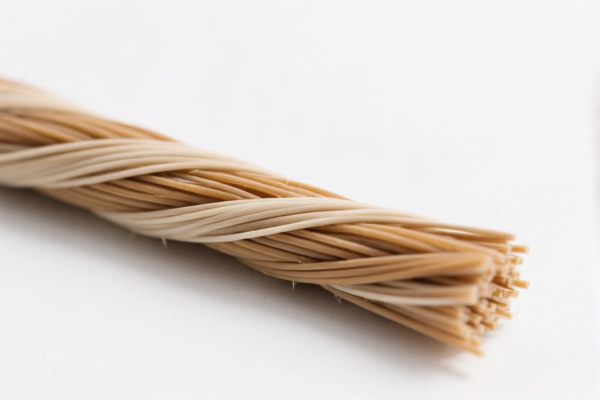
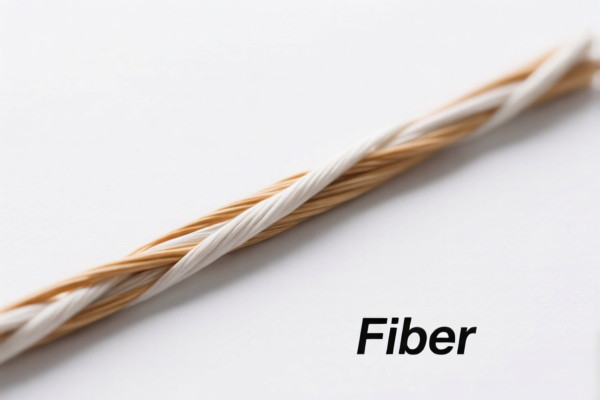

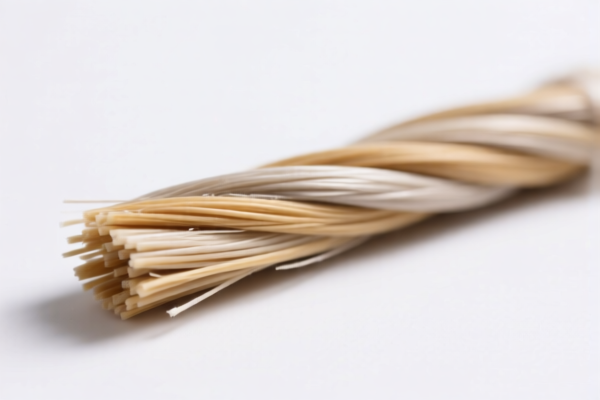
AI Analysis
🔦 Fiber Optic Rods (Fiber Optic Cables & Bundles)
🌐 HS Code Reference & Customs Clearance Guide | 2026 Latest Tariff Breakdown | Strategic Import Strategy
📌 I. Product Definition & Classification: What Exactly is a "Fiber Optic Rod"?
In international trade, the term "Fiber Optic Rod" is technically ambiguous. It usually refers to optical fibers (the glass/plastic core) or fiber optic cables/bundles (the assembled transmission medium). The HS Code classification depends strictly on material composition and structural form.
⚠️ Key Distinction:
- If it is a simple cable made primarily of optical fiber without complex electrical shielding → Likely 8544.70.00.00.
- If it is a bundle of fibers, or made of plastic/polymer → Likely 9001.10.00.85 or 9001.10.00.75.
- If it is an electrical component or part of a larger electrical apparatus → Likely 8543.90.88.85.
📦 II. HS Code Classification Details (Based on Provided Data)
The provided data identifies four potential classifications for "Fiber Optic Rods/Cables." Note that HS Code 9001.10.00.85 appears twice with slightly different summaries.
| HS Code | Product Description | Key Characteristics | Material/State |
|---|---|---|---|
8544.70.00.00 |
Optical Fiber Cables | Classified as cables where the primary material is optical fiber. | Optical Fiber |
9001.10.00.85 |
Other Fiber Optic Bundles & Cables | Unclassified material; inferred as non-plastic (likely glass/quartz). | Non-Plastic |
9001.10.00.75 |
Plastic Fiber Optic Bundles & Cables | Explicitly identified as cables made of plastic or polymer. | Plastic/Polymer |
8543.90.88.85 |
Parts of Electrical Apparatus | Classified as a part of an electrical device; no material conflict noted. | Electrical Component |
🔍 Critical Note:
-8544.70.00.00is the most direct classification for standard optical fiber cables.
-9001.10.00.75is mandatory if your product is made of plastic fiber (POF).
-8543.90.88.85is a "catch-all" for electrical parts and carries a punitive tax rate. Avoid this unless strictly necessary as a component.
💰 III. 2026 Latest Tariff Rate Breakdown (USA Import)
✅ Applicable Country: United States (US)
✅ Origin: China (CN) (Implied by the high surtaxes in the data)
✅ Effective Date: Current regulations (Section 301 & 122 Terms)
🎯 1. 8544.70.00.00 — Optical Fiber Cables (Best Case Scenario)
| Item | Content |
|---|---|
| Base Tariff | 0.0% |
| Section 301 Surtax | +25.0% |
| Section 122 Surtax | +10.0% |
| Total Tax Rate | 35.0% |
| Tax Calculation | CIF Value × 35% |
| De Minimis Eligibility | ❌ No (High risk of audit/retention) |
📌 Explanation:
- This is the most favorable classification for standard optical fiber cables.
- Section 301 (25%): Standard punitive tariff on Chinese goods.
- Section 122 (10%): Additional surcharge on certain goods from China.
- Total: 35%. Significantly lower than other potential classifications.
🎯 2. 9001.10.00.85 & 9001.10.00.75 — Fiber Optic Bundles (Plastic or Non-Plastic)
| Item | Content |
|---|---|
| Base Tariff | 6.7% |
| Section 301 Surtax | +25.0% |
| Section 122 Surtax | +10.0% |
| Total Tax Rate | 41.7% |
| Tax Calculation | CIF Value × 41.7% |
| De Minimis Eligibility | ❌ No |
📌 Explanation:
- If your product is classified under 9001.10 (Optical Fibers, Bundles), the base rate jumps to 6.7%.
- Adding the same 35% in surtaxes results in a total rate of 41.7%.
- Difference: This is 6.7% higher than8544.70.00.00.
- Action: Ensure your product description emphasizes "Cable" structure rather than just "Bundle" or "Rod" to aim for8544.70.00.00.
🎯 3. 8543.90.88.85 — Parts of Electrical Apparatus (HIGH RISK)
| Item | Content |
|---|---|
| Base Tariff | 0.0% |
| Section 301 Surtax | +25.0% |
| Section 122 Surtax | +10.0% |
| Steel/Aluminum/Copper Surtax | +50.0% |
| Total Tax Rate | 85.0% |
| Tax Calculation | CIF Value × 85.0% |
| De Minimis Eligibility | ❌ No |
📌 Warning:
- 85% Total Tax Rate!
- This classification triggers an additional 50% tariff if the product contains any steel, aluminum, or copper components (which most cables do, for shielding or strength).
- Avoid this code unless the product is clearly a non-conductive part of a larger electrical machine. Misclassification here leads to massive overpayment.
🛠️ IV. Customs Clearance Practical Advice (Pitfall Avoidance Guide)
✅ 1. Documentation Checklist (Must-Have)
| Document | Required? | Purpose |
|---|---|---|
| ✅ Product Specification Sheet | ✔️ | Must specify: Core material (Glass vs. Plastic), Cable structure, Diameter, Attenuation. |
| ✅ Photographs | ✔️ | Clear images of cross-section (to show fiber vs. plastic) and jacketing. |
| ✅ Certificate of Origin (CO) | ✔️ | Proof of Chinese origin (triggers surtaxes). |
| ✅ Bill of Lading / Invoice | ✔️ | Must match HS Code description exactly. |
| ✅ Material Declaration | ✔️ | Explicitly state: "Plastic Optical Fiber (POF)" or "Glass Silica Fiber". |
✅ 2. Classification Strategy (The "Save 6.7%" Rule)
🔥 “Define as Cable, Not Rod, Not Part!”
| Scenario | Recommended HS Code | Reason |
|---|---|---|
| Standard Telecom/Data Cable | 8544.70.00.00 |
Primary material is optical fiber; designed for signal transmission. Lowest Tax (35%). |
| Plastic Optical Fiber (POF) | 9001.10.00.75 |
Must declare as Plastic. Tax is 41.7%. Do not try to force 8544.70.00.00 for plastic. |
| Fiber Optic Bundle (Loose Fibers) | 9001.10.00.85 |
If no cable jacketing/structure. Tax is 41.7%. |
| Part of a Machine (e.g., inside a medical device) | 8543.90.88.85 |
AVOID. Tax is 85%. Only use if explicitly sold as a non-separable part of an apparatus. |
📌 Crucial Tip:
- If your product is a "Fiber Optic Rod" (a solid core for sensing or illumination), Customs may view it as a "Rod" (Chapter 90) or "Cable" (Chapter 85).
- Strategy: If it has a jacket or is intended for communication/transmission, argue for 8544.70.00.00 (Cable).
- If it is a solid glass rod for lighting/sensing, it likely falls under 9001.10 (Bundles/Fibers).
✅ 3. Special Cases & Mitigation
| Situation | Advice |
|---|---|
| Mixed Content (Copper Shield + Fiber) | Ensure the optical fiber is the essential character. If copper shielding is minimal, stick with 8544.70.00.00. If it's a heavy cable with copper, risk 8543.90.88.85 (85% tax). |
| Plastic Optical Fiber (POF) | Must declare as "Plastic". Do not misdeclare as "Glass" to get a lower base rate, as the surtaxes are similar, but base rates differ. 9001.10.00.75 is the correct code for Plastic. |
| Small Samples (De Minimis) | ❌ Do not rely on De Minimis. All codes listed have high surtaxes (25%+10%). Packages <$800 may still be held for inspection or taxed. |
🌍 V. Global Market Comparison (2026)
| Market | Recommended HS Code | Est. Total Tariff (China Origin) | Notes |
|---|---|---|---|
| 🇺🇸 USA | 8544.70.00.00 |
35% | Includes Section 301 (25%) + 122 (10%). |
| 🇨🇳 China | 8544.70.00.00 |
~0-5% | Standard import duty. No US surtaxes. |
| 🇪🇺 EU | 8544.70.00.00 |
~0-2.5% | No Section 301/122 surtaxes. |
| 🇬🇧 UK | 8544.70.00.00 |
~0-2.5% | Post-Brexit tariffs are lower than US. |
| 🇯🇵 Japan | 8544.70.00.00 |
~0-2.5% | No punitive surtaxes. |
📌 Conclusion:
- The USA is the most expensive market for Chinese fiber optic products due to Section 301 and 122 surtaxes.
- 35% vs 41.7%: Correctly classifying as8544.70.00.00(Cable) instead of9001.10(Bundle) saves 6.7% on the CIF value.
- 85% Avoidance: Never use8543.90.88.85unless you have no other choice; the 50% steel/aluminum surtax is devastating.
📌 VI. Common Errors & Pitfalls (Lessons Learned)
❌ Error 1: Calling the product "Fiber Optic Rod" in the commercial invoice.
👉 Consequence: Customs may classify it as a generic "Rod" (Chapter 90) or "Part" (Chapter 85), leading to 41.7% or 85% tax.
✅ Fix: Use "Optical Fiber Cable" or "Fiber Optic Bundle" depending on structure.
❌ Error 2: Misdeclaring Plastic Fiber (POF) as Glass Fiber.
👉 Consequence: If caught, you may face penalties for misdeclaration. While the total tax might be similar (41.7% for both 9001 codes), the base duty differs.
✅ Fix: Accurately declare material: "Plastic Optical Fiber Cable".
❌ Error 3: Including Copper Shielding and declaring as 8544.70.00.00 when it’s a cable assembly.
👉 Consequence: Risk of reclassification to 8543.90.88.85 due to "Electrical Apparatus Part" status.
✅ Fix: Ensure the fiber is the primary function. If it’s a complex assembly with electronics, consider the 85% rate risk or seek a binding ruling.
🎯 VII. Conclusion: Professional Declaration, Cost Optimization!
🎯 Remember the Mantra:
🔹 "Cable is King: 8544.70.00.00 saves you 6.7%!"
🔹 "Plastic? Go to 9001.10.00.75, don’t hide it!"
🔹 "No Steel Part? Avoid 8543.90.88.85 or pay 85%!"
📌 Pro Tip:
- If your shipments are frequent, apply for an Advance Ruling (Binding Tariff Information) from US Customs (CBP).
- For high-value shipments, consider supply chain diversification (e.g., assembly in Vietnam/Mexico) to mitigate Section 301/122 surtaxes, though rules of origin must be strictly met.
📣 Immediate Action:
📞 Review your Product Specs: Is it Glass or Plastic? Is it a Cable or a Bundle?
🚀 Update your Invoice: Use "Optical Fiber Cable" for8544.70.00.00.
💼 Calculate Costs:
- If8544.70.00.00: Budget 35% tax.
- If9001.10: Budget 41.7% tax.
- If8543.90.88.85: Stop! Re-evaluate classification. Budget 85% tax.
✨ Precision in Classification = Profit in Your Pocket!
💼 Don’t let ambiguous names cost you 6.7% or 50%!
Customer Reviews
About HS Code Classification
The Harmonized System (HS) is an internationally standardized nomenclature developed by the World Customs Organization (WCO) to classify traded products. Over 200 countries use the HS system as the basis for customs tariffs, trade statistics, and import/export regulations.
Each HS code follows a hierarchical structure:
- Chapter (2 digits) — Broad category of goods (e.g., Chapter 84: Machinery and Mechanical Appliances)
- Heading (4 digits) — More specific grouping within the chapter
- Subheading (6 digits) — Internationally standardized breakdown, used by all WCO member countries
- National subdivisions (8-10 digits) — Country-specific extensions for further classification, such as US HTSUS 10-digit codes
Correct HS code classification is essential for smooth customs clearance, accurate duty payment, and compliance with trade regulations. Misclassification can lead to customs delays, overpayment of duties, or penalties.
When importing from CN to US, the applicable tariff rates may include:
- Most-Favored-Nation (MFN) rate — The standard duty rate applied to WTO members
- General rate — Applied to countries without trade agreements
- Trade remedy duties — Additional tariffs such as Section 301 (anti-dumping), Section 232 (national security), or countervailing duties
The information provided on this page is for reference purposes only. For official classification, please consult with your local customs authority or a licensed customs broker.