Fiber Reinforced Concrete Products
CN → US| HS Code | Tariff Rate | Origin | Destination | Doc |
|---|---|---|---|---|
| 6811899000 | 35.0% | CN | US | Official Doc |
| 6811820000 | 35.0% | CN | US | Official Doc |
| 6815994170 | 35.0% | CN | US | Official Doc |
| 6815190000 | 35.0% | CN | US | Official Doc |
Product Images
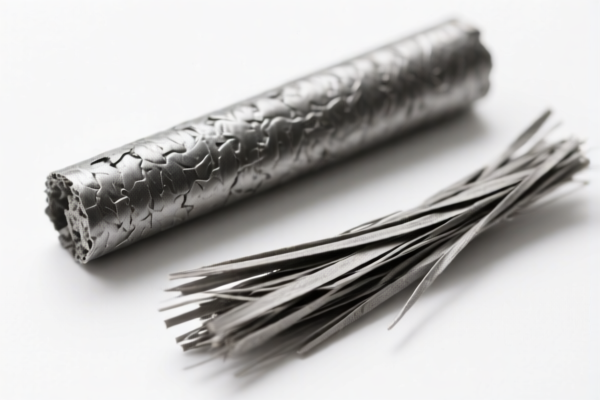
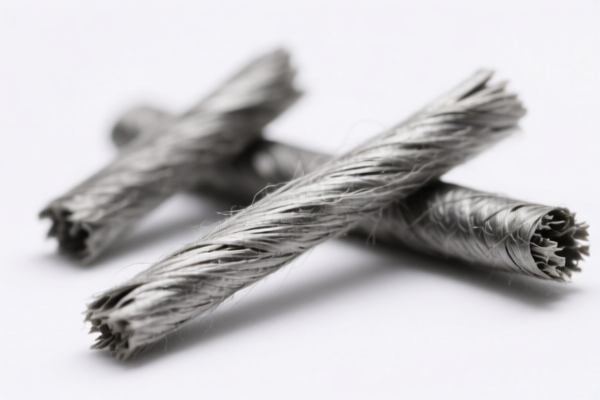
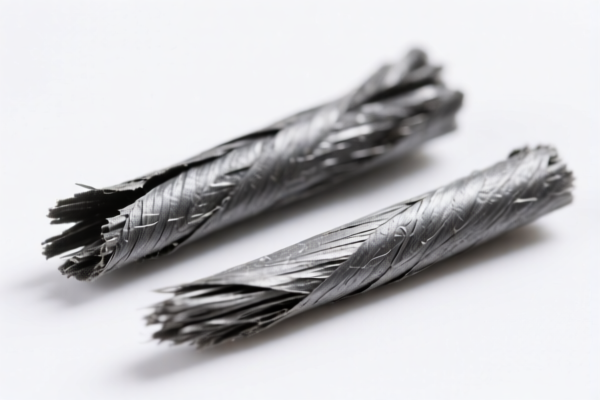
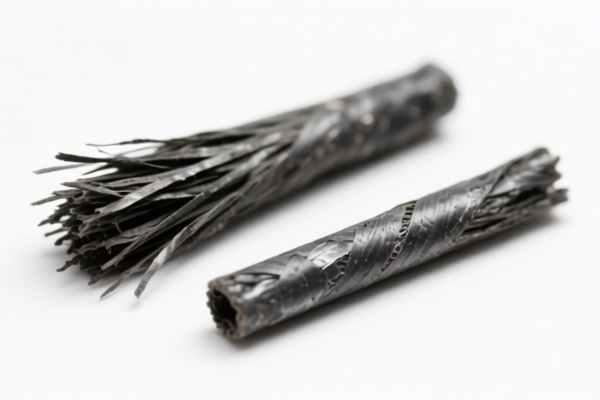
AI Analysis
🏗️ Fiber Reinforced Concrete (FRC) Products
🌐 HS Code Reference & Customs Clearance Guide | 2026 Latest Tariff Analysis | Professional Clearance Strategy
📌 I. Product Definition & Classification: Do You Really Know "FRC"?
Fiber Reinforced Concrete (FRC) consists of cementitious materials (concrete or mortar) reinforced with discontinuous or continuous fibers (typically glass, steel, polypropylene, or synthetic fibers). In international trade, its classification is complex because it straddles the line between building materials, composite materials, and mineral products.
The key to correct classification lies in identifying the primary function and material composition: - Cementitious-Based (6811/6815): If the base matrix is cement or similar materials, it falls under Chapter 68. - Mineral/Inorganic (6815): If it’s treated primarily as a mineral artifact without specific chemical restrictions, it may fall under the "basket" provisions of 6815.
⚠️ Critical Distinction:
- If the product is explicitly described as "Glass Fiber Reinforced Concrete" (GRC) or similar cementitious composites → Chapter 68 (Stone, Plaster, Cement).
- If the product is a generic mineral制品 with no specific heading → 6815.99 (Other articles of stone or other mineral substances).
- Note: Steel-reinforced concrete structural elements are often excluded from these chapters and may fall under Chapter 72/73, but for non-structural FRC products, Chapter 68 is dominant.
📦 II. HS Code Classification Details (2026 Latest Tariff Authority Comparison)
Based on the provided data, here are the four applicable HS Codes for FRC products:
| HS Code | Product Description | Applicability Scenario | Material/Matrix Conflict? |
|---|---|---|---|
6811.89.90.00 |
Articles of asbestos-cement, of cement, or of fibre-cement (Other) | GRC panels, cladding, architectural ornaments where "fibre-cement" is the key descriptor | ✅ No Conflict: Fits "Fibre-cement or similar materials" |
6811.82.00.00 |
Articles of asbestos-cement, of cement, or of fibre-cement (Other) | Similar to above, specific sub-heading for fibre-cement articles | ✅ No Conflict: Fits "Fibre-cement or similar materials" |
6815.99.41.70 |
Other articles of stone or other mineral substances (Specific code for mineral artifacts) | FRC products classified under the "basket" clause for mineral-based products with no specific chemical restrictions | ✅ No Conflict: Fits "Mineral/Inorganic category" |
6815.19.00.00 |
Articles of stone or other mineral substances (Other than those of heading 6801 or 6802) | Non-electrical mineral制品, generic stone/mineral products | ✅ No Conflict: Fits "Stone or other mineral material" |
🔍 Key Insight:
- 6811 is preferred if the product is explicitly "Fibre-Cement" or "Cement-based composite."
- 6815 is used as a fallback for mineral artifacts that don't fit other specific headings, especially if the "fiber" aspect is considered a minor additive to the mineral matrix.
- All four codes indicate no material conflict for FRC.
💰 III. 2026 Latest Tariff Rate Details (Including Surtaxes & Policy Add-ons)
✅ Applicable Country: United States (US)
✅ Origin: China (CN)
✅ Effective Date: From November 10, 2025 (including subsequent imports)
🎯 1. 6811.89.90.00 & 6811.82.00.00 —— Fiber-Cement Articles
| Item | Detail |
|---|---|
| Base Duty Rate | 0.0% (ad valorem) |
| Section 301 Surtax (USITC) | +25.0% (Under USITC Footnote provisions) |
| Section 122 Surtax (IEEPA) | +10.0% (Specific China-targeted surcharge) |
| Total Effective Rate | 35.0% |
| Calculation Basis | CIF Value × 35% |
| De Minimis Exemption | ❌ Not Eligible (Denied under current trade remedies) |
| Legal Basis Path | USITC:6811 → IEEPA:9903 → Section 301 Footnote |
📌 Explanation:
- Although the base duty is 0%, the heavy surcharges bring the total to 35%.
- This rate is standard for most Chinese-made building materials under Section 301 and related provisions.
- No de minimis exemption: Even small shipments are subject to this duty.
🎯 2. 6815.99.41.70 & 6815.19.00.00 —— Mineral/Stone Articles
| Item | Detail |
|---|---|
| Base Duty Rate | 0.0% (ad valorem) |
| Section 301 Surtax (USITC) | +25.0% |
| Section 122 Surtax (IEEPA) | +10.0% |
| Total Effective Rate | 35.0% |
| Calculation Basis | CIF Value × 35% |
| De Minimis Exemption | ❌ Not Eligible |
| Legal Basis Path | USITC:6815 → IEEPA:9903 → Section 301 Footnote |
📌 Explanation:
- These codes are often used for GRC (Glass Fiber Reinforced Concrete) or mineral-based composite panels.
- The tariff structure is identical to 6811: 0% base + 35% surtax = 35% total.
- Classification under 6815 may be chosen if the product is marketed as a "mineral composite" rather than "cement-based."
🛠️ IV. Customs Clearance Practical Advice (Avoiding Pitfalls)
✅ 1. Required Documentation Checklist
| Document | Must Provide? | Notes |
|---|---|---|
| ✅ Product Specification Sheet | ✔️ | Must detail: Cement content, fiber type (Glass/PP/Steel), dimensions, weight. |
| ✅ Material Safety Data Sheet (MSDS) | ✔️ | Proves non-hazardous nature (especially for cement dust/fiber exposure). |
| ✅ Commercial Invoice | ✔️ | Clearly state "Fiber Reinforced Concrete Products" or "GRC Panels." Avoid vague terms like "Building Material." |
| ✅ Certificate of Origin (CO) | ✔️ | Essential for proving Chinese origin and applying correct surtaxes. |
| ✅ Packing List | ✔️ | Detail fragile nature if applicable; ensure net/gross weights are accurate. |
| ✅ Test Reports | ✔️ | ASTM/EN standards for flexural strength, durability, and fire resistance. |
✅ 2. Declaration Tips (Critical Keywords)
🔥 "Clarify Matrix, Specify Fiber, Avoid 'Concrete Blocks'"
| Scenario | Correct Declaration | Incorrect Action |
|---|---|---|
| GRC Panels/Cladding | 6811.82.00.00 or 6811.89.90.00 |
Misdeclaring as "Plastic Panels" → Higher risk/penalties |
| Mineral Composite Art | 6815.99.41.70 |
Misdeclaring as "Ceramic Tiles" → Different HS, different tax |
| Structural Concrete | Not in scope of provided data | Often falls under 6801/6802 or 7302; do not force into 6811 if structural steel is primary |
| Vague Description | "Construction Material" | 🚫 High Risk: Customs may assign worst-case HS code |
📌 Note:
- Use precise terminology: "Glass Fiber Reinforced Concrete (GRC) Panel" vs. "Fiber Cement Board".
- If the product contains steel reinforcement bars (rebar), it may NOT fall under these chapters. Ensure fibers are non-metallic or non-structural if using Chapter 68.
✅ 3. Special Circumstances
| Situation | Handling Advice |
|---|---|
| Mixed Packaging | Declare separately if possible. If bundled, ensure the primary value driver determines the HS code. |
| OEM/Custom Shapes | Provide 3D drawings. Custom shapes may be scrutinized more heavily under 6815.99. |
| Fire Resistance Claims | If marketing as "Fireproof," ensure test reports are available. Non-compliance can lead to delays. |
🌍 V. Global Market Comparison (2026 Latest)
| Country/Region | Recommended HS Code | Total Tariff (China Origin) | Certification | Notes |
|---|---|---|---|---|
| 🇺🇸 USA | 6811.89.90.00 / 6815.19.00.00 |
35% | None specific | High surtax due to 301/122 provisions. |
| 🇨🇳 China | 6811.89.90.00 |
0-5% | CCC (if applicable) | Low import duty for domestic trade. |
| 🇪🇺 EU | 6811.80 / 6815.99 |
0-2.5% | CE Marking | Lower tariffs, stricter environmental rules (REACH). |
| 🇬🇧 UK | 6811.80 |
0-2.5% | UKCA Marking | Post-Brexit, aligns with EU but requires UKCA. |
| 🇦🇺 Australia | 6811.80 |
5% | AS/NZS Standards | Moderate tariffs, strict building codes. |
📌 Conclusion:
- USA is the highest-cost market for FRC products from China due to the 35% effective duty.
- EU/UK/Australia are more tariff-friendly but have stricter environmental and safety certifications.
- Consider supply chain diversification (e.g., sourcing from Vietnam or Mexico) if targeting the US market to mitigate surtaxes.
📌 VI. Common Mistakes & Pitfalls (Lessons Learned)
❌ Mistake 1: Declaring "Concrete Pipes" as FRC Panels
👉 Consequence: Incorrect HS code (6802 or 6815 vs 6811) → Seizure & Penalties.
✅ Fix: Distinguish between structural concrete (pipes) and composite panels (cladding).
❌ Mistake 2: Ignoring the "Fiber Type"
👉 Consequence: If steel fibers are structural, Chapter 68 may not apply.
✅ Fix: Confirm that fibers are for reinforcement of the matrix, not structural steel replacement.
❌ Mistake 3: Vague Invoice Description ("Construction Goods")
👉 Consequence: Customs holds shipment for classification review → Demurrage Costs.
✅ Fix: Use precise HS Code and description on all docs.
❌ Mistake 4: Assuming De Minimis Exemption Applies
👉 Consequence: Small shipments still incur 35% duty.
✅ Fix: Factor 35% into landed cost for all shipments, regardless of value.
🎯 VII. Conclusion: Precision in Classification, Profit in Clearance
🎯 Remember This Mantra:
🔹 "Cement Matrix = 6811, Mineral Basket = 6815, Base Duty Zero, Surtax 35%."
🔹 "Specify Fiber, Clarify Use, Avoid Vague Terms."
📌 Pro Tip:
- If your FRC products are not made in China (e.g., sourced from Turkey, India, or Vietnam), you may avoid the 35% US surtax.
- Always apply for an Advance Ruling from US Customs (CBP) if unsure between 6811 and 6815. This provides legal certainty.
📣 Take Action Now:
📞 Consult with a licensed customs broker.
📄 Prepare detailed technical specs and test reports.
🚀 Optimize your supply chain to manage the 35% duty impact.
✨ Professional Clearance Starts with Accurate Classification!
💼 Every Percent Saved is Profit Earned!
Customer Reviews
About HS Code Classification
The Harmonized System (HS) is an internationally standardized nomenclature developed by the World Customs Organization (WCO) to classify traded products. Over 200 countries use the HS system as the basis for customs tariffs, trade statistics, and import/export regulations.
Each HS code follows a hierarchical structure:
- Chapter (2 digits) — Broad category of goods (e.g., Chapter 84: Machinery and Mechanical Appliances)
- Heading (4 digits) — More specific grouping within the chapter
- Subheading (6 digits) — Internationally standardized breakdown, used by all WCO member countries
- National subdivisions (8-10 digits) — Country-specific extensions for further classification, such as US HTSUS 10-digit codes
Correct HS code classification is essential for smooth customs clearance, accurate duty payment, and compliance with trade regulations. Misclassification can lead to customs delays, overpayment of duties, or penalties.
When importing from CN to US, the applicable tariff rates may include:
- Most-Favored-Nation (MFN) rate — The standard duty rate applied to WTO members
- General rate — Applied to countries without trade agreements
- Trade remedy duties — Additional tariffs such as Section 301 (anti-dumping), Section 232 (national security), or countervailing duties
The information provided on this page is for reference purposes only. For official classification, please consult with your local customs authority or a licensed customs broker.