Fiber Reinforced Printable Tape
CN → US| HS Code | Tariff Rate | Origin | Destination | Doc |
|---|---|---|---|---|
| 3919102010 | 40.8% | CN | US | Official Doc |
| 5603110070 | 35.0% | CN | US | Official Doc |
| 5603120070 | 35.0% | CN | US | Official Doc |
| 3919905020 | 40.8% | CN | US | Official Doc |
| 3926905500 | 40.1% | CN | US | Official Doc |
Product Images
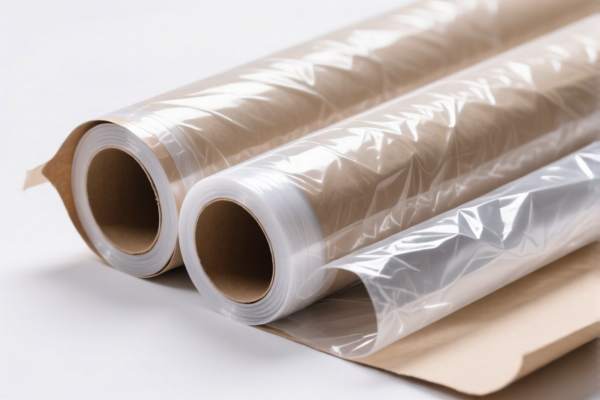
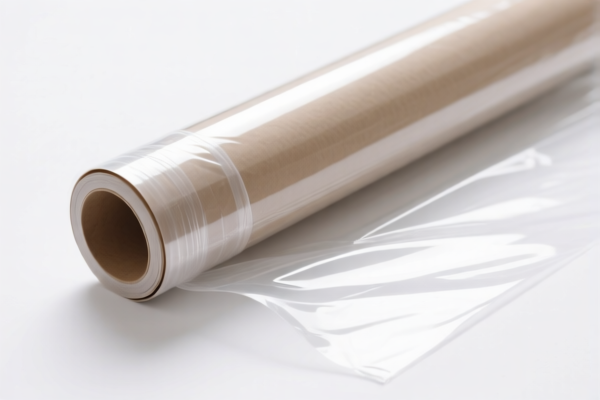
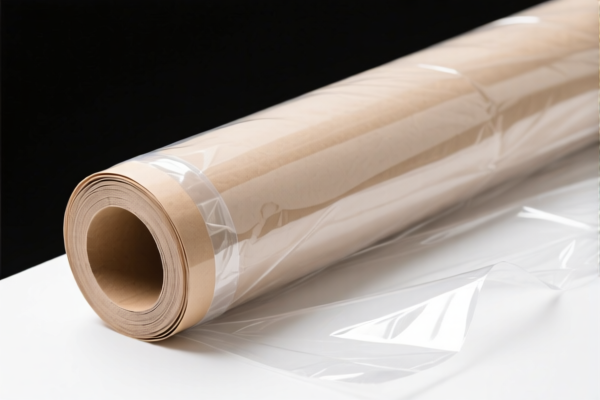
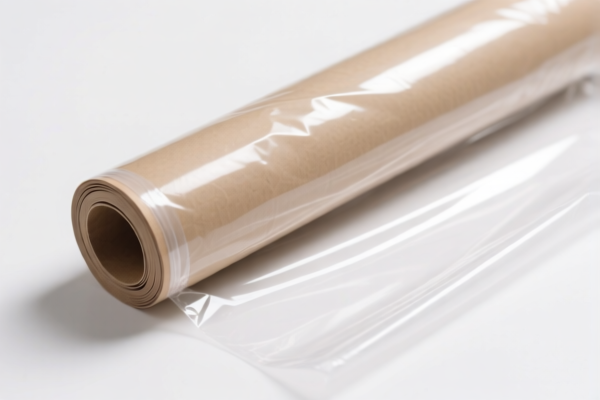
AI Analysis
📦 Fiber Reinforced Printable Tape (FRPT)
🌐 HS Code Reference & Customs Clearance Guide | 2026 Latest Tariff Analysis | Professional Clearance Strategy for Chinese Origin Imports to US
📌 I. Product Definition & Classification: Do You Understand "Fiber Reinforced Tape"?
Fiber Reinforced Printable Tape (FRPT) is a high-performance industrial adhesive tape, widely used in packaging, HVAC, and construction. Its core characteristics include:
- Structure: Typically consists of a scrim (mesh) made of fiberglass or synthetic fibers (the "fiber reinforced" component), coated with pressure-sensitive adhesive on one or both sides.
- Surface: Designed to be written on or printed with labels/markings.
- Form: Sold in rolls, self-adhesive.
⚠️ Key Classification Dilemma:
- Chapter 39 (Plastics): If the primary characteristic is the plastic coating/adhesive base holding the fibers → HS 3919.
- Chapter 56 (Textiles/Non-wovens): If the primary characteristic is the fibrous non-woven structure with light binding → HS 5603.
The choice depends on the Essential Character test under GRI 3(b). However, for standard "printed tape" used in packaging, Chapter 39 is the most common and accepted classification by US Customs.
📦 II. HS Code Classification Details (2026 Latest Tariff Authority Comparison)
Based on the data provided, here are the five possible classifications with their specific tax implications.
| HS Code | Product Description | Material/Form Match | Total Tax Rate | Tax Breakdown |
|---|---|---|---|---|
3919.10.20.10 |
Self-adhesive plates, sheets, film, foil, tape, strip and other flat shapes, of plastics, whether or not in rolls (Other): Other, Of cellulose derivatives or of chemical wood pulp, in the form of sheets or strips | ✅ Perfect Match: "Fiber reinforced" matches the material enhancement; shape is roll/self-adhesive. | 40.8% | Base: 5.8% + Section 301: 25% + IEEPA: 10% |
5603.11.00.70 |
Non-woven fabrics, whether or not impregnated, coated, covered or laminated: Of man-made filaments, weighing ≤ 25 g/m² | ⚠️ Inferred: Assumes material is man-made filament/non-woven. No conflict with form. | 35.0% | Base: 0.0% + Section 301: 25% + IEEPA: 10% |
5603.12.00.70 |
Non-woven fabrics, whether or not impregnated, coated, covered or laminated: Of man-made filaments, weighing > 25 g/m² but ≤ 70 g/m² | ⚠️ Inferred: Based on "fiber" assumption for non-woven fabric. Tape is an application of non-woven. | 35.0% | Base: 0.0% + Section 301: 25% + IEEPA: 10% |
3919.90.50.20 |
Self-adhesive plates, sheets, film, foil, tape, strip and other flat shapes, of plastics... Other: Other | ✅ Exact Match: Material (fiber-reinforced) and form (tape) meet requirements. | 40.8% | Base: 5.8% + Section 301: 25% + IEEPA: 10% |
3926.90.55.00 |
Other articles of plastics and articles of other materials of heading 3901 to 3914: Other: Of plastics, containing textile fibers | ✅ Material Match: Contains "fiber" (textile fibers); form (tape) fits "other articles". | 40.1% | Base: 5.1% + Section 301: 25% + IEEPA: 10% |
🔍 Key Distinction:
- HS 3919 (Tape/Plastics) generally incurs a higher base tariff (5.1%-5.8%) but is often preferred for "tapes" because the product is explicitly a "flat shape of plastics" with adhesive.
- HS 5603 (Non-woven) has a 0% base tariff but requires proving the product is primarily a "non-woven fabric" rather than a "plastic tape." If the plastic coating is substantial, Customs may reject this classification.
💰 III. 2026 Latest Tariff Rate Details (Including Additional Taxes)
✅ Applicable Country: United States (US)
✅ Origin: China (CN)
✅ Effective Date: From November 10, 2025 (and subsequent imports)
🎯 1. 3919.10.20.10 & 3919.90.50.20 —— Self-Adhesive Plastic Tapes
| Item | Content |
|---|---|
| Base Tariff | 5.8% (for 3919.10.20.10) or 5.1% (for 3919.90.50.20) ad valorem |
| Section 301 Additional Tariff | +25% (From USITC Footnote) |
| IEEPA Additional Tariff | +10% (Against China/HK products, effective Nov 10, 2025) |
| Total Effective Rate | 40.8% (for 3919.10.20.10) or 40.1% (for 3919.90.50.20) |
| Tax Calculation | CIF Value × Total Rate |
| De Minimis Eligibility | ❌ No (deny_de_minimis applies) |
| Legal Basis Path | IEEPA:9903.01.25 → IEEPA:9903.01.24 → USITC:3919.x / 3926.90 → FOOTNOTE |
📌 Explanation:
- The 25% is the standard Section 301 tariff on Chinese plastics/tapes.
- The 10% is the new IEEPA tariff.
- Total ~40-41% is extremely high. Pre-classification and duty mitigation strategies are critical.
🎯 2. 5603.11.00.70 & 5603.12.00.70 —— Non-Woven Fabrics
| Item | Content |
|---|---|
| Base Tariff | 0% |
| Section 301 Additional Tariff | +25% |
| IEEPA Additional Tariff | +10% |
| Total Effective Rate | 35.0% |
| Tax Calculation | CIF Value × 35% |
| De Minimis Eligibility | ❌ No (deny_de_minimis applies) |
| Legal Basis Path | IEEPA:9901.25 → IEEPA:9903.01.24 → USITC:5603 → FOOTNOTE |
📌 Note:
- While the base rate is 0%, the 35% total is still significant.
- Risk: If Customs determines the product is not a "non-woven fabric" but a "plastic tape," this classification will be rejected, leading to back taxes and penalties. Only use if the fiber content and fabric structure are dominant.
🛠️ IV. Customs Clearance Practical Advice (Battle-Tested Pitfall Guide)
✅ 1. Documentation Checklist (Non-Negotiable)
| Document | Required | Description |
|---|---|---|
| ✅ Product Specification Sheet | ✔️ | Must detail: Base material (plastic/fiberglass), adhesive type, weight per square meter, reinforcement type. |
| ✅ Technical Drawings / Cross-Section | ✔️ | Visual proof of "fiber reinforcement" vs. "non-woven fabric." Crucial for distinguishing Chapter 39 vs. 56. |
| ✅ Product Photos (with Label) | ✔️ | Clear view of the roll, adhesive side, and printed surface. |
| ✅ Third-Party Test Report | ✔️ | GSM (grams per square meter) test is critical if claiming HS 5603 (weighing ≤25 g/m² or ≤70 g/m²). |
| ✅ Commercial Invoice | ✔️ | Must state: "Fiber Reinforced Printable Adhesive Tape, for Packaging/HVAC." Avoid vague terms like "Plastic Sheets." |
| ✅ Certificate of Origin (CO) | ✔️ | Mandatory for IEEPA/Section 301 verification. |
✅ 2. Declaration Tactics (Key Mantra)
🔥 “Describe the Essential Character: If it sticks and has plastic base, think 3919. If it’s fluffy fabric, think 5603.”
| Scenario | Correct Declaration | Wrong Practice |
|---|---|---|
| Standard Packaging Tape (Plastic film + fiberglass scrim) | 3919.10.20.10 (Tape of Plastics) |
Misclassify as Non-Woven → Audit Risk |
| Heavy Duty Reinforced Tape | 3919.90.50.20 |
Vague description → Delay |
| Fabric-like Tape (Low plastic coating, high fiber) | 5603.11.00.70 or 5603.12.00.70 |
No GSM test report → Rejection |
| Plastic Articles with Fiber Content | 3926.90.55.00 |
Confusing "tape" with "other articles" → Higher Base Rate |
✅ 3. Special Case Handling
| Situation | Handling Advice |
|---|---|
| OEM Custom Tape | Provide customer order + design specs. Avoid "generic" descriptions. |
| Printed Surface | Emphasize "Printable" in description, but do not claim it changes the HS code (it remains a tape). |
| Multiple Materials | If >50% value is plastic, 3919 is safer. If fibers are the main structural component, 5603 might work. |
| Duty Mitigation | Consider Exclusion Lists for Section 301 (if applicable). Check if your specific HS Code has an exclusion. |
🌍 V. Global Market Comparison (2026 Latest)
| Country/Region | Recommended HS Code | Total Tax (China Origin) | Certification Required | Notes |
|---|---|---|---|---|
| 🇺🇸 USA | 3919.10.20.10 |
40.8% | FCC/ROHS (if electronic adj) | High Tariff. 35% if 5603. |
| 🇨🇳 China | 3919.10.20.10 |
~5-10% | CCC (if applicable) | Low entry tax. |
| 🇪🇺 EU | 3919.10 |
~6.5% | CE | No IEEPA/301 equivalent. |
| 🇬🇧 UK | 3919.10 |
~6.5% | UKCA | Post-Brexit alignment with EU. |
| 🇦🇺 Australia | 3919.10 |
~5% | RCM | Low tariff. |
📌 Conclusion:
- USA is the most expensive market due to the 35-41% combined tariff.
- EU/UK offer much lower duties (~6.5%), making them more attractive for distribution hubs.
- Duty Drawback or FTA Utilization (if shipped from a third country like Vietnam, if rules of origin are met) is essential for profitability.
📌 VI. Common Errors & Pitfalls (Lessons Learned)
❌ Error 1: Declaring "Plastic Tape" as "Non-Woven Fabric" without GSM proof.
👉 Consequence: Customs rejects classification, applies 3919 rate (40.8%) + penalties.
❌ Error 2: Ignoring the 10% IEEPA tariff.
👉 Consequence: Underpayment, audit and seizure upon arrival (post-Nov 10, 2025).
❌ Error 3: Vague Description: "Adhesive Tape."
👉 Consequence: CBP assigns a different, potentially higher tariff code or holds shipment for 10+ days.
❌ Error 4: Splitting Shipment to Avoid De Minimis.
👉 Consequence: Denied. Section 301/IEEPA goods are not eligible for $800 de minimis. Full duty applies from the first unit.
✅ Correct Practice:
"Self-Adhesive Fiberglass Reinforced Printable Tape, Plastic Base, Roll Form, For Industrial Packaging, Model XYZ, Chinese Origin"
🎯 VII. Conclusion: Precision Classification Saves Money!
🎯 Remember the Mantra:
🔹 "Tape with Plastic Base = 3919 (40.8%). Fabric-like = 5603 (35%). No De Minimis!"
🔹 "HS Code determines survival. 6% difference = Thousands in savings."
📌 Pro Tip:
- Apply for Advance Ruling: Submit a Binding Ruling Request to US CBP before shipment. This locks in the HS Code and avoids post-arrival disputes.
- Check Exclusions: Verify if your specific product type is excluded from Section 301.
- Consider Transshipment: If possible, final packaging/labeling in a non-China origin country might alter origin rules (consult a trade attorney).
📣 Immediate Action:
📞 Contact a Licensed Customs Broker + Provide Technical Specs + Request Advance Ruling
🚀 Ensure Smooth Clearance, Minimize Costs, Maximize Profit!
✨ Professional Customs Clearance Starts with Accurate Classification!
💼 Every cent of duty saved is pure profit!
Customer Reviews
About HS Code Classification
The Harmonized System (HS) is an internationally standardized nomenclature developed by the World Customs Organization (WCO) to classify traded products. Over 200 countries use the HS system as the basis for customs tariffs, trade statistics, and import/export regulations.
Each HS code follows a hierarchical structure:
- Chapter (2 digits) — Broad category of goods (e.g., Chapter 84: Machinery and Mechanical Appliances)
- Heading (4 digits) — More specific grouping within the chapter
- Subheading (6 digits) — Internationally standardized breakdown, used by all WCO member countries
- National subdivisions (8-10 digits) — Country-specific extensions for further classification, such as US HTSUS 10-digit codes
Correct HS code classification is essential for smooth customs clearance, accurate duty payment, and compliance with trade regulations. Misclassification can lead to customs delays, overpayment of duties, or penalties.
When importing from CN to US, the applicable tariff rates may include:
- Most-Favored-Nation (MFN) rate — The standard duty rate applied to WTO members
- General rate — Applied to countries without trade agreements
- Trade remedy duties — Additional tariffs such as Section 301 (anti-dumping), Section 232 (national security), or countervailing duties
The information provided on this page is for reference purposes only. For official classification, please consult with your local customs authority or a licensed customs broker.