Fiber Reinforced Strapping
CN → US| HS Code | Tariff Rate | Origin | Destination | Doc |
|---|---|---|---|---|
| 3919102010 | 40.8% | CN | US | Official Doc |
| 5603110070 | 35.0% | CN | US | Official Doc |
| 5603120070 | 35.0% | CN | US | Official Doc |
| 3919905020 | 40.8% | CN | US | Official Doc |
| 3926905500 | 40.1% | CN | US | Official Doc |
Product Images
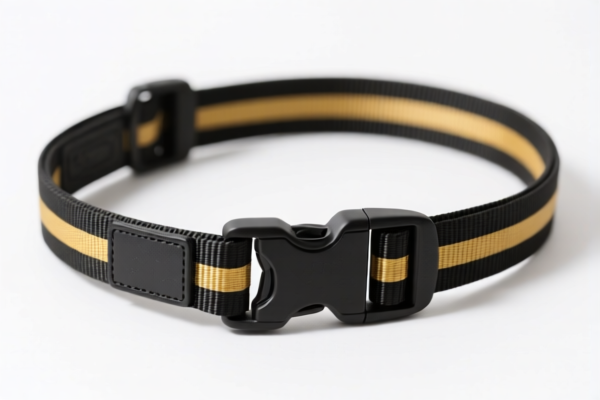
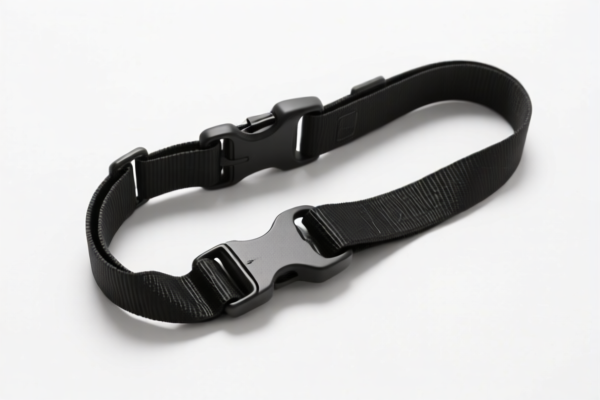
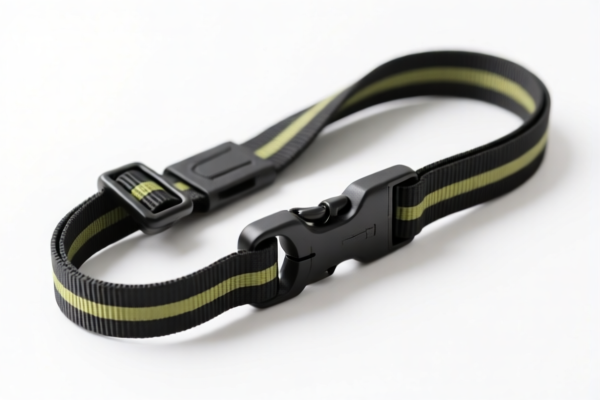
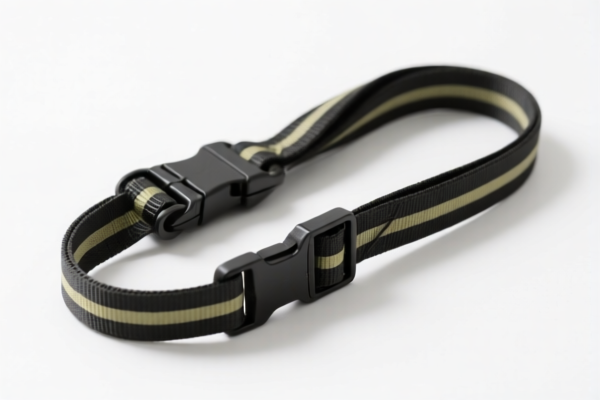
AI Analysis
🏗️ Fiber Reinforced Strapping (FRS) – Ultimate Clearance Guide & Tariff Analysis (2026)
🌐 HS Code Reference & Clearance Strategy | 2026 Latest Tariff Breakdown | Professional Customs Strategy
📌 Part 1: Product Definition & Classification: Do You Really Understand "Fiber Reinforced Strapping"?
Fiber Reinforced Strapping (FRS) is a high-strength packaging and lashing material, commonly used in logistics, heavy industry, and construction. In international trade, its classification depends heavily on material composition and form factor.
Key Distinction:
- Plastic-based Strapping with Fiber Reinforcement: If the core material is plastic (e.g., PP, PET) and reinforced with fibers (glass, aramid, etc.), it falls under Chapter 39 (Plastics).
- Non-woven/Textile-based Reinforcement: If the product is primarily a non-woven fabric or textile web coated or treated, it may fall under Chapter 56 (Non-wovens) or 59 (Impregnated Textiles).
⚠️ Critical Classification Point:
- If the product is a roll of self-adhesive or non-adhesive tape/strapping made from plastic with fiber reinforcement → HS 3919 or 3926.
- If the product is a non-woven fiber fabric used for reinforcement (not necessarily a finished strap/tape) → HS 5603.
📦 Part 2: HS Code Classification Matrix (2026 Latest Tariff Reference)
| HS Code | Product Description | Material/Format Match | Tax Rate (US/China Origin) |
|---|---|---|---|
3919.10.20.10 |
Plastic sheets, films, plates, etc., self-adhesive, of plastics, reinforced with fibers | ✅ Perfect Match: "Fiber reinforced" + "Tape/Strap" format in plastic base | 40.8% |
3919.90.50.20 |
Other plastic plates, sheets, film, foil, strip, of plastics, reinforced with fibers | ✅ High Match: Matches "Fiber reinforced" material + "Tape" form; generic plastic category | 40.8% |
3926.90.55.00 |
Other articles of plastics and articles of other materials of headings 3901 to 3914 | ⚠️ Partial Match: Includes "textile fibers" but generally for finished plastic articles; less precise for simple straps | 40.1% |
5603.11.00.70 |
Non-woven fabrics, of synthetic filaments, weighing ≤ 25 g/m² | 🔶 Inferred Match: If classified as non-woven fiber web; assumes synthetic filament base | 35.0% |
5603.12.00.70 |
Non-woven fabrics, of synthetic filaments, weighing > 25 g/m² but ≤ 70 g/m² | 🔶 Inferred Match: Similar to above but higher weight range; assumes non-woven textile format | 35.0% |
🔍 Key Insight:
- HS 3919/3926 applies if the strapping is plastic-based with fiber reinforcement.
- HS 5603 applies only if the product is primarily a non-woven fabric/web (not necessarily a finished strapping product).
- Tax Difference: Plastic-based (40.8%) vs. Non-woven (35.0%) → 5.8% savings if correctly classified as non-woven (but risks misclassification if not actually non-woven).
💰 Part 3: 2026 Latest Tariff Rate Breakdown (Including Surcharges & Policy Add-ons)
✅ Applicable Country: United States (US)
✅ Country of Origin: China (CN)
✅ Effective Date: From November 10, 2025 (and subsequent imports)
🎯 1. 3919.10.20.10 – Plastic Sheets/Films, Self-Adhesive, Reinforced with Fibers
| Item | Details |
|---|---|
| Base Tariff | 5.8% (ad valorem) |
| USITC Surcharge | +25% (under USITC Footnote 9903.88.01) |
| IEEPA Surcharge | +10% (对中国/香港产品,自2025年11月10日起) |
| Total Tariff | 40.8% |
| Tax Calculation | CIF Value × 40.8% |
| De Minimis Eligibility | ❌ Not Eligible (deny_de_minimis) |
| Legal Reference Path | IEEPA:9903.01.25 → IEEPA:9903.01.24 → USITC:3919.10.20.10 → FOOTNOTE:9903.88.01 |
📌 Explanation:
- The 25% USITC surcharge is under Section 301 tariffs for Chinese imports.
- The 10% IEEPA surcharge is an additional anti-China tariff under the International Emergency Economic Powers Act.
- Total 40.8% is a high tariff, requiring careful cost planning.
🎯 2. 3919.90.50.20 – Other Plastic Sheets/Films, Reinforced with Fibers
| Item | Details |
|---|---|
| Base Tariff | 5.8% |
| USITC Surcharge | +25% |
| IEEPA Surcharge | +10% |
| Total Tariff | 40.8% |
| Tax Calculation | CIF × 40.8% |
| De Minimis Eligibility | ❌ Not Eligible |
| Legal Reference Path | IEEPA:9903.01.25 → IEEPA:9903.01.24 → USITC:3919.90.50.20 → FOOTNOTE:9903.88.01 |
📌 Note:
- Same tariff as3919.10.20.10because both are plastic-based fiber-reinforced products.
- Even if "self-adhesive" is not specified, the fiber reinforcement keeps it in the same high-tariff bracket.
🎯 3. 3926.90.55.00 – Other Plastic Articles
| Item | Details |
|---|---|
| Base Tariff | 5.1% |
| USITC Surcharge | +25% |
| IEEPA Surcharge | +10% |
| Total Tariff | 40.1% |
| Tax Calculation | CIF × 40.1% |
| De Minimis Eligibility | ❌ Not Eligible |
| Legal Reference Path | IEEPA:9903.01.25 → IEEPA:9903.01.24 → USITC:3926.90.55.00 |
📌 Note:
- Slightly lower base tariff (5.1% vs 5.8%), but still high total (40.1%).
- Less precise classification for "strapping," may trigger customs scrutiny.
🎯 4. 5603.11.00.70 & 5603.12.00.70 – Non-Woven Fabrics (Synthetic Filaments)
| Item | Details |
|---|---|
| Base Tariff | 0.0% |
| USITC Surcharge | +25% |
| IEEPA Surcharge | +10% |
| Total Tariff | 35.0% |
| Tax Calculation | CIF × 35.0% |
| De Minimis Eligibility | ❌ Not Eligible |
| Legal Reference Path | IEEPA:9903.01.25 → IEEPA:9903.01.24 → USITC:5603.11.00.70 / 5603.12.00.70 |
📌 Note:
- Lower total tariff (35.0%) if classified as non-woven fabric.
- Risk: Only applicable if the product is primarily a non-woven fabric, not a plastic-based strapping. Misclassification can lead to penalties + back taxes.
🛠️ Part 4: Practical Clearance Advice (Pitfall Avoidance Guide)
✅ 1. Documentation Checklist (Mandatory)
| Document | Required | Notes |
|---|---|---|
| ✅ Product Specification Sheet | ✔️ | Include material composition (e.g., PP + Glass Fiber), weight per roll, width, tensile strength |
| ✅ Technical Drawing/Cross-Section | ✔️ | Show layers: plastic base, fiber reinforcement, coating (if any) |
| ✅ Product Photos (Label/Tag) | ✔️ | Clearly show model, brand, material specs |
| ✅ Third-Party Test Report | ✔️ | Tensile strength, elongation, material certification (e.g., SGS, BV) |
| ✅ Commercial Invoice | ✔️ | Describe as "Fiber Reinforced Plastic Strapping, Roll" |
| ✅ Certificate of Origin (CO) | ✔️ | If non-China origin,可申请 preferential rates |
| ✅ Packing List | ✔️ | Show quantity, weight, dimensions; avoid splitting parts |
✅ 2. Declaration Tips (Critical Rules)
🔥 Mantra: "Material Defines Code, Form Confirms It, Name Must Be Precise!"
| Scenario | Correct Declaration | Wrong Practice |
|---|---|---|
| Plastic strap + glass fiber | 3919.10.20.10 or 3919.90.50.20 |
Misclassify as 5603 → Risk of penalty |
| Non-woven fabric web | 5603.11.00.70 or 5603.12.00.70 |
Misclassify as plastic strap → 40.8% vs 35.0% |
| Finished plastic articles (e.g., tape rolls) | 3926.90.55.00 |
Less precise, may trigger audit |
| Mixed materials (plastic + textile) | Evaluate primary material | Incorrect mix → Delay/Rejection |
✅ 3. Special Cases
| Situation | Handling Advice |
|---|---|
| OEM Custom Strapping | Provide customer PO + design specs to avoid "non-standard" flags |
| Self-Adhesive vs. Non-Adhesive | Self-adhesive → 3919.10.20.10; Non-adhesive → 3919.90.50.20 |
| Used in Industrial Lashing | If used for heavy-duty lashing, may be classified as "Industrial Article" → 3926.90.55.00 |
| Non-Woven Fabric for Reinforcement Only | If sold as raw non-woven web, use 5603 codes |
🌍 Part 5: Global Market Clearance Comparison (2026 Latest)
| Country/Region | Recommended HS Code | Tariff | Certification | Notes |
|---|---|---|---|---|
| 🇺🇸 USA | 3919.10.20.10 / 3919.90.50.20 |
40.8% (China) | None specific | High tariff; IEEPA + 301 apply |
| 🇨🇳 China | 3919.10.20.10 |
5.8% | None | No surcharges |
| 🇪🇺 EU | 3926.90.95 |
6.5% | REACH | No additional surcharges |
| 🇦🇺 Australia | 3919.10.20.10 |
5% | None | Moderate tariff |
| 🇯🇵 Japan | 3926.90.90 |
0% | None | Low tariff |
📌 Conclusion:
- USA has the highest tariff burden (40.8%) for Chinese-origin fiber-reinforced strapping.
- Consider supply chain diversification (e.g., Vietnam, Mexico) to mitigate IEEPA/301 tariffs.
📌 Part 6: Common Errors & Pitfalls (Lessons Learned)
❌ Error 1: Declaring plastic strapping as "non-woven fabric" to save 5.8%
👉 Consequence: Customs audit → Back taxes + fines + shipment delay!
❌ Error 2: Splitting shipment into "strapping rolls" + "fiber cores"
👉 Consequence: Each item taxed separately → Total tariff exceeds 100%!
❌ Error 3: Vague description: "Reinforced Strap"
👉 Consequence: Customs cannot determine material → Referral for further inspection!
❌ Error 4: Using 3926.90.55.00 for simple strapping
👉 Consequence: Less precise, higher audit risk → Potential reclassification to 3919 with same rate!
✅ Best Practice:
"Polypropylene (PP) Fiber Reinforced Strapping, Roll, 50mm Width, 200m Length, Glass Fiber Core, Model XYZ"
🎯 Part 7: Conclusion – Precise Classification Saves Money!
🎯 Remember These Key Points:
🔹 "Plastic Base + Fiber = 40.8% (US)"
🔹 "Non-Woven Web = 35.0% (US, if truly non-woven)"
🔹 "Misclassification = Penalties + Delays"
🔹 "Pre-Order Ruling = Safety Net"
📌 Pro Tip:
If your strapping is originally from Vietnam, Mexico, Thailand, or Malaysia, you may qualify for IEEPA exemption, reducing the tariff to 0%~5%.
Recommendation: Apply for Advance Ruling before shipment to ensure correct classification and avoid surprises.
📣 Immediate Action:
📞 Contact a professional customs broker + Provide product specs + Apply for HS Code Advance Ruling
🚀 Ensure Smooth Clearance, Maximize Profit, and Stay Compliant!
✨ Professional Clearance Starts with Precise Classification!
💼 Every Percent of Tariff Counts – Plan Ahead, Save More!
Customer Reviews
About HS Code Classification
The Harmonized System (HS) is an internationally standardized nomenclature developed by the World Customs Organization (WCO) to classify traded products. Over 200 countries use the HS system as the basis for customs tariffs, trade statistics, and import/export regulations.
Each HS code follows a hierarchical structure:
- Chapter (2 digits) — Broad category of goods (e.g., Chapter 84: Machinery and Mechanical Appliances)
- Heading (4 digits) — More specific grouping within the chapter
- Subheading (6 digits) — Internationally standardized breakdown, used by all WCO member countries
- National subdivisions (8-10 digits) — Country-specific extensions for further classification, such as US HTSUS 10-digit codes
Correct HS code classification is essential for smooth customs clearance, accurate duty payment, and compliance with trade regulations. Misclassification can lead to customs delays, overpayment of duties, or penalties.
When importing from CN to US, the applicable tariff rates may include:
- Most-Favored-Nation (MFN) rate — The standard duty rate applied to WTO members
- General rate — Applied to countries without trade agreements
- Trade remedy duties — Additional tariffs such as Section 301 (anti-dumping), Section 232 (national security), or countervailing duties
The information provided on this page is for reference purposes only. For official classification, please consult with your local customs authority or a licensed customs broker.