Fiber Reinforced Tape for Automotive Industry
CN → US| HS Code | Tariff Rate | Origin | Destination | Doc |
|---|---|---|---|---|
| 3919905020 | 40.8% | CN | US | Official Doc |
| 3926909989 | 22.8% | CN | US | Official Doc |
| 3926905500 | 40.1% | CN | US | Official Doc |
| 5603110070 | 35.0% | CN | US | Official Doc |
| 3919102010 | 40.8% | CN | US | Official Doc |
Product Images
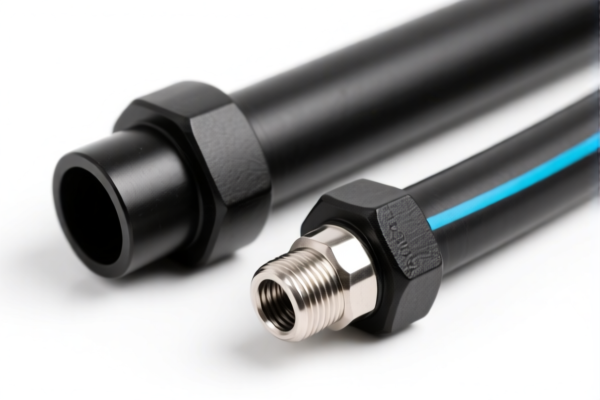
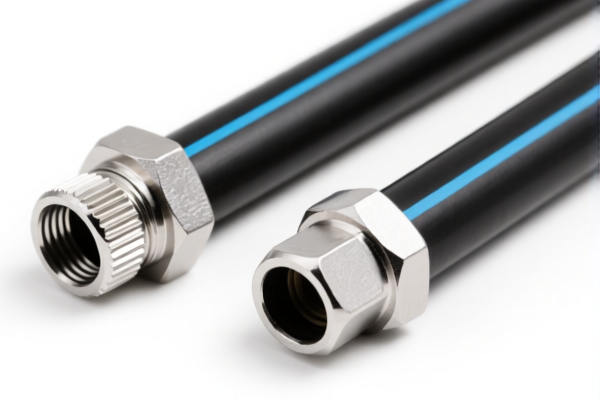
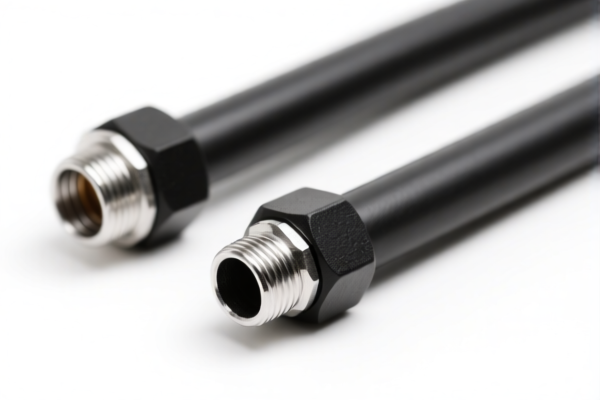
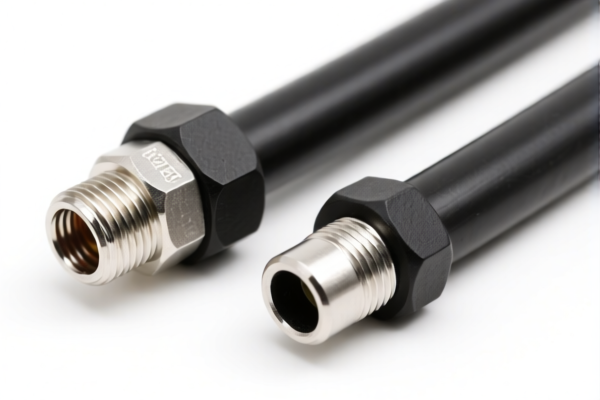
AI Analysis
🚗 Fiber Reinforced Tape (Automotive Industry)
🌐 HS Code Reference & Customs Clearance Guide | 2026 Latest Tariff Analysis | Professional-Grade Strategy for High-Tax Products
📌 I. Product Definition & Classification: What Exactly is "Fiber Reinforced Tape"?
In the automotive industry, Fiber Reinforced Tape is a critical functional material used for sealing, bonding, insulating, and reinforcing components. It typically consists of a plastic/polymer base (such as PVC, PE, or adhesive) embedded with or coated on fibers (glass, aramid, or synthetic) to enhance tensile strength and durability.
Because these tapes combine plastic materials with textile fibers, their classification is complex and highly dependent on the primary material and form factor. Misclassification can lead to significant tariff penalties.
⚠️ Key Classification Distinction:
- Is it a self-adhesive roll primarily made of plastic with fiber reinforcement? → Likely Chapter 39 (Plastics).
- Is it a non-woven fabric (felt-like) used for soundproofing or insulation? → Likely Chapter 56 (Non-wovens).
- Does it have specific textile characteristics overriding the plastic? → Check Chapter 59 or 63, but based on the provided data, the focus is heavily on Chapter 39 variants.
📦 II. HS Code Classification Details (2026 Latest Tariff Alignment)
Based on the provided <DATA>, here are the five specific HS Codes and their logical deductions for fiber-reinforced automotive tapes.
| HS Code | Product Description (Summary) | Application Logic | Total Tax Rate |
|---|---|---|---|
3919.90.50.20 |
Fiber Reinforced Tape, Material & Form Match | General-purpose reinforced tape (PVC/PE base with glass/synthetic fiber). The "form match" implies it fits the standard definition of plastic tapes in Chapter 39. | 40.8% |
3926.90.99.89 |
Plastic & Other Material Articles (Including Plastic/Polymer Components) | Finished plastic articles containing polymers, not specifically "tapes" but "other制品". Used when the product is a specialized component rather than a roll of tape. | 22.8% |
3926.90.55.00 |
Plastic/Other Material Articles Containing Textile Fibers | Specific sub-category for plastic articles that explicitly contain textile fibers. This is a precise match for tapes where the fiber content is significant and declared. | 40.1% |
5603.11.00.70 |
Non-Woven Artificial/Synthetic Fiber Articles | If the "tape" is actually a non-woven fabric (e.g., acoustic insulation felt) with adhesive backing or not, classified under Non-wovens rather than Plastic tapes. | 35.0% |
3919.10.20.10 |
Fiber Reinforced Self-Adhesive Rolls in Rolls | Specifically for Self-Adhesive tapes in roll form. This is the most common classification for standard automotive duct tapes, masking tapes, or binding tapes. | 40.8% |
🔍 Critical Analysis:
- HS 3919 (Plastic Tape) and HS 3926.55 (Plastic with Textile) attract the highest tax rates (40%+) due to the combination of "Plastic" and "Textile/Fiber" triggering stricter scrutiny.
- HS 3926.99 (Other Plastic Articles) offers a lower rate (22.8%) if the product can be argued as a "finished article" rather than a "raw tape material."
- HS 5603 (Non-Woven) is a mid-range option (35.0%), suitable for sound-dampening or insulation mats that look like tape but are technically non-woven fabrics.
💰 III. Detailed Tariff Rate Breakdown (US Market Focus)
✅ Applicable Country: United States (US)
✅ Origin: China (CN)
✅ Effective Date: 2025/2026 (Post-2024 Policy Adjustments)
🎯 1. 3919.90.50.20 & 3919.10.20.10 —— Plastic Tapes (Reinforced)
| Item | Detail |
|---|---|
| Base Tariff | 5.8% (Ad Valorem) |
| Section 301 Tariff | +25.0% (USITC Footnote for China-origin plastics/textiles) |
| Section 122 Tariff | +10.0% (Specific policy surcharge on certain manufactured goods) |
| Total Tax Rate | 40.8% |
| Tax Calculation | CIF Value × 40.8% |
| De Minimis Eligibility | ❌ Denied (High tariff risk) |
| Legal Basis Path | USITC:3919 → Section 301: 25% → Section 122: 10% |
📌 Explanation:
- These codes are classified as "Plastic Articles" with textile reinforcement.
- The 25% Section 301 tariff is the biggest cost driver.
- The 10% Section 122 is a recent addition for specific manufacturing categories.
- Total: 40.8% is a very high duty burden.
🎯 2. 3926.90.55.00 —— Plastic Articles with Textile Fibers
| Item | Detail |
|---|---|
| Base Tariff | 5.1% (Ad Valorem) |
| Section 301 Tariff | +25.0% |
| Section 122 Tariff | +10.0% |
| Total Tax Rate | 40.1% |
| Tax Calculation | CIF Value × 40.1% |
| De Minimis Eligibility | ❌ Denied |
📌 Explanation:
- Slightly lower base rate (5.1% vs 5.8%) compared to3919, but still subject to the same heavy surcharges.
- Use this if the product is a finished component (e.g., a reinforced seal strip) rather than a roll of tape.
🎯 3. 3926.90.99.89 —— Other Plastic Articles (Lowest Tax Option)
| Item | Detail |
|---|---|
| Base Tariff | 5.3% (Ad Valorem) |
| Section 301 Tariff | +7.5% (Note: Lower 301 rate for "Other" articles) |
| Section 122 Tariff | +10.0% |
| Total Tax Rate | 22.8% |
| Tax Calculation | CIF Value × 22.8% |
| De Minimis Eligibility | ❌ Denied |
📌 Explanation:
- This is the most cost-effective code in the list.
- Strategy: If your product is a finished automotive part (e.g., a pre-cut reinforced seal, a specific plastic bracket with adhesive) rather than a "roll of tape," you may qualify for this lower 7.5% Section 301 rate.
- Risk: Must prove it is not a "generic tape" under Chapter 3919.
🎯 4. 5603.11.00.70 —— Non-Woven Articles (Mid-Range)
| Item | Detail |
|---|---|
| Base Tariff | 0.0% (Ad Valorem) |
| Section 301 Tariff | +25.0% |
| Section 122 Tariff | +10.0% |
| Total Tax Rate | 35.0% |
| Tax Calculation | CIF Value × 35.0% |
| De Minimis Eligibility | ❌ Denied |
📌 Explanation:
- Zero Base Tariff is attractive.
- Strategy: Ideal for acoustic insulation tapes or sound-dampening mats that are technically non-woven fabrics.
- Risk: Customs must agree that the product is a "Non-Woven Fabric" and not a "Plastic Tape."
🛠️ IV. Customs Clearance Practical Advice (Avoiding Pitfalls)
✅ 1. Required Documentation Checklist
| Document | Required | Notes |
|---|---|---|
| ✅ Product Specification Sheet | ✔️ | Must detail: Base material (PVC/PE/Adhesive), Reinforcement type (Glass/Aramid), Thickness, Width. |
| ✅ Composition Statement | ✔️ | Clearly state % of Plastic vs. % of Textile Fiber. Crucial for distinguishing between 3919 and 5603. |
| ✅ Product Photos | ✔️ | Show cross-section to reveal fiber structure. |
| ✅ Commercial Invoice | ✔️ | Describe as "Automotive Reinforced Tape" or "Plastic Seal Article" based on HS. |
| ✅ Customs Ruling (Pre-Clearance) | ✔️ | Highly Recommended due to high tariff variability. |
✅ 2. Strategic Declaration Tips
🔥 "Form Defines Code, Code Defines Cost!"
| Scenario | Recommended HS Code | Reason |
|---|---|---|
| Roll of Tape (Standard) | 3919.10.20.10 or 3919.90.50.20 |
Standard "Tape" definition. Expect 40.8% tax. |
| Finished Seal/Strip (Pre-cut) | 3926.90.99.89 |
Argue as "Other Plastic Article" to get 22.8% tax. |
| Acoustic Insulation Mat/Felt | 5603.11.00.70 |
If non-woven, use this for 35.0% tax. |
| Textile-Heavy Composite | 3926.90.55.00 |
If fibers are integral and substantial, 40.1% tax. |
✅ 3. Special Considerations
| Situation | Advice |
|---|---|
| OEM Custom Parts | If the tape is custom-molded or pre-cut for a specific car model, declare as 3926.90.99.89 to save 18% in tariffs. |
| Non-Woven Insulation | Do NOT declare as "Plastic Tape" if it’s a felt-like material. Use 5603.11.00.70 to avoid misclassification penalties. |
| High-Volume Bulk | Consider Advance Rulings from CBP to lock in the 22.8% rate if applicable. |
🌍 V. Global Market Comparison (2026)
| Market | Recommended HS Code | Estimated Tax (China Origin) | Notes |
|---|---|---|---|
| 🇺🇸 USA | 3919 / 3926.90.99 |
22.8% – 40.8% | Heavy Section 301 + 122 tariffs. |
| 🇨🇳 China | 3919 / 3926 |
5% – 10% | Standard MFN rates, no Section 301. |
| 🇪🇺 EU | 3919 / 3926 |
4% – 6% | No Section 301 equivalent. |
| 🇲🇽 Mexico | 3919 / 3926 |
5% | USMCA may apply if originated. |
📌 Conclusion:
- The US market is the most expensive due to layered tariffs (Base + 301 + 122).
- Strategy Shift: To reduce costs from 40.8% to 22.8%, re-engineer the product description to emphasize it as a "Finished Plastic Article" rather than "Tape," or use Non-Woven classification if applicable.
📌 VI. Common Mistakes & Pitfalls (Lessons Learned)
❌ Mistake 1: Declaring a pre-cut automotive seal as "Tape" (3919)
👉 Result: 40.8% tariff.
✅ Fix: Declare as "Plastic Article" (3926.90.99.89) → 22.8% tariff.
❌ Mistake 2: Calling acoustic felt "Plastic Tape"
👉 Result: Misclassification, potential seizure.
✅ Fix: Use 5603.11.00.70 (Non-Woven) if it’s felt-like → 35.0% tariff (better than 40.8% and safer).
❌ Mistake 3: Ignoring Section 122 Tariff
👉 Result: Unexpected 10% surcharge at border.
✅ Fix: Always account for the +10% in total cost calculations.
🎯 VII. Conclusion: Smart Classification Saves Money!
🎯 Key Takeaway:
🔹 "Tape = 40.8% | Finished Article = 22.8% | Non-Woven = 35.0%"
🔹 Don’t just call it "Tape." Describe its form and function to unlock the lower tariff codes.
📌 Pro Tip:
If your product is a custom pre-cut seal for a specific car model, DO NOT use "Tape" in the description. Use "Plastic Seal Component" or "Automotive Trim Part" to qualify for 3926.90.99.89.
📣 Immediate Action:
📞 Request a CBP Advance Ruling for your specific product design.
📄 Update your Commercial Invoice to reflect "Plastic Article" if applicable.
💡 Review your BOM to see if Non-Woven classification (5603) is viable.
✨ Precision Classification is the Key to Profitability!
💼 Save 18% on every shipment by choosing the right HS Code!
Customer Reviews
About HS Code Classification
The Harmonized System (HS) is an internationally standardized nomenclature developed by the World Customs Organization (WCO) to classify traded products. Over 200 countries use the HS system as the basis for customs tariffs, trade statistics, and import/export regulations.
Each HS code follows a hierarchical structure:
- Chapter (2 digits) — Broad category of goods (e.g., Chapter 84: Machinery and Mechanical Appliances)
- Heading (4 digits) — More specific grouping within the chapter
- Subheading (6 digits) — Internationally standardized breakdown, used by all WCO member countries
- National subdivisions (8-10 digits) — Country-specific extensions for further classification, such as US HTSUS 10-digit codes
Correct HS code classification is essential for smooth customs clearance, accurate duty payment, and compliance with trade regulations. Misclassification can lead to customs delays, overpayment of duties, or penalties.
When importing from CN to US, the applicable tariff rates may include:
- Most-Favored-Nation (MFN) rate — The standard duty rate applied to WTO members
- General rate — Applied to countries without trade agreements
- Trade remedy duties — Additional tariffs such as Section 301 (anti-dumping), Section 232 (national security), or countervailing duties
The information provided on this page is for reference purposes only. For official classification, please consult with your local customs authority or a licensed customs broker.